IMDb RATING
7.5/10
1.3K
YOUR RATING

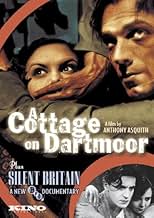
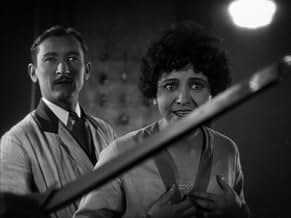
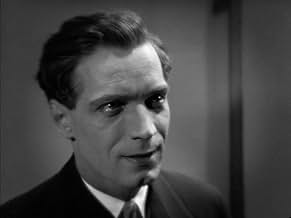
A former barber escapes from a high security prison. Flashback story of an escape from the lonely, high-security Dartmoor Prison.A former barber escapes from a high security prison. Flashback story of an escape from the lonely, high-security Dartmoor Prison.A former barber escapes from a high security prison. Flashback story of an escape from the lonely, high-security Dartmoor Prison.
- Director
- Writers
- Stars


- Director
- Writers
- All cast & crew
- Production, box office & more at IMDbPro
7.51.3K
1
2
3
4
5
6
7
8
9
10
Featured reviews
A barber, a manicurist & a client are on the razor's edge of a deadly love triangle.
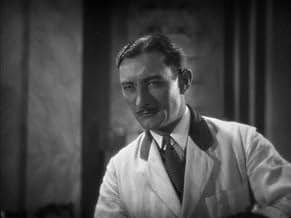
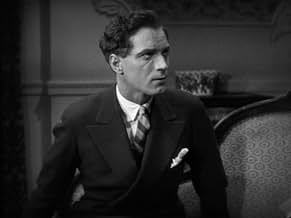
Anthony Asquith is best known for straightforward film-making in the so-called British literary tradition which served him particularly well in stage-to-screen adaptations of G. B. Shaw & Terrence Rattigan. Letting the writer function as auteur doesn't win you critical kudos, but films as fine as PYGMALION/'38 and THE BROWNING VERSION/'51 don't just 'happen.' Even so, it's fun to watch the young Asquith show off, even needlessly, on late silents like this & UNDERGROUND/'28, also out on DVD. You can all but hear him parsing the latest Russian or German import just screened at his CineClub. There's some strikingly fast montage work and psychological P.O.V. stuff (even a shock-flash of red tinting as in the original prints of Hitchcock's SPELLBOUND/'45), but the main influence is UFA studios with their posh camera moves, rich visual texture, expressionist acting, shadowy lighting & diagonal slashes The opening works best as Swedish actor Uno Henning (in his only British role, he's an intriguing mix of Buster Keaton & Conrad Veidt) breaks out of prison in search of revenge. The story flashes back to detail a rather commonplace love triangle that gives Asquith plenty of space for his set pieces (a visit to the cinema, a very close shave, et al.) which tend to run on a bit too long. But no matter, it's all ravishing to watch and if the characterizations never quite add up, the visual touches are worth the stretch.
beautiful, poetic and haunting
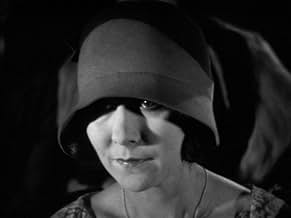
Firstly, let me say that my little lad eats the occasional rusk and loved them when a baby (now nearly 4). I loved this movie...I saw it for the first time last night on the BBC. I too enjoyed the flashback vehicle, which by using the exclamation (via title) "Joe!" jolted us into flashback. I thought the use of mirrors imaginative and symbolic (Norah appearing at times a disembodied - if beautiful - head among possessive men in the barbershop. I was quite enthralled by the big farmer coming in for a manicure (wink-wink). The images are on reflection quite disturbing in the barbershop...a man having his hands caressed by a pretty girl whilst a cut throat razor is applied to his throat. I too found the trip to the cinema memorable and also poignant. The director at pains to reveal to us the value of the cinema orchestra at a time when their jobs would have been in extreme peril. Couple this with mention of a "talkie" earlier (this received a blank response) and these elements could be viewed as a swan song for the silents. You must see this film, it is truly wonderful. The performances are spot on and it does not always take the predictable turn. Considering the intensity of obsession the male lead character conveys, the film develops great warmth. UNIQUE!!
10sunlily
Beautifully Realized British Silent
A Cottage on Dartmoor is a late British silent of stunning clarity and poetic justice. The use of the camera to caress the homey accents in Norah's boarding house, the use of mirrors to dramatize the lives and thoughts of the characters, the elongated camera angles of the escaped convict jumping from captivity to freedom, and running from his past into redemption. All of this and more make this late silent itself almost a valentine to the end of the silent era and the dawn of sound.
One of the most poignant scenes in the movie demonstrates this by taking us to a "talkie" that nonetheless has a full orchestra that the camera hones in on and romanticizes.
While this is a tale of obsession, it is also a story of love that has many emotionally tense elements that Norah Baring and Uno Henning handle with dignity and grace. I'm very surprised that I've not heard more about either of these actors.
A Cottage on Dartmoor is a very beautifully realized film that probably wouldn't have been as effective had it been made as a sound movie.
One of the most poignant scenes in the movie demonstrates this by taking us to a "talkie" that nonetheless has a full orchestra that the camera hones in on and romanticizes.
While this is a tale of obsession, it is also a story of love that has many emotionally tense elements that Norah Baring and Uno Henning handle with dignity and grace. I'm very surprised that I've not heard more about either of these actors.
A Cottage on Dartmoor is a very beautifully realized film that probably wouldn't have been as effective had it been made as a sound movie.
Did Hitchcock steal from this movie?
I'm extremely impressed with every aspect of 'A Cottage on Dartmoor', directed by the underrated Anthony Asquith (son of the Prime Minister). The camera-work features some superb tracking shots, kept perfectly in focus by focus-puller Arthur Woods (later a brilliant director in his own right, all too briefly before his death in World War Two). There is a clever and subtle flashback transition. The frame compositions are excellent, as are the performances by this obscure cast. At the climax of this monochrome film, there is a single flash of red: Hitchcock would later use this same device in 'Spellbound'. I wonder if Hitchcock copied it from Asquith.
Most of this story takes place in flashback, a device which I normally dislike. Flashbacks are now so hackneyed that there is an entire cinematic grammar of flashbacks: the screen goes blurry, the soundtrack swells with theremin music. Here, the transition to flashback is done subtly, with the first dialogue intertitle bridging the shift. Well done!
Some minor details distressed me. We see a prisoner who escaped from Dartmoor. His uniform displays a number, but shouldn't it also have the broad arrow? Also, since Joe (the convict) has sworn revenge against Harry Stevens -- his rival for the affection of Sally -- why ever have Harry and Sally moved to a remote cottage on Dartmoor, conveniently close to Joe's prison? This is the sort of thing which Hitchcock identified as 'icebox logic', the cinematic equivalent of "esprit d'escalier".
This film was made at an awkward moment of cinema history. The movie is silent, yet (in the dialogue titles) the characters on screen discuss going to 'a talkie'. But when they go to the cinema, a live orchestra are playing ... which indicates that the movie being shown is a silent. And an insert shot of a programme book tells us that the movie is Harold Lloyd's 'Safety Last', definitely a silent.
Not the least of this film's pleasures is its depiction of life in George V's England. I got a twinge of nostalgia from a brief shot of an infant clutching a rusk. (Do modern babies eat rusks?) In the central role, Norah Baring is excellent: portraying a simple manicurist, she is personable and pleasant to look at, without the implausible amount of glamour that a Hollywood actress would have brought to such a workaday role. I'll rate this fine character drama 8 out of 10.
Most of this story takes place in flashback, a device which I normally dislike. Flashbacks are now so hackneyed that there is an entire cinematic grammar of flashbacks: the screen goes blurry, the soundtrack swells with theremin music. Here, the transition to flashback is done subtly, with the first dialogue intertitle bridging the shift. Well done!
Some minor details distressed me. We see a prisoner who escaped from Dartmoor. His uniform displays a number, but shouldn't it also have the broad arrow? Also, since Joe (the convict) has sworn revenge against Harry Stevens -- his rival for the affection of Sally -- why ever have Harry and Sally moved to a remote cottage on Dartmoor, conveniently close to Joe's prison? This is the sort of thing which Hitchcock identified as 'icebox logic', the cinematic equivalent of "esprit d'escalier".
This film was made at an awkward moment of cinema history. The movie is silent, yet (in the dialogue titles) the characters on screen discuss going to 'a talkie'. But when they go to the cinema, a live orchestra are playing ... which indicates that the movie being shown is a silent. And an insert shot of a programme book tells us that the movie is Harold Lloyd's 'Safety Last', definitely a silent.
Not the least of this film's pleasures is its depiction of life in George V's England. I got a twinge of nostalgia from a brief shot of an infant clutching a rusk. (Do modern babies eat rusks?) In the central role, Norah Baring is excellent: portraying a simple manicurist, she is personable and pleasant to look at, without the implausible amount of glamour that a Hollywood actress would have brought to such a workaday role. I'll rate this fine character drama 8 out of 10.
Grand Cottage, moor please!
COTTAGE ON DARTMOOR: an expressionistic and claustrophobic account of sexual obsession and jealousy, very Hitchockian in the way it deals with the resulting crescendo of suspense, especially in connection with a key throat-cutting in a barber's chair incident. Asquith was a director who grew stodgy as his career entered into the sound era, viz his terribly British adaptions of Rattigan, but the present film (1929) is rather an eye opener. One standout scene is set within a cinema, partly a comment on the imminent and creatively burdensome coming of clunky sound, and which contains an extended eye opening use of editing, cutting about within an audience as the beady-eyed boy friend watches his victims - a bravura sequence which ought to be much better known to cineastes.


Did you know
- GoofsJoe's coworker reaches down to pick up the movie tickets with his right hand, but the close-up shows his left hand grabbing them.
- ConnectionsFeatured in Cinema Europe: The Other Hollywood (1995)
Details
- Runtime
- 1h 28m(88 min)
- Color
- Sound mix
- Aspect ratio
- 1.20 : 1
Contribute to this page
Suggest an edit or add missing content