

A small-time criminal moves to a big city to seek bigger fortune.A small-time criminal moves to a big city to seek bigger fortune.A small-time criminal moves to a big city to seek bigger fortune.
- Nominated for 1 Oscar
- 2 wins & 1 nomination total

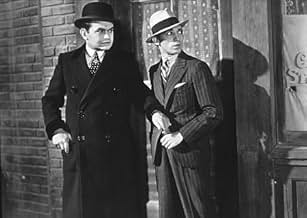


Thomas E. Jackson
- Sgt. Flaherty
- (as Thomas Jackson)


Nicholas Bela
- Ritz Colonna
- (as Nick Bela)

Ernie Adams
- Cashier
- (uncredited)
Elmer Ballard
- Bat Carilla
- (uncredited)

Ferike Boros
- Mrs. Passa
- (uncredited)

Kernan Cripps
- Detective
- (uncredited)
George Daly
- Machine-Gunner
- (uncredited)

Adolph Faylauer
- New Year's Celebrant
- (uncredited)
7.215.4K
1
2
3
4
5
6
7
8
9
10
Featured reviews
It Gets Lonely at the Top
Little Caesar which popularized both the gangster film and Edward G. Robinson is a great study in the criminal mindset and the ruthlessness it takes to get to the top of that world. After all in White Heat look at the epitaph James Cagney gave to his career.
We meet Robinson and a friend Douglas Fairbanks, Jr. in some greasy spoon in the middle of nowhere. Fairbanks wants to go into dancing, but Robinson knows exactly what he wants. He wants to rise to the top of the criminal world. Not for riches or fame, but simply raw naked power. As he says to have a bunch of guys working for you who will do ANYTHING you say. The more men you have doing that, the more powerful you are.
And the film is a study in the rise and fall of Robinson in his chosen field. But the top is a lonely place.
It's been said there's an undercurrent of homosexuality running in Little Caesar between Robinson and Fairbanks by some critics. I've never subscribed to that point of view. In doing what he's doing Robinson essentially cuts himself off from all kind of human contact. His only other attachment is the fawning George E. Stone from his gang.
Robinson needs Fairbanks as a friend and confidante. We all need that, someone we can unbend with and show our true feelings, even if it's confiding our criminal ambitions.
But as the plot develops Fairbanks who's been on the fringe of Robinson's activities, meets Glenda Farrell and they fall in love. And through her partially Fairbanks develops a conscience about what he's seen.
How Robinson deals with it and what becomes of everyone involved is for those interested in viewing the film. But after over 70 years, Little Caesar holds up very well because of its universal theme.
Loneliness at the top is an occupational hazard for all ambitious people. It's never expressed in such raw terms as in the gangster film genre. But it's still used. Used in fact in both the Paul Muni version of Scarface and in Al Pacino's version as well.
Mervyn LeRoy did a fine job in directing this groundbreaking piece of entertainment. Robinson's portrayal once seen is never forgotten.
We meet Robinson and a friend Douglas Fairbanks, Jr. in some greasy spoon in the middle of nowhere. Fairbanks wants to go into dancing, but Robinson knows exactly what he wants. He wants to rise to the top of the criminal world. Not for riches or fame, but simply raw naked power. As he says to have a bunch of guys working for you who will do ANYTHING you say. The more men you have doing that, the more powerful you are.
And the film is a study in the rise and fall of Robinson in his chosen field. But the top is a lonely place.
It's been said there's an undercurrent of homosexuality running in Little Caesar between Robinson and Fairbanks by some critics. I've never subscribed to that point of view. In doing what he's doing Robinson essentially cuts himself off from all kind of human contact. His only other attachment is the fawning George E. Stone from his gang.
Robinson needs Fairbanks as a friend and confidante. We all need that, someone we can unbend with and show our true feelings, even if it's confiding our criminal ambitions.
But as the plot develops Fairbanks who's been on the fringe of Robinson's activities, meets Glenda Farrell and they fall in love. And through her partially Fairbanks develops a conscience about what he's seen.
How Robinson deals with it and what becomes of everyone involved is for those interested in viewing the film. But after over 70 years, Little Caesar holds up very well because of its universal theme.
Loneliness at the top is an occupational hazard for all ambitious people. It's never expressed in such raw terms as in the gangster film genre. But it's still used. Used in fact in both the Paul Muni version of Scarface and in Al Pacino's version as well.
Mervyn LeRoy did a fine job in directing this groundbreaking piece of entertainment. Robinson's portrayal once seen is never forgotten.
Still holds up very well
Seminal gangster film about the rise and fall of Enrico Bandello, a Chicago hoodlum, based on the novel by W.R. Burnett. The prototype for Enrico was, like so many other gangster heroes, mobster Al Capone. If you know a little bit about his life story, you got your basic gangster plot for practically all films that followed, like Tony Camonte in SCARFACE.
This film was the first of "the big three", together with PUBLIC ENEMY (1931) and SCARFACE: SHAME OF THE NATION (1932) and provided the blueprint for the modern gangster crime flic. It was the first gangster film to reach a wide audience and launched Edward G. Robinson to stardom. The story is simple and straightforward and might feel a little overly familiar to modern audiences, but the film lost little of its power and still holds up pretty well. It's a tough movie, but mostly tough talking with not much violence on screen.
But the film would probably be instantly forgettable without Robinson's superb performance. Whenever he's on screen, his presence is incredibly menacing. The rest of the cast is so so, but Thomas Jackson as Flaherty, Rico's nemesis, gives a wonderfully cynical performance, mocking Rico and all the other gangsters. Like most other early gangster films, it lacks the real emotional depth and complexity that came with later films, like the French gangster films of the fifties or THE GODFATHER and was made primarily as popular entertainment. Pleasant entertainment nevertheless with Edward G. Robinson portraying the first classic gangster role in screen history.
Camera Obscura --- 8/10
This film was the first of "the big three", together with PUBLIC ENEMY (1931) and SCARFACE: SHAME OF THE NATION (1932) and provided the blueprint for the modern gangster crime flic. It was the first gangster film to reach a wide audience and launched Edward G. Robinson to stardom. The story is simple and straightforward and might feel a little overly familiar to modern audiences, but the film lost little of its power and still holds up pretty well. It's a tough movie, but mostly tough talking with not much violence on screen.
But the film would probably be instantly forgettable without Robinson's superb performance. Whenever he's on screen, his presence is incredibly menacing. The rest of the cast is so so, but Thomas Jackson as Flaherty, Rico's nemesis, gives a wonderfully cynical performance, mocking Rico and all the other gangsters. Like most other early gangster films, it lacks the real emotional depth and complexity that came with later films, like the French gangster films of the fifties or THE GODFATHER and was made primarily as popular entertainment. Pleasant entertainment nevertheless with Edward G. Robinson portraying the first classic gangster role in screen history.
Camera Obscura --- 8/10
Robinson's Performance Highlights A Good Production That Still Works
Edward G. Robinson's memorable performance in "Little Caesar" is rightfully one of his best-remembered roles. While he deserves also to be remembered for his versatility in many other performances as well, it's easy to see why this one in particular is still remembered. Along with James Cagney's role in "The Public Enemy", Robinson's portrayal here helped to exemplify the kinds of characters that for some time defined the genre.
The story is not without interest in itself, as it follows the rise and decline of various gangsters and their followers. The fragile nature of their form of 'power' comes across quite clearly, and of course there is plenty of action as well. It's not especially subtle, but it wasn't supposed to be. The supporting cast all give solid performances, but Robinson's character is always the center of attention. Douglas Fairbanks, Jr. has the most interesting character to work with among the supporting roles.
The story moves at a good pace, especially given its release date, and is over almost before you know it. Even aside from Robinson, it's one of the better features of the earliest years of sound movies, handling the dialogue and sound better than most. Like "The Public Enemy", it was set in its own time, but it's a good production overall that still works rather well decades later.
The story is not without interest in itself, as it follows the rise and decline of various gangsters and their followers. The fragile nature of their form of 'power' comes across quite clearly, and of course there is plenty of action as well. It's not especially subtle, but it wasn't supposed to be. The supporting cast all give solid performances, but Robinson's character is always the center of attention. Douglas Fairbanks, Jr. has the most interesting character to work with among the supporting roles.
The story moves at a good pace, especially given its release date, and is over almost before you know it. Even aside from Robinson, it's one of the better features of the earliest years of sound movies, handling the dialogue and sound better than most. Like "The Public Enemy", it was set in its own time, but it's a good production overall that still works rather well decades later.
Birth of a genre
WARNING: This review may reveal some scenes of the movie!
In the film that made Edward G. Robinson a star, we get to see one of the nastiest, meanest characters ever put on film. As "Rico," Robinson plays a no-holds barred gangster. As an example, at one point he believes one of his gang is feeling guilty and going to the priest to confess...so he guns him down on the steps of the church.
I first started watching the film simply because I'm a bit of a film buff and felt that it should be a film I see, regardless of how good (or bad) it might be. But by the end of the film, I had been pulled into the story. It revolves around a small-time thug and his buddy who go to the city to make it big. Soon Rico is muscling in on the "big guys" turf, taking over his territory with his own brand of shoot first, ask questions later. I could tell you more, but you should see the movie instead.
Robinson is great in the film. Toward the end of the film there is an amazing shot of just his face, staring into the camera -- no words, no other characters, just Robinson as Rico, and you get a chance to see truly great acting! Just the mood he creates with his eyes alone in this one shot is worth seeing the entire film. Throw in a good storyline, an entire gang of thugs who are terrified of the chief thug, great direction, and you wind up with a great film. And don't worry parents -- this is still a film from 1930, so there is no sex, no language, and even the majority of the violence (which is minimal considering this is a film about the mob!) is hidden from sight. Even the ones you see have no blood involved -- just the sound of a gun and a person slumps over to die.
When you see a film like this on a station like Turner Classic Movies, you get the added benefit of additional trivia. According to the introduction, the book upon which this movie was based was written after the author, listening to a friend of his sing on the radio live from a local club, was gunned down on the air when the mob broke into the club with Tommy guns blazing. Imagine the shock of hearing your friend killed live on the radio...
Finally, during the introduction of the film it was also stated that at the time of release, complaints were made that the film glorified the mob and their violent ways. I disagree. If Robinson's portrayal doesn't turn you off of violence and the mob, then you probably aren't human -- which is probably exactly the point of this film.
In the film that made Edward G. Robinson a star, we get to see one of the nastiest, meanest characters ever put on film. As "Rico," Robinson plays a no-holds barred gangster. As an example, at one point he believes one of his gang is feeling guilty and going to the priest to confess...so he guns him down on the steps of the church.
I first started watching the film simply because I'm a bit of a film buff and felt that it should be a film I see, regardless of how good (or bad) it might be. But by the end of the film, I had been pulled into the story. It revolves around a small-time thug and his buddy who go to the city to make it big. Soon Rico is muscling in on the "big guys" turf, taking over his territory with his own brand of shoot first, ask questions later. I could tell you more, but you should see the movie instead.
Robinson is great in the film. Toward the end of the film there is an amazing shot of just his face, staring into the camera -- no words, no other characters, just Robinson as Rico, and you get a chance to see truly great acting! Just the mood he creates with his eyes alone in this one shot is worth seeing the entire film. Throw in a good storyline, an entire gang of thugs who are terrified of the chief thug, great direction, and you wind up with a great film. And don't worry parents -- this is still a film from 1930, so there is no sex, no language, and even the majority of the violence (which is minimal considering this is a film about the mob!) is hidden from sight. Even the ones you see have no blood involved -- just the sound of a gun and a person slumps over to die.
When you see a film like this on a station like Turner Classic Movies, you get the added benefit of additional trivia. According to the introduction, the book upon which this movie was based was written after the author, listening to a friend of his sing on the radio live from a local club, was gunned down on the air when the mob broke into the club with Tommy guns blazing. Imagine the shock of hearing your friend killed live on the radio...
Finally, during the introduction of the film it was also stated that at the time of release, complaints were made that the film glorified the mob and their violent ways. I disagree. If Robinson's portrayal doesn't turn you off of violence and the mob, then you probably aren't human -- which is probably exactly the point of this film.
Salad Days...
There's a villain and he's out to make his name, Caesar Enrico Bandello, just has no shame, with a cannon in his hand, shoot you down just where you stand, there's no way that he'll be stopped, he won't be tamed. He's taken over a small gang, after a heist, where the crime commissioner has paid a price, a rival boss then shoots him down, but it only leaves a frown, then 'Big Boy' gives him Chicago's Northside vice.
Isn't Edward G. Robinson always spellbinding, especially in his more devious roles. The ascent and decent of a larger than life ego, the cost to others and the ultimate price paid in the quest for power.
Isn't Edward G. Robinson always spellbinding, especially in his more devious roles. The ascent and decent of a larger than life ego, the cost to others and the ultimate price paid in the quest for power.


Did you know
- GoofsRico is hit by the bullet sufficiently to require bandaging by Scabby, but the overcoat he was wearing has no bullet hole in it, nor is there any trace of blood in the subsequent scene in Little Arnie's office.
- Quotes
[last lines]
Caesar Enrico Bandello: Mother of Mercy! Is this the end of Rico?
- Alternate versionsIn the 1954 re-release, a foreword crawl was added, warning that the "heroes" of Little Caesar (1931) and The Public Enemy (1931) represent "a problem that sooner or later we, the public, must solve." This version is often shown on cable channels.
- ConnectionsFeatured in Hollywood: The Fabulous Era (1962)
- How long is Little Caesar?Powered by Alexa
Details
- Runtime
- 1h 19m(79 min)
- Color
Contribute to this page
Suggest an edit or add missing content