IMDb RATING
7.6/10
1.7K
YOUR RATING

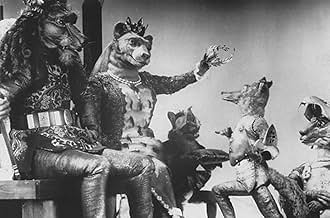
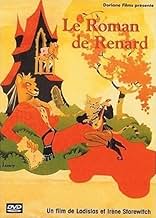
When Renard the Fox's mischievous pranks go too far, King Lion is forced to attempt to bring the trickster to justice.When Renard the Fox's mischievous pranks go too far, King Lion is forced to attempt to bring the trickster to justice.When Renard the Fox's mischievous pranks go too far, King Lion is forced to attempt to bring the trickster to justice.





Claude Dauphin
- Monkey
- (voice)
Romain Bouquet
- Fox
- (voice)
Sylvain Itkine
- Wolf
- (voice)
Léon Larive
- Bear
- (voice)
Robert Seller
- Cock
- (voice)
Eddy Debray
- Badger
- (voice)
- (as Debray)
Nicolas Amato
- Cat
- (voice)

Sylvia Bataille
- Rabbit
- (voice)
Suzy Dornac
- Fox Cub
- (voice)
Jaime Plama
- Cat (singing)
- (voice)
Marcel Raine
- Sire Noble
- (voice)
7.61.7K
1
2
3
4
5
6
7
8
9
10
Featured reviews
Excellent and fun film and not sure about US law
I love this little gem of a film. It does deserve a place along side Snow White and the New Gulliver. I saw this quite by accident on Youtube and I am glad I did. I don't want to tell you anything about the story. Instead, read the great story it is based on. I read it in French. It is a refreshingly medieval take on morality, refreshing compared to the tales of Perraut or La Fontaine. Some here say the film can't be shown in the US because of some law or other forbidden the exhibiting of Nazi financed films. That could be, though I would find that very hard to believe as I saw both Triumph of the Will (at a theater in San Francisco) and Olympiad (on television-AMC I believe, though maybe not) in the USA. How more Nazi can you get than those two films and yet they are both distributed in the USA. So, to me, there should be no reason that this true, and joyful, classic should not be seen in the US. If not, see if you can see it on Youtube. It comes in six parts with English subtitles. There it is called 'Tale of the Fox.' Hope you can see it and laugh along.
Dazzling Animation from a forgotten genius
Seven years before "Snow White" Wladyslaw Starewicz produced a truly amazing piece of stop motion animation, not only one of the first to use sound and dialogue as more than decoration, but the first truly adult animation with a blackly comic story-line that's astonishingly fresh today.
The culmination of twenty years of pioneering animation, "Tale" was virtually forgotten from it's release till the early 1990's when it resurfaced at various film festivals. Seeing "Tale" now it's easy to understand why 1930's audiences might have had a hard time with this. The brutality of humour and characters would've been off-putting to most and even now the film an ability to shock.
It's easy to go into this expecting a more primitive "Song of the South" and at first this seems like where we're headed. But there's a cynicism and sophistication Walt could never have imagined.
Reynaud (craftily voiced by Romain Bouquet)is no Disney hero nor should he be taken as a soft hearted villain. Completely amoral, loyal to none (outside his family) he ruthlessly exploits the gullibility of his peers (and even the king himself), in a series of inventive and savagely comic encounters to a point where the enraged animal kingdom declares war on him.
Ten years in the making, "Tale" offers numerous highlights (the drunken rabbit in the monastery, the attack on Reynaud's castle; not to mention a particularly surreal and endearing song between a love smitten cat and a royal girl dove during the strange armistice in which no animal is allowed to eat another.)
An unforgettable and remarkable movie that defies it's age. Try to look out for this one on video (it's available) or in animation festivals... Better still write into your local TV station and request it so more people can see it.
The culmination of twenty years of pioneering animation, "Tale" was virtually forgotten from it's release till the early 1990's when it resurfaced at various film festivals. Seeing "Tale" now it's easy to understand why 1930's audiences might have had a hard time with this. The brutality of humour and characters would've been off-putting to most and even now the film an ability to shock.
It's easy to go into this expecting a more primitive "Song of the South" and at first this seems like where we're headed. But there's a cynicism and sophistication Walt could never have imagined.
Reynaud (craftily voiced by Romain Bouquet)is no Disney hero nor should he be taken as a soft hearted villain. Completely amoral, loyal to none (outside his family) he ruthlessly exploits the gullibility of his peers (and even the king himself), in a series of inventive and savagely comic encounters to a point where the enraged animal kingdom declares war on him.
Ten years in the making, "Tale" offers numerous highlights (the drunken rabbit in the monastery, the attack on Reynaud's castle; not to mention a particularly surreal and endearing song between a love smitten cat and a royal girl dove during the strange armistice in which no animal is allowed to eat another.)
An unforgettable and remarkable movie that defies it's age. Try to look out for this one on video (it's available) or in animation festivals... Better still write into your local TV station and request it so more people can see it.
The second stop-motion animated film in animation history
I watched this 1937 French stop-motion animated film last night on YouTube, and I thought it was a great film.
This film is also the second stop-motion animated film in animation history. The film is based on the old medieval stories of Reynard the Fox and all the tricks he plays with the animals in King Lion's court, who are trying to bring him to justice and whose punishment is being hung. You know, I could clearly see the inspiration for Disney's animated version of "Robin Hood," as well as the inspiration for the 2009 stop-motion animated film "Fantastic Mr. Fox."
Overall, I really enjoyed this film, and it is now one of my favorite foreign animated films.
This film is also the second stop-motion animated film in animation history. The film is based on the old medieval stories of Reynard the Fox and all the tricks he plays with the animals in King Lion's court, who are trying to bring him to justice and whose punishment is being hung. You know, I could clearly see the inspiration for Disney's animated version of "Robin Hood," as well as the inspiration for the 2009 stop-motion animated film "Fantastic Mr. Fox."
Overall, I really enjoyed this film, and it is now one of my favorite foreign animated films.
Ladislas Starevich's 1930 Animated Film Gets 1937 Sound Track, Third Animated Feature Film Before "Snow White."
"The Tale of the Fox," finally released in April 1937, was posed to be distributed to theaters years earlier as cinema's first animated feature film with accompanying audio. But its creator, Ladislas Starevich, had trouble securing a clean sound track. As one of cinema's top stop-motion pioneers, Starevich was intending to finish his masterpiece in 1930 when he ran out of money after he spent his savings on a distorted audio track. Several years later, the German National Socialist government (the Nazis) took notice of Starevich's film as it collected dust sitting on his shelves and agreed to fund its completion with audio.
"The Tale of the Fox" was based on Johann Wolfgang Gothe's interpretation of the Middle Ages' 'Reynard the Fox,' about a trickster red fox who constantly frustrates the other animals in the kingdom by his wile ways and intellect. The Nazis, sensing a great opportunity to show off its Teutonic pride with a work from Gothe, one of Germany's most illustrious writers, stepped in to pay for the audio, complete with a musical score and voice actors speaking the animals' dialogue. Once the track was laid alongside Starevich's visuals, the movie premiered in Germany.
"The animation is truly visionary and charming," writes reviewer Martin Teller, "with beautiful attention to detail and impressionist touches. These puppets are alive with character, and you can draw a straight line from this film to the magic of Wes Anderson's 'Mr. Fantastic Fox (2006).'"
Starevich and his team took 18-months, beginning in 1929, to create the story of Renard, the fox who loved to play pranks on his fellow animals. In an early trick, a neighboring wolf saw the fox standing next to a pile of fish and inquired how he caught so many. The fox pointed to the frozen hole in the ice where he stuck his tail in and caught fish by the dozens. The eager wolf broke up the ice and dropped in his tail, only to see the hole ice up within minutes. He became stuck and was unable to get out of the dilemma he found himself in. For its intended 1930 premier, Starevich's producer Louis Nalpas decided to use the new audio technology of the late 1920s, Vitaphones' sound-on-disc. But everyone involved was frustrated by its quality. Later the French provided their own sound track in 1941.
Because of its delay, "The Tale of the Fox" became the third animated feature film to have sound. Argentina's 1931 'Peludopolis' (now lost) by Quirino Cristani, and Soviet Union's 1935 "The New Gulliver" predated Starevich's only feature film. Starevich, who made his first short animated film in 1910 in Russia, had been living in France since the 1917 October Revolution. His stop-motion expertise in the 1930 film was so ahead of its time that despite the advances of the technology in 1933's "King Kong," Some critics claim "The Tale of the Fox" is still is more impressive for its time.
"The film is performed exclusively by puppets of animals moved by means of stunning, technically brilliant stop motion animation," wrote film reviewer Keith Allen, "and the effect the director achieves by populating his work solely with such puppets is truly bewitching."
"The Tale of the Fox" was based on Johann Wolfgang Gothe's interpretation of the Middle Ages' 'Reynard the Fox,' about a trickster red fox who constantly frustrates the other animals in the kingdom by his wile ways and intellect. The Nazis, sensing a great opportunity to show off its Teutonic pride with a work from Gothe, one of Germany's most illustrious writers, stepped in to pay for the audio, complete with a musical score and voice actors speaking the animals' dialogue. Once the track was laid alongside Starevich's visuals, the movie premiered in Germany.
"The animation is truly visionary and charming," writes reviewer Martin Teller, "with beautiful attention to detail and impressionist touches. These puppets are alive with character, and you can draw a straight line from this film to the magic of Wes Anderson's 'Mr. Fantastic Fox (2006).'"
Starevich and his team took 18-months, beginning in 1929, to create the story of Renard, the fox who loved to play pranks on his fellow animals. In an early trick, a neighboring wolf saw the fox standing next to a pile of fish and inquired how he caught so many. The fox pointed to the frozen hole in the ice where he stuck his tail in and caught fish by the dozens. The eager wolf broke up the ice and dropped in his tail, only to see the hole ice up within minutes. He became stuck and was unable to get out of the dilemma he found himself in. For its intended 1930 premier, Starevich's producer Louis Nalpas decided to use the new audio technology of the late 1920s, Vitaphones' sound-on-disc. But everyone involved was frustrated by its quality. Later the French provided their own sound track in 1941.
Because of its delay, "The Tale of the Fox" became the third animated feature film to have sound. Argentina's 1931 'Peludopolis' (now lost) by Quirino Cristani, and Soviet Union's 1935 "The New Gulliver" predated Starevich's only feature film. Starevich, who made his first short animated film in 1910 in Russia, had been living in France since the 1917 October Revolution. His stop-motion expertise in the 1930 film was so ahead of its time that despite the advances of the technology in 1933's "King Kong," Some critics claim "The Tale of the Fox" is still is more impressive for its time.
"The film is performed exclusively by puppets of animals moved by means of stunning, technically brilliant stop motion animation," wrote film reviewer Keith Allen, "and the effect the director achieves by populating his work solely with such puppets is truly bewitching."
Overlooked and deserving of more attention
Alternate title: The Frenchtastic Mr. Fox.
It's honestly crazy how this looks, and how well it's aged. It's hard to even describe the animation style, but what I can say is that nothing else looks quite like this. For the visuals alone, it's worth checking out for anyone who's interested in animation.
Thankfully, the rest of the film's also pretty good. The story is simple but interesting enough, and I liked the film's odd sense of humour, too.
This is an underrated decades-old animated movie that I never would have known about were it not for Letterboxd. Gotta love how easy it is to find such weird and cool movies online nowadays - I continue to make sure I don't take it for granted.
It's honestly crazy how this looks, and how well it's aged. It's hard to even describe the animation style, but what I can say is that nothing else looks quite like this. For the visuals alone, it's worth checking out for anyone who's interested in animation.
Thankfully, the rest of the film's also pretty good. The story is simple but interesting enough, and I liked the film's odd sense of humour, too.
This is an underrated decades-old animated movie that I never would have known about were it not for Letterboxd. Gotta love how easy it is to find such weird and cool movies online nowadays - I continue to make sure I don't take it for granted.


Did you know
- TriviaThis was Director, Animator, Writer, Cinematographer, Production Designer and Art Director Wladyslaw Starewicz' only animation feature.
- ConnectionsFeatured in South Jersey Sam: Top 13 Best Foxes (2011)
- SoundtracksLa Chanson de Tibert
Sung by Jaime Plana
- How long is The Story of the Fox?Powered by Alexa
Details
- Release date
- Country of origin
- Language
- Also known as
- How the Fox Trapped the Bear
- Production company
- See more company credits at IMDbPro
Box office
- Gross worldwide
- $2,094
- Runtime
- 1h 3m(63 min)
- Color
- Sound mix
- Aspect ratio
- 1.20 : 1
Contribute to this page
Suggest an edit or add missing content