
A man sets out for revenge after learning of his wife's affair.A man sets out for revenge after learning of his wife's affair.A man sets out for revenge after learning of his wife's affair.
- Director
- Writers
- Stars
- Awards
- 1 win total


James Dugan
- Condover
- (as Jimmie Dugan)

Peter Brocco
- Wireless Operator
- (uncredited)
Jack Gardner
- Submarine Crewman
- (uncredited)

John George
- Man in Crowd
- (uncredited)
Henry Guttman
- Submarine Crewman
- (uncredited)

Fred Kohler Jr.
- Submarine Crewman
- (uncredited)

Anderson Lawler
- Sailor
- (uncredited)

Lucien Littlefield
- Shopkeeper
- (uncredited)
- Director
- Writers
- All cast & crew
- Production, box office & more at IMDbPro
6.3971
1
2
3
4
5
6
7
8
9
10
Featured reviews
Keep on watching--it gets better and better as the film progresses
Wow does this film have some odd casting. While practically everyone aboard the submarine speaks American style English, Charles Laughton and Cary Grant are cast in two of the leading roles despite their accents. This sort of casting happened relatively frequently in older Hollywood films, but it is confusing to the viewer.
The film begins with Charles Laughton married to Tallulah Bankhead. It seems their friends have been talking about Tallulah's behaviors. Common knowledge is that she is cheating on poor old Charlie, though it turns out this is not true. Laughten is exceptionally paranoid and delights in playing like the slighted husband by starting these rumors himself! Later, he accuses one of his officers (Cary Grant) of committing adultery with Tallulah and delights in destroying Grant's career--even though the man did nothing inappropriate.
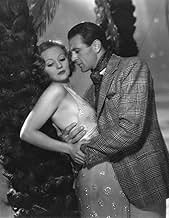
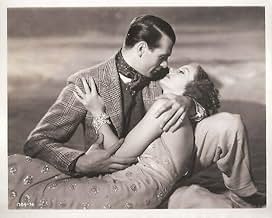
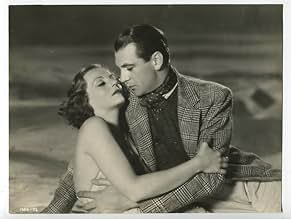
In response to Laughton's cruelty, Tallulah runs off and is rescued by dashing young Gary Cooper as she runs amok in an Arabian town. He falls for her but she rebuffs his advances because she's a decent woman. However, she does kiss him and soon makes her escape back home. Soon afterward, Cooper reports to her home--it seems he's the officer who's replacing Grant. However, seeing that his nice commanding officer is married to a woman that let him kiss her, he assumed (incorrectly) that Talullah is a cheat--not understanding that Laughton is certifiably insane.
Talullah comes on board the submarine that will be sailing later that night in order to try to explain herself to Cooper. However, when Laughton sees she's on board, he orders the boat to sail immediately, as he sees an insane chance to punish the two "lovers"--leading to a very exciting final portion of the film. In fact, from then on, the film is at its best. The final moments aboard the ship were exceptionally well done and Laughton's final scene quite memorable. Since this film was made "Pre-Production Code", the scene is particularly graphic and exciting.
Overall, although the film starts a bit slowly, it's a dandy film that combines a naval film with a psychological drama. I must admit that the final five minutes or so of the film seemed a tad awkward, but what proceeded was exciting and it's a heck of a good film.
The film begins with Charles Laughton married to Tallulah Bankhead. It seems their friends have been talking about Tallulah's behaviors. Common knowledge is that she is cheating on poor old Charlie, though it turns out this is not true. Laughten is exceptionally paranoid and delights in playing like the slighted husband by starting these rumors himself! Later, he accuses one of his officers (Cary Grant) of committing adultery with Tallulah and delights in destroying Grant's career--even though the man did nothing inappropriate.
In response to Laughton's cruelty, Tallulah runs off and is rescued by dashing young Gary Cooper as she runs amok in an Arabian town. He falls for her but she rebuffs his advances because she's a decent woman. However, she does kiss him and soon makes her escape back home. Soon afterward, Cooper reports to her home--it seems he's the officer who's replacing Grant. However, seeing that his nice commanding officer is married to a woman that let him kiss her, he assumed (incorrectly) that Talullah is a cheat--not understanding that Laughton is certifiably insane.
Talullah comes on board the submarine that will be sailing later that night in order to try to explain herself to Cooper. However, when Laughton sees she's on board, he orders the boat to sail immediately, as he sees an insane chance to punish the two "lovers"--leading to a very exciting final portion of the film. In fact, from then on, the film is at its best. The final moments aboard the ship were exceptionally well done and Laughton's final scene quite memorable. Since this film was made "Pre-Production Code", the scene is particularly graphic and exciting.
Overall, although the film starts a bit slowly, it's a dandy film that combines a naval film with a psychological drama. I must admit that the final five minutes or so of the film seemed a tad awkward, but what proceeded was exciting and it's a heck of a good film.
Tallulah Bankhead takes charge in intense melodrama
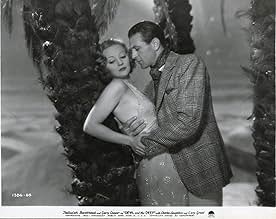
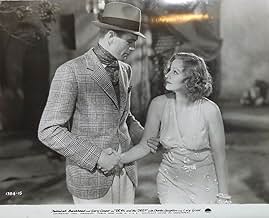
Paramount, at the height of its sophistication in the early 30's, could recycle its sets from MOROCCO and fashion a stylish production out of a passable triangle melodrama. Unfulfilled wife Tallulah Bankhead --frustrated at home, humiliated in front of her social set by her pathologically jealous husband -- stumbles into an Arab marketplace crowded with whirling dervishes, and into the arms of Gary Cooper for a romantic liaison under the desert stars. Conflicts ensue, of course, and then all three find themselves on a crippled submarine.
Viewers who know Tallulah Bankhead only from her caricatured role in LIFEBOAT will be startled by her intensity and bruised glamour: slouching in Travis Banton gowns, she looks sometimes like Garbo, sometimes like "Margo Channing". Meanwhile, she gives a crash course in how to hold a melodrama together, commanding every scene, inflecting every line with subtle nuances. When she must deal with menacing Charles Laughton, the air between them vibrates with tension. Laughton [billed as "the eminent English character actor"] does his share as well, but he seems mannered in a familiar way, a dry run for his Captain Bligh.
Only the radiant young Cary Grant in a dazzling naval uniform steals attention from the leading lady in a brief appearance. Gary Cooper, though persuasive as the romantic hero, soon gets submerged in a disappointingly shallow character.
The eye is seduced by cameraman Charles Lang's repertoire of shadows, the heart is stirred by a star performance, but in the end the head may resist: the terse dialogue tries for Hemingway but remains stubbornly pedestrian and remarkably humorless: the script owes its sole laugh to Bankhead's line reading while buying a billiard cue. The devil is in the dialogue!
Viewers who know Tallulah Bankhead only from her caricatured role in LIFEBOAT will be startled by her intensity and bruised glamour: slouching in Travis Banton gowns, she looks sometimes like Garbo, sometimes like "Margo Channing". Meanwhile, she gives a crash course in how to hold a melodrama together, commanding every scene, inflecting every line with subtle nuances. When she must deal with menacing Charles Laughton, the air between them vibrates with tension. Laughton [billed as "the eminent English character actor"] does his share as well, but he seems mannered in a familiar way, a dry run for his Captain Bligh.
Only the radiant young Cary Grant in a dazzling naval uniform steals attention from the leading lady in a brief appearance. Gary Cooper, though persuasive as the romantic hero, soon gets submerged in a disappointingly shallow character.
The eye is seduced by cameraman Charles Lang's repertoire of shadows, the heart is stirred by a star performance, but in the end the head may resist: the terse dialogue tries for Hemingway but remains stubbornly pedestrian and remarkably humorless: the script owes its sole laugh to Bankhead's line reading while buying a billiard cue. The devil is in the dialogue!
big stars and toy boats
Devil and the Deep contains a fascinating performance from Charles Laughton as a submarine commander going nuts with the conviction that his sultry wife (Tallulah Bankhead) is cheating on him first with Cary Grant and then Gary Cooper.
The physical production features a claustrophobic studio recreation of a North African town (reminiscent of Von Sternberg's "Morocco" but without the dazzling shadow play), a romantic scene in a starlit desert oasis (said to have been filmed in an actual desert but looking exactly like a painted backdrop) and finally the laughable spectacle of toy boats bobbing around in a tank of water that we're supposed to believe is the Mediterranean.
Bankhead, like other female stars of that historical moment, is made up and coiffed to look like a Garbo clone. The style suits her without overwhelming her innate, distinctive qualities of voice and manner. Laughton's performance prefigures his later Captain Bligh in Mutiny on the Bounty and Quasimodo in The Hunchback of Notre Dame. I prefer his work here to his Bligh, which was sometimes too messily overwrought. This is also the second 1932 film (the other being "Payment Deferred") in which he plays dementia with mad laughter. Cooper is wooden and awkward (and handsome) as usual and Grant does well in a smallish supporting role.
The physical production features a claustrophobic studio recreation of a North African town (reminiscent of Von Sternberg's "Morocco" but without the dazzling shadow play), a romantic scene in a starlit desert oasis (said to have been filmed in an actual desert but looking exactly like a painted backdrop) and finally the laughable spectacle of toy boats bobbing around in a tank of water that we're supposed to believe is the Mediterranean.
Bankhead, like other female stars of that historical moment, is made up and coiffed to look like a Garbo clone. The style suits her without overwhelming her innate, distinctive qualities of voice and manner. Laughton's performance prefigures his later Captain Bligh in Mutiny on the Bounty and Quasimodo in The Hunchback of Notre Dame. I prefer his work here to his Bligh, which was sometimes too messily overwrought. This is also the second 1932 film (the other being "Payment Deferred") in which he plays dementia with mad laughter. Cooper is wooden and awkward (and handsome) as usual and Grant does well in a smallish supporting role.
A devillish affair
'Devil and the Deep's' biggest draw was the cast. The most interesting being Charles Laughton in his first American film. Have also liked Tallulah Bankhead in other films, one of her best being 'Lifeboat', and Gary Cooper gave a lot of great performances later on when his acting style had fully developed ('High Noon', 'The Westerner' etc). So did Cary Grant. Did like the premise, which did have potential to be quite tense and intriguing and also the creepy-sounding title.
It is a shame that 'Devil and the Deep' isn't better known. For all its faults, and it has them, it is a nice, interesting film that sees most of the cast on great form (the cast are not just the main interest point of 'Devil and the Deep' but also the primary reason as to why the film just about works) and does a lot right. Not everything works and the film could have done more with its subject, though it doesn't waste it, but the flaws are outweighed by the good things.
A lot works. The best asset is the cast. Bankhead is intensely riveting in her role without going too over the top. Laughton is genuinely menacing and looked as though he was enjoying himself, the chemistry between him and Bankhead has the right amount of intensity needed. Grant is in a very early role and acquits himself very well and is charming and suave, something that he specialised in throughout his career and refined not long after this. It is nicely directed by Marion Gering (an unfamiliar director to me), especially towards the end and in the interactions between Bankhead and Laughton.
Production values are generally not too elaborate while never looking cheap, the atmospheric and suitably claustrophobic photography and eerie lighting coming off best. The music is suitably haunting without being intrusive while not having much that is distinguished. The script is patchy and undernourished at times but generally is intriguing and to me it didn't get too over-heated. The story is tautly paced relatively and carried by its atmosphere, the tense climax stands out.
Sadly, Cooper really isn't at his best. Actually thought that he was very weak and wooden and he certainly went on to much better things. To be fair though, he had a very shallow and dull character and awfully clunky dialogue (this was where the script was patchy) to work with.
It was a little bland at the start and the film changes gear very abruptly and the second half generally felt incomplete, hence some choppiness.
Bottom line, pretty good and deserving to be better known. 7/10
It is a shame that 'Devil and the Deep' isn't better known. For all its faults, and it has them, it is a nice, interesting film that sees most of the cast on great form (the cast are not just the main interest point of 'Devil and the Deep' but also the primary reason as to why the film just about works) and does a lot right. Not everything works and the film could have done more with its subject, though it doesn't waste it, but the flaws are outweighed by the good things.
A lot works. The best asset is the cast. Bankhead is intensely riveting in her role without going too over the top. Laughton is genuinely menacing and looked as though he was enjoying himself, the chemistry between him and Bankhead has the right amount of intensity needed. Grant is in a very early role and acquits himself very well and is charming and suave, something that he specialised in throughout his career and refined not long after this. It is nicely directed by Marion Gering (an unfamiliar director to me), especially towards the end and in the interactions between Bankhead and Laughton.
Production values are generally not too elaborate while never looking cheap, the atmospheric and suitably claustrophobic photography and eerie lighting coming off best. The music is suitably haunting without being intrusive while not having much that is distinguished. The script is patchy and undernourished at times but generally is intriguing and to me it didn't get too over-heated. The story is tautly paced relatively and carried by its atmosphere, the tense climax stands out.
Sadly, Cooper really isn't at his best. Actually thought that he was very weak and wooden and he certainly went on to much better things. To be fair though, he had a very shallow and dull character and awfully clunky dialogue (this was where the script was patchy) to work with.
It was a little bland at the start and the film changes gear very abruptly and the second half generally felt incomplete, hence some choppiness.
Bottom line, pretty good and deserving to be better known. 7/10
And Starring Tallulah Bankhead
Bankhead made a handful of silent films before she became the rage of the London stage in the late 20s. Back in Hollywood, she made 7 films in 1931 and 1932. The Devil and the Deep was the penultimate one. She was not a success. It would be more than a decade before she would "face the cameras" again in 1944's brilliant Lifeboat for Alfred HItchcock.
The few of these early talkies I've seen have been fascinating because Bankhead was a STAR, and no one was quite like her. She had the allure of Garbo or Dietrich, but she was closer to Davis or Crawford or Constance Bennett in her temperament. In Faithless, Tarnished Lady, The Cheat, and Devil and the Deep she plays basically the same character: the woman who goes wrong but is saved in the end. Bankhead suffered in her 30s films from lousy directors. In Devil and the Deep, Marion Gering mis-directs by letting Charles Laughton ham it up as the husband, while Gary Cooper as the lover is boring. Bankhead holds center stage and is really very good in this VERY strange film.
It's a submarine movie set apparently in Algiers or some such place. She is the commander's bored wife. He's nuts. After her fling with Cary Grant (yes it's quite the cast), Laughton has him transferred. Cooper's fate is worse since they're all aboard the sub when all hell breaks loose.
Bankhead looks great in stylish clothing and slinks about the house and the club , the streets (amid whirling dervishes), and on the sub. Laughton is menacing and his final scene is memorable. But they're not a very believable couple. Cooper is oddly boring and is given awful lines to say. Grant, in a small part, is, well, Cary Grant. Paul Porcasi is the shop keeper, Henry Kolker and Juliette Compton are the catty club denizens. One problem is that the film is underlit so it's hard to see a lot of detail. Amusing scenes with Cooper and Bankhead staring up at the stars, buying cheap perfume, and buying a pool cue.
With a better director and better writers, this could have been a blockbuster. But it's neat to see Bankhead in her prime, before she became a campy professional star.
The few of these early talkies I've seen have been fascinating because Bankhead was a STAR, and no one was quite like her. She had the allure of Garbo or Dietrich, but she was closer to Davis or Crawford or Constance Bennett in her temperament. In Faithless, Tarnished Lady, The Cheat, and Devil and the Deep she plays basically the same character: the woman who goes wrong but is saved in the end. Bankhead suffered in her 30s films from lousy directors. In Devil and the Deep, Marion Gering mis-directs by letting Charles Laughton ham it up as the husband, while Gary Cooper as the lover is boring. Bankhead holds center stage and is really very good in this VERY strange film.
It's a submarine movie set apparently in Algiers or some such place. She is the commander's bored wife. He's nuts. After her fling with Cary Grant (yes it's quite the cast), Laughton has him transferred. Cooper's fate is worse since they're all aboard the sub when all hell breaks loose.
Bankhead looks great in stylish clothing and slinks about the house and the club , the streets (amid whirling dervishes), and on the sub. Laughton is menacing and his final scene is memorable. But they're not a very believable couple. Cooper is oddly boring and is given awful lines to say. Grant, in a small part, is, well, Cary Grant. Paul Porcasi is the shop keeper, Henry Kolker and Juliette Compton are the catty club denizens. One problem is that the film is underlit so it's hard to see a lot of detail. Amusing scenes with Cooper and Bankhead staring up at the stars, buying cheap perfume, and buying a pool cue.
With a better director and better writers, this could have been a blockbuster. But it's neat to see Bankhead in her prime, before she became a campy professional star.


Did you know
- TriviaAt no point is the navy that Charles Laughton, Cary Grant and Gary Cooper belong to named. That the officers are English and others American would not make sense in the British or U.S. navy, but no flags or emblems are seen, and their uniforms belong to no known country on earth.
- Quotes
Cmdr. Charles Sturm: [to Lt Sempter] It must be a happy thing to look like you do. I suppose women love you. I've never had that. Must be a happy thing.
- Crazy creditsAnd introducing CHARLES LAUGHTON The eminent English character actor in the role of THE COMMANDER
- ConnectionsFeatured in MsMojo: Top 10 Biggest Old Hollywood Scandals (2023)
- How long is Devil and the Deep?Powered by Alexa
Details
- Release date
- Country of origin
- Language
- Also known as
- Pod žarkim sunca Ekvatora
- Filming locations
- Production company
- See more company credits at IMDbPro
- Runtime
- 1h 18m(78 min)
- Color
- Aspect ratio
- 1.37 : 1
Contribute to this page
Suggest an edit or add missing content