IMDb RATING
6.3/10
5.9K
YOUR RATING


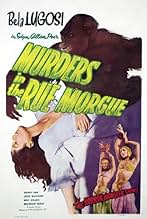
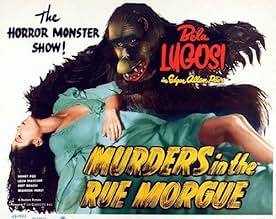
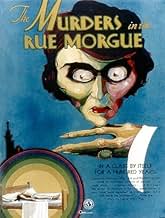
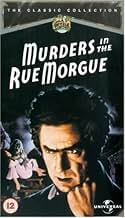
A mad scientist seeks to mingle human blood with that of an ape, and resorts to kidnapping women for his experiments.A mad scientist seeks to mingle human blood with that of an ape, and resorts to kidnapping women for his experiments.A mad scientist seeks to mingle human blood with that of an ape, and resorts to kidnapping women for his experiments.
- Awards
- 2 wins total



Leon Ames
- Pierre Dupin
- (as Leon Waycoff)


Ted Billings
- Sideshow Spectator
- (uncredited)

Herman Bing
- Franz Odenheimer
- (uncredited)

Joe Bonomo
- Gorilla
- (uncredited)

Agostino Borgato
- Alberto Montani
- (uncredited)

Iron Eyes Cody
- Indian at Sideshow
- (uncredited)

Christian J. Frank
- Gendarme Using Snuff
- (uncredited)

Charles Gemora
- Erik, the Gorilla
- (uncredited)
Harrison Greene
- Sideshow Barker
- (uncredited)

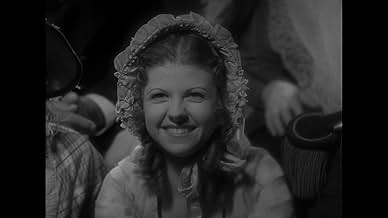
Charlotte Henry
- Blonde Girl in Sideshow Audience
- (uncredited)
6.35.9K
1
2
3
4
5
6
7
8
9
10
Featured reviews
Pre-Production Code Thriller!
"Murders In the Rue Morgue" was Universal's follow up for star Bela Lugosi after the huge success of "Dracula" (1931). He did appear in other films during this period but mostly in minor roles. In fact, in one of the worst career moves of his career, Bela had turned down the role of the monster in "Frankenstein" (1931).
This film made in 1932, two years before the introduction of the infamous Production Code, contains many situations that would have not been allowed under the Production Code. For example, even the suggestion of a liaison between an ape and a woman would have never been allowed and the clear identification of a prostitute likewise. It's probably why this film was not seen for many years.
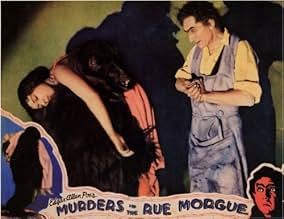
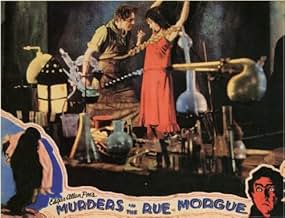
Lugosi, donning his mad scientist hat, plays the mysterious Dr. Mirakle who works in a carnival sideshow in 1845 Paris. He displays his man-like ape (actually it looks like a full grown chimpanzee) Erik while searching for a human female to presumably mate with the monster. One night pretty Camille L'Espanaye (Sidney Fox) and her beau, medical student Pierre Dupin (Leon Waycoff) visit the carnival and take in Dr. Mirakle's show. During the show, the ape is give the girl's bonnet and becomes obsessed with her.
Meanwhile we learn that Mirakle has been searching for the right blood match for his pet. We discover that two women have been murdered (offscreen) already. One dark night, Mirakle comes upon a "woman of the streets" (Arlene Francis) who has just witnessed the deaths of two "suitors" in a knife fight. The good doctor lures the poor wench to his laboratory where we witness his torture of her and her rather cold disposition of her corpse when she dies after she is injected with the ape's blood.
All the while Mirakle has kept his eye on the comely Camille. Then one night he sends the ape to Camille's room and..............
The film is well directed by Robert Florey who utilizes Universal's dark fog filled sets to great effect. Lugosi is quite terrifying in this role. Although he did get teamed with Boris Karloff in the mid thirties, he never achieved the heights he should have at Universal. With his personal off screen problems well documented, he made a number of poor choices in his movie roles. During the period when his star should have been rising he kept appearing in cheap poverty row features and serials which did little to advance his career.
Others in the cast include Bert Roach as Paul, Pierre's friend, Brandon Hurst as the Prefect of Police and D'Arcy Corrigan as the Morgue Keeper.
A very young John Huston contributes some additional dialog for the story. Leon Waycoff became Leon Ames and enjoyed a lengthy career as a character actor.
One of Lugosi's best.
This film made in 1932, two years before the introduction of the infamous Production Code, contains many situations that would have not been allowed under the Production Code. For example, even the suggestion of a liaison between an ape and a woman would have never been allowed and the clear identification of a prostitute likewise. It's probably why this film was not seen for many years.
Lugosi, donning his mad scientist hat, plays the mysterious Dr. Mirakle who works in a carnival sideshow in 1845 Paris. He displays his man-like ape (actually it looks like a full grown chimpanzee) Erik while searching for a human female to presumably mate with the monster. One night pretty Camille L'Espanaye (Sidney Fox) and her beau, medical student Pierre Dupin (Leon Waycoff) visit the carnival and take in Dr. Mirakle's show. During the show, the ape is give the girl's bonnet and becomes obsessed with her.
Meanwhile we learn that Mirakle has been searching for the right blood match for his pet. We discover that two women have been murdered (offscreen) already. One dark night, Mirakle comes upon a "woman of the streets" (Arlene Francis) who has just witnessed the deaths of two "suitors" in a knife fight. The good doctor lures the poor wench to his laboratory where we witness his torture of her and her rather cold disposition of her corpse when she dies after she is injected with the ape's blood.
All the while Mirakle has kept his eye on the comely Camille. Then one night he sends the ape to Camille's room and..............
The film is well directed by Robert Florey who utilizes Universal's dark fog filled sets to great effect. Lugosi is quite terrifying in this role. Although he did get teamed with Boris Karloff in the mid thirties, he never achieved the heights he should have at Universal. With his personal off screen problems well documented, he made a number of poor choices in his movie roles. During the period when his star should have been rising he kept appearing in cheap poverty row features and serials which did little to advance his career.
Others in the cast include Bert Roach as Paul, Pierre's friend, Brandon Hurst as the Prefect of Police and D'Arcy Corrigan as the Morgue Keeper.
A very young John Huston contributes some additional dialog for the story. Leon Waycoff became Leon Ames and enjoyed a lengthy career as a character actor.
One of Lugosi's best.
A U.S. look at French horror through a German lens
Much creepier than any mad scientist and his monkey movie has a right to be. Much of the credit must go to cinematographer Karl Freund (The Last Laugh, Metropolis) who gives the movie the feel of a German horror film. Charles D. Hall's distorted sets also help make this often resemble a sound remake of "The Cabinet Of Dr. Caligari." The script has a very European flavor as well with lines that sometimes sound as if they were translated from another language. The ape is more convincing than all those later films because of quick cutting between an actual ape's snarling face and a man in a suit, the latter shown not enough to destroy the illusion. At one point stop motion is used to show the ape carrying a woman across the top of buildings a year before "King Kong!" There are three failings, however. Near the end is a long attempt at humor concerning French bureaucracy that hurts the build-up of tension. The other two failings come from the lab. They lay over one sequence a fog effect with the fog blowing at hurricane strength despite no apparent wind anywhere else in the shot. And at the end is a very obvious matte shot with lots of squiggly lines around the characters.
Simian blood, the better to stimulate the mating urge
Murders In The Rue Morgue casts Bela Lugosi as one of the many mad scientists he played in his long career. To make ends meet he has a carnival act, but it's really a blind for some gruesome experiments involving sex. InterSpecies sex that is.
If Charles Darwin is correct and man is related to the other primates than it follows, reasons Bela apes should be looking to mate with man given the proper stimulation. So for his horny gorilla he kidnaps women and injects them with simian blood. In the Paris of 1845 Bela's experiments are working pretty good as his ape is let loose on these injected women and the young women of Paris are in danger. Women of all classes as streetwalker Arlene Francis discovers to her tragic regret.
King Kong never eyed Fay Wray with more lust than Bela's simian had when he was checking out Sidney Fox. In fact King Kong should prove the hypothesis Lugosi was advancing. The climax of Murders At The Rue Morgue is very similar to King Kong with Leon Ames playing the Bruce Cabot part.
Some really great sets and beautiful cinematography are the main attraction of Murders At The Rue Morgue which bares only the slightest resemblance to Edgar Allan Poe's story. Lugosi is fabulously sinister and lustful, he's checking out Fox and the others himself. It's not Dracula for him, but what is?
If Charles Darwin is correct and man is related to the other primates than it follows, reasons Bela apes should be looking to mate with man given the proper stimulation. So for his horny gorilla he kidnaps women and injects them with simian blood. In the Paris of 1845 Bela's experiments are working pretty good as his ape is let loose on these injected women and the young women of Paris are in danger. Women of all classes as streetwalker Arlene Francis discovers to her tragic regret.
King Kong never eyed Fay Wray with more lust than Bela's simian had when he was checking out Sidney Fox. In fact King Kong should prove the hypothesis Lugosi was advancing. The climax of Murders At The Rue Morgue is very similar to King Kong with Leon Ames playing the Bruce Cabot part.
Some really great sets and beautiful cinematography are the main attraction of Murders At The Rue Morgue which bares only the slightest resemblance to Edgar Allan Poe's story. Lugosi is fabulously sinister and lustful, he's checking out Fox and the others himself. It's not Dracula for him, but what is?
An appreciated but underrated Universal and Lugosi short triumph
Murders in the Rue Morgue (1932)
King Kong was released by RKO in 1933, a story of an ape captured by white hairless apes and brought to a foreign land. And this is exactly the beginning of the 1932 Rue Morgue, as Bela Lugosi, playing Dr. Mirakle, appears as flamboyant sideshow impresario with an ape in a cage. His trick (if it is one) is knowing how to translate ape talk to English (or French, maybe, since we are in Paris). His point is that the apes are us, that evolution is true. "Can you understand what he says? Or have you forgotten?" Not the most honorable spokesman for science, no doubt, but he is a mad scientist, and is setting out to create some kind of unexplained human/ape hybrid.
The movie is filled with dramatic innovations, and a very high technical standard (for Universal, a minor studio player until this time). And the transfer to DVD is terrific. Ten minutes into the film, Lugosi breaks the fourth wall and looks into the camera to challenge the viewer to accept evolution and its consequences.. (The Scopes trial was 1925, so this is a hot topic.) Watch for the camera attached to the swing about 32 minutes in. There are echoes of Frankenstein (1931) with the madman and his doltish assistant, as well as the angry mobs. And there is Lugosi himself, with all the aura carrying over from his breakthrough in Dracula (also 1931).
The cinematography by Karl Freund is totally amazing. There are not astonishing tricks, just consistent, brilliant framing and lighting, scene after scene. (If only he had shot Dracula--oh, he did! Yes...check that out, too.) 1920s German Expressionist films find a true expression here (not Caligari, for sure, but a high water mark for American movies of the time). Simple things like shadows and angles, of course, but also moving camera in subtle ways (the camera falling slightly when approaching someone in a window, for example). Completely first rate.
It's common in these movies to have eccentric villains, grotesque monsters, and Gothic settings with wild special effects. And to have the common person as a balance to all this madness. These apply a little comic relief but in a silly way from our perspective. (The "common" person at the time in other movies was far more vivid and timeless, like Crawford or Cagney, but that would overwhelm the villains as well as the budget). In this case, one of the common folk is a resourceful doctor, and this search for the bad guy takes on a larger role than in the other monster movies.
The movie isn't a sparkling masterpiece. The acting throughout (even by Lugosi, really) isn't always spot on, but it works overall, and is consistent. There is a comic moment near the end (when we are most anxious for action) where the character have an argument in different languages, and it's so perky I'm assuming they felt they couldn't take it out, but it doesn't advance the plot. It does deal with Logosi's characteristic odd accent. And for fun, there is an anachronism, half an hour in, when a bicycle rides through the little town, decades before they were made like that.
It won't matter if you don't believe in evolution. The movie plays loose with the concept, and Dr. Mirakle says at one point, with his beady eyes: "Do you think your little candle can outshine the truth?"
King Kong was released by RKO in 1933, a story of an ape captured by white hairless apes and brought to a foreign land. And this is exactly the beginning of the 1932 Rue Morgue, as Bela Lugosi, playing Dr. Mirakle, appears as flamboyant sideshow impresario with an ape in a cage. His trick (if it is one) is knowing how to translate ape talk to English (or French, maybe, since we are in Paris). His point is that the apes are us, that evolution is true. "Can you understand what he says? Or have you forgotten?" Not the most honorable spokesman for science, no doubt, but he is a mad scientist, and is setting out to create some kind of unexplained human/ape hybrid.
The movie is filled with dramatic innovations, and a very high technical standard (for Universal, a minor studio player until this time). And the transfer to DVD is terrific. Ten minutes into the film, Lugosi breaks the fourth wall and looks into the camera to challenge the viewer to accept evolution and its consequences.. (The Scopes trial was 1925, so this is a hot topic.) Watch for the camera attached to the swing about 32 minutes in. There are echoes of Frankenstein (1931) with the madman and his doltish assistant, as well as the angry mobs. And there is Lugosi himself, with all the aura carrying over from his breakthrough in Dracula (also 1931).
The cinematography by Karl Freund is totally amazing. There are not astonishing tricks, just consistent, brilliant framing and lighting, scene after scene. (If only he had shot Dracula--oh, he did! Yes...check that out, too.) 1920s German Expressionist films find a true expression here (not Caligari, for sure, but a high water mark for American movies of the time). Simple things like shadows and angles, of course, but also moving camera in subtle ways (the camera falling slightly when approaching someone in a window, for example). Completely first rate.
It's common in these movies to have eccentric villains, grotesque monsters, and Gothic settings with wild special effects. And to have the common person as a balance to all this madness. These apply a little comic relief but in a silly way from our perspective. (The "common" person at the time in other movies was far more vivid and timeless, like Crawford or Cagney, but that would overwhelm the villains as well as the budget). In this case, one of the common folk is a resourceful doctor, and this search for the bad guy takes on a larger role than in the other monster movies.
The movie isn't a sparkling masterpiece. The acting throughout (even by Lugosi, really) isn't always spot on, but it works overall, and is consistent. There is a comic moment near the end (when we are most anxious for action) where the character have an argument in different languages, and it's so perky I'm assuming they felt they couldn't take it out, but it doesn't advance the plot. It does deal with Logosi's characteristic odd accent. And for fun, there is an anachronism, half an hour in, when a bicycle rides through the little town, decades before they were made like that.
It won't matter if you don't believe in evolution. The movie plays loose with the concept, and Dr. Mirakle says at one point, with his beady eyes: "Do you think your little candle can outshine the truth?"
Edgar Allan Poe Meets Bela Lugosi
A crazed scientist commits vile MURDERS IN THE RUE MORGUE to promote his theories concerning the relationship between human & ape biology.
Bela Lugosi dominates this rather fascinating little foray into terror, his mad mesmerizing eyes & theatrical gestures a natural complement to the film's Grand Guignol qualities. Listening to the world of weariness in his voice as he delivers a line like `Will my search never end?' makes only more poignant this fine actor's eventual descent into drug addicted obscurity.
Pert, pretty little Sidney Fox -she actually receives top billing over Lugosi - gives a pleasing performance as the unfortunate choice of the ape's interest (the plot is never really clear as to what, exactly, Lugosi is attempting to accomplish with his gruesome experiments). Leon Waycoff is hopeless as a romantic lead, but with an eventual name change to Leon Ames, he was to become one of Hollywood's most durable character actors.
The supporting cast is quite good: plump Bert Roach as a nervous medical student; sepulchral D'Arcy Corrigan as a sardonic morgue keeper; Arlene Francis, who has the dubious honor of featuring in one of Universal's most horrific murder scenes; and Noble Johnson, important Black actor & silent film star, here performing in whiteface (as he often did) as Lugosi's mute henchman.
Movie mavens will spot some familiar faces in unbilled roles: Harry Holman as Miss Fox's silly, obese landlord; Herman Bing, Torben Meyer & Agostino Borgato as three ear-witnesses to one of the murders; Tempe Pigott as an old crone with very bad teeth; and Charlotte Henry as a lovely young lady.
Based somewhat loosely on the classic detective story by Edgar Allan Poe, the film also owes much in plot to Leroux' The Phantom of the Opera and in style to Wiene's THE CABINET OF DR. CALIGARI. Karl Freund's cinematography is first rate, as is the expressionistic set design by Herman Rosse, with buildings tilted or leaning at crazed angles. The contribution of master makeup artist Jack Pierce is also evident.
Bela Lugosi dominates this rather fascinating little foray into terror, his mad mesmerizing eyes & theatrical gestures a natural complement to the film's Grand Guignol qualities. Listening to the world of weariness in his voice as he delivers a line like `Will my search never end?' makes only more poignant this fine actor's eventual descent into drug addicted obscurity.
Pert, pretty little Sidney Fox -she actually receives top billing over Lugosi - gives a pleasing performance as the unfortunate choice of the ape's interest (the plot is never really clear as to what, exactly, Lugosi is attempting to accomplish with his gruesome experiments). Leon Waycoff is hopeless as a romantic lead, but with an eventual name change to Leon Ames, he was to become one of Hollywood's most durable character actors.
The supporting cast is quite good: plump Bert Roach as a nervous medical student; sepulchral D'Arcy Corrigan as a sardonic morgue keeper; Arlene Francis, who has the dubious honor of featuring in one of Universal's most horrific murder scenes; and Noble Johnson, important Black actor & silent film star, here performing in whiteface (as he often did) as Lugosi's mute henchman.
Movie mavens will spot some familiar faces in unbilled roles: Harry Holman as Miss Fox's silly, obese landlord; Herman Bing, Torben Meyer & Agostino Borgato as three ear-witnesses to one of the murders; Tempe Pigott as an old crone with very bad teeth; and Charlotte Henry as a lovely young lady.
Based somewhat loosely on the classic detective story by Edgar Allan Poe, the film also owes much in plot to Leroux' The Phantom of the Opera and in style to Wiene's THE CABINET OF DR. CALIGARI. Karl Freund's cinematography is first rate, as is the expressionistic set design by Herman Rosse, with buildings tilted or leaning at crazed angles. The contribution of master makeup artist Jack Pierce is also evident.


Did you know
- TriviaMany censors cut parts of the death scenes of the woman (Arlene Francis) of the streets - eliminating her stabbing and being tied to the cross beams.
- GoofsIn many scenes, the close-up of a chimpanzee is used for the gorilla.
- Quotes
Dr. Mirakle: [Responding to an audience member who has accused him of heresy] Heresy? Do they still burn men for heresy? Then burn me monsieur, light the fire! Do you think your little candle will outshine the flame of truth?
- Crazy creditsAt the end of the film, the cast list is shown again with the heading, "A GOOD CAST IS WORTH REPEATING...."
- Alternate versionsWhen originally released theatrically in the UK, the BBFC made cuts to secure a 'A' rating. All cuts were waived in 2001 when the film was granted a '12' certificate for home video.
- ConnectionsEdited into Mondo Lugosi - A Vampire's Scrapbook (1987)
Details
- Release date
- Country of origin
- Languages
- Also known as
- Ubistva u ulici Morg
- Filming locations
- Production company
- See more company credits at IMDbPro
Box office
- Budget
- $190,000 (estimated)
- Runtime
- 1h 1m(61 min)
- Color
- Aspect ratio
- 1.37 : 1
Contribute to this page
Suggest an edit or add missing content