IMDb RATING
6.4/10
2.1K
YOUR RATING


A torch singer becomes a farmer's mail-order bride.A torch singer becomes a farmer's mail-order bride.A torch singer becomes a farmer's mail-order bride.
- Director
- Writers
- Stars
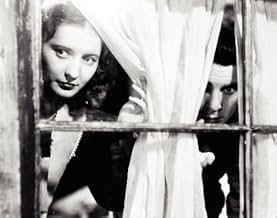
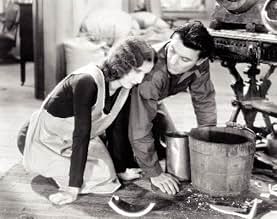
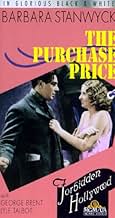


Mae Busch
- Queenie - Girl on Train
- (uncredited)
Nick Copeland
- Skins' Pal at Shivaree
- (uncredited)

Mike Donlin
- Tom Buchanan - Man at Shivaree
- (uncredited)
Harrison Greene
- Man in Hotel Lobby
- (uncredited)

Crauford Kent
- A.C. Peters - The Banker
- (uncredited)

Matt McHugh
- Waco - Fields' Henchman
- (uncredited)
John 'Skins' Miller
- Skins - The Accordion Player
- (uncredited)

Carlyle Moore Jr.
- Hotel Desk Clerk
- (uncredited)

Edmund Mortimer
- Dance Extra
- (uncredited)

Henry Otho
- Extra in Beer Hall and at Shivaree
- (uncredited)
- Director
- Writers
- All cast & crew
- Production, box office & more at IMDbPro
6.42K
1
2
3
4
5
6
7
8
9
10
Featured reviews
Stanwyck's in It, So You Know It's at Least Worth Watching
The appeal of this somewhat run-of-the-mill film is Barbara Stanwyck in an early display of her mega-watt star power and her ability to turn mediocre material into something special.
Her character doesn't make much sense: a nightclub singer from the city who wants to get away from the bootlegger boyfriend hounding her and so agrees to an arranged marriage with a farmer up in the wilds of North Dakota! The bootlegger (played by Lyle Talbot) isn't threatening or abusive, so one wonders why Stanwyck needs to go to such great lengths to avoid him -- keep wondering, because the movie never explains it. But if you can swallow that, then you can easily swallow the fact that this urban good-time gal seems to know all about how to run a farm.
Which brings me back to Stanwyck. The movie's premise isn't remotely plausible, but Stanwyck somehow makes it so through the confidence of her performance. I really think she could make anything worth sitting through just for the pleasure of watching her.
The film does provide an interesting look at what farm life in the early days of the 1930s was like, a lifestyle I've only seen recreated in more modern-day movies.
Grade: B-
Her character doesn't make much sense: a nightclub singer from the city who wants to get away from the bootlegger boyfriend hounding her and so agrees to an arranged marriage with a farmer up in the wilds of North Dakota! The bootlegger (played by Lyle Talbot) isn't threatening or abusive, so one wonders why Stanwyck needs to go to such great lengths to avoid him -- keep wondering, because the movie never explains it. But if you can swallow that, then you can easily swallow the fact that this urban good-time gal seems to know all about how to run a farm.
Which brings me back to Stanwyck. The movie's premise isn't remotely plausible, but Stanwyck somehow makes it so through the confidence of her performance. I really think she could make anything worth sitting through just for the pleasure of watching her.
The film does provide an interesting look at what farm life in the early days of the 1930s was like, a lifestyle I've only seen recreated in more modern-day movies.
Grade: B-
kind of liked it
Sometimes I think you just have to be in the mood for certain films. This may have been one of those times. "The Purchase Price" from 1932, largely thanks to Barbara Stanwyck, is actually a very sweet film.
Stanwyck plays Joan, a torch singer, unhappy with her present life and the racketeer, Eddie Fields (Lyle Talbot) with whom she's involved. When she finds out that someone has used her photo and sent it off to be a mail-order bride, Joan decides to show up in person and takes off.
She ends up in farm country with Jim Gilson (George Brent) who's in debt up to his eyebrows. However, over the years, he has developed an excellent grain seed - if he can stave off the creditors until the next planting season, he'll be okay.
To Joan's credit, she settles in, determined to make him a good wife and to be a good neighbor, and she falls in love with Jim. When her ex-beau shows up, Jim jumps to some wrong conclusions.
Barbara Stanwyck is great in this, giving a warm, sincere performance. She is glamorous in the first few scenes (though boy, she can't sing), and she remains sexy and pretty even plainly dressed on the farm, causing a lot of men to notice her and make dumb old Jim jealous.
This is a different kind of role for George Brent, who soon would be well-dressed, mustached, and sophisticated as he played opposite Bette Davis. Here he's an oaf.
The movie is short and moves quickly. Stanwyck's performance helps give a freshness to a story that was old even back in 1932.
Stanwyck plays Joan, a torch singer, unhappy with her present life and the racketeer, Eddie Fields (Lyle Talbot) with whom she's involved. When she finds out that someone has used her photo and sent it off to be a mail-order bride, Joan decides to show up in person and takes off.
She ends up in farm country with Jim Gilson (George Brent) who's in debt up to his eyebrows. However, over the years, he has developed an excellent grain seed - if he can stave off the creditors until the next planting season, he'll be okay.
To Joan's credit, she settles in, determined to make him a good wife and to be a good neighbor, and she falls in love with Jim. When her ex-beau shows up, Jim jumps to some wrong conclusions.
Barbara Stanwyck is great in this, giving a warm, sincere performance. She is glamorous in the first few scenes (though boy, she can't sing), and she remains sexy and pretty even plainly dressed on the farm, causing a lot of men to notice her and make dumb old Jim jealous.
This is a different kind of role for George Brent, who soon would be well-dressed, mustached, and sophisticated as he played opposite Bette Davis. Here he's an oaf.
The movie is short and moves quickly. Stanwyck's performance helps give a freshness to a story that was old even back in 1932.
Unusual city girl/country boy drama
This peculiar but interesting drama has Barbara Stanwyck as a weary nightclub torch singer with a "who cares?" attitude. To escape her underworld boyfriend, she decides to hide out in the bleak plains of North Dakota as a mail-order bride. As her shy farmer husband, the normally debonair George Brent is almost unrecognizable in a pair of overalls, but gives a sensitive characterization. The bulk of the plot follows the growing feeling between the reserved country mouse' and the tough city mouse', complicated by several villains. Tough guy director William Wellman keeps things moving at a clip, and uses his low budget wisely to stage several good set-pieces, including a drunken shivaree for the happy couple. In the supporting cast, Leila Bennett stands out as a plain-talking maid.
Interesting roles for Stanwyck and Brent in offbeat saga...
BARBARA STANWYCK is a city gal fed up with the sophisticated life of a nightclub singer and her lecherous boyfriend (LYLE TALBOT) and who sees an "escape" by fleeing to the country for a more bucolic existence and more wholesome environment. She gets more than she bargains for when her mail order husband turns out to be shy farmer (GEORGE BRENT), whom she at first repulses when he comes on too strong with his lovemaking and then spends the rest of the film trying to make it up to him.
The unusual domestic drama gives both Stanwyck and Brent offbeat roles which they handle beautifully. Brent is a surprising revelation as the shy, bumbling country guy with no understanding of Stanwyck's softer feelings and holding off loving her until the final reel, after the two of them have to save their crop of wheat from burning to the ground.
Only weak point in the story is the overdone nature of the wild party scene shortly after their wedding and Stanwyck's reaction to the crudeness of the country bumpkins. It seems a bit of a stretch to believe the way this scene unfolds.
But otherwise, an interesting look at Stanwyck who excels in showing both sides of her character--tough and tender--and Brent, who is usually the more debonair, sophisticated man showing us another side of his personality (and with some nice touches of humor too) as the shy groom. They both get excellent support from LYLE TALBOT as "the other man" in a rather thankless role that he makes believable.
Well worth watching and nicely directed by William Wellman.
The unusual domestic drama gives both Stanwyck and Brent offbeat roles which they handle beautifully. Brent is a surprising revelation as the shy, bumbling country guy with no understanding of Stanwyck's softer feelings and holding off loving her until the final reel, after the two of them have to save their crop of wheat from burning to the ground.
Only weak point in the story is the overdone nature of the wild party scene shortly after their wedding and Stanwyck's reaction to the crudeness of the country bumpkins. It seems a bit of a stretch to believe the way this scene unfolds.
But otherwise, an interesting look at Stanwyck who excels in showing both sides of her character--tough and tender--and Brent, who is usually the more debonair, sophisticated man showing us another side of his personality (and with some nice touches of humor too) as the shy groom. They both get excellent support from LYLE TALBOT as "the other man" in a rather thankless role that he makes believable.
Well worth watching and nicely directed by William Wellman.
A precode with an odd setting
This film deals with Stanwyck, who works as a singer in New York. She has been working the nightclub circuit since she was a teenager and is romantically involved with the leader of the underground crime world. Fixture of the pre-code world, Lyle Talbot, portrays the underground kingpin. Because breaking up with such a powerful man, like Talbot, may prove to be difficult, Stanwyck opts to escape to Montreal. In Montreal, she resumes her career under a new name. Stanwyck is spotted by one of Talbot's henchmen. In lieu of returning to Talbot, Stanwyck hatches a scheme with the maid at her apartment building. It seems that the maid has been corresponding with a North Dakota farmer, George Brent, who is looking for a mail order bride. In one of her letters, the maid mails Stanwyck's picture instead of her own, because she finds the youthful Stanwyck more attractive than herself. Sensing the perfect plan, Stanwyck offers to pay the maid two month's worth of wages if she can go to North Dakota in her place. The maid agrees.
Stanwyck and Brent marry and soon it's Stanwyck's turn to learn about life on a farm during the Great Depression. On their wedding night, Brent tries to make advances on new wife Stanwyck to consummate their relationship, but she turns him down and forces him to sleep elsewhere. I know they're married and all, but I don't blame her, she literally just met and married him that same day. I imagine however, that sex probably comes with the territory as a mail order bride. But I digress.
For most of the film, Brent is aloof to Stanwyck and keeps his distance. She genuinely begins to embrace life on the farm and learns how to sew, cook, clean, etc. She is friendly with the neighbors and even helps a neighbor who has recently given birth. Stanwyck helps out with the baby and even instructs a young Anne Shirley how she can help her mother who is recuperating from the birth.
The main conflict in the film, aside from Brent's unhappiness with Stanwyck, is that he is broke and will lose his farm if he cannot pay his back bills. His saving grace however is that he owns a strain of wheat that grows well and is of high quality. He's sure to sell his wheat if he grows and harvests it. Brent and Stanwyck are finally on the same page and work together to save the farm.
This was an okay film, definitely not among one of Stanwyck's best. It definitely doesn't rank up there with my favorite Stanwyck pre-code, Ladies They Talk About. She gives the part her all, even though the plot is somewhat absurd. Brent is just there. He doesn't do much except give Stanwyck the silent treatment. But then this strong silent type was probably Brent's interpretation of a farmer of Scandinavian ancestry living on the Great Plains.
There were definitely some pre-code elements in the film, like Stanwyck walking around the bedroom clad in only a short slip and knee high stockings. She also lays a negligee out on the bed for George Brent to see and get excited, but he's mad at Stanwyck, and won't take the bait.
Stanwyck and Brent marry and soon it's Stanwyck's turn to learn about life on a farm during the Great Depression. On their wedding night, Brent tries to make advances on new wife Stanwyck to consummate their relationship, but she turns him down and forces him to sleep elsewhere. I know they're married and all, but I don't blame her, she literally just met and married him that same day. I imagine however, that sex probably comes with the territory as a mail order bride. But I digress.
For most of the film, Brent is aloof to Stanwyck and keeps his distance. She genuinely begins to embrace life on the farm and learns how to sew, cook, clean, etc. She is friendly with the neighbors and even helps a neighbor who has recently given birth. Stanwyck helps out with the baby and even instructs a young Anne Shirley how she can help her mother who is recuperating from the birth.
The main conflict in the film, aside from Brent's unhappiness with Stanwyck, is that he is broke and will lose his farm if he cannot pay his back bills. His saving grace however is that he owns a strain of wheat that grows well and is of high quality. He's sure to sell his wheat if he grows and harvests it. Brent and Stanwyck are finally on the same page and work together to save the farm.
This was an okay film, definitely not among one of Stanwyck's best. It definitely doesn't rank up there with my favorite Stanwyck pre-code, Ladies They Talk About. She gives the part her all, even though the plot is somewhat absurd. Brent is just there. He doesn't do much except give Stanwyck the silent treatment. But then this strong silent type was probably Brent's interpretation of a farmer of Scandinavian ancestry living on the Great Plains.
There were definitely some pre-code elements in the film, like Stanwyck walking around the bedroom clad in only a short slip and knee high stockings. She also lays a negligee out on the bed for George Brent to see and get excited, but he's mad at Stanwyck, and won't take the bait.


Did you know
- TriviaDuring the wheat-burning scene a stand-in was used instead of Barbara Stanwyck, but she didn't think the stand-in acted as the character so Stanwyck decided to play it herself. This resulted in her getting some burns on her legs, but she never complained.
- GoofsWhen Barbara Stanwyck gets off the train in North Dakota the terrain is very mountainous. North Dakota is on the Great Plains - very flat.
- Quotes
Eddie 'Ed' Fields: Ya daffy little tahmata, I'm bugs about ya. I'd marry ya myself, if I wasn't already married.
- ConnectionsFeatured in Barbara Stanwyck: Fire and Desire (1991)
- SoundtracksTake Me Away
(1932) (uncredited)
Music by Peter Tinturin
Lyrics by Sidney Clare and Charles Tobias
Played during the opening credits and at the end
Sung by Barbara Stanwyck at the nightclub
Played as background music often
- How long is The Purchase Price?Powered by Alexa
Details
Box office
- Budget
- $202,000 (estimated)
- Runtime
- 1h 8m(68 min)
- Color
- Sound mix
- Aspect ratio
- 1.37 : 1
Contribute to this page
Suggest an edit or add missing content