
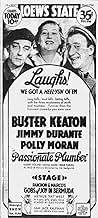
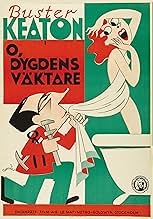
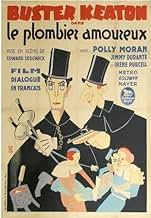
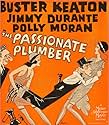
To make her lover jealous, a beautiful socialite passes off a bumbling plumber as her paramour.To make her lover jealous, a beautiful socialite passes off a bumbling plumber as her paramour.To make her lover jealous, a beautiful socialite passes off a bumbling plumber as her paramour.
- Awards
- 4 wins total


Edward Brophy
- Man Outside Beauty Parlor
- (uncredited)

Heinie Conklin
- Hunter with Rifle at Duel
- (uncredited)

Carl M. Leviness
- Casino Patron
- (uncredited)

Fred Malatesta
- Tony's Second
- (uncredited)

Rolfe Sedan
- Tony's Second
- (uncredited)

Stanhope Wheatcroft
- Casino Patron
- (uncredited)

Florence Wix
- Casino Patron
- (uncredited)
5.9663
1
2
3
4
5
6
7
8
9
10
Featured reviews
Cute, typical 1930s comedy
I thought this was a light, fun romp, 1930s style. Of course Keaton is the scene stealer in this one. I know he didn't like to do so much talking in these films, but I like his voice and delivery. I feel this film also utilizes his wide range of facial expressions more than the other MGM films. Jimmy Durante is as irritating as ever, but for some reason he hit it off with 1930s American audiences. His pairing with Keaton however, was a poor choice. I also feel Keaton did a remarkable job in this film as his life had begun to fall apart about this time. He could have made a successful go at these sort of screwball type films, but as an artist, he felt they were ridiculous and a waste of time. If MGM had let him take control of his own films, then we would have something revolutionary to watch. That being said, This one is enjoyable. Sure, it's not a classic or well thought out film, but it made me laugh, and I saw the old Keaton in there, just a little.
Laurel and Hardy type humour
I have never seen nor want to see a silent Buster Keaton film so came to this without any preconceptions or anti-talkie prejudice. To me this very much has the feel of a Laurel and Hardy picture. Well made silly gentle slapstick.
When you read that this was adapted from a stage play, you're right to approach with caution but you don't need to worry about this. It's not one of those awful filmed stage plays - this was properly adapted into a proper film with a cinematic rather than a theatric script.
If you're ok with the somewhat acquired taste of American 1930s comedy acting and like Stan and Ollie, you'll probably enjoy this. Unlike many early thirties comedies, the characters are, although not realistic, actually engaging. You're interested in them, you want to know what happens to them. So often that acting style creates characters so unbelievable that you can't accept them as real people. The protagonists here however, like you find in L&H films, manage that perfect balance of absurdly with likeability.
Buster Keaton purists don't like this - it's not their Buster! Like when The Marx Brothers went to MGM and became what MGM wanted them to be, Buster Keaton became Thalberg's neutered befuddled pet. I've no problem with that. As a stand alone picture, to someone who doesn't watch silent movies, this Buster is perfect for a film like this.
His co-star is the acclaimed stage actress Irene Purcell and like Keaton, she is perfect in this too. It was, and still is rare to find an actress in the movies who is allowed be genuinely as funny as the male comedian, not just his pretty foil. She completely captures your attention and that's not just because she's so stunningly and staggeringly attractive, she has real comedy talent and this picture allows her to demonstrate this without the usual constraints of the time.
When you read that this was adapted from a stage play, you're right to approach with caution but you don't need to worry about this. It's not one of those awful filmed stage plays - this was properly adapted into a proper film with a cinematic rather than a theatric script.
If you're ok with the somewhat acquired taste of American 1930s comedy acting and like Stan and Ollie, you'll probably enjoy this. Unlike many early thirties comedies, the characters are, although not realistic, actually engaging. You're interested in them, you want to know what happens to them. So often that acting style creates characters so unbelievable that you can't accept them as real people. The protagonists here however, like you find in L&H films, manage that perfect balance of absurdly with likeability.
Buster Keaton purists don't like this - it's not their Buster! Like when The Marx Brothers went to MGM and became what MGM wanted them to be, Buster Keaton became Thalberg's neutered befuddled pet. I've no problem with that. As a stand alone picture, to someone who doesn't watch silent movies, this Buster is perfect for a film like this.
His co-star is the acclaimed stage actress Irene Purcell and like Keaton, she is perfect in this too. It was, and still is rare to find an actress in the movies who is allowed be genuinely as funny as the male comedian, not just his pretty foil. She completely captures your attention and that's not just because she's so stunningly and staggeringly attractive, she has real comedy talent and this picture allows her to demonstrate this without the usual constraints of the time.
More of a sex farce than a typical Keaton comedy
Not hilarious but pretty funny, with Jimmy Durante, Gilbert Roland and the three female leads of Moran, Maris and Purcell providing much of the comedy.
Weird and at times a little stupid, some good laughs; but the last reel is not as hilariously frantic as in other Keaton films.
Weird and at times a little stupid, some good laughs; but the last reel is not as hilariously frantic as in other Keaton films.
Carry On Buster
Now that was actually good -- I could stand to watch a lot more of those!
The last thirty seconds or so form a too-convenient "eh?--what?" conclusion, the initial set-up is slow, and Jimmy Durante seems to have wandered into a rather pointless supporting role from another movie altogether; but for the first time in talkies we have Buster back as of old -- alert, expressive, and ever-so-slightly bemused as his life unexpectedly intersects with that of a flighty socialite who is the target of a cad -- and the return is worth celebration. It will take all his trademark patience, agility and ingenuity to fulfil the contract to protect his new 'employer' both from her would-be seducer and from her own weaker moments... but "Maybe some day you'll be glad I was here," he tells her with a touching stubbornness, and true to his word it is he who contrives the final confrontation.
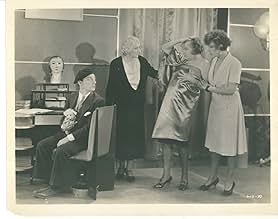
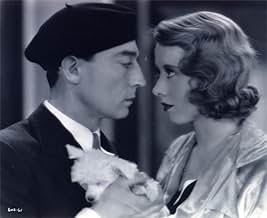
In a sense this is just as much farce as was "Parlor, Bedroom and Bath": but the script is better, the supporting cast is much better, and Keaton himself more than holds his own where both dialogue and speaking glances are concerned. He may be playing another 'Elmer', but his character here is a far cry from the pathetic buffoon of his first speaking role in "Free and Easy"; Elmer Tuttle, plumber and inventor, may be out of his element in Miss Patricia's social circles, but he is full of resource and determination, and no helpless puppet. The result, predictably, is far more effective -- when Reggie Irving's head nestles on a concerned female bosom, it is through mere ineptitude, but when Buster here avails himself of the same proffered rest in the aftermath of the duel, it is a visible decision to take full advantage of the opportunity! And as ever with Keaton, many of the most hilarious moments are unspoken. His ever-helpful provision of ammunition to the incensed ladies as events catch up with Tony, a scene which had me in stitches; his attempt to conceal a ridiculously fluffy lap-dog in his pocket, with the whole surreal episode the supremely logical culmination of many earlier plot twists, a set-up worthy of any of his silent features; the arrival of Aunt Charlotte, and his inspired solution to the crisis; and of course the whole duel sequence.
The entire production, from script to sight-gags, is somewhat reminiscent of the classic "Carry On" comedies of the 1960s -- and as a longstanding fan of the latter I mean that as nothing more than a thoroughly-going recommendation. It's very easy to mentally substitute Sid James into the Durante role (arguably an improvement...), Joan Sims as Patricia, and Hattie Jacques as Aunt Charlotte, and oddly enough Buster seems entirely at home in such company. But what I hadn't realised is that the actual duel sequence in the Scarlet Pimpernel spoof "Carry On Don't Lose Your Head" -- including the hero's famous offer "You have the swords, I'll have the pistols" -- is a direct homage to this film; Buster, of course, did it all first.
"The Passionate Plumber" is a true sound comedy, adapted from a stage property, but in addition it's a genuine Keaton movie in ways that "Speak Easily" or "Parlor, Bedroom and Bath", for example, are not. The MGM talkies tend to treat physical comedy as the lowest form of humour, utilising pratfalls, entanglements with scenery and general bumbling to milk the audience for routine, predictable laughs. In this film, for the first time since "Doughboys" and with more consistent results, we see the return of Keaton's own unexpected inventiveness, with the 'Aunt Charlotte' scene as perhaps the most memorable example: in a standard farce, Elmer would be hiding in a creaking cupboard or frantically climbing out of a window at this point, but it wouldn't get one-half the laugh that Keaton's straight-faced expedient does, not to mention the inspired improvisation that follows.
For once, we have Buster back in problem-solving mode, overcoming obstacles and pitting his wits against the world, and it's enough to bring a whole extra sparkle for this viewer at least. He has, of course, fallen in unspoken love with the leading lady -- but that certainly doesn't mean he's going to allow her, or anyone else, to walk all over him! Competent, coherent characters always seem to suit his style better than witless stumblers, producing superior comic results, and this film simply reinforces the point; it isn't a run-of-the-mill MGM picture, and it's distinctly funnier for it.
Keaton himself apparently didn't feel that either the film or the role were right for him. As in, famously, the case of "The High Sign" -- which he actually suppressed from initial release as substandard -- I honestly believe that in this case he was wrong: much of the film depends entirely on his interpretation, many of the laughs derive directly from his reactions and timing, and the material provides opportunity for the full range of his talents. And above all, it had me laughing by the end with the sort of helpless delight I haven't experienced from any of his other sound productions...
The last thirty seconds or so form a too-convenient "eh?--what?" conclusion, the initial set-up is slow, and Jimmy Durante seems to have wandered into a rather pointless supporting role from another movie altogether; but for the first time in talkies we have Buster back as of old -- alert, expressive, and ever-so-slightly bemused as his life unexpectedly intersects with that of a flighty socialite who is the target of a cad -- and the return is worth celebration. It will take all his trademark patience, agility and ingenuity to fulfil the contract to protect his new 'employer' both from her would-be seducer and from her own weaker moments... but "Maybe some day you'll be glad I was here," he tells her with a touching stubbornness, and true to his word it is he who contrives the final confrontation.
In a sense this is just as much farce as was "Parlor, Bedroom and Bath": but the script is better, the supporting cast is much better, and Keaton himself more than holds his own where both dialogue and speaking glances are concerned. He may be playing another 'Elmer', but his character here is a far cry from the pathetic buffoon of his first speaking role in "Free and Easy"; Elmer Tuttle, plumber and inventor, may be out of his element in Miss Patricia's social circles, but he is full of resource and determination, and no helpless puppet. The result, predictably, is far more effective -- when Reggie Irving's head nestles on a concerned female bosom, it is through mere ineptitude, but when Buster here avails himself of the same proffered rest in the aftermath of the duel, it is a visible decision to take full advantage of the opportunity! And as ever with Keaton, many of the most hilarious moments are unspoken. His ever-helpful provision of ammunition to the incensed ladies as events catch up with Tony, a scene which had me in stitches; his attempt to conceal a ridiculously fluffy lap-dog in his pocket, with the whole surreal episode the supremely logical culmination of many earlier plot twists, a set-up worthy of any of his silent features; the arrival of Aunt Charlotte, and his inspired solution to the crisis; and of course the whole duel sequence.
The entire production, from script to sight-gags, is somewhat reminiscent of the classic "Carry On" comedies of the 1960s -- and as a longstanding fan of the latter I mean that as nothing more than a thoroughly-going recommendation. It's very easy to mentally substitute Sid James into the Durante role (arguably an improvement...), Joan Sims as Patricia, and Hattie Jacques as Aunt Charlotte, and oddly enough Buster seems entirely at home in such company. But what I hadn't realised is that the actual duel sequence in the Scarlet Pimpernel spoof "Carry On Don't Lose Your Head" -- including the hero's famous offer "You have the swords, I'll have the pistols" -- is a direct homage to this film; Buster, of course, did it all first.
"The Passionate Plumber" is a true sound comedy, adapted from a stage property, but in addition it's a genuine Keaton movie in ways that "Speak Easily" or "Parlor, Bedroom and Bath", for example, are not. The MGM talkies tend to treat physical comedy as the lowest form of humour, utilising pratfalls, entanglements with scenery and general bumbling to milk the audience for routine, predictable laughs. In this film, for the first time since "Doughboys" and with more consistent results, we see the return of Keaton's own unexpected inventiveness, with the 'Aunt Charlotte' scene as perhaps the most memorable example: in a standard farce, Elmer would be hiding in a creaking cupboard or frantically climbing out of a window at this point, but it wouldn't get one-half the laugh that Keaton's straight-faced expedient does, not to mention the inspired improvisation that follows.
For once, we have Buster back in problem-solving mode, overcoming obstacles and pitting his wits against the world, and it's enough to bring a whole extra sparkle for this viewer at least. He has, of course, fallen in unspoken love with the leading lady -- but that certainly doesn't mean he's going to allow her, or anyone else, to walk all over him! Competent, coherent characters always seem to suit his style better than witless stumblers, producing superior comic results, and this film simply reinforces the point; it isn't a run-of-the-mill MGM picture, and it's distinctly funnier for it.
Keaton himself apparently didn't feel that either the film or the role were right for him. As in, famously, the case of "The High Sign" -- which he actually suppressed from initial release as substandard -- I honestly believe that in this case he was wrong: much of the film depends entirely on his interpretation, many of the laughs derive directly from his reactions and timing, and the material provides opportunity for the full range of his talents. And above all, it had me laughing by the end with the sort of helpless delight I haven't experienced from any of his other sound productions...
Buster is in problem solving mode here...
...just like in his silent days. Unlike most of his MGM talkies, here he is not cast as the hapless bumbling butt of jokes, but instead he shows grace under pressure and ingenuity when in a tight spot.
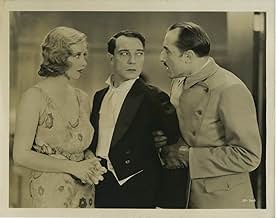
This was the first of his three teamings with Jimmy Durante, and even that odd pairing doesn't distract too much from the film's enjoyment. Keaton here is playing Elmer Tuttle, who for some unexplained reason is an American plumber choosing to live in Paris. He enters the story as chauffeur Julius (Jimmy Durante) has been tasked by his employer to find a plumber to repair a leaky shower, and Elmer is the lucky plumber chosen for the job. Julius' employer is Patricia Alden (Irene Purcell), also an American living in Paris, who is trying to pull herself away from her married lover Tony (Gilbert Roland) since she sees there is no future in the relationship.
Patricia decides to drive the proud Tony away by claiming that Elmer is her lover, and she also hires Elmer to make sure she doesn't give in to temptation and go crawling back to Tony. The problem is, shortly after she gives Elmer the job she decides to go back to Tony, but Elmer won't take "you're fired" for an answer. He protects her in spite of herself. Keaton shows that old inventiveness at every turn here. When he needs money to rent formal attire to get into a Paris night spot he finds a way to make the night spot pay for it, every time Patricia thinks she has lost Elmer and is on her way back to Tony, Elmer finds a way to outsmart and stop her, and finally when Patricia's aunt Charlotte comes to visit and Patricia is afraid of what she'll think if she finds a man - Elmer - in her room, Keaton hilariously turns his plumbing toolkit into a doctor's bag and makes aunt Charlotte believe he is Patricia's physician.
Some of the plot lines hit unexplained dead ends and the ending for sure doesn't make much sense, but yet I find myself pulling this one out and watching it pretty often just because it is a good example of the old Keaton magic at work.
This was the first of his three teamings with Jimmy Durante, and even that odd pairing doesn't distract too much from the film's enjoyment. Keaton here is playing Elmer Tuttle, who for some unexplained reason is an American plumber choosing to live in Paris. He enters the story as chauffeur Julius (Jimmy Durante) has been tasked by his employer to find a plumber to repair a leaky shower, and Elmer is the lucky plumber chosen for the job. Julius' employer is Patricia Alden (Irene Purcell), also an American living in Paris, who is trying to pull herself away from her married lover Tony (Gilbert Roland) since she sees there is no future in the relationship.
Patricia decides to drive the proud Tony away by claiming that Elmer is her lover, and she also hires Elmer to make sure she doesn't give in to temptation and go crawling back to Tony. The problem is, shortly after she gives Elmer the job she decides to go back to Tony, but Elmer won't take "you're fired" for an answer. He protects her in spite of herself. Keaton shows that old inventiveness at every turn here. When he needs money to rent formal attire to get into a Paris night spot he finds a way to make the night spot pay for it, every time Patricia thinks she has lost Elmer and is on her way back to Tony, Elmer finds a way to outsmart and stop her, and finally when Patricia's aunt Charlotte comes to visit and Patricia is afraid of what she'll think if she finds a man - Elmer - in her room, Keaton hilariously turns his plumbing toolkit into a doctor's bag and makes aunt Charlotte believe he is Patricia's physician.
Some of the plot lines hit unexplained dead ends and the ending for sure doesn't make much sense, but yet I find myself pulling this one out and watching it pretty often just because it is a good example of the old Keaton magic at work.


Did you know
- TriviaMGM's first attempt to promote Buster Keaton and Jimmy Durante as a comedy team. The other two pairings of Keaton and Durante are Speak Easily (1932) and What-No Beer? (1933).
- GoofsWhen Elmer provides a tray of plates for Nina and Patricia to throw at Tony, some of them crack apart as they are lifted up off the tray, revealing that they are not real plates but special break-away plates.
- Quotes
Tony Lagorce: [meeting for a duel with Elmer] Anything! Swords. Pistols. I don't care. I'll kill him anyway.
McCracken: What's the difference? Swords, pi...
Elmer: Satisfy both sides. Let him have a sword and I'll use a pistol.
- ConnectionsAlternate-language version of Le plombier amoureux (1932)
Details
- Release date
- Country of origin
- Languages
- Also known as
- El amante improvisado
- Filming locations
- Paris, France(opening establishing shots)
- Production company
- See more company credits at IMDbPro
- Runtime
- 1h 13m(73 min)
- Color
- Aspect ratio
- 1.20 : 1
Contribute to this page
Suggest an edit or add missing content