
An affair is almost exposed when Claire's husband unexpectedly returns early from the Summer Olympics.An affair is almost exposed when Claire's husband unexpectedly returns early from the Summer Olympics.An affair is almost exposed when Claire's husband unexpectedly returns early from the Summer Olympics.
- Awards
- 3 wins total


- Studio Official
- (uncredited)

- Manager of Neopolitan Hotel
- (uncredited)

- Chou-Chou
- (uncredited)
- Porter
- (uncredited)

- Singing Gondolier
- (uncredited)

- Porter
- (uncredited)

- Boulevardier
- (uncredited)

- Man in the Manhole
- (uncredited)
Featured reviews
Not Lubitsch, But Still Good
It is quite funny, but you have to give it a chance to warm up, as it takes a few minutes to get underway. The humor is very subtle and probably wouldn't go over well with modern audiences (see Adam Sandler). It comes with some unique quirks, like Cary Grant delivering a few lines in song, but once into the picture some old pros take over. Roland Young and Charles Ruggles, two veterans of the stage, have some of the best exchanges of situational dialogue and are aided by Thelma Todd, a comedienne who had a bright future but who was murdered around the time of the film's release. Her murder was never solved. Cary Grant plays it straight and Lili Damita is everyone's love interest but is the weakest member of the cast. It is very much like a filmed play, with just a few indoor sets, and there are only six cast members. The blue-tinted nighttime scenes were a nice, unexpected touch.
In short, it is well worth your time but give it a chance to get past the slow beginning. It is actually a quick 80 minutes.
An entertaining romantic farce that runs out of steam before the finale; Cary Grant's debut is very memorable
As for the rest of the film, it is a reasonably solid comedy of adulterous affairs, with some surprisingly risqué elements that were permitted in the days before the Production Code was heavily enforced due to pressure from the National Legion of Decency in l933. The film begins delightfully as a light comedic ballet, with director Frank Turtle providing some truly madcap slapstick and even recitative singing that sets the viewer up for a knockabout farce. Unfortunately, this progressively free-wheeling atmosphere is largely abandoned in the film's last half, which plays out in a more or less predictable manner. The film still holds up perfectly well, however, until the too-conservative ending, which is a big disappointment after over 70 minutes of uninhibited fun.
On the plus side, the film is very well cast, and the actors manage to keep the picture engaging even after the initial momentum of the exhilarating first-half is long gone. Although she makes somewhat of an delayed entrance, Lili Damita brings both pluck and intelligence to the female lead, Roland Young makes the transformation of his somewhat unsympathetic character highly believable, and both Grant and Charles Ruggles offer top-notch support. The lovely Thelma Todd also makes the most of a rather bland role, and her talent for making a relatively thankless character seem genuinely inspired serves as a bittersweet reminder of yet another comedic great that was taken from us way too soon. In the end, THIS IS THE NIGHT is far too inconsistent to ever be considered a great movie, but it sure is a lot of fun!
Venice's Menace
This Is The Night has Cary Grant as a French Olympic athlete whose sport is the javelin. But apparently he's not spearing Thelma Todd enough and she's casting a roving eye. The eye of Roland Young meets her's and the two plan a holiday in Venice.
To which Mr. Grant arrives and rudely interrupts. Thinking fast on his feet as American Express agent Charlie Ruggles arrives with tickets at Todd's apartment, Young says that he'll be traveling with his wife and once outside frantically looks for a wife. He finds Lily Damita and hires her for a railroad holiday from Paris to Venice. Ruggles goes along as a fifth wheel on this carriage, presumably to catch whoever comes flying off the rebound. As he's soused most of the time, I can't see what appeal he would have. Of course I can't see what appeal he would have sober.
Cary Grant was billed fifth in this film, but in 1932 he gradually went up the billing ladder and by the time of She Done Him Wrong, he's co-starring with Mae West. His debonair charm could barely be concealed in a role which required him to be a bit of a fathead.
Ralph Rainger and Sam Coslow wrote a couple of forgettable songs and it's in the musical numbers that this film bares the closest resemblance to Love Me Tonight. Note the Italian gondolier in the Venice scenes. He gets no billing in the film, but it is Donald Novis one of the most popular singers of the day on radio. In three years he would move to Broadway and play the romantic lead in Rodgers&Hart's Jumbo where he would introduce The Most Beautiful Girl In The World and My Romance. Novis had a wonderful tenor voice as you'll agree if you see this film.
Speaking of Rodgers&Hart maybe if they wrote a score as good as the one they did for Love Me Tonight, This Is The Night would be more remembered than as footnote as Cary Grant's feature film debut.
This is Frank Tuttle
This movie has all the earmarks of a Lubitsch picture: the European settings (Paris, Hollywood, which Lubitsch said he much preferred to Paris France; Venice, where he had set the opening of TROUBLE IN PARADISE two years earlier) and is the sort of racy European comedy that Paramount specialized in until the Production Code killed them dead later that year. The setups are all Lubitsch: the recitative number "Madame Has Lost Her Dress" that opens the movie; The sexual imagery of Cary Grant carrying around a bagful of javelins and reducing Roland Young and Charlie Ruggles to blithering idiocy; Thelma Todd in her underwear; and into this mess lands Lily Damita, an honest girl reduced to sleeping on movie sets: trouble in Paris, Hollywood.
Although Tuttle lacks the ability to direct actors in the small, exquisite details that Lubitsch did, he had a fine hand at framing and storyline. The movie is near perfect, except for the miscasting of Roland Young as the love interest..... but perhaps that is the point of the matter: we do not always fall in love with Maurice Chevalier.
Unique and memorable cast in sophisticated comedy
A great cast of more or less sympathetic characters surrounds the lovely Damita:
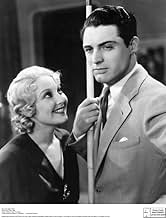
Roland Young and Charlie Ruggles are fine as a pair of wealthy gentlemen of Paris. Young is about to embark on a clandestine Venetian trip with girlfriend Thelma Todd—when her husband, Olympic javelin-thrower Cary Grant, unexpectedly returns home. One lie leads to another, and soon Young has hired an actress—Damita, eager to accept any job—to pose as his wife, and the whole gang boards a train for Venice.
Thelma Todd is excellent as the deceiving wife jealous of her lover's new partner; we don't get to see Todd angry in many of her movies, but smoke positively comes out of her ears here. Cary Grant—very youthful and athletic, bag of javelins slung over his shoulder—has a minor role but is awfully fun to watch (in his first picture).
Roland Young is outstanding as the would-be cosmopolitan lover who can't quite control either Damita or Todd; his face and mannerisms express varying degrees of discomfort, frustration and worry as he struggles to keep multiple relationships from caving in on him.
A hilarious running gag involves chauffeur Irving Bacon repeatedly catching Thelma's dress—in a car door, for example—and accidentally pulling it off.
Overall, it's very funny, with a plot that is tough to predict and somewhat surprisingly, it gradually turns into a very sweet picture, at that. Very enjoyable, especially for fans of these great character actors—and well worth watching just to see Roland Young and the great Thelma Todd together.


Did you know
- TriviaFilm debut of Cary Grant.
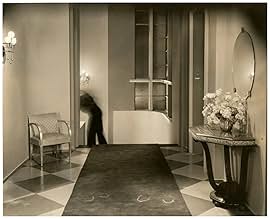
- GoofsWhen Bunny and Stephen, carrying his javelins, after arriving back unexpectedly from his trip to the Olympics, go into the next room, a large shadow of the boom microphone can be seen moving on the doorway and wall behind it.
- Quotes
Claire Mathewson: [they are seated in the back of their car; Claire has had her dress torn by the car door] Gerald, aren't you going to do anything?
Gerald Gray: Here?
Claire Mathewson: No, no. I mean about discharging your chauffeur
Gerald Gray: Oh, oh let me keep him. I've let you keep your husband
Claire Mathewson: I haven't kept him
Gerald Gray: What?
Claire Mathewson: He left this morning
Gerald Gray: For good?
Claire Mathewson: No, no, for the Olympic Games at Los Angeles. He's in them, you know. Haven't you ever heard of Steve Mathewson, the javelin thrower?
Gerald Gray: Javelin thrower?
Claire Mathewson: ah ha
Gerald Gray: Do you mean those long, murderous harpoon things?
[she nods]
Gerald Gray: Claire, the moment you meet a man, right after you've said 'how do you do?' you should add 'my husband throws javelins'.
- ConnectionsRemake of Good and Naughty (1926)
- SoundtracksThis Is the Night
Written by Sam Coslow and Ralph Rainger
- How long is This Is the Night?Powered by Alexa
Details
- Release date
- Country of origin
- Official sites
- Languages
- Also known as
- Natten är vår
- Filming locations
- Production company
- See more company credits at IMDbPro
- Runtime
- 1h 20m(80 min)
- Aspect ratio
- 1.33 : 1