IMDb RATING
7.1/10
4.8K
YOUR RATING


Although Vivian Revere is seemingly the most successful of a trio of reunited schoolmates, she throws it away by descending into a life of debauchery and drugs.Although Vivian Revere is seemingly the most successful of a trio of reunited schoolmates, she throws it away by descending into a life of debauchery and drugs.Although Vivian Revere is seemingly the most successful of a trio of reunited schoolmates, she throws it away by descending into a life of debauchery and drugs.
- Director
- Writers
- Stars


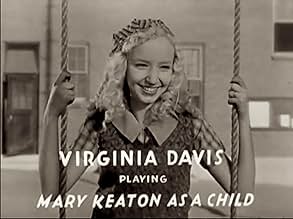




Anne Shirley
- Vivian Revere as a Child
- (as Dawn O'Day)

Joan Sheldon
- Ruth Westcott as a Child
- (as Betty Carse)

Herman Bing
- Prof. Irving Finklestein
- (uncredited)

Clara Blandick
- Mrs. Keaton
- (uncredited)
Dick Brandon
- Horace
- (uncredited)

Ann Brody
- Mrs. Goldberg
- (uncredited)

Spencer Charters
- Street Cleaner
- (uncredited)

Frankie Darro
- Bobby
- (uncredited)
- Director
- Writers
- All cast & crew
- Production, box office & more at IMDbPro
7.14.7K
1
2
3
4
5
6
7
8
9
10
Featured reviews
See this for Ann Dvorak
I highly recommend this Pre-Code film, an early directorial effort by Mervyn LeRoy. "Three on a Match" is more frank about life than many other films from that early era. Though Bette Davis is in it, she was still an ingénue with a very small part. She makes no major impact, but the real star of the show is Ann Dvorak (pronounced Vorzhak in case you didn't know). I have only recently gotten acquainted with this exquisite actress and have yet to see a bad performance in the half dozen or so films I've seen of hers. She was amazing in "Match," just so very natural, believable, one of the best at making not great dialog zing. And her eyes!! Wow!
The concept of the film comes from a superstition that grew during WWI about three soldiers lighting cigarettes from the same match being bad luck for one of the three. This is not a war film. The girls are civilians, who at one point light up cigarettes with one match, recalling that superstition. The three are: Ann Dvorak, Bette Davis and Joan Blondell (she's also good). What is surprising is how their lives change and how straightforward the film is in depicting one woman's downfall. It's very intense, with a shocking and heartbreaking ending.
We get to know three girls as children first and then see them again years later when they reconnect after becoming young women. As children they were very different. As adults their lives take different paths. The film is segmented by yearly dates, jumping ahead every few years to see where they are and how things have changed.
The story becomes a bit predictable, but it's still very much worth sticking with because of how honest the portrayals are and how good Dvorak is. She made an even bigger impact not too long after this by playing Paul Muni's sister in Howard Hawks' "Scarface." "Three on a Match" is worth seeing for a view into a short period of early sound films when they approached their subject matter fearlessly, and had more realistic female characters. Once the production code was instated, female roles became more constrained. This is one of the must-see Pre-Code films.
The concept of the film comes from a superstition that grew during WWI about three soldiers lighting cigarettes from the same match being bad luck for one of the three. This is not a war film. The girls are civilians, who at one point light up cigarettes with one match, recalling that superstition. The three are: Ann Dvorak, Bette Davis and Joan Blondell (she's also good). What is surprising is how their lives change and how straightforward the film is in depicting one woman's downfall. It's very intense, with a shocking and heartbreaking ending.
We get to know three girls as children first and then see them again years later when they reconnect after becoming young women. As children they were very different. As adults their lives take different paths. The film is segmented by yearly dates, jumping ahead every few years to see where they are and how things have changed.
The story becomes a bit predictable, but it's still very much worth sticking with because of how honest the portrayals are and how good Dvorak is. She made an even bigger impact not too long after this by playing Paul Muni's sister in Howard Hawks' "Scarface." "Three on a Match" is worth seeing for a view into a short period of early sound films when they approached their subject matter fearlessly, and had more realistic female characters. Once the production code was instated, female roles became more constrained. This is one of the must-see Pre-Code films.
A potent pre-code packed into just one hour
The story follows three girls - Mary (Joan Blondell), Vivien (Ann Dvorak), and Ruth (Bette Davis) - as they graduate from what today would be eighth grade, in the 1920s in what was then the end of public school education. As now, the only real thing you have in common with the people you go to public school is a zipcode. These three have been acquaintances but not friends, as they seem to go their completely separate ways.
Mary is the wild one - she winds up in reform school for grand larceny. Vivien is the dreamy one - she ends up married to a rich guy, a good guy, Robert Kirkwood played by Warren William, usually the cad of the precodes, but not here. Robert is a square guy making a very good living as an attorney, and cares that his wife is not haaappy (I put those extra a's in there on purpose). Ruth continues to be the one on the straight and narrow, pursuing one of the few careers open to a woman in those days - secretary.
Mary gets out of jail and becomes a chorus girl, and one day a chance meeting at a beauty shop leads to a reunion lunch for the three where they share "three on a match" when lighting their cigarettes. There is an old wives' tale that says one will die when this is done.
Vivien winds up abandoning her husband and taking up with a wild no-good cad, mainly because he is exciting and romantic -Mike (Lyle Talbot) - at least until Viv's money runs out. Mary is the promiscuous gal who has a moral center, and Kirkwood falls for her as she seems to really care for him and his son. Ruth is banished to the banal role of governess after Mary and Kirkwood marry.
Viv and Mike wind up in a tenement, hooked on coke after the fun of partying and excessive drinking grows dull. And to make matters worse Mike winds up owing two thousand dollars in gambling debts to a hood who has all of the tough guys of the 30s working for him -Humphrey Bogart, Allen Jenkins, and Jack La Rue. Remember Bogie is not the big star here yet, or even contract Warner Brothers, but he makes the biggest impression of the henchman.
So Mike and Viv are broke and Mike is desperate for cash or the hoods will kill him. What happens next involves some very unexpected turns in the plot and some frank precode moments, even more frank than what has happened so far as the film comes to a startling conclusion.
I don't really have many criticisms other than the moral seems to be that if you stay on the straight and narrow all of your life like Bette Davis' character does, you are doomed to remain unnoticed and in the shadows, alone and working low paying jobs. I like how what is going on in the plot is shown against the backdrop of first the roaring 20s and then the Great Depression - Viv is almost the personification of these two , in order. I thought that Buster Phelps as the Kirkwood son was extremely irritating here, not cute. And in spite of the fact that three years pass at the end of the film he looks the exact same age from beginning to end!
If you like the precodes, this is essential viewing.
Mary is the wild one - she winds up in reform school for grand larceny. Vivien is the dreamy one - she ends up married to a rich guy, a good guy, Robert Kirkwood played by Warren William, usually the cad of the precodes, but not here. Robert is a square guy making a very good living as an attorney, and cares that his wife is not haaappy (I put those extra a's in there on purpose). Ruth continues to be the one on the straight and narrow, pursuing one of the few careers open to a woman in those days - secretary.
Mary gets out of jail and becomes a chorus girl, and one day a chance meeting at a beauty shop leads to a reunion lunch for the three where they share "three on a match" when lighting their cigarettes. There is an old wives' tale that says one will die when this is done.
Vivien winds up abandoning her husband and taking up with a wild no-good cad, mainly because he is exciting and romantic -Mike (Lyle Talbot) - at least until Viv's money runs out. Mary is the promiscuous gal who has a moral center, and Kirkwood falls for her as she seems to really care for him and his son. Ruth is banished to the banal role of governess after Mary and Kirkwood marry.
Viv and Mike wind up in a tenement, hooked on coke after the fun of partying and excessive drinking grows dull. And to make matters worse Mike winds up owing two thousand dollars in gambling debts to a hood who has all of the tough guys of the 30s working for him -Humphrey Bogart, Allen Jenkins, and Jack La Rue. Remember Bogie is not the big star here yet, or even contract Warner Brothers, but he makes the biggest impression of the henchman.
So Mike and Viv are broke and Mike is desperate for cash or the hoods will kill him. What happens next involves some very unexpected turns in the plot and some frank precode moments, even more frank than what has happened so far as the film comes to a startling conclusion.
I don't really have many criticisms other than the moral seems to be that if you stay on the straight and narrow all of your life like Bette Davis' character does, you are doomed to remain unnoticed and in the shadows, alone and working low paying jobs. I like how what is going on in the plot is shown against the backdrop of first the roaring 20s and then the Great Depression - Viv is almost the personification of these two , in order. I thought that Buster Phelps as the Kirkwood son was extremely irritating here, not cute. And in spite of the fact that three years pass at the end of the film he looks the exact same age from beginning to end!
If you like the precodes, this is essential viewing.
Mom's Not Quite Herself Today
Another neglected eye-opener from the pre-Code era. No doubt, this cynical essay on wanton motherhood helped bring down the wrath of the censors two years hence. Ann Dvorak is a bored upper-class matron who flees to Europe with toddler son in tow, seeking excitement and a sexual adventure she can't admit to herself. She finds them in the person of shady character Lyle Talbott, with whom she shacks-up neglecting her boy in the process. Dvorak shines in those scenes that graphically chart her growing degradation, which I take from her appearance to include heavy drug use. The ending is frankly pretty predictable, Code or no Code.
The movie is no unmixed triumph. The Blondell--William relationship seems highly improbable, while Bette Davis's contrived role as the third girl on the match remains largely a waste. In fact, the movie's second half comes nowhere near the vitality or subtlety of the first half-- note the nuances of that early bedroom scene where we become privy to Dvorak's failing marriage. It's a little gem. The second half, on the other hand, is not helped by the caricatured gangsters, especially in their final scene which unlike the rest of the movie is also poorly directed. Nonetheless, the 60 minutes comes as a revelation to those of us accustomed to the conventions of a 30-year Code period.
Thanks be to TCM for rescuing these sleepers. I doubt they were shown anytime during the censorship era, and by the time they could be shown, they were too dated and obscure. But now film buffs have a chance to discover a Hollywood era most of us didn't know existed. Three on a Match may not be the most compelling product of that time, but it does prove one thing-- despite the opinion of some, sex was not an invention of the 1960's.
The movie is no unmixed triumph. The Blondell--William relationship seems highly improbable, while Bette Davis's contrived role as the third girl on the match remains largely a waste. In fact, the movie's second half comes nowhere near the vitality or subtlety of the first half-- note the nuances of that early bedroom scene where we become privy to Dvorak's failing marriage. It's a little gem. The second half, on the other hand, is not helped by the caricatured gangsters, especially in their final scene which unlike the rest of the movie is also poorly directed. Nonetheless, the 60 minutes comes as a revelation to those of us accustomed to the conventions of a 30-year Code period.
Thanks be to TCM for rescuing these sleepers. I doubt they were shown anytime during the censorship era, and by the time they could be shown, they were too dated and obscure. But now film buffs have a chance to discover a Hollywood era most of us didn't know existed. Three on a Match may not be the most compelling product of that time, but it does prove one thing-- despite the opinion of some, sex was not an invention of the 1960's.
Short Film Full Of Surprises
This was a fast-paced 63-minute story that was a combination women's film and film noir. With a cast that included Joan Blondell, Warren William, Ann Dvorak, Lyle Talbot, Bette Davis, Edward Arnold and Anne Shirley, you know it isn't going to be boring.
Dvorak has the principal role, playing a "dame" who is bored with her husband and her life and flies the coop. She winds up with a petty crook who needs money to pay off off his evil crime boss. The couple winds up in a kidnapping scheme which goes bad in a scene that is quite shocking.
The lingo of the day is interesting to hear as is Davis' youthful face. Arnold also looks really young, far more than I remember seeing him in other movies. Speaking of young, did I mention Humphrey Bogart and Glenda Farrell were also in this? Yes, it's full of surprises for classic film buffs. In another note: Shirley is billed under the name "Dawn O'Day."
I am glad this is now available on DVD. It looks great!
Dvorak has the principal role, playing a "dame" who is bored with her husband and her life and flies the coop. She winds up with a petty crook who needs money to pay off off his evil crime boss. The couple winds up in a kidnapping scheme which goes bad in a scene that is quite shocking.
The lingo of the day is interesting to hear as is Davis' youthful face. Arnold also looks really young, far more than I remember seeing him in other movies. Speaking of young, did I mention Humphrey Bogart and Glenda Farrell were also in this? Yes, it's full of surprises for classic film buffs. In another note: Shirley is billed under the name "Dawn O'Day."
I am glad this is now available on DVD. It looks great!
Lots of fun for fans of early 30s melodramas!
After viewing the video version of this movie again last night, I was surprised at how most of the movie stands up today. As with many "from the headlines" movies produced by Warner Brothers and First National in the early 1930s, the pace is rapid. I prefer the latter part of the movie to the earlier scenes, which provide a lengthy prologue to the main story. It is unfortunate that the lead actress, Ann Dvorak, is almost forgotten today, for she was a beautiful and talented actress, who more often than not was more capable than the material she was given. Hers is an unusual character, but an interesting and not too hysterical performance. It's also fun to watch future stars like Bette Davis and Humphrey Bogart in supporting roles, as well as to savour supporting performances by Jack LaRue, Allen Jenkins and Lyle Talbot. The climax is quite remarkable, although the tacked on happy ending jars with the mood of the movie as a whole. Well worth watching on the late show, cable, or if you find a copy of the video.


Did you know
- TriviaFirst film released where Humphrey Bogart plays a hoodlum.
- GoofsAt their first lunch, Mary notes Vivian's limo outside "with a Russian grand duke for a chauffeur". However, when the three go to split up outside the restaurant, Vivian's driver is an African-American.
- Quotes
Miss Blazer: Willie Goldberg, will you be quiet?
[Louder]
Miss Blazer: Willie Goldberg!
[Frustrated]
Miss Blazer: Oh, I'd like to be your mother for just about two minutes!
Willie Goldberg: [Sarcastically] I'll speak to father about that.
- ConnectionsEdited from The Public Enemy (1931)
- How long is Three on a Match?Powered by Alexa
Details
Box office
- Budget
- $444,000 (estimated)
- Runtime
- 1h 3m(63 min)
- Color
- Aspect ratio
- 1.37 : 1
Contribute to this page
Suggest an edit or add missing content