IMDb RATING
6.4/10
1.2K
YOUR RATING

A tuna fisherman marries a woman who doesn't love him.A tuna fisherman marries a woman who doesn't love him.A tuna fisherman marries a woman who doesn't love him.
- Awards
- 2 wins total


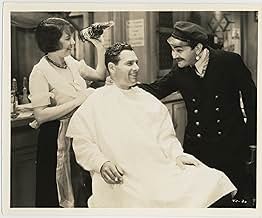
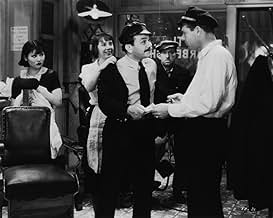


J. Carrol Naish
- Tony
- (as J. Carroll Naish)


Sheila Bromley
- 'Red'
- (uncredited)

Wong Chung
- Chinese Laundryman
- (uncredited)

Edwin Maxwell
- Doctor
- (uncredited)

Toshia Mori
- Oriental Lady Barber
- (uncredited)
Henry Otho
- Crewman
- (uncredited)

Inez Palange
- Mike's Neighbor
- (uncredited)

Pedro Regas
- Crewman
- (uncredited)
Joe Roig
- Undetermined Secondary Role
- (uncredited)

Hector V. Sarno
- Crewman
- (uncredited)

Harry Semels
- Crewman
- (uncredited)
6.41.2K
1
2
3
4
5
6
7
8
9
10
Featured reviews
Post script
Sorry, I forgot to add a point to my comment that was rather an important one, at least to me. Tiger Shark was shot in the early 1930s and there are some interesting scenes of men sailing their boat into a school of tuna, guided by a lookout, then lining up in the leads and pulling the fish in using flexible poles, one at a time. The scenes are authentic and exciting. Alas, they are history. Tuna fisherman now use "long lines." (Koreans and Japanese have huge industries built around this technique.) The fishing boat now needs a smaller crew (less expensive) because there no longer any mano a mano contests between fish and man. The crew simply strings out long fishing lines, guided by sonar, more than a mile long, with baited hooks fixed to the lines at short, regular intervals, set for a given depth. This has proved far more lucrative than fishing exclusively for tuna with poles. The long lines have a tendency to clean everything that swims out of the sea; not just tuna but sharks, sea turtles, porpoises, and game fish like marlin (which can't be legally sold). By the time they are harvested, many of the animals are already dead, especially the air-breathing turtles and porpoises. The industry has become much more efficient and without passion. Mike probably wouldn't have approved but the organization that would now own his boat would have.
Tiger Shark (1932) ***
I had once taped this one off Italian TV (during a lengthy Howard Hawks season of films shown in English but with Italian subtitles) but my VCR developed a fault and the recording was subsequently unwatchable! I sure am glad to have caught up with it now
First of all, Edward G. Robinson is the whole show here: his portrayal of the central character, a Portuguese fisherman who sees himself as the best in the business and speaks in amiable broken English (his catchphrase is: "Absolutely indeed") is first-rate and it was also quite funny to watch him sporting an earring. The plot is predictable enough (a woman comes between two best friends and the situation is resolved through tragedy) but that may be because the same elements were recycled so many times, even by Warner Bros. themselves, over the years: SLIM (1937), THE WAGONS ROLL AT NIGHT (1941), Raoul Walsh's MANPOWER (1941; with Marlene Dietrich coming between Edward G. Robinson and George Raft), etc.
Even more importantly, however, the imprint of director Howard Hawks is all over it: the vivid recreation of a man's world, the bonds which grow stronger through the everyday adversity which that entails, the invasion of a woman into this enclosed world which sets about the inevitable tragedy, etc. In fact, the brotherly (or even father-son) relationship seen here between Robinson and his younger protégée, Richard Arlen, is reprised in many another Hawks film Pat O'Brien and James Cagney in CEILING ZERO (1935), Thomas Mitchell and Cary Grant in ONLY ANGELS HAVE WINGS (1939), Walter Brennan and Humphrey Bogart in TO HAVE AND HAVE NOT (1944), John Wayne and Dean Martin in RIO BRAVO (1959), etc; the unceremonious intrusion of the female character onto a perfectly ordered way of life is also seen enacted by Katharine Hepburn in BRINGING UP BABY (1938), Jean Arthur in ONLY ANGELS HAVE WINGS, Barbara Stanwyck in BALL OF FIRE (1941), Lauren Bacall in TO HAVE AND HAVE NOT, Joanne Dru in RED RIVER (1948), Margaret Sheridan in THE THING FROM ANOTHER WORLD (1951), Angie Dickinson in RIO BRAVO, Elsa Martinelli in HATARI! (1962) and Paula Prentiss in MAN'S FAVORITE SPORT? (1964); early on, the "boys" in TIGER SHARK are gathered around drinking and singing to their hearts' content a similar instance occurs also in ONLY ANGELS HAVE WINGS, RIO BRAVO and HATARI! Besides Robinson's performance and the fascinating early look at the Hawksian themes elaborated on more fully in his later films, TIGER SHARK is also notable for its exciting fishing sequences especially the rather grisly (for their time) shark attacks; the scene where Robinson loses his hand to one of the marauding beasts is particularly effective.
Actually, this viewing of TIGER SHARK has reminded me of several notable films which Robinson appeared in around the same time but with which I'm not all that familiar having watched them only once years ago, namely TWO SECONDS (1932), THE MAN WITH TWO FACES (1934), John Ford's THE WHOLE TOWN'S TALIKING (1935), Hawks' own BARBARY COAST (1935), THE LAST GANGSTER (1937), A SLIGHT CASE OF MURDER (1938), THE AMAZING DR. CLITTERHOUSE (1938), CONFESSIONS OF A NAZI SPY (1939), THE SEA WOLF (1941) and MANPOWER!
Even more importantly, however, the imprint of director Howard Hawks is all over it: the vivid recreation of a man's world, the bonds which grow stronger through the everyday adversity which that entails, the invasion of a woman into this enclosed world which sets about the inevitable tragedy, etc. In fact, the brotherly (or even father-son) relationship seen here between Robinson and his younger protégée, Richard Arlen, is reprised in many another Hawks film Pat O'Brien and James Cagney in CEILING ZERO (1935), Thomas Mitchell and Cary Grant in ONLY ANGELS HAVE WINGS (1939), Walter Brennan and Humphrey Bogart in TO HAVE AND HAVE NOT (1944), John Wayne and Dean Martin in RIO BRAVO (1959), etc; the unceremonious intrusion of the female character onto a perfectly ordered way of life is also seen enacted by Katharine Hepburn in BRINGING UP BABY (1938), Jean Arthur in ONLY ANGELS HAVE WINGS, Barbara Stanwyck in BALL OF FIRE (1941), Lauren Bacall in TO HAVE AND HAVE NOT, Joanne Dru in RED RIVER (1948), Margaret Sheridan in THE THING FROM ANOTHER WORLD (1951), Angie Dickinson in RIO BRAVO, Elsa Martinelli in HATARI! (1962) and Paula Prentiss in MAN'S FAVORITE SPORT? (1964); early on, the "boys" in TIGER SHARK are gathered around drinking and singing to their hearts' content a similar instance occurs also in ONLY ANGELS HAVE WINGS, RIO BRAVO and HATARI! Besides Robinson's performance and the fascinating early look at the Hawksian themes elaborated on more fully in his later films, TIGER SHARK is also notable for its exciting fishing sequences especially the rather grisly (for their time) shark attacks; the scene where Robinson loses his hand to one of the marauding beasts is particularly effective.
Actually, this viewing of TIGER SHARK has reminded me of several notable films which Robinson appeared in around the same time but with which I'm not all that familiar having watched them only once years ago, namely TWO SECONDS (1932), THE MAN WITH TWO FACES (1934), John Ford's THE WHOLE TOWN'S TALIKING (1935), Hawks' own BARBARY COAST (1935), THE LAST GANGSTER (1937), A SLIGHT CASE OF MURDER (1938), THE AMAZING DR. CLITTERHOUSE (1938), CONFESSIONS OF A NAZI SPY (1939), THE SEA WOLF (1941) and MANPOWER!
Bizarre Fisherman's Melodrama
Had the bizarre fishing-village-set TIGER SHARK come out ten years later, it would've made a pretty intriguing Film Noir, following the trope of the pretty young girl marrying an older businessman while falling in love with the handsome younger fella who has no money, and is friends with the rich guy...
In this case that rich guy, before there was any money and when he had both hands... during the more adventuresome Hemingway-meets-Melville first act... saves the life of Richard Arlen as common fisherman Pipes Boley by losing one hand to the titular (yet thereafter unimportant) TIGER SHARK, later replaced with a hook...
Making Edward G. Robinson more a gentleman dandy than the pirate he'd seem... and his only real handicap is baby-faced ingenue Zita Johann, feeling no chemistry with Robinson's Mike Mascarenhas as a husband, leading to when and how he'll discover where her love is going...
Which does genuinely provide the short/stout firebrand the kind of dangerous potential for the audience to anticipate his inevitable explosion...
But too much time's spent on the searing romantic triangle when an actor like Robinson needed and deserved more of an edgy potboiler than this morality play programmer.
In this case that rich guy, before there was any money and when he had both hands... during the more adventuresome Hemingway-meets-Melville first act... saves the life of Richard Arlen as common fisherman Pipes Boley by losing one hand to the titular (yet thereafter unimportant) TIGER SHARK, later replaced with a hook...
Making Edward G. Robinson more a gentleman dandy than the pirate he'd seem... and his only real handicap is baby-faced ingenue Zita Johann, feeling no chemistry with Robinson's Mike Mascarenhas as a husband, leading to when and how he'll discover where her love is going...
Which does genuinely provide the short/stout firebrand the kind of dangerous potential for the audience to anticipate his inevitable explosion...
But too much time's spent on the searing romantic triangle when an actor like Robinson needed and deserved more of an edgy potboiler than this morality play programmer.
Good Film
Tiger Shark (1932)
*** (out of 4)
A lonely fisherman (Edward G. Robinson) marries a girl out of pity only to see her fall in love with his best friend. Director Howard Hawks does a very good job at showing off a wide range of emotions from sentiment to laughs to some very intense shark attack scenes. Robinson clearly steals the show with his touching performance but the supporting roles are good too. Another highlight is seeing the old time assembly line of having the fish removed from the boat and cleaned all in the matter of minutes. Apparently Warner loved this story so much that they remade it three times within the next ten years including Robinson returning in Manpower.!!!
*** (out of 4)
A lonely fisherman (Edward G. Robinson) marries a girl out of pity only to see her fall in love with his best friend. Director Howard Hawks does a very good job at showing off a wide range of emotions from sentiment to laughs to some very intense shark attack scenes. Robinson clearly steals the show with his touching performance but the supporting roles are good too. Another highlight is seeing the old time assembly line of having the fish removed from the boat and cleaned all in the matter of minutes. Apparently Warner loved this story so much that they remade it three times within the next ten years including Robinson returning in Manpower.!!!
They Knew What They Wanted, with tuna
How many times has this plot been used? The older guy--hearty, well-liked, a good man--wins the pretty young thing, but she's attracted to his best friend. It's like "They Knew What They Wanted," with Edward G. Robinson changing Charles Laughton's Italian accent to Portuguese and becoming an ace fisherman instead of a vintner. He's wonderful, in a showy yet subtle performance, and the beautiful Zita Johann is a prize worth fighting for. The writing isn't wonderful, though--we never understand why this lying blowhard is so popular, and the third side of the triangle, Richard Arlen, is given no personality at all. Howard Hawks must have liked the maritime setting, or just being on a boat, because there are yards of irrelevant footage of tuna fishing, leading to a climax that's not very clearly edited (just how does Arlen get out of this, and why does Eddie G. do such a turnaround?). But it leads to a moving big finale. It's atmospheric, with lots of outdoors shooting that makes it seem less studio-bound, and Robinson is always worth watching.


Did you know
- TriviaQuita wears traditional Portuguese attire for her wedding.
- GoofsWhen Quita tells Mike to leave her alone after being informed of her father's death, he responds twice with "yeah, all right". But Robinson as Mike drops the Portuguese accent he uses for the role and uses a regular American accent.
- Crazy creditsOpening Card: San Diego
- ConnectionsFeatured in Sharksploitation (2023)
- SoundtracksAbdulla Bulbul Amir
(1877) (uncredited)
Written by William Percy French
Sung by Richard Arlen and members of the crew
Details
- Release date
- Country of origin
- Languages
- Also known as
- Morski pas
- Filming locations
- Monterey, California, USA(outdoor sequences)
- Production company
- See more company credits at IMDbPro
- Runtime
- 1h 17m(77 min)
- Color
- Sound mix
- Aspect ratio
- 1.37 : 1
Contribute to this page
Suggest an edit or add missing content