IMDb RATING
7.2/10
1.8K
YOUR RATING


A working girl is menaced by her tyrannical employer.A working girl is menaced by her tyrannical employer.A working girl is menaced by her tyrannical employer.
- Director
- Writers
- Stars
- Awards
- 1 win total

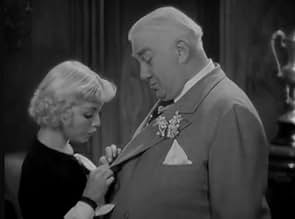
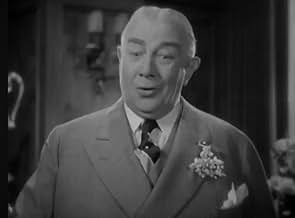


Frank McGlynn Sr.
- The Editor
- (scenes deleted)

Oscar Apfel
- Board of Directors Member #5
- (uncredited)

Harry C. Bradley
- Employee Who Refuses Paycut
- (uncredited)


Berton Churchill
- Mr. Bradford
- (uncredited)

Jesse De Vorska
- Jewish Football Customer
- (uncredited)

Neal Dodd
- Minister at Wedding
- (uncredited)

Clarence Geldert
- Board of Directors Member
- (uncredited)
- Director
- Writers
- All cast & crew
- Production, box office & more at IMDbPro
7.21.8K
1
2
3
4
5
6
7
8
9
10
Featured reviews
One of the best of the pre-code era
A very watchable pre-code film - not so only it's risque elements but for acting (particularly Warren William), plot, comedy and fast pace. One of my favorites of the era.
It's very interesting how Warren William - who treats women like objects, tries to break up a budding romance (by seducing and sleeping with Loretta Young, not once but twice!!), indirectly leads to a employees' suicide, etc - manages to "win" in the end. For the most part, the is the "bad guy" in the story...although he has a few redeeming characteristics.
It's worth owning the video.
It's very interesting how Warren William - who treats women like objects, tries to break up a budding romance (by seducing and sleeping with Loretta Young, not once but twice!!), indirectly leads to a employees' suicide, etc - manages to "win" in the end. For the most part, the is the "bad guy" in the story...although he has a few redeeming characteristics.
It's worth owning the video.
Refreshing and Enjoyable
This movie has lots of humor, pathos, and suspense. The wonderful cast does a great job. William Warren is, at times, ruthless yet he also displays occasional compassion and a considerable amount of vulnerability. As the no nonsense top boss in a major Manhattan department store he stops at nothing in his quest to keep his store at the top. He thinks nothing of summarily terminating loyal long time store employees if they offend him in any manner. Although all of the cast is superb in their well written roles, make no mistake, this is Warren's film. It moves fast and does none of the slow dragging that many films of the early 1930s suffer from.
Pre-code fun
Ya gotta love these pre-code flicks. Women looked and acted like real women, and men acted like the cads they often are. Warren William plays the tyrannical owner of a department store down on its luck. He hires and fires with absolute glee, and is an unrepentant womanizer. He hires a new salesgirl, played by the incredibly beautiful Loretta Young, and soon has his way with her. She falls for a fellow employee (Wallace Ford) and marries him secretly. William then turns his attention back to Young and... The film is an absolute hoot, and even includes a highly suggestive rape about-to-happen. Young is almost ethereal in her beauty, but this one's William's film all the way. His character is a cad, but in a strange way, a likable cad.
Like Buster Keaton in "The Play House"...
... Warren William appears to be the whole show. Sure, you have a great supporting cast, but Warren William's character, tyrannical department store manager Kurt Anderson, is the center of the universe. You dislike his character when you first meet him, but as the film goes along, you begin to understand him and almost pity him by the end of the film. What a brilliant piece of acting.
It's one of several films made in the 20s and 30s centered around those giant department stores of New York City with that special brand of humor and pathos that was so unique to Warner Brothers at the time. Kurt Anderson's curse, besides being completely aware that he would be old and "through" someday just like all of the people that he fired, is to not actually control his empire. He is technically just an employee. He works for the board, for the banks, and the actual owner who seems only good for writing pronouncements for special occasions from his yacht in the Mediterranean.
Loretta Young plays a girl, Madelene, that sleeps with Anderson in order to get a job there - she is starving at the time. Later she develops a romance with Martin West (Wallace Ford), who becomes like a son to Anderson, somebody he is grooming to take over for him someday. The complication is that Martin and Madelene secretly marry because Anderson doesn't like the idea of married executives - they spend too much time at home. This means that Anderson thinks Madelene is still available, and although Anderson is not the marrying kind, he still finds Madelene desirable. Complications ensue.
Albert Gran didn't have too many talking film roles, and in fact this film was released six months after he died. But he is hilarious here as a rather useless executive who Anderson has to keep around because he is related to the actual invisible store owner. Alice White probably has better comic timing here than in any role I've seen her as Anderson's gold digging on-again-off-again mercenary mistress. She is much better as the cherry on top rather than the whole pie.
The running gag for me? The actual owner of the store - you never see him - always starts his letters by saying he is descended from both James Monroe and Benjamin Franklin. As far as I know there is no such person.
It's one of several films made in the 20s and 30s centered around those giant department stores of New York City with that special brand of humor and pathos that was so unique to Warner Brothers at the time. Kurt Anderson's curse, besides being completely aware that he would be old and "through" someday just like all of the people that he fired, is to not actually control his empire. He is technically just an employee. He works for the board, for the banks, and the actual owner who seems only good for writing pronouncements for special occasions from his yacht in the Mediterranean.
Loretta Young plays a girl, Madelene, that sleeps with Anderson in order to get a job there - she is starving at the time. Later she develops a romance with Martin West (Wallace Ford), who becomes like a son to Anderson, somebody he is grooming to take over for him someday. The complication is that Martin and Madelene secretly marry because Anderson doesn't like the idea of married executives - they spend too much time at home. This means that Anderson thinks Madelene is still available, and although Anderson is not the marrying kind, he still finds Madelene desirable. Complications ensue.
Albert Gran didn't have too many talking film roles, and in fact this film was released six months after he died. But he is hilarious here as a rather useless executive who Anderson has to keep around because he is related to the actual invisible store owner. Alice White probably has better comic timing here than in any role I've seen her as Anderson's gold digging on-again-off-again mercenary mistress. She is much better as the cherry on top rather than the whole pie.
The running gag for me? The actual owner of the store - you never see him - always starts his letters by saying he is descended from both James Monroe and Benjamin Franklin. As far as I know there is no such person.
Pulls No Punches
Behind the pedestrian title lurks a rather savage look at survival-era capitalism as played out during that desperate depression year of 1933. Who else is better outfitted to protect the average working stiff from cut-throat competition and unemployment than a tiger shark bigger than those circling around. Department store shark Warren William is in charge of 12,000 average Joe's, and by golly he's going to keep them swimming even if he has to eat half of them in the process. Bravura performance from William-- watch his eyes slink around the hallway before he enters the hotel room to ravish a drunkenly compliant Loretta Young. His authoritative presence commands the movie as completely as he does his underlings. Film may come as a revelation to viewers unfamiliar with pre-Code Hollywood, before the censors took over in 1934. Nonetheless, it was an era of social frankness that would not emerge again until the counter-cultural 1960's, while the movie itself would play as well today as it did then, as one reviewer sagely observes.
Much of film's value lies in getting us to think about the appeal a strongman-tyrant presents during turbulent times. We loathe William's ruthless and often cruel tactics. But at the same time he's inventive, decisive, and brutally logical-- with a single-minded dedication that goes beyond personal happiness. In short, he becomes The Department Store in the same way an effective tyrant can personify The State. He's a figure to be loathed, yet grudgingly admired at the same time, while it's a credit to the film-makers that they pull off the ambivalence as well as they do. Two scenes stay with me that help define William's compelling side--watch him nearly throw up at the smarmy speech given in behalf of the store's worthless owners, plus his face-to-face denunciation of bankers as parasitically unproductive, a passage that probably brought depression-era audiences to their feet.There are also unexpected deposits of humor, such as the bald man/balloon gag that is hilariously inventive and likely a brainstorm from ace director Roy del Ruth. On the other hand, Wallace Ford simply lacks the kind of edge to make his role as William's assistant plausible. Instead, a face-off between William and, say, Cagney would have exploded the screen.
Anyhow, don't let the forgettable title or the now obscure Warren William fool you. There are so many memorable glimpses of human honesty, that the movie must be seen to be appreciated, especially by those unfamiliar with the pre-Code era. So catch up with this cynical little gem if you can.
Much of film's value lies in getting us to think about the appeal a strongman-tyrant presents during turbulent times. We loathe William's ruthless and often cruel tactics. But at the same time he's inventive, decisive, and brutally logical-- with a single-minded dedication that goes beyond personal happiness. In short, he becomes The Department Store in the same way an effective tyrant can personify The State. He's a figure to be loathed, yet grudgingly admired at the same time, while it's a credit to the film-makers that they pull off the ambivalence as well as they do. Two scenes stay with me that help define William's compelling side--watch him nearly throw up at the smarmy speech given in behalf of the store's worthless owners, plus his face-to-face denunciation of bankers as parasitically unproductive, a passage that probably brought depression-era audiences to their feet.There are also unexpected deposits of humor, such as the bald man/balloon gag that is hilariously inventive and likely a brainstorm from ace director Roy del Ruth. On the other hand, Wallace Ford simply lacks the kind of edge to make his role as William's assistant plausible. Instead, a face-off between William and, say, Cagney would have exploded the screen.
Anyhow, don't let the forgettable title or the now obscure Warren William fool you. There are so many memorable glimpses of human honesty, that the movie must be seen to be appreciated, especially by those unfamiliar with the pre-Code era. So catch up with this cynical little gem if you can.


Did you know
- TriviaThe pristine print quality is due to the good fortune that the Library of Congress possesses the original camera negative.
- GoofsThe marriage license for Martin and Madeline does not have the date, signature and seal of the City Clerk for New York, that portion of the document is blank. The marriage license would not be valid undated and unsigned.
- Quotes
Kurt Anderson: When did YOU develop principles?
Polly Dale: Oh, I saved a couple out of the crash.
- ConnectionsFeatured in Thou Shalt Not: Sex, Sin and Censorship in Pre-Code Hollywood (2008)
- SoundtracksI Found a Million Dollar Baby (In a Five and Ten Cent Store)
(1931) (uncredited)
Music by Harry Warren
Played as background music in scenes with Alice White
- How long is Employees' Entrance?Powered by Alexa
Details
- Release date
- Country of origin
- Language
- Also known as
- Vi som gå affärsvägen
- Filming locations
- May Co Department Store, 801 S Broadway, Los Angeles, California, USA(opening scenes, department store)
- Production company
- See more company credits at IMDbPro
Box office
- Budget
- $188,000 (estimated)
- Runtime
- 1h 15m(75 min)
- Color
- Sound mix
- Aspect ratio
- 1.37 : 1
Contribute to this page
Suggest an edit or add missing content