
An engaged attorney and a divorcee fall for each other in 1870s Manhattan.An engaged attorney and a divorcee fall for each other in 1870s Manhattan.An engaged attorney and a divorcee fall for each other in 1870s Manhattan.
- Awards
- 3 wins total
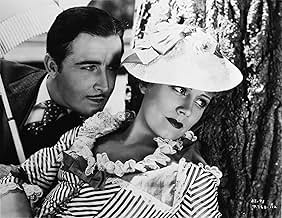


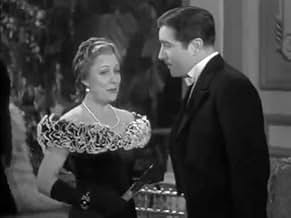
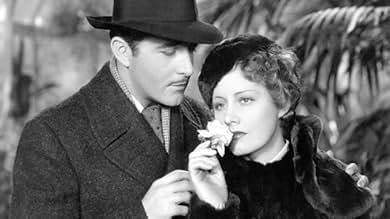


Barry O'Moore
- Mr. Welland
- (as Herbert Yost)


Lowden Adams
- Jenkins
- (uncredited)
Muriel Barr
- Miss Allison - Jenkins' Daughter
- (uncredited)

Harry Beresford
- Museum Guard
- (uncredited)

Lynn Browning
- Miss Archer
- (uncredited)

Herbert Bunston
- W.J. Letterblair
- (uncredited)

Bess Flowers
- Child's Mother
- (uncredited)
Alf James
- Man Who Comes with Chairs
- (uncredited)

John Merton
- John
- (uncredited)
6.2589
1
2
3
4
5
6
7
8
9
10
Featured reviews
Edith Wharton must have been disappointed in this filming of her novel. She only lived three years after it appeared.
Edith Wharton chronicled the romantic tragedies of the 19th century 400, those anointed people who would fit in Lady Astor's Lavish New York Society ballroom. This 1934 film is the story of a young lawyer named Newland Archer who is pledged to a New York girl named May Welland. The marriage is in the offing for most of the film.
What stirs things up is the arrival of a mysterious woman, a Polish Countess named Ellen Olenska, who lives at an unfashionable Manhattan address, west 23rd street. Newland is charmed by the Countess and she, likewise. The Countess is in town to get a divorce. Society is as put off by Mrs. Olenska's frankness as they are with her address.
Teacups rattle at every social turn. Irene Dunne is younger in this film as Countess Olenska than in any other I've seen her in. She upstages every other actor in the film including John Boles who is inept as Newland. The movie seems a star vehicle for Dunne. At least the 1993 remake of Age of Innocence from Director Martin Scorcese gives some weight to the other characters, while failing finally to tell the story adequately. Julie Haydon, who would eventually play Laura in Tennessee Williams' play The Glass Menagerie, is suitably church-mousey as Newland's fiancee, May.
Newland's interest in and defense of the Countess eventually gets him in trouble with the upper-class set who are his peers. When push comes to shove, the question is, what will Archer do, dump the one he promised or run off with the Countess. What actually does happen is a fairly delicate bit of story-telling.
The 1934 Age of Innocence tells the story better than the 1993 version. But the older story isn't really that good either. Mrs. Wharton's novel was a sophisticated piece of work. It deserved a better telling on-screen. If you'd like a well-done thirties social drama, have a look at Dodsworth with Walter Huston, Ruth Chatterton and Mary (yes!) Astor. Age of Innocence is strictly for Irene Dunne aficianados.
What stirs things up is the arrival of a mysterious woman, a Polish Countess named Ellen Olenska, who lives at an unfashionable Manhattan address, west 23rd street. Newland is charmed by the Countess and she, likewise. The Countess is in town to get a divorce. Society is as put off by Mrs. Olenska's frankness as they are with her address.
Teacups rattle at every social turn. Irene Dunne is younger in this film as Countess Olenska than in any other I've seen her in. She upstages every other actor in the film including John Boles who is inept as Newland. The movie seems a star vehicle for Dunne. At least the 1993 remake of Age of Innocence from Director Martin Scorcese gives some weight to the other characters, while failing finally to tell the story adequately. Julie Haydon, who would eventually play Laura in Tennessee Williams' play The Glass Menagerie, is suitably church-mousey as Newland's fiancee, May.
Newland's interest in and defense of the Countess eventually gets him in trouble with the upper-class set who are his peers. When push comes to shove, the question is, what will Archer do, dump the one he promised or run off with the Countess. What actually does happen is a fairly delicate bit of story-telling.
The 1934 Age of Innocence tells the story better than the 1993 version. But the older story isn't really that good either. Mrs. Wharton's novel was a sophisticated piece of work. It deserved a better telling on-screen. If you'd like a well-done thirties social drama, have a look at Dodsworth with Walter Huston, Ruth Chatterton and Mary (yes!) Astor. Age of Innocence is strictly for Irene Dunne aficianados.
Surprisingly fresh
I have seen Scorsese's film many times and have always loved the luxurious attention to detail, but always thought Mae was miscast and there wasn't much humor, it was more of a melodramatic romance than a statement on values and morals of the time, so I was hesitant to watch this version, figuring it would be boring and predictable...
Instead, I was pleasantly surprised, this film actually had the depth, humor and awareness that I did not find in Scorsese's film. The movie is also remarkably adult for its time, and totally believable as well as faithful to the novel; the dialog was crisp, quick and mature and the story moved along steadily.
Nobody seems miscast or out of place and unlike other reviewers, I didn't find any problem with John Bole's performance, I thought he conveyed exactly what he was supposed to and was even less wimpy than Daniel Day-Lewis's performance in the Scorsese film.
Overall I recommend this version highly, and while I do prefer the pace of this film, it will never compare to the visual sumptuousness of the Scorsese version.
Instead, I was pleasantly surprised, this film actually had the depth, humor and awareness that I did not find in Scorsese's film. The movie is also remarkably adult for its time, and totally believable as well as faithful to the novel; the dialog was crisp, quick and mature and the story moved along steadily.
Nobody seems miscast or out of place and unlike other reviewers, I didn't find any problem with John Bole's performance, I thought he conveyed exactly what he was supposed to and was even less wimpy than Daniel Day-Lewis's performance in the Scorsese film.
Overall I recommend this version highly, and while I do prefer the pace of this film, it will never compare to the visual sumptuousness of the Scorsese version.
Captures The Times
Irene Dunne and John Boles star in this adaptation of the Edith Wharton novel. A flashback takes the viewer back to the age of Victorian morals, when propriety and social order were the prime values of society.
Newland Archer (Boles) is engaged, but finds himself helplessly attracted to Ellen (Dunne), the cousin of his fiancée, May (Julie Haydon). The upper crust of polite society are constrained by even the appearances of impropriety, so he cannot act upon his feelings. But he must. More than the others in his circle, he dares think beyond what is expected of him. In this sense, the story is about the individual versus society.
But it is also about the agency of women. Ellen chastises herself continuously for even having her inappropriate feelings. Society, in the guise of protection, binds women to strictures. Newland asks if they must "bury" a woman just to protect her virtue.
Boles and Dunne are good in their roles. The surrounding cast is equally strong. Julie Haydon stands out; her portrayal of May is luminous and vulnerable: just the way it must be to create conflict within Newland and Ellen.
The emotions in the film are restrained in accordance with the story. But the viewer can still feel the passions that are expressed in small gestures and cloaked phrases.
Newland Archer (Boles) is engaged, but finds himself helplessly attracted to Ellen (Dunne), the cousin of his fiancée, May (Julie Haydon). The upper crust of polite society are constrained by even the appearances of impropriety, so he cannot act upon his feelings. But he must. More than the others in his circle, he dares think beyond what is expected of him. In this sense, the story is about the individual versus society.
But it is also about the agency of women. Ellen chastises herself continuously for even having her inappropriate feelings. Society, in the guise of protection, binds women to strictures. Newland asks if they must "bury" a woman just to protect her virtue.
Boles and Dunne are good in their roles. The surrounding cast is equally strong. Julie Haydon stands out; her portrayal of May is luminous and vulnerable: just the way it must be to create conflict within Newland and Ellen.
The emotions in the film are restrained in accordance with the story. But the viewer can still feel the passions that are expressed in small gestures and cloaked phrases.
Thanks to TCM for the opportunity of watching this rare film.
Irene Dunne shines in this fine(one must remember it was the post-code 1930s)adaptation of the Edith Wharton novel, as Countess Ellen Olenska, an american born member of New York's high society, who was raised and married in Europe, far way from that city's strict society conventions, now an outsider in her own family. She returns to New York city because she wants to divorce her polish aristocrat husband, where she falls in love with young lawyer Newland Archer, her cousin's fiancé.
John Boles, as usual, is just so-so as Newland Archer, although I must say, that upon watching the movie I felt he was much more effective when impersonating him in his old age. This actor always reminds me of Robert Taylor, because although the latter achieved superstar stardom and had better looks, their acting abilities and inexpressiveness are roughly equivalent. As well, both served as "escorts" in many star vehicles of notable 1930s female stars: Irene Dunne, Barbara Stanwyck, etc.
Miss Dunne, an excellent comedienne and dramatic actress, had previously worked with Boles in the 1932 weepie "Back Street", and this film's plot is in the same category. She looks very beautiful indeed in period clothing. Julie Haydon is rightly "controlled" and restrained, as her cousin May.
Helen Westley gives the greatest performance among the supporting players, as Old Dowager Mrs. Manson Mingott, both Countess Olenska's and May's understanding and very warm grandmother. Laura Hope Crews is very good as Dunne's stuffy and very concerned aunt (and May's mother), and Lionel Atwill plays an unscrupulous "married man of bad reputation" who befriends Dunne, in spite of the scandal it may cause, in the opinion of her family.
Recommended viewing for '30s movie fans.
John Boles, as usual, is just so-so as Newland Archer, although I must say, that upon watching the movie I felt he was much more effective when impersonating him in his old age. This actor always reminds me of Robert Taylor, because although the latter achieved superstar stardom and had better looks, their acting abilities and inexpressiveness are roughly equivalent. As well, both served as "escorts" in many star vehicles of notable 1930s female stars: Irene Dunne, Barbara Stanwyck, etc.
Miss Dunne, an excellent comedienne and dramatic actress, had previously worked with Boles in the 1932 weepie "Back Street", and this film's plot is in the same category. She looks very beautiful indeed in period clothing. Julie Haydon is rightly "controlled" and restrained, as her cousin May.
Helen Westley gives the greatest performance among the supporting players, as Old Dowager Mrs. Manson Mingott, both Countess Olenska's and May's understanding and very warm grandmother. Laura Hope Crews is very good as Dunne's stuffy and very concerned aunt (and May's mother), and Lionel Atwill plays an unscrupulous "married man of bad reputation" who befriends Dunne, in spite of the scandal it may cause, in the opinion of her family.
Recommended viewing for '30s movie fans.
Technically well made but also very weak in certain key plot elements.
Technically speaking, this is a generally well made film. The acting (apart from some serious over-melodramatic acting from John Boles) was good and the entire production looked marvelous. So why, then, only a score of 5? Well, the story seems to try hard to make an excellent point--only to have it undone by plot holes that just don't make a lot of sense. Perhaps in the original Edith Wharton novel this is not the case, but here the film seems to be missing something.
The film begins with Boles ("Newland Archer") becoming engaged with his long time sweetheart, May. They seem like a happy couple and they are going into the upcoming marriage with not a care in the world other than wanting to marry sooner than later. At about the same time, May's cousin (Countess Ellen Olenska--played by Irene Dunne) is arriving from Europe and there is a great scandal because Mrs. Olenska is planning on divorcing her husband--something that polite society at the time would NEVER condone. It is interesting that we never see her husband nor do we really know much about their marriage other than the fact that she is unhappy and wants out--even though her family is strongly in favor of her remaining married. The family's wishes, oddly, are NOT because of a love for Olenska but because they were more concerned about how the scandal would ruin their good name! Many, in fact, were totally unconcerned about her soon to be ex-husband nor about adultery--just what others would think. This hypocrisy made for an excellent theme and I wish the film had really worked more on this angle.
Unfortunately, out of the blue, Archer suddenly announces to the Countess that he loves her!! Where this comes from makes no sense at all--especially since his bride to be is a sweet lady who has done no one wrong. Yet despite this profession, Archer still marries May and they go on their honeymoon. During this time, Archer is distant and quite frankly a major jerk--pining for the Countess and ignoring his poor wife. Frankly, any sympathy you had for the Countess and her divorce is quickly lost because she, too, is conspiring with Archer to run away together. So instead of an excellent story of hypocrisy, the story becomes a story of lust and selfishness--making the viewer really hate Boles and Dunne (especially Boles). All the great buildup of the last hour of the film is practically thrown away when this affair appears out of nowhere.
So what, at this point, is the point of the film? This ambiguity was a serious deficiency with the film. Had Archer never married May and then run off with the Countess, then you might have had a lot of sympathy for the couple. As is, they just seemed nasty and selfish. And the overall message seemed muddled. Were they trying to excuse away adultery or somehow trying to be pro-marriage? I really don't know. Had Archer acted rationally and consistently and less like a weasel, then this message would have been much more clear. As a result, it seriously deadens the impact of this film. It COULD have been much, much better.
The film begins with Boles ("Newland Archer") becoming engaged with his long time sweetheart, May. They seem like a happy couple and they are going into the upcoming marriage with not a care in the world other than wanting to marry sooner than later. At about the same time, May's cousin (Countess Ellen Olenska--played by Irene Dunne) is arriving from Europe and there is a great scandal because Mrs. Olenska is planning on divorcing her husband--something that polite society at the time would NEVER condone. It is interesting that we never see her husband nor do we really know much about their marriage other than the fact that she is unhappy and wants out--even though her family is strongly in favor of her remaining married. The family's wishes, oddly, are NOT because of a love for Olenska but because they were more concerned about how the scandal would ruin their good name! Many, in fact, were totally unconcerned about her soon to be ex-husband nor about adultery--just what others would think. This hypocrisy made for an excellent theme and I wish the film had really worked more on this angle.
Unfortunately, out of the blue, Archer suddenly announces to the Countess that he loves her!! Where this comes from makes no sense at all--especially since his bride to be is a sweet lady who has done no one wrong. Yet despite this profession, Archer still marries May and they go on their honeymoon. During this time, Archer is distant and quite frankly a major jerk--pining for the Countess and ignoring his poor wife. Frankly, any sympathy you had for the Countess and her divorce is quickly lost because she, too, is conspiring with Archer to run away together. So instead of an excellent story of hypocrisy, the story becomes a story of lust and selfishness--making the viewer really hate Boles and Dunne (especially Boles). All the great buildup of the last hour of the film is practically thrown away when this affair appears out of nowhere.
So what, at this point, is the point of the film? This ambiguity was a serious deficiency with the film. Had Archer never married May and then run off with the Countess, then you might have had a lot of sympathy for the couple. As is, they just seemed nasty and selfish. And the overall message seemed muddled. Were they trying to excuse away adultery or somehow trying to be pro-marriage? I really don't know. Had Archer acted rationally and consistently and less like a weasel, then this message would have been much more clear. As a result, it seriously deadens the impact of this film. It COULD have been much, much better.


Did you know
- TriviaThe original Broadway production starred Katharine Cornell as Ellen Olenska, and Franchot Tone as Newland Archer.
- GoofsAs evidenced by a dated letter, Newland assisted Ellen with her divorce case in August 1879. Newland and May were married just after the following Easter, which would make it 1879. After returning from their honeymoon, they receive an invitation for a party on Wednesday, October 2nd. That would be correct if it was still 1878, but in 1879, October 2nd was a Thursday.
- Quotes
Julius Beaufort: After all your exquisite associations over there, how do you think you're going to like it here?
Ellen: I think it quite like heaven.
Julius Beaufort: Yes, I have that feeling too sometimes. You mean, just some place to go after you're dead?
- ConnectionsReferences All Quiet on the Western Front (1930)
- SoundtracksNone But the Lonely Heart
(1869) (uncredited)
Music by Pyotr Ilyich Tchaikovsky
Played during the opening credits and often as background music
- How long is The Age of Innocence?Powered by Alexa
Details
- Release date
- Country of origin
- Languages
- Also known as
- La edad de la inocencia
- Filming locations
- Production company
- See more company credits at IMDbPro
- Runtime
- 1h 21m(81 min)
- Color
- Aspect ratio
- 1.37 : 1
Contribute to this page
Suggest an edit or add missing content