IMDb RATING
6.8/10
5.1K
YOUR RATING


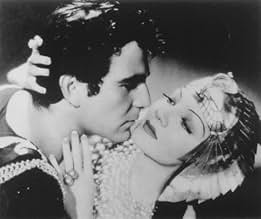
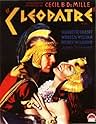
The man-hungry Queen of Egypt leads Julius Caesar and Marc Antony astray, amid scenes of DeMillean splendor.The man-hungry Queen of Egypt leads Julius Caesar and Marc Antony astray, amid scenes of DeMillean splendor.The man-hungry Queen of Egypt leads Julius Caesar and Marc Antony astray, amid scenes of DeMillean splendor.
- Won 1 Oscar
- 2 wins & 4 nominations total



Ian Maclaren
- Cassius
- (as Ian MacLaren)


Ferdinand Gottschalk
- Glabrio
- (scenes deleted)


Jayne Regan
- Lady Vesta
- (as Jane Regan)
6.85K
1
2
3
4
5
6
7
8
9
10
Featured reviews
The best version for those who love kitsch...
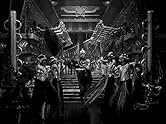
Was Demille more daring than any other director or was he just clueless? What does one say when the curtains close on Antony and Cleopatra and suddenly the screen erupts with more sexual symbols than any moment in Hollywood's history? From the phallic symbols (oars) to the yonic symbols (curtains) until finally both orgasmically mesh together in a final combination (a drummer with his drum), the scene tells us we're viewing the artistry of a kinky genius or a shameless carney.
And along with the jawdropping visuals, the film is crammed with juicy Demille-like dialog. Unlike other Demille films, this one has a wonderful cast to deliver his unique oneliners, and there are so many. My own favorites are the moments of dumbdowned Shakespeare. Instead of speaking of Cleopatra's "infinite variety" we are told she is always "many colored" and, of course, instead of "Et tu, Brute?" we get, "You? You too, Brutus?" What can you say about a movie in which Julius Ceasar says "Nope" to his senators? Nothing. One can only savor every delicious moment of camp that only a Demille could serve up.
The Taylor/Burton version is more spectacular, more intelligent, and more historical, but for those who relish kitsch--and this story always lends itself to it--this version is the best.
And along with the jawdropping visuals, the film is crammed with juicy Demille-like dialog. Unlike other Demille films, this one has a wonderful cast to deliver his unique oneliners, and there are so many. My own favorites are the moments of dumbdowned Shakespeare. Instead of speaking of Cleopatra's "infinite variety" we are told she is always "many colored" and, of course, instead of "Et tu, Brute?" we get, "You? You too, Brutus?" What can you say about a movie in which Julius Ceasar says "Nope" to his senators? Nothing. One can only savor every delicious moment of camp that only a Demille could serve up.
The Taylor/Burton version is more spectacular, more intelligent, and more historical, but for those who relish kitsch--and this story always lends itself to it--this version is the best.
Cleopatra (1934) ***1/2
I wasn't looking forward to this one as much as THE SIGN OF THE CROSS (considered by many as De Mille's best film) but I must say that I was just as impressed by it. The pacing here is smoother, and we do get to see some wonderful action montages towards the end as opposed to the rather middling arena stuff of CROSS.
Claudette Colbert, too gets a lot more coverage this time around and certainly clinches the title role far better than the positively annoying Elizabeth Taylor in the ill-fated 1963 version. However, the male leads here are less interesting, for lack of a better word: Henry Wilcoxon and Warren William are adequate but, naturally, no match for the thespian skills of Richard Burton and Rex Harrison respectively.
The supporting cast is notable (Ian Keith, Irving Pichel, Joseph Schildkraut, C. Aubrey Smith) and the film features a number of great scenes: Caesar's murder (partly filmed in a POV shot), following which is a delicious jibe at Antony's famous oratory during Caesar's funeral as envisioned by Shakespeare; the long - and justly celebrated - barge sequence, in which Antony (intent on teaching Cleopatra, whom he blames for Caesar's death, a lesson) ends up being completely won over by her wiles; Cleopatra's own death scene is simply but most effectively filmed.
Like in THE SIGN OF THE CROSS, the film's production values are truly awe-inspiring and, in fact, Victor Milner was awarded with a well-deserved Oscar for his lush cinematography here. Needless to say, De Mille's take on Cleopatra, despite feeling hurried since it runs for less than half its length, is a more satisfying viewing experience than the stultifyingly dull, overblown and misguided (if still worthwhile and not quite as catastrophic as the history books would have it) later version.
Claudette Colbert, too gets a lot more coverage this time around and certainly clinches the title role far better than the positively annoying Elizabeth Taylor in the ill-fated 1963 version. However, the male leads here are less interesting, for lack of a better word: Henry Wilcoxon and Warren William are adequate but, naturally, no match for the thespian skills of Richard Burton and Rex Harrison respectively.
The supporting cast is notable (Ian Keith, Irving Pichel, Joseph Schildkraut, C. Aubrey Smith) and the film features a number of great scenes: Caesar's murder (partly filmed in a POV shot), following which is a delicious jibe at Antony's famous oratory during Caesar's funeral as envisioned by Shakespeare; the long - and justly celebrated - barge sequence, in which Antony (intent on teaching Cleopatra, whom he blames for Caesar's death, a lesson) ends up being completely won over by her wiles; Cleopatra's own death scene is simply but most effectively filmed.
Like in THE SIGN OF THE CROSS, the film's production values are truly awe-inspiring and, in fact, Victor Milner was awarded with a well-deserved Oscar for his lush cinematography here. Needless to say, De Mille's take on Cleopatra, despite feeling hurried since it runs for less than half its length, is a more satisfying viewing experience than the stultifyingly dull, overblown and misguided (if still worthwhile and not quite as catastrophic as the history books would have it) later version.
Epic and a visual treat
What an extraordinary year 1934 was for Claudette Colbert. "It Happened One Night", "Imitation of Life", and of course, Cecil B. DeMille's version of the epic story, "Cleopatra". It's lush and extravagant especially for the time period, with absolutely marvelous costumes by Travis Banton, and beautiful art deco sets by Hans Dreier. Warren William is solid as Julius Ceasar and Henry Wilcoxon is passable as Marc Antony, but, wow, Claudette Colbert sizzles as Cleopatra. She finds the right balance between regal grandeur and smooth seduction. This movie just squeaked in before the doors of the Hays Code closed, and thank goodness, because she's so beautiful while slinking around in those revealing outfits. There are some fantastic dance/circus performances as well, and the movie is such a visual treat. The dialogue sometimes gets a little silly, but DeMille knew a good story when he saw one, and he knew that sex and violence sold. His ambition in production, both in creating big scenes and in the small details, really pay off, and it's no doubt that this is one of those early films that shaped Hollywood "epic" movies for decades.
"I'm no longer a queen. I'm a woman!"
Spectacular DeMille hokum that, like most of his work, is hard to dislike despite its flaws. Say what you will about Cecil B. DeMille but he knew how to put on a show. The sets, costumes, and pageantry are excellent. The actors are all very enjoyable even if they ham it up some. Claudette Colbert is sexy and a treat to watch. Warren William's Julius Caesar seems like he would be more at home shooting craps or hustling pool than ruling Rome. Henry Wilcoxon is quite good as Marc Antony. The rest of the cast is solid, as DeMille supporting casts usually were. I have no sympathy for history buffs who gripe about this movie's failure to adhere to historical accuracy. If you watched a movie, especially a C.B. DeMille movie, looking for a history lesson then the fault is on you and not him. It's a fun piece of escapism loosely based on real people and events. Lighten up and enjoy the movie.
This is a very different Cleopatra than the 1963 version!
This movie is very different from the 1963 film starring Elizabeth Taylor. This version of "Cleopatra" doesn't take itself nearly as seriously as that film, and actually, it may be easier to watch for that very reason. However, Cleopatra as played by Claudette Colbert is definitely over the top. At times, she is so campy in her role that it seems inappropriate given some of the situations she is in and the gravity of the moment. I often had the sense that Claudett Colbert was straining to bring out a great performance of Cleopatra but that the director was guiding her to overdo it against her wishes and she somehow is letting the audience know! "Cleopatra" walks a fine line between being a tongue in cheek film and between being a serious drama, and sometimes the lines get blurred. Warren William is a bit irritating in his role as Julius Caesar. Henry Wilcoxon fares much better as Marc Antony and this film picks up steam as soon as he arrives on the scene. Several of the bit players are very good in "Cleopatra." This movie has an odd fascination to it. I actually found it to be better the second time I watched it than the first. It's worth watching for film buffs, but perhaps not everyone's cup of tea. I'd give this one an 80/100 despite the fact that it was nominated for "Best Picture" in 1934.


Did you know
- TriviaWhen Cecil B. DeMille was in pre-production on this film, he asked to screen the original Cleopatra (1917) with Theda Bara. No prints could be found in Los Angeles, so a copy was borrowed from the Fox office in New York. After DeMille viewed the film, it was sent back to Little Ferry, NJ. On 7/9/37 a fire at the storage facility destroyed almost all of Fox's known archived prints, most likely including "Cleopatra". The screening for DeMille's company, on 2/15/34, may have been the last time anyone saw the legendary film. However, on September 14, 2023, 42 seconds of extremely rare footage of the final act in which Cleopatra prepares to die as the Roman Legion marches upon her palace was procured from a 1920's toy film projector and presented on YouTube.
- GoofsThe main doors to Cleopatra's chambers have modern metal hinges.
- Quotes
Cleopatra: Together we could conquer the world.
Julius Caesar: Nice of you to include me.
- Alternate versionsThe movie was released in Germany with German direction by Kurt Bleines and German dialogue by Helmut Brandis and Helena von Fortenbach.
- ConnectionsEdited into Catalogue of Ships (2008)
Details
- Runtime
- 1h 40m(100 min)
- Color
- Aspect ratio
- 1.37 : 1
Contribute to this page
Suggest an edit or add missing content