
Egotistical nightclub dance performer Raoul has the determination to succeed at all costs, and the only woman in his life who truly matters to him is a dancing partner named Helen.Egotistical nightclub dance performer Raoul has the determination to succeed at all costs, and the only woman in his life who truly matters to him is a dancing partner named Helen.Egotistical nightclub dance performer Raoul has the determination to succeed at all costs, and the only woman in his life who truly matters to him is a dancing partner named Helen.
- Awards
- 1 win total





Ray Milland
- Lord Robert Coray
- (as Raymond Milland)

Martha Bamattre
- Belgian Landlady
- (uncredited)

Max Barwyn
- Waiter
- (uncredited)
Eugene Borden
- Chez Raoul Patron
- (uncredited)
Jack Chefe
- Nightclub Patron
- (uncredited)

Heinie Conklin
- Beer Garden Waiter
- (uncredited)
Frank Dunn
- Hotel Manager
- (uncredited)

Elinor Fair
- Dancer
- (uncredited)
Constant Franke
- Chez Raoul Patron
- (uncredited)
Gregory Golubeff
- Orchestra Leader
- (uncredited)

Mack Gray
- Club Patron
- (uncredited)
6.6434
1
2
3
4
5
6
7
8
9
10
Featured reviews
George Raft's best musical
This is a surprisingly good '30s dance film from Paramount. It is neither a frothy comedy nor a dated revue like so many musicals of the day. There's a bit of a story, some nifty dialogue and a whole lot of style.
The story follows Raoul (perfectly cast George Raft) as he rises from coal mine laborer to be a top dancer in pre-Great War Europe. Unrelenting and egocentric, he goes through a line of dance partners from whom he flees romantic entanglements until war changes everything. As unlikely as the plot sounds on paper, director Wesley Ruggles easily guides the action from Raoul's unfortunate experience in an amateur theater to a beer garden to a Paris nightclub to a London club to his own hot spot. Along the way there is the desperately possessive Frances Drake, erotic fan dancer Sally Rand, and best of all Carole Lombard as Helen, the woman Raoul really falls for.
Those who are watching the film just to see Lombard have to wait a while before she first shows up. In fact, it is even longer before we first hear the music of "Bolero" itself. But it's all worth the wait.
The dances are a great representation of Raft's vaudeville and nightclub act before he hit Hollywood. The portrayal of the first Paris club, in fact, recalls a very young Raft's real employment as a tea-room gigolo - dancing with dowagers for tips with the possibility of having to fulfill other obligations afterward. Sex has a constant presence here, as is usually the case with Raft's adult fare. The hint of it spices the dialogue and drives the action. Rand's famous fan dance is a sensual highlight, and Lombard easily strips down to her skivvies as well.
A major part of the consistent mood is Leo Tover's cinematography. He dramatically captured the dances as well as emphasizing the performances of the actors with light and shadow. Even in the distance shots of the Bolero number when dance doubles do the heavy lifting, there is never a break in the moment. Tover and Ruggles set up the film to play to Raft's strengths and let Lombard be Lombard.
As with so many movies, the grotesquely gruesome World War I is hacked down to about two minutes, but it does cause a huge turn in the plot. And believably so, as the long-term effects of poison gas really did ruin the lives of those who survived the war itself.
It is odd to see Raft and William Frawley playing brothers (they are almost different species), and it is not explained until very late in the film that they are only half-brothers. Also coming late is the sudden information that Raoul's mother was Belgian, making it convenient for him to join the Belgian army as a publicity stunt.
But the movie isn't about plot - it's about mood and style. This is the only "A" musical Raft was fortunate enough to get. The studios threw him into other musicals occasionally, but they were all cheaper, slap-dash affairs (like the vastly inferior "Rumba" with lover Carole again) trying to make the same buck without half the production value and certainly without quality direction.
The story follows Raoul (perfectly cast George Raft) as he rises from coal mine laborer to be a top dancer in pre-Great War Europe. Unrelenting and egocentric, he goes through a line of dance partners from whom he flees romantic entanglements until war changes everything. As unlikely as the plot sounds on paper, director Wesley Ruggles easily guides the action from Raoul's unfortunate experience in an amateur theater to a beer garden to a Paris nightclub to a London club to his own hot spot. Along the way there is the desperately possessive Frances Drake, erotic fan dancer Sally Rand, and best of all Carole Lombard as Helen, the woman Raoul really falls for.
Those who are watching the film just to see Lombard have to wait a while before she first shows up. In fact, it is even longer before we first hear the music of "Bolero" itself. But it's all worth the wait.
The dances are a great representation of Raft's vaudeville and nightclub act before he hit Hollywood. The portrayal of the first Paris club, in fact, recalls a very young Raft's real employment as a tea-room gigolo - dancing with dowagers for tips with the possibility of having to fulfill other obligations afterward. Sex has a constant presence here, as is usually the case with Raft's adult fare. The hint of it spices the dialogue and drives the action. Rand's famous fan dance is a sensual highlight, and Lombard easily strips down to her skivvies as well.
A major part of the consistent mood is Leo Tover's cinematography. He dramatically captured the dances as well as emphasizing the performances of the actors with light and shadow. Even in the distance shots of the Bolero number when dance doubles do the heavy lifting, there is never a break in the moment. Tover and Ruggles set up the film to play to Raft's strengths and let Lombard be Lombard.
As with so many movies, the grotesquely gruesome World War I is hacked down to about two minutes, but it does cause a huge turn in the plot. And believably so, as the long-term effects of poison gas really did ruin the lives of those who survived the war itself.
It is odd to see Raft and William Frawley playing brothers (they are almost different species), and it is not explained until very late in the film that they are only half-brothers. Also coming late is the sudden information that Raoul's mother was Belgian, making it convenient for him to join the Belgian army as a publicity stunt.
But the movie isn't about plot - it's about mood and style. This is the only "A" musical Raft was fortunate enough to get. The studios threw him into other musicals occasionally, but they were all cheaper, slap-dash affairs (like the vastly inferior "Rumba" with lover Carole again) trying to make the same buck without half the production value and certainly without quality direction.
Pleasant...and NOT by the numbers!
"Bolero" is a pleasant little film....not one I'd rush out to see but one still worth seeing. It's particularly nice because although George Raft is known more for playing tough guys, here he's actually doing what he did best...dance.
When the film begins, Raoul (Raft) is working in a dance hall...dancing with old ladies for a pittance. He knows he's too good for that and soon find himself a dance partner and they hit it big in nightclubs. But there's a problem...Raoul always maintained that this was business but his partner is more interested in romance and her professionalism was lacking. Soon, he meets Helen (Carole Lombard) and she agees with him...it's business. And, not surprisingly, the act hits it even bigger...so big that Raoul has the money to do what he's drempt about...open his own nightclub. But a pesky little thing called WWI intervenes....so what's next?
The most interesting thing about this film for me was its Pre-Code sensibilities. Because Hollywood routinely ignored the old Production Code, a few shocking things occur in this one...such as a supporting actress being Sally Rand (doing a cleaned up version of her famous fan dance) and Raft with his hands on Lombard's boobs during the Bolero number! Shocking to imagine but things were pretty rique back before July, 1934!
Overall, a pleasant musical which is a tad better because again and again, the film surprised me by not using all the usual cliches and story elements. See the picture...see what I mean.
When the film begins, Raoul (Raft) is working in a dance hall...dancing with old ladies for a pittance. He knows he's too good for that and soon find himself a dance partner and they hit it big in nightclubs. But there's a problem...Raoul always maintained that this was business but his partner is more interested in romance and her professionalism was lacking. Soon, he meets Helen (Carole Lombard) and she agees with him...it's business. And, not surprisingly, the act hits it even bigger...so big that Raoul has the money to do what he's drempt about...open his own nightclub. But a pesky little thing called WWI intervenes....so what's next?
The most interesting thing about this film for me was its Pre-Code sensibilities. Because Hollywood routinely ignored the old Production Code, a few shocking things occur in this one...such as a supporting actress being Sally Rand (doing a cleaned up version of her famous fan dance) and Raft with his hands on Lombard's boobs during the Bolero number! Shocking to imagine but things were pretty rique back before July, 1934!
Overall, a pleasant musical which is a tad better because again and again, the film surprised me by not using all the usual cliches and story elements. See the picture...see what I mean.
Save the last dance for me.
In his eighties extravaganza "Les Uns et Les Autres" ,Claude Lelouch tried a new choreography for le Bolero de Maurice Ravel.It cannot hold a candle to the wonderful Raft/Lombard dancing.This extraordinary finale has also emotion and heart going for it,an emotion totally absent of Lelouch's too perfect and terribly cold sequence.
The story takes place in France 1910.A miner (Raft) becomes a Danseur Mondain.He 's not interested in his female partners and is a real heart breaker.His only purpose is to marry a rich woman.Enter a gorgeous woman (Lombard) who registers the same desire :she 's looking for a money match.So both agree not to fall in love with each other.
Outside the finale ,best scene is the first interrupted ballet : Raft realizes his military audience is not watching them ,talking about the war which has just begun.So they stop dancing and the band segues from Ravel's work to "La Marseillaise" oddly sung in English.
The story takes place in France 1910.A miner (Raft) becomes a Danseur Mondain.He 's not interested in his female partners and is a real heart breaker.His only purpose is to marry a rich woman.Enter a gorgeous woman (Lombard) who registers the same desire :she 's looking for a money match.So both agree not to fall in love with each other.
Outside the finale ,best scene is the first interrupted ballet : Raft realizes his military audience is not watching them ,talking about the war which has just begun.So they stop dancing and the band segues from Ravel's work to "La Marseillaise" oddly sung in English.
Dancing Man
BOLERO (Paramount, 1934), directed by Wesley Ruggles, stars movie tough guy George Raft(1895-1980), in a change of pace playing a dancer, not in the sense of Fred Astaire or Gene Kelly, but that of an ambitious night club dancer working solely on a "strictly business" deal with his female partners, in spite of how some try to throw themselves on him.
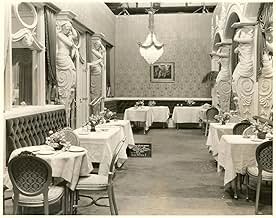
The plot: Raoul De Baere (George Raft), working as a coal digger by day and dancer on amateur shows by night, is an unscrupulous young man determined to succeed. Advised he would do better with a partner, he borrows a large sum of money from his brother, Michael (William Frawley) to set up a dancing act for himself. He lands a job dancing at a Hoboken Beer Garden, moves to France where he rises from tea salon gigolo to featured dancer at the Cabaret Montmarte. After acquiring the temperamental partner, Leona (Frances Drake) and Lady Clare D'Argon (Gertrude Michael) as his sponsor, he joins professional forces with the self sufficient Helen Hathaway (Carole Lombard). Starting his own night club, Chez Raoul, he plans on dancing the "Bolero" with Helen on opening night, surrounded by black natives pounding the drums. During their debut performance, patrons have more interest discussing the war outbreak in Europe than watching the dance. Raoul cancels his performance and announces he's enlisting in the service for his native land Belgium. When Helen finds that Raoul enlisted in the Army as a publicity stunt rather than showing his true patriotism, she leaves him. After the war ends in 1918, Raoul returns to civilian life, diagnosed with a bad heart. Going against doctor's orders, he reopens his night club to resume where he had left off five years ago, dancing the "Bolero." Helen, who has since married, to Lord Robert Coray (Ray Milland), are both seated with the crowd to watch the re-opening of Chez Raoul. Because Annette (Sally Rand), Raoul's new partner whom he had known before, arrives drunk, he cancels her out intends on doing a solo dance instead. As for Michael, more worried about the risk Raoul is about to take and knowing how important this night is to him, goes over to Helen to see if she would consider substituting for Annette.
In spite of many dance numbers, BOLERO is not a musical, and should not be categorized as one. It is, however, a drama about a dancer. There are no songs or vocalizing whatsoever, only instrumental scoring to dance numbers to popular songs from the 1914-1918 era, including "In My Merry Oldsmobile," "Alexander's Ragtime Band" (time-stepping solo by Raft), "The Missouri Waltz," "The Tango," among others. Aside from Raft taking much of the spotlight on the dance floor either alone or with a partner, the story does break away once from Raft on Sally Rand, in a very rare movie role, doing her famous fan dance, lasting three minutes, leaving Michael (Frawley) to comment, "I never get tired looking at that number."
George Raft has always credited BOLERO as a personal favorite of all his movies, as well as Carole Lombard as his best dancing partner. While the story is about dancers, Raft and Lombard portray dancers, but for the "Bolero," they were doubled by professionals, Veloz and Yolanda, in the long shots and difficult movements. This had been a well-kept secret until revealed in a mid 1970s documentary, "That's Hollywood" narrated by Tom Bosley, and shortly after-wards in a segment from "Entertainment Tonight" profiled by Leonard Maltin. Aside from the now famous "Bolero" dance, Raft and Lombard earlier in the photo-play perform a dance to an untitled jazzy tune, once in a dressing room with Lombard in her undergarments, and later, in a night club act with Raft sporting top hat and tuxedo, and Lombard all gowned up.
George Raft is ideally cast as a self-centered dancer who won't let anything stand in his way. He performs well opposite Carole Lombard, with whom he appeared again in RUMBA (Paramount, 1935), a rehash to BOLERO, but not as good. RUMBA is as forgotten as BOLERO is better known. William Frawley as Raoul's half-brother, best known for his recurring role as the grumpy, bald-headed landlord, Fred Mertz, in the classic 1950s TV series, "I Love Lucy," starring Lucille Ball, Desi Arnaz and Vivian Vance, not only has a sizable role here, but a full head of dark hair, probably a toupee. Ray Milland, some years prior to achieving star status and an Academy Award for THE LOST WEEKEND (1945), has several small but key scenes as the wealthy Lord Coray, sporting a mustache, loving Helen from a distance and following her wherever she's performing. Contrary to the fact to when the story takes place (1914-1918), Maurice Ravel's composition of "Bolero" was actually written in 1928, making it totally impossible for Raoul and Helen to perform a dance that didn't existed then.
Out of circulation on the commercial television markets in various states since the mid 1970s, BOLERO was resurrected on cable channel's American Movie Classics (1990-91) with some fine informative insights by its host, Bob Dorian. Never distributed on video cassette, BOLERO was the sort of movie Raft needed to break away from some offbeat assignments Paramount offered him. With few musicals to his credit, he would seem to always return to the pattern of gangsters or hard-boiled tough guys, the sort of roles that suit him best. At least Raft had BOLERO to his long list of screen credits as something personal and special in his career. (***)
The plot: Raoul De Baere (George Raft), working as a coal digger by day and dancer on amateur shows by night, is an unscrupulous young man determined to succeed. Advised he would do better with a partner, he borrows a large sum of money from his brother, Michael (William Frawley) to set up a dancing act for himself. He lands a job dancing at a Hoboken Beer Garden, moves to France where he rises from tea salon gigolo to featured dancer at the Cabaret Montmarte. After acquiring the temperamental partner, Leona (Frances Drake) and Lady Clare D'Argon (Gertrude Michael) as his sponsor, he joins professional forces with the self sufficient Helen Hathaway (Carole Lombard). Starting his own night club, Chez Raoul, he plans on dancing the "Bolero" with Helen on opening night, surrounded by black natives pounding the drums. During their debut performance, patrons have more interest discussing the war outbreak in Europe than watching the dance. Raoul cancels his performance and announces he's enlisting in the service for his native land Belgium. When Helen finds that Raoul enlisted in the Army as a publicity stunt rather than showing his true patriotism, she leaves him. After the war ends in 1918, Raoul returns to civilian life, diagnosed with a bad heart. Going against doctor's orders, he reopens his night club to resume where he had left off five years ago, dancing the "Bolero." Helen, who has since married, to Lord Robert Coray (Ray Milland), are both seated with the crowd to watch the re-opening of Chez Raoul. Because Annette (Sally Rand), Raoul's new partner whom he had known before, arrives drunk, he cancels her out intends on doing a solo dance instead. As for Michael, more worried about the risk Raoul is about to take and knowing how important this night is to him, goes over to Helen to see if she would consider substituting for Annette.
In spite of many dance numbers, BOLERO is not a musical, and should not be categorized as one. It is, however, a drama about a dancer. There are no songs or vocalizing whatsoever, only instrumental scoring to dance numbers to popular songs from the 1914-1918 era, including "In My Merry Oldsmobile," "Alexander's Ragtime Band" (time-stepping solo by Raft), "The Missouri Waltz," "The Tango," among others. Aside from Raft taking much of the spotlight on the dance floor either alone or with a partner, the story does break away once from Raft on Sally Rand, in a very rare movie role, doing her famous fan dance, lasting three minutes, leaving Michael (Frawley) to comment, "I never get tired looking at that number."
George Raft has always credited BOLERO as a personal favorite of all his movies, as well as Carole Lombard as his best dancing partner. While the story is about dancers, Raft and Lombard portray dancers, but for the "Bolero," they were doubled by professionals, Veloz and Yolanda, in the long shots and difficult movements. This had been a well-kept secret until revealed in a mid 1970s documentary, "That's Hollywood" narrated by Tom Bosley, and shortly after-wards in a segment from "Entertainment Tonight" profiled by Leonard Maltin. Aside from the now famous "Bolero" dance, Raft and Lombard earlier in the photo-play perform a dance to an untitled jazzy tune, once in a dressing room with Lombard in her undergarments, and later, in a night club act with Raft sporting top hat and tuxedo, and Lombard all gowned up.
George Raft is ideally cast as a self-centered dancer who won't let anything stand in his way. He performs well opposite Carole Lombard, with whom he appeared again in RUMBA (Paramount, 1935), a rehash to BOLERO, but not as good. RUMBA is as forgotten as BOLERO is better known. William Frawley as Raoul's half-brother, best known for his recurring role as the grumpy, bald-headed landlord, Fred Mertz, in the classic 1950s TV series, "I Love Lucy," starring Lucille Ball, Desi Arnaz and Vivian Vance, not only has a sizable role here, but a full head of dark hair, probably a toupee. Ray Milland, some years prior to achieving star status and an Academy Award for THE LOST WEEKEND (1945), has several small but key scenes as the wealthy Lord Coray, sporting a mustache, loving Helen from a distance and following her wherever she's performing. Contrary to the fact to when the story takes place (1914-1918), Maurice Ravel's composition of "Bolero" was actually written in 1928, making it totally impossible for Raoul and Helen to perform a dance that didn't existed then.
Out of circulation on the commercial television markets in various states since the mid 1970s, BOLERO was resurrected on cable channel's American Movie Classics (1990-91) with some fine informative insights by its host, Bob Dorian. Never distributed on video cassette, BOLERO was the sort of movie Raft needed to break away from some offbeat assignments Paramount offered him. With few musicals to his credit, he would seem to always return to the pattern of gangsters or hard-boiled tough guys, the sort of roles that suit him best. At least Raft had BOLERO to his long list of screen credits as something personal and special in his career. (***)
Famous 30s Dance Film--Bolero!
George Raft is excellent as an ambitious dancer (he was a Broadway dancer before coming to Hollywood) who is never satisfied. He works his way up thru beer gardens and honky tonks in the US to the height of London and Paris supper clubs, finally owning his own nightclub. Even if some of the long shots are doubled by a dance act, there is enough footage here to show that Raft could dance. Not an Astair or Kelly, but Raft could certainly move--in total opposition to his screen persona as rigid tough guy. Bolero is one of Raft's most likable and best film performances.
Carole Lombard, in horrible makeup, cashes in on her breakthrough year of 1934 (this film and Twentieth Century) in her role as Helen. Lombard and Raft were a good team and are quite believable as dancers. Lombard slinks thru a few numbers here before the big Bolero production number--she even danced in her underwear for her audition. Quite racy. Lombard remains one the the screen's great treasure even 60 years after her death.
Sally Rand is surprisingly good as Annette, and yes Rand does her famous "fan dance" complete with see-through negligee. She has a couple of really solid acting scenes as well. William Frawly is good as the Irish brother (Raft plays a Belgian), while Gertrude Michael and Frances Drake are solid in support. Ray Milland has a small role as Lombard's husband.
Bolero was a hit, a change of pace for Raft, a star-making role for Lombard. It spawned 1935's Rumba, which was not a hit. And even if the long shots are of Veloz and Yolanda, they are extremely well done. We see enough of Raft and Lombard in dance action to believe that ALL the dancing is done but them.
Nice film though I wish the Bolero dance number had been longer. This and Night After Night rank among Raft's best performances.
Carole Lombard, in horrible makeup, cashes in on her breakthrough year of 1934 (this film and Twentieth Century) in her role as Helen. Lombard and Raft were a good team and are quite believable as dancers. Lombard slinks thru a few numbers here before the big Bolero production number--she even danced in her underwear for her audition. Quite racy. Lombard remains one the the screen's great treasure even 60 years after her death.
Sally Rand is surprisingly good as Annette, and yes Rand does her famous "fan dance" complete with see-through negligee. She has a couple of really solid acting scenes as well. William Frawly is good as the Irish brother (Raft plays a Belgian), while Gertrude Michael and Frances Drake are solid in support. Ray Milland has a small role as Lombard's husband.
Bolero was a hit, a change of pace for Raft, a star-making role for Lombard. It spawned 1935's Rumba, which was not a hit. And even if the long shots are of Veloz and Yolanda, they are extremely well done. We see enough of Raft and Lombard in dance action to believe that ALL the dancing is done but them.
Nice film though I wish the Bolero dance number had been longer. This and Night After Night rank among Raft's best performances.


Did you know
- TriviaBefore starting in films, George Raft was a taxi dancer in New York, dancing with women at clubs for the "ten cents a dance". He was adept at all kinds of dance steps, including Spanish-style. One of his fellow dancers was a young Italian immigrant named Rudolph Valentino.
- GoofsAfter Sally Rand dances applause can be heard before the audience actually starts clapping.
- Quotes
Mike DeBaere: [to the fan dancer] Did you ever think about doing that dance with one fan?
- ConnectionsFeatured in Columbo: Make Me a Perfect Murder (1978)
- SoundtracksBolero
The Composition by Maurice Ravel
- How long is Bolero?Powered by Alexa
Details
- Runtime
- 1h 25m(85 min)
- Color
- Aspect ratio
- 1.37 : 1
Contribute to this page
Suggest an edit or add missing content