
Frail Nemecsek, a lonely boy craving belonging, idolizes charismatic Boka, leader of a gang, in an evocative depiction of youth's pain and war's senselessness.Frail Nemecsek, a lonely boy craving belonging, idolizes charismatic Boka, leader of a gang, in an evocative depiction of youth's pain and war's senselessness.Frail Nemecsek, a lonely boy craving belonging, idolizes charismatic Boka, leader of a gang, in an evocative depiction of youth's pain and war's senselessness.
- Director
- Writers
- Stars
- Awards
- 3 wins & 1 nomination total


George P. Breakston
- Nemecsek
- (as George Breakston)

Jimmy Butler
- Boka
- (as Jimmie Butler)


Samuel S. Hinds
- Father
- (as Samuel Hinds)


- Director
- Writers
- All cast & crew
- Production, box office & more at IMDbPro
6.9583
1
2
3
4
5
6
7
8
9
10
Featured reviews
War Playing
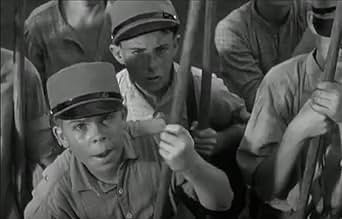
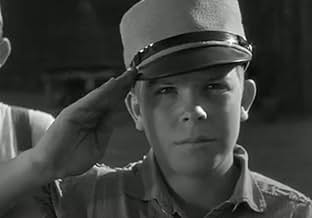
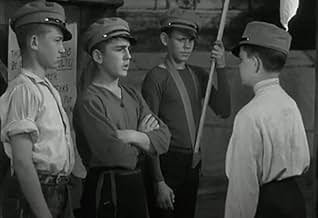
In a busy military hospital, one German soldier bemoans participating in a deadly World War, shouting out, "Patriotism is a loathsome lie!" Then, the story dissolves to a Hungarian schoolteacher telling his young students, "There is nothing finer than Patriotism, nothing nobler than War in defense of the country!" Keeping a few of the boys after school, for passing notes, reveals they are part of a gang. They are "The Paul Street Boys", and they are being threatened by older teenage gang "The Red Shirts" who want to take control of a vacant lot. The lot is the only one left in the neighborhood where the gang can meet and play. "The Paul Street Boys" like to play war games.
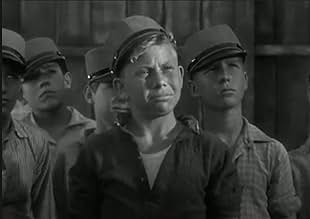
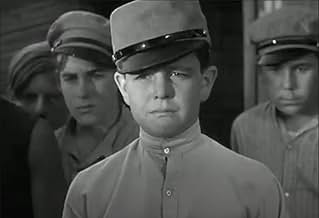
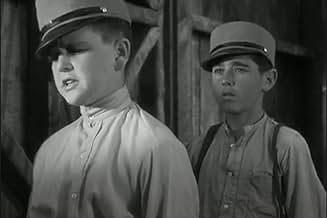
Most of the two dozen members of the gang are officers. Only small but determined George Breakston (as Erno Nemecsek), remains a "Private". Young blonde Breakston is the smallest because he won't wear heels. He's also clumsy and admits to being afraid - but "Nemecsek" possesses an enviable amount of determination. Despite being made a scapegoat in the group, Breakston admires "The Paul Street Boys" courageous leader Jimmy Butler (as Boka), who is reelected over a scheming Jackie Searl (as Gereb). Young Searl gets only two votes, from himself and the confident winner.
The boys are playing marbles when "The Red Shirts" cocky leader Frankie Darro (as Feri Ats) arrives on screen. Mr. Darro is obviously going to be hard to beat. Darro has already made inroads; working for the enemy, Searl lets Darro sneak into the "Paul Street Boys" lot and steal their flag. That evening, Breakston volunteers for a dangerous mission - to accompany leader Butler and banana lover Donald Haines (as Csonakos) to "The Red Shirts" camp, and bring back their flag. You'll have to see for yourself how successful they are, but you can be sure the gangs go to War...
An interesting side effect of Breakston's capture is the respect Darro has for his enemy's heroics. Breakston would find himself a more valued member of Darro's gang, but never wavers in his support for Butler. These relationships are highly intriguing. You can probably read a lot of different things in the allegorical story (my favorite "reading" is of "Nemecsek" as Jewish, but there are other interpretations). This film is clearly from a superior source, even without the introduction, "From Ferenc Molnar's immortal book." As it turns out, this is a classic novel from Hungry. For upshot Columbia Pictures, director Frank Borzage, photographer Joseph August, and editor Viola Lawrence excel.
Each of the performers are outstanding, with an amazing lead by Breakston. He may tend toward the sentimental, but plays it as directed. The producers and/or Mr. Borzage seem to have added an "All Quiet on the Western Front" type opening, which partially works; really, the story was strong enough as is. Also regrettable is the decision to intentionally speed up the film in selected parts. Incredibly, this received an homage in the opening of the excellent 1969 re-make, which was nominated for an "Academy Award" in the foreign language category.
******** No Greater Glory (3/14/34) Frank Borzage ~ George Breakston, Jimmy Butler, Frankie Darro, Jackie Searl
Most of the two dozen members of the gang are officers. Only small but determined George Breakston (as Erno Nemecsek), remains a "Private". Young blonde Breakston is the smallest because he won't wear heels. He's also clumsy and admits to being afraid - but "Nemecsek" possesses an enviable amount of determination. Despite being made a scapegoat in the group, Breakston admires "The Paul Street Boys" courageous leader Jimmy Butler (as Boka), who is reelected over a scheming Jackie Searl (as Gereb). Young Searl gets only two votes, from himself and the confident winner.
The boys are playing marbles when "The Red Shirts" cocky leader Frankie Darro (as Feri Ats) arrives on screen. Mr. Darro is obviously going to be hard to beat. Darro has already made inroads; working for the enemy, Searl lets Darro sneak into the "Paul Street Boys" lot and steal their flag. That evening, Breakston volunteers for a dangerous mission - to accompany leader Butler and banana lover Donald Haines (as Csonakos) to "The Red Shirts" camp, and bring back their flag. You'll have to see for yourself how successful they are, but you can be sure the gangs go to War...
An interesting side effect of Breakston's capture is the respect Darro has for his enemy's heroics. Breakston would find himself a more valued member of Darro's gang, but never wavers in his support for Butler. These relationships are highly intriguing. You can probably read a lot of different things in the allegorical story (my favorite "reading" is of "Nemecsek" as Jewish, but there are other interpretations). This film is clearly from a superior source, even without the introduction, "From Ferenc Molnar's immortal book." As it turns out, this is a classic novel from Hungry. For upshot Columbia Pictures, director Frank Borzage, photographer Joseph August, and editor Viola Lawrence excel.
Each of the performers are outstanding, with an amazing lead by Breakston. He may tend toward the sentimental, but plays it as directed. The producers and/or Mr. Borzage seem to have added an "All Quiet on the Western Front" type opening, which partially works; really, the story was strong enough as is. Also regrettable is the decision to intentionally speed up the film in selected parts. Incredibly, this received an homage in the opening of the excellent 1969 re-make, which was nominated for an "Academy Award" in the foreign language category.
******** No Greater Glory (3/14/34) Frank Borzage ~ George Breakston, Jimmy Butler, Frankie Darro, Jackie Searl
Our Gang like ALL QUIET ON THE WESTERN FRONT boys drama!
This forgotten little family / children's film is about bigger adult issues. This sweet film is about acceptance of those who are different. It uses so much symbolism and so many metaphors it seems is seems like the whole cast is on a soap box. But it's worth it. During the heart of the Great Depression with a pending war in Europe these issues needed to be raised by those who would be fighting for them just ten years later. Two rival gangs of school boys are at war over the same vacant lot as the only place left for them to play. The writer and director focus on the world as the boys see it and so the audience is brought inside the walls of the fort and the earnest issues of homeland, friendship, loyalty and tolerance. An almost too sweet story unfolds and we get to know these youngsters and are touched by their views. I recommend this film and thank Cinesation, the annual Silent & Early Film Festival held in Michigan each fall for playing it on the big screen!
Atypical but important Borzage classic
What makes NO GREAT GLORY atypical for Borzage is that there is no central romantic couple, but this film, a stirring and vivid anti-war drama from the perspective of children (based on Molnar's THE BOYS OF PAUL STREET, which has been filmed on several other occasions), remains one of Borzage's most powerful, and shows the great range of his talent. Using a large cast of children, he is able to get some of the finest performances from many of the child actors, most of whom were Hollywood veterans by this point: George Breakston, Frankie Darro, etc. Yet here, with Borzage's patient guidance, they give fresh and touching performances. Borzage is always able to find great humanity in his performers, and the sorrowful story becomes truly tragic, because Borzage truly engages your emotions and your mind. This is another movie that is not available, and should be made available (and should be shown as often as possible).
A Truly Moving Film
Frank Borzage's films puzzle me in many respects. I can't figure out how he manages to move us but he does. I've seen all the often-quoted films - "Three Comrades", "Mortal Storm", "Man's Castle", "Seventh Heaven" - on more than one occasion and yet each time I am truly moved.
I first caught "No Greater Glory" at the Cinematheque in Paris with a friend when we were studying film. The audience was actually moved to tears! We're talking here about a French audience, a foreign language film not particularly well dubbed on film, an era never experienced by the young audience present at the time and performances by child actors unknown for the most part. Yes, the context in the film was European as were the names and places but the situation was Depression-era America, let there be no doubt about that, as were the actors and production staff. I'm still amazed why and how it worked its magic.
The young actors are never "cute", the lines in the film are more adult than child-like, the performances quite adequate but with no pulling-out-all-the-stops Academy Award-winning emoting. In short, it doesn't "feel" like a manipulative movie in any traditional sense of the word, yet we are manipulated by Borzage's hatred of war in general and his remarkable compassion and sincerity in translating his feelings onto the screen. This film is an absolute must!
Curtis Stotlar
I first caught "No Greater Glory" at the Cinematheque in Paris with a friend when we were studying film. The audience was actually moved to tears! We're talking here about a French audience, a foreign language film not particularly well dubbed on film, an era never experienced by the young audience present at the time and performances by child actors unknown for the most part. Yes, the context in the film was European as were the names and places but the situation was Depression-era America, let there be no doubt about that, as were the actors and production staff. I'm still amazed why and how it worked its magic.
The young actors are never "cute", the lines in the film are more adult than child-like, the performances quite adequate but with no pulling-out-all-the-stops Academy Award-winning emoting. In short, it doesn't "feel" like a manipulative movie in any traditional sense of the word, yet we are manipulated by Borzage's hatred of war in general and his remarkable compassion and sincerity in translating his feelings onto the screen. This film is an absolute must!
Curtis Stotlar
Astonishing, beautiful
Is this an allegory? Is it intended to show the futility of war? Is it just a story of a moment of boys' life? Supposedly it is somewhat autobiographical, a story by Ferenc Molnar.
Whatever its intent, and I suppose a viewer is allowed to see what he wants, it is a moving and beautifully done film.
There is one very sad irony: Jimmy Butler, who gives a magnificent performance, and who shows so much talent you just know he is going to be a big star, was later a casualty of the real war, World War II.
He shows astonishing presence, especially for one so young -- he was 13 when "No Greater Glory" was released -- and gave a performance not surpassed by many adults.
Frankie Darro, sometimes billed as "Darrow," was nearly always simply great (You must see him in "Wild Boys of the Road," where he performs surely the first "break dance" on film.), and he is a stand-out here.
Ralph Morgan and Lois Wilson are wonderful as parents of the boy played by George Breakston, just heartbreaking as they wish their little son recovery from his illness.
Really, even when an occasional player is less than great, this movie and the portrayals are enthralling.
Turner Classic Movies is to be commended for letting us see this.
Whatever its intent, and I suppose a viewer is allowed to see what he wants, it is a moving and beautifully done film.
There is one very sad irony: Jimmy Butler, who gives a magnificent performance, and who shows so much talent you just know he is going to be a big star, was later a casualty of the real war, World War II.
He shows astonishing presence, especially for one so young -- he was 13 when "No Greater Glory" was released -- and gave a performance not surpassed by many adults.
Frankie Darro, sometimes billed as "Darrow," was nearly always simply great (You must see him in "Wild Boys of the Road," where he performs surely the first "break dance" on film.), and he is a stand-out here.
Ralph Morgan and Lois Wilson are wonderful as parents of the boy played by George Breakston, just heartbreaking as they wish their little son recovery from his illness.
Really, even when an occasional player is less than great, this movie and the portrayals are enthralling.
Turner Classic Movies is to be commended for letting us see this.


Did you know
- TriviaJimmy Butler was killed during World War II on February 18, 1945 in France.
- ConnectionsEdited from All Quiet on the Western Front (1930)
- How long is No Greater Glory?Powered by Alexa
Details
- Release date
- Country of origin
- Language
- Also known as
- Men of Tommorow
- Production company
- See more company credits at IMDbPro
- Runtime
- 1h 14m(74 min)
- Color
- Aspect ratio
- 1.37 : 1
Contribute to this page
Suggest an edit or add missing content