
A French captain (Jean-Pierre Aumont) poses as a Nazi to pinpoint a U-boat base off the coast of France, while assuming the identity of a look-a-like French citizen.A French captain (Jean-Pierre Aumont) poses as a Nazi to pinpoint a U-boat base off the coast of France, while assuming the identity of a look-a-like French citizen.A French captain (Jean-Pierre Aumont) poses as a Nazi to pinpoint a U-boat base off the coast of France, while assuming the identity of a look-a-like French citizen.



Jean-Pierre Aumont
- Bertrand Corlay
- (as Pierre Aumont)
- …


6.7384
1
2
3
4
5
6
7
8
9
10
Featured reviews
from a novel by Helen MacInnes
Jean-Pierre Aumont, Susan Peters, Signe Hasso, and Margaret Wycherly star in "Assignment in Brittany," a 1943 film.
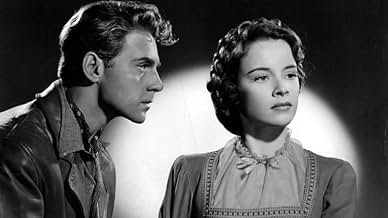
The story concerns a young man, Capt. Pierre Matard (Aumont), who is sent to France because he is a lookalike of an injured man, Bertrand Corlay (also Aumont) hospitalized in London. The British need to location of a port in Brittany that has destroyed a lot of British ships. Pierre goes to France and impersonates Corlay.
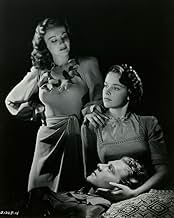
Matard knows a great many facts about Corlay but nothing of his cold personality and the fact that he has been playing ball with the Nazis. Bertrand's mother catches on fairly quickly; his girlfriend (Susan Peters) is slower on the draw. Corlay also has a mistress (Hasso), which comes as a surprise. He works with the Free French, all the while trying to keep himself and others out of danger.
The last time I saw Jean-Pierre Aumont was in a TV movie called Sins in 1986. He was 75 years old, and I don't think I ever saw him as anything but elderly. Well, boy, what a hunk he was - that beautiful mane of hair, glorious smile, good build - wow.
This is a typical black and white film about the war, showing the courage of the people in the French resistance. Everybody was good, and despite a critique of stage mannerisms on this board, I was frankly unaware of it.
It was nice to see the lovely Susan Peters as the shy but loving girlfriend of Bernard, who actually falls for his impersonator Matard. Only two years later, she would be in a hunting accident and spend the following 7 years in a wheelchair, until her death in 1952 at the age of 31.
Aumont actually fought with the Free French in North Africa. He was widowed in 1951 when his wife, Maria Montez, died of heart failure while sitting in a hot bath. He remarried in 1956, to Marisa Pavan, and stayed married to her until his death 45 years later.
Good movie, good suspense, and a young and vital Aumont.
The story concerns a young man, Capt. Pierre Matard (Aumont), who is sent to France because he is a lookalike of an injured man, Bertrand Corlay (also Aumont) hospitalized in London. The British need to location of a port in Brittany that has destroyed a lot of British ships. Pierre goes to France and impersonates Corlay.
Matard knows a great many facts about Corlay but nothing of his cold personality and the fact that he has been playing ball with the Nazis. Bertrand's mother catches on fairly quickly; his girlfriend (Susan Peters) is slower on the draw. Corlay also has a mistress (Hasso), which comes as a surprise. He works with the Free French, all the while trying to keep himself and others out of danger.
The last time I saw Jean-Pierre Aumont was in a TV movie called Sins in 1986. He was 75 years old, and I don't think I ever saw him as anything but elderly. Well, boy, what a hunk he was - that beautiful mane of hair, glorious smile, good build - wow.
This is a typical black and white film about the war, showing the courage of the people in the French resistance. Everybody was good, and despite a critique of stage mannerisms on this board, I was frankly unaware of it.
It was nice to see the lovely Susan Peters as the shy but loving girlfriend of Bernard, who actually falls for his impersonator Matard. Only two years later, she would be in a hunting accident and spend the following 7 years in a wheelchair, until her death in 1952 at the age of 31.
Aumont actually fought with the Free French in North Africa. He was widowed in 1951 when his wife, Maria Montez, died of heart failure while sitting in a hot bath. He remarried in 1956, to Marisa Pavan, and stayed married to her until his death 45 years later.
Good movie, good suspense, and a young and vital Aumont.
Not be as far as American WWII propaganda films go...
This is a wartime film obviously intended to bolster the public's resolve. It stars a French expatriate, Jean-Pierre Aumont, who came to Hollywood when his country fell to the Germans. Unfortunately, not too many other French actors were available...and those who SHOULD have had French accents never even tried. So, it's all a bit strange with Aumont the only French person in a film set in a France where everyone has American and British accents!! Just suspend your sense of disbelief and watch.
The story is a bit silly but enjoyable. It seems that a French agent cannot go back to his native land for an assignment due to an injury. But, they manage to find a Free-French officer, Pierre (Aumont) who looks a lot like him. And, after a bit of plastic surgery, voila...the man has a double who will do the assignment for him! His job is to locate the secret German submarine bases so they can be destroyed. And, until he locates them, Pierre is to assume the other man's life...living withe man's mother and interacting with his friends.
The story that follows is rather typical of a wartime film. However, the Germans are not quite as monstrous as they often were in WWII- era films--as the filmmakers were going more for realism in this instance. Overall, it's enjoyable but a tad dumb. Turn off the part of your brain that questions silly plot lines and you'll no doubt enjoy this generally well made film.
The story is a bit silly but enjoyable. It seems that a French agent cannot go back to his native land for an assignment due to an injury. But, they manage to find a Free-French officer, Pierre (Aumont) who looks a lot like him. And, after a bit of plastic surgery, voila...the man has a double who will do the assignment for him! His job is to locate the secret German submarine bases so they can be destroyed. And, until he locates them, Pierre is to assume the other man's life...living withe man's mother and interacting with his friends.
The story that follows is rather typical of a wartime film. However, the Germans are not quite as monstrous as they often were in WWII- era films--as the filmmakers were going more for realism in this instance. Overall, it's enjoyable but a tad dumb. Turn off the part of your brain that questions silly plot lines and you'll no doubt enjoy this generally well made film.
Good underground film and portrayal of mixed French loyalties in WW II
This is a Hollywood movie made in the middle of World War II. It's a very good portrayal of British and French undercover work during the war, as well as of the French underground. To its credit, it also shows the betrayal of some of the French, including a double agent and traitors among the underground.
The French underground contributed to the Allied efforts against Germany in WW II. But the country also saw a significant collaboration with the Nazis, in the Vichy government, socializing with the Germans, and spies and double agents in the underground.
At the time "Assignment in Brittany" was being made, Germany's blockade of the Atlantic was in place. By the end of 1943, when it had ended - due to loss of ships and air support, the Germans had sunk 3,500 merchant ships enroute to the United Kingdom and Russia. Some 175 Allied war ships also had been sunk. Germany lost 783 U-boats and 47 surface ships.
There wasn't a specific U-boat base on the coast of France that had to be knocked out, as this movie shows. Rather, Allied bombing raids hit several ports from which U-boats operated. But, most of the U-boat losses were from Allied aircraft and convoy escort ships. The Atlantic battle was one of attrition in which the Allies outlasted the Germans with superior naval power combined with a blockade of Germany from its Baltic Sea ports.
This film has some good action toward the end. But its best aspect is the portrayal of the French underground and people during the German occupation. The story is an interesting one. Considering that MGM had to shoot the movie on its Hollywood studios, the film has a realistic feel as though it's taking place in Brittany France during the war.
The cast all do a fine job and the film quality and production are good. This was the American film debut of both Jean-Pierre Aumont and Signe Hasso. He is Capt. Pierre Metard in the French Army, and goes undercover back into France as a look-alike, Bertrand Corlay. His duty is to pinpoint the hidden German U-boat base so that the Allies can attack and destroy it. The story has an element of romance, but not the obviously usual type that Hollywood inserts to increase appeal for a film.
Here are a couple of interesting lines from the movie. Corlay and a schoolteacher, Jean Kerenor (played by Richard Whorf) are going into the town pub when a German guard stops them. Kerenor says, "One uncovers. It's good form for the content." They take their hats off and enter, where town men and German officers are seated at tables. But all others are wearing their hats.
To Metard, who impersonates her son, Madame Henriette Corlay says, "There are women, monsieur, who give their love but once. I think Ann's one of them. When you go..." Capt. Metard, "It's not I she loves... it's your son." Mme. Corlay, "I don't think you believe that. Monsieur, don't make her suffer any more."
The French underground contributed to the Allied efforts against Germany in WW II. But the country also saw a significant collaboration with the Nazis, in the Vichy government, socializing with the Germans, and spies and double agents in the underground.
At the time "Assignment in Brittany" was being made, Germany's blockade of the Atlantic was in place. By the end of 1943, when it had ended - due to loss of ships and air support, the Germans had sunk 3,500 merchant ships enroute to the United Kingdom and Russia. Some 175 Allied war ships also had been sunk. Germany lost 783 U-boats and 47 surface ships.
There wasn't a specific U-boat base on the coast of France that had to be knocked out, as this movie shows. Rather, Allied bombing raids hit several ports from which U-boats operated. But, most of the U-boat losses were from Allied aircraft and convoy escort ships. The Atlantic battle was one of attrition in which the Allies outlasted the Germans with superior naval power combined with a blockade of Germany from its Baltic Sea ports.
This film has some good action toward the end. But its best aspect is the portrayal of the French underground and people during the German occupation. The story is an interesting one. Considering that MGM had to shoot the movie on its Hollywood studios, the film has a realistic feel as though it's taking place in Brittany France during the war.
The cast all do a fine job and the film quality and production are good. This was the American film debut of both Jean-Pierre Aumont and Signe Hasso. He is Capt. Pierre Metard in the French Army, and goes undercover back into France as a look-alike, Bertrand Corlay. His duty is to pinpoint the hidden German U-boat base so that the Allies can attack and destroy it. The story has an element of romance, but not the obviously usual type that Hollywood inserts to increase appeal for a film.
Here are a couple of interesting lines from the movie. Corlay and a schoolteacher, Jean Kerenor (played by Richard Whorf) are going into the town pub when a German guard stops them. Kerenor says, "One uncovers. It's good form for the content." They take their hats off and enter, where town men and German officers are seated at tables. But all others are wearing their hats.
To Metard, who impersonates her son, Madame Henriette Corlay says, "There are women, monsieur, who give their love but once. I think Ann's one of them. When you go..." Capt. Metard, "It's not I she loves... it's your son." Mme. Corlay, "I don't think you believe that. Monsieur, don't make her suffer any more."
Brittany for Americans who have never been to Brittany
First, let's start with the very clear purpose of this movie - because, during World War II, when Hollywood made a movie about the war, it had clear reasons for doing so.
When the Germans invaded France (and Belgium and Holland) in May, 1940, it quickly became apparent that the (then) Allies were unprepared for Blitzkrieg, (Why and who was to blame is a story for another day.) By June France was overrun and the French army, what was left of it, was quite simply fleeing before the German invaders. The French government, as unprepared as the French army, turned over power to the very conservative Philippe Pétain, a World War I hero, and he negotiated an armistice with the Germans. The French therefore stopped fighting - except for those who fled to England to continue the fight under Ch De Gaulle. Here in the States, that was depicted in large headlines as "The French Quit."
FDR realized that France could not be written off as a nation of collaborators, because if we were ever to defeat the Germans, we would have to land there. And so, Hollywood was directed to find ways of showing that not all the French were Nazi sympathizers. (On this, see the very useful book Hollywood Goes to War: How Politics, Profit and Propaganda Shaped World War II Movies.) This led to movies like *Reunion in France* (1942), *Paris After Dark* (1943), and this movie. Its first purpose was to show that, while there were indeed collaborators among the French, there were also brave anti-Nazis - there is no indication of a real organized Resistance in this movie.
The second purpose of this movie was evidently to appeal to women with a love story and a very handsome leading man, the French actor Jean-Pierre Aumont, in what was evidently his first American movie. (His English is very good.) I found this love story, with Susan Peters, to be of no interest at all. There's no chemistry between them at all. That's probably why the movie is now forgotten. Aumont was better looking than Bogart, but Peters couldn't hold a candle to Bergman - no woman could - and their scenes together are of no interest.
What I found interesting about this movie, which was probably filmed very quickly - the novel on which it was based came out just the year before, in 1942 - is that, despite the title, it presents a very generic, and indeed non-Breton Brittany. It takes place near St. Lunaire, in the Côtes d'Armor, where I have lived for 20 years, and I can assure you that none of the architecture, and almost none of the costumes, look like what one sees, or would have seen, there. Even the names are not Breton. (I don't know if they are the same as in Helen MacInnes' novel.) Why MGM didn't bother to go for something more authentic I can't guess, since they certainly had the resources to do so. Perhaps it was because they figured that Americans in 1943 and before, even those who had traveled to France, were unlikely to have known Brittany. (That seems to be symbolized by the final image, Mont St. Michel, which American tourists would have visited, but which is in Normandy.) Perhaps it was just because they were in a rush and didn't want to bother.
No one, but no one, who knew Brittany at the time would have believed for one moment that a Frenchman from another part of France - Métard/Aumont is presented as being from NE France - could have passed for a small-town Breton for even 30 seconds once he opened his mouth and started speaking French with a non-Breton accent. Whether that is dealt with in MacInnes' novel I don't know.
So, is there anything to recommend here, since the love story and even the basic premise of Métard passing for a small-town Breton are unconvincing? I found the staging of the attack on the submarine base to be well done. Yes, the torpedo boats are clearly toys floating in something like a bathtub. But other than that, I thought that part of the movie was well done. (The director, Jack Conway, had done some great action movies, like *Vivo Villa* and *A Tale of Two Cities*.)
When you watch this movie - and I hope you will, if you're interested in World War II - I hope you'll try to watch it as Americans would have seen it in 1943, a time when we had just entered the war and no one knew if the Germans would retain control of Europe. That gives it a power that an ahistorical viewing does not have.
When the Germans invaded France (and Belgium and Holland) in May, 1940, it quickly became apparent that the (then) Allies were unprepared for Blitzkrieg, (Why and who was to blame is a story for another day.) By June France was overrun and the French army, what was left of it, was quite simply fleeing before the German invaders. The French government, as unprepared as the French army, turned over power to the very conservative Philippe Pétain, a World War I hero, and he negotiated an armistice with the Germans. The French therefore stopped fighting - except for those who fled to England to continue the fight under Ch De Gaulle. Here in the States, that was depicted in large headlines as "The French Quit."
FDR realized that France could not be written off as a nation of collaborators, because if we were ever to defeat the Germans, we would have to land there. And so, Hollywood was directed to find ways of showing that not all the French were Nazi sympathizers. (On this, see the very useful book Hollywood Goes to War: How Politics, Profit and Propaganda Shaped World War II Movies.) This led to movies like *Reunion in France* (1942), *Paris After Dark* (1943), and this movie. Its first purpose was to show that, while there were indeed collaborators among the French, there were also brave anti-Nazis - there is no indication of a real organized Resistance in this movie.
The second purpose of this movie was evidently to appeal to women with a love story and a very handsome leading man, the French actor Jean-Pierre Aumont, in what was evidently his first American movie. (His English is very good.) I found this love story, with Susan Peters, to be of no interest at all. There's no chemistry between them at all. That's probably why the movie is now forgotten. Aumont was better looking than Bogart, but Peters couldn't hold a candle to Bergman - no woman could - and their scenes together are of no interest.
What I found interesting about this movie, which was probably filmed very quickly - the novel on which it was based came out just the year before, in 1942 - is that, despite the title, it presents a very generic, and indeed non-Breton Brittany. It takes place near St. Lunaire, in the Côtes d'Armor, where I have lived for 20 years, and I can assure you that none of the architecture, and almost none of the costumes, look like what one sees, or would have seen, there. Even the names are not Breton. (I don't know if they are the same as in Helen MacInnes' novel.) Why MGM didn't bother to go for something more authentic I can't guess, since they certainly had the resources to do so. Perhaps it was because they figured that Americans in 1943 and before, even those who had traveled to France, were unlikely to have known Brittany. (That seems to be symbolized by the final image, Mont St. Michel, which American tourists would have visited, but which is in Normandy.) Perhaps it was just because they were in a rush and didn't want to bother.
No one, but no one, who knew Brittany at the time would have believed for one moment that a Frenchman from another part of France - Métard/Aumont is presented as being from NE France - could have passed for a small-town Breton for even 30 seconds once he opened his mouth and started speaking French with a non-Breton accent. Whether that is dealt with in MacInnes' novel I don't know.
So, is there anything to recommend here, since the love story and even the basic premise of Métard passing for a small-town Breton are unconvincing? I found the staging of the attack on the submarine base to be well done. Yes, the torpedo boats are clearly toys floating in something like a bathtub. But other than that, I thought that part of the movie was well done. (The director, Jack Conway, had done some great action movies, like *Vivo Villa* and *A Tale of Two Cities*.)
When you watch this movie - and I hope you will, if you're interested in World War II - I hope you'll try to watch it as Americans would have seen it in 1943, a time when we had just entered the war and no one knew if the Germans would retain control of Europe. That gives it a power that an ahistorical viewing does not have.
We need more movies like this
Solid story, I think well done and paced nicely for modern sensibilities even. Dramatic scenes jump to quite harrowing action without warning, and play out realistically. A relatively simple, high-stakes spy/war plot, clearly resolved. Nice bits of play acting, being discovered, double agents, etc. etc.
Some here complain about the acting, but I thought it all worked great, and the supporting cast really held up their end; even people on screen for two minutes seem real, and to be motivated by actual emotion.
Not a great transfer, and hard to watch but I caught it on TCM. Nicely done sets, and mostly works within the confines of budget by keeping things indoors and at night. The few outdoor scenes (especially those in the day) are a bit lame in the backlot/studio way they were, but that's about the only flaw I can find in it.
Some here complain about the acting, but I thought it all worked great, and the supporting cast really held up their end; even people on screen for two minutes seem real, and to be motivated by actual emotion.
Not a great transfer, and hard to watch but I caught it on TCM. Nicely done sets, and mostly works within the confines of budget by keeping things indoors and at night. The few outdoor scenes (especially those in the day) are a bit lame in the backlot/studio way they were, but that's about the only flaw I can find in it.


Did you know
- TriviaThe Germans built several submarine bases on the west coast of France after their occupation of the country in 1940. Enormous submarine pens of reinforced concrete were erected at Bordeaux, Brest, La Pallice, Lorient and Saint-Nazaire. These structures protected the U-Boats from attack and allowed them freer access to the Atlantic Ocean, as the submarines did not have to transverse the English Channel or go around the UK via the North Sea from bases in Germany. As of 2020 these massive constructions are still largely intact and some have even been re-purposed. The pens at La Pallice can be seen in Das Boot (1981) and Raiders of the Lost Ark (1981).
- Quotes
Jean Kerenor: [as he and Metard/Corlay are stopped by a guard from entering a pub] One uncovers. It's good form for the content.
[German officers as well as town folk are seated inside]
Details
- Runtime
- 1h 36m(96 min)
- Color
- Aspect ratio
- 1.37 : 1
Contribute to this page
Suggest an edit or add missing content