
A young lady leaves her brutal husband and meets another man aboard a ship.A young lady leaves her brutal husband and meets another man aboard a ship.A young lady leaves her brutal husband and meets another man aboard a ship.
- Director
- Writers
- Stars



- Director
- Writers
- All cast & crew
- Production, box office & more at IMDbPro
6.7453
1
2
3
4
5
6
7
8
9
10
Featured reviews
Good entertainment
I enjoyed this film, but must be nearly alone in not particularly finding Diana Wynyard appealing in any real way, in her role as the unhappy, abused wife. Jane Wyatt on the other hand, as her sister, is sophisticated and lovely, very Myrna Loy.
Having read lots of books set in Edwardian England, I am familiar with the often ludicrous plots involved in setting up divorces and cases of criminal conversation. If you accept that the laws were limited and often ridiculous, you can overlook what seems so old-fashioned.
It is amusing to see Mrs. Patrick Campbell in action; she is a grand ham. The part of the abusive husband is a stereotype; he is oily and creepy and cruel. The new love is the opposite of course, charming and kind and gentle.
Overall a well-made film; just wish it had been made a year earlier before the draconian production code took over.
Having read lots of books set in Edwardian England, I am familiar with the often ludicrous plots involved in setting up divorces and cases of criminal conversation. If you accept that the laws were limited and often ridiculous, you can overlook what seems so old-fashioned.
It is amusing to see Mrs. Patrick Campbell in action; she is a grand ham. The part of the abusive husband is a stereotype; he is oily and creepy and cruel. The new love is the opposite of course, charming and kind and gentle.
Overall a well-made film; just wish it had been made a year earlier before the draconian production code took over.
Technically Impressive With Fine Performances
One More River (1934)
*** (out of 4)
This James Whale directed melodrama is technically good and the performances are fine but I'd still rank it rather low in regards to the director's filmmography. A woman (Diana Wynyard) goes to England to try and escape her abusive husband (Colin Clive) and on the ship ride over has a nice man (Frank Lawton) fall in love with her. Even though her husband is abusive, she refuses to go any further with the new man and it doesn't take long for the husband to show up and cause trouble. ONE MORE RIVER was based on a very popular novel that of course had to be trimmed down for the big screen due to the production code going into full swing during this period. For the most part I thought the film featured some very good performances from its excellent cast and there's no question that it's rather impressive on a technical side. The biggest issue I had with the film was actually the pacing, which just seemed extremely slow to me and it really took forever for the film to finally pick up some speed. There's no question that the material is old-fashioned but this isn't the reason it goes so slow. Again, the best thing going are the performances with Wynyard really standing out as the abused woman trying to do what's right. Lawton is also good in his role as the man who loves her and Clive proves what a talent he was in just a few scenes. Jane Wyatt appears in his first role and we get good support from Reginald Denny, Henry Stephenson, Lionel Atwill and C. Aubrey Smith.
*** (out of 4)
This James Whale directed melodrama is technically good and the performances are fine but I'd still rank it rather low in regards to the director's filmmography. A woman (Diana Wynyard) goes to England to try and escape her abusive husband (Colin Clive) and on the ship ride over has a nice man (Frank Lawton) fall in love with her. Even though her husband is abusive, she refuses to go any further with the new man and it doesn't take long for the husband to show up and cause trouble. ONE MORE RIVER was based on a very popular novel that of course had to be trimmed down for the big screen due to the production code going into full swing during this period. For the most part I thought the film featured some very good performances from its excellent cast and there's no question that it's rather impressive on a technical side. The biggest issue I had with the film was actually the pacing, which just seemed extremely slow to me and it really took forever for the film to finally pick up some speed. There's no question that the material is old-fashioned but this isn't the reason it goes so slow. Again, the best thing going are the performances with Wynyard really standing out as the abused woman trying to do what's right. Lawton is also good in his role as the man who loves her and Clive proves what a talent he was in just a few scenes. Jane Wyatt appears in his first role and we get good support from Reginald Denny, Henry Stephenson, Lionel Atwill and C. Aubrey Smith.
Handsome and Comforting
This is James Whale's reward for making good for Universal through his monster movies. He gets the assignment to make an adaptation of a popular novel by a Nobel Prize winning novelist (John Galsworthy), a follow-up to his immensely successful Forsyte Saga, set in his home country of England. Wallowing in the details of his native nation, Whale made a handsome and engaging film, a portrait of an upper class family trying to deal with scandal in the most reserved way possible. Honestly, I can see how it wouldn't ignite the American box office at the time.
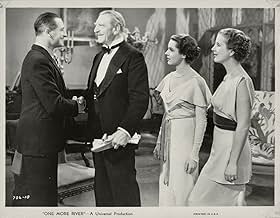
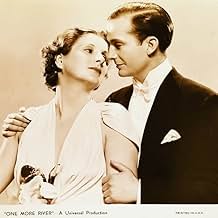
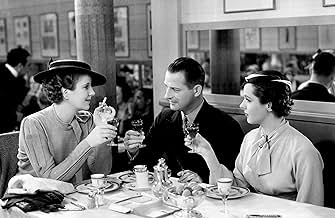
Clare (Diana Wynyard) comes home to England on a Trans-Atlantic voyage where she met the younger Tony (Frank Lawton). The two have fallen in love, but Clare is still married to Sir Gerald (Colin Clive), whom she escaped when she got on the boat. She has come home to start a new life, returning to her family led by General Charwell (C. Aubrey Smith), her father. Tony may be unemployed and looking for work and much younger, but he's sweet and earnest. She may be married and running from abuse, but she's rudderless until she must find employment for herself. So, with time on their hands, they reconnect and start an innocent love affair with no more than a handful of kisses to cheeks.
Into this situation comes rushing Sir Gerald, coming to England from America on the next ship, and ready to assert dominance over Clare, no matter her wishes. What follows is this very prim and almost genteel look at a rather nasty divorce using private investigators and even outright lies to get what Sir Gerald wants.
The appeal of the film becomes twofold. It's a character-based story, centered around a good woman battling between two sides of herself, and it's also a look at a Britain on the verge of permanent change. It reminded me of Noel Coward's dual plays (turned into movies) Cavalcade and This Happy Breed, also made about the British upper middle classes between the wars, but I think Whale's adaptation of Galsworthy's novel captures the unknowingness of what was to come better than Cavalcade did (This Happy Breed was written just after the start of the war). There's some brief dialogue about a pending calamity, but ultimately it's about people just trying to get on with their lives and dealing with their own drama. The implication is there, but, in retrospect, no thanks to the movie itself but just history playing out afterwards, it gives the action this melancholic air as this look at innocence in a love affair has no more time left in the nation.
And that portrait is quite nice. I don't think I'd go any further than that, but the look at a country collecting itself back together after the ravages of WWI and finding ways forward seems to be told through the characters. I don't like to do symbolism that much, but it's hard to shake the idea that Sir Gerald represents something like the ravages of the Great War, Clare is old Britain and Tony is new Britain, coming together to create something new once they rid themselves of the past.
The film has a long courtroom scene in the end, and I keep finding it interesting that Whale is able to handle them so well. I have this natural aversion to them, but maybe it's the British setting, which has different rules from American courtrooms so I can't see the dramatic silliness as easily, that makes me take them so much easier. It really just becomes an excuse for Sir Gerald and Clare to talk about each other, and Wynyard has the harder job of restrained form in the face of moderately harsh questioning. She handles herself well, but it's always going to be Clive who gets the attention. He's a scenery chewing bad guy, and he's going to revel in every moment he's on screen, which he does.
And the nice, comfy ending, something close to bittersweet but perhaps a bit too nice to call it that, leaves the audience with some kind of cozy feeling that things will get better. It's a naturally hopeful work, and I think it works.
It's a handsome, comforting work, a look at British life. This was the sort of thing studios might throw a lot of money at as their prestige pictures (I was thinking of WB's The Life of Emile Zola), but this just didn't connect with audiences at the time. It's a fine picture, not near Whale's best, but a worthy entry in a surprisingly strong filmography.
Clare (Diana Wynyard) comes home to England on a Trans-Atlantic voyage where she met the younger Tony (Frank Lawton). The two have fallen in love, but Clare is still married to Sir Gerald (Colin Clive), whom she escaped when she got on the boat. She has come home to start a new life, returning to her family led by General Charwell (C. Aubrey Smith), her father. Tony may be unemployed and looking for work and much younger, but he's sweet and earnest. She may be married and running from abuse, but she's rudderless until she must find employment for herself. So, with time on their hands, they reconnect and start an innocent love affair with no more than a handful of kisses to cheeks.
Into this situation comes rushing Sir Gerald, coming to England from America on the next ship, and ready to assert dominance over Clare, no matter her wishes. What follows is this very prim and almost genteel look at a rather nasty divorce using private investigators and even outright lies to get what Sir Gerald wants.
The appeal of the film becomes twofold. It's a character-based story, centered around a good woman battling between two sides of herself, and it's also a look at a Britain on the verge of permanent change. It reminded me of Noel Coward's dual plays (turned into movies) Cavalcade and This Happy Breed, also made about the British upper middle classes between the wars, but I think Whale's adaptation of Galsworthy's novel captures the unknowingness of what was to come better than Cavalcade did (This Happy Breed was written just after the start of the war). There's some brief dialogue about a pending calamity, but ultimately it's about people just trying to get on with their lives and dealing with their own drama. The implication is there, but, in retrospect, no thanks to the movie itself but just history playing out afterwards, it gives the action this melancholic air as this look at innocence in a love affair has no more time left in the nation.
And that portrait is quite nice. I don't think I'd go any further than that, but the look at a country collecting itself back together after the ravages of WWI and finding ways forward seems to be told through the characters. I don't like to do symbolism that much, but it's hard to shake the idea that Sir Gerald represents something like the ravages of the Great War, Clare is old Britain and Tony is new Britain, coming together to create something new once they rid themselves of the past.
The film has a long courtroom scene in the end, and I keep finding it interesting that Whale is able to handle them so well. I have this natural aversion to them, but maybe it's the British setting, which has different rules from American courtrooms so I can't see the dramatic silliness as easily, that makes me take them so much easier. It really just becomes an excuse for Sir Gerald and Clare to talk about each other, and Wynyard has the harder job of restrained form in the face of moderately harsh questioning. She handles herself well, but it's always going to be Clive who gets the attention. He's a scenery chewing bad guy, and he's going to revel in every moment he's on screen, which he does.
And the nice, comfy ending, something close to bittersweet but perhaps a bit too nice to call it that, leaves the audience with some kind of cozy feeling that things will get better. It's a naturally hopeful work, and I think it works.
It's a handsome, comforting work, a look at British life. This was the sort of thing studios might throw a lot of money at as their prestige pictures (I was thinking of WB's The Life of Emile Zola), but this just didn't connect with audiences at the time. It's a fine picture, not near Whale's best, but a worthy entry in a surprisingly strong filmography.
Highly superior soap
Saw this as part of Cinefest 2009 in Syracuse, and it was a revelation. Not that it doesn't stir high expectations: a Galsworthy novel, adapted by playwright R.C. Sheriff (author of the great antiwar play "Journey's End"), directed with great assurance by James Whale, and with a near-amazing cast. As an abused high society wife trying to wrench free of her extremely nasty husband, Diana Wynyard is ladylike and touching. A very young Jane Wyatt is her confidante, Henry Stephenson is a helpful lawyer relative, and Frank Lawton is the appealing young man who falls in love with her. All are upstaged by Mrs. Patrick Campbell, a formidable presence bellowing every line with relish, and she It's remarkably adult for its day, with a modern attitude about adultery (our heroine doesn't, but the movie seems to believe she should). It's literate and fast-moving, and sandwiched between Whale's "The Invisible Man" and "The Bride of Frankenstein," it's one of several examples of how assured he was outside of the horror genre.
One More River
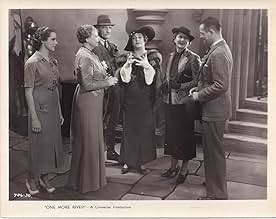
"Claire" (Diana Winyard) is married to aspiring politician "Sir Gerald" (Colin Clive) but he's a bit of a brute. It's an incident with a riding crop that finally sends his wife on a cruise where she encounters "Croom" (Frank Lawton). Unfortunately, her husband cannot be seen to not have his wife at his side and so when she flatly refuses a reconciliation, he sets in motion a public divorce that will call the integrity of not just her, but of her new companion into question. Of course, though still entirely platonic, we know that the relationship between the two has burgeoned somewhat - but this isn't really a film about a romance. It's a rather sad indictment of a judicial system that still looked upon a woman as the property of her husband. Not in a feudal sense, but that she might accuse such a prominent and respectable man of ill-treating her was a charge that was always going to fall on deaf ears. It's the ensuing court hearing that brings this to life a bit, with some sparky sparring from lawyers "Brough" (Lionel Atwill), "Forsythe" (Alan Mowbray) and the inquisitive judge (Gilbert Emery) quite cleverly showcasing the one-sidedness of the whole affair. The film also befits from a great cast of supporting favourites who feature sparingly but add depth to a story of state-supported prejudice that Winyard holds together quite well.


Did you know
- TriviaAccording to Jane Wyatt, "[James Whale] was crazy about Mrs. Pat [Mrs. Patrick Campbell]. The set was kind of run for her. The whole thing was to get her relaxed. She was playing up a lot about how nervous she was, and I think she got an awful lot of attention that way. i think we felt sorry for Mrs. Campbell. Poor dear--how ever are they going to pull her together. That was my reaction. We all had to pull her together and help her through.
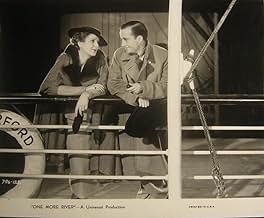
- GoofsIn the opening scene, the liner pulling into the London dock that lady Corven arrives on is seen in the establishing shot is clearly named the ORFORD, yet after a we see her and Tony speak on the deck, another establishing shot of the ship now shows it is one called the ORSOVA.
- ConnectionsReferenced in Gods and Monsters (1998)
Details
- Runtime
- 1h 28m(88 min)
- Color
- Aspect ratio
- 1.37 : 1
Contribute to this page
Suggest an edit or add missing content