
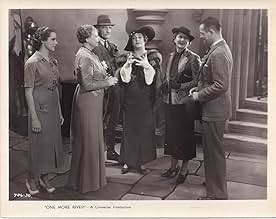
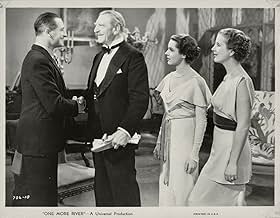
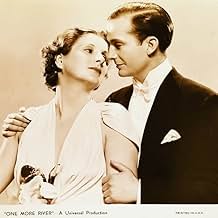
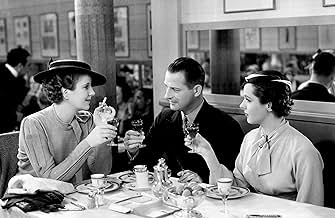
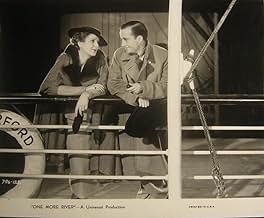
A young lady leaves her brutal husband and meets another man aboard a ship.A young lady leaves her brutal husband and meets another man aboard a ship.A young lady leaves her brutal husband and meets another man aboard a ship.
- Director
- Writers
- Stars



- Director
- Writers
- All cast & crew
- Production, box office & more at IMDbPro
6.7453
1
2
3
4
5
6
7
8
9
10
Featured reviews
Good entertainment
I enjoyed this film, but must be nearly alone in not particularly finding Diana Wynyard appealing in any real way, in her role as the unhappy, abused wife. Jane Wyatt on the other hand, as her sister, is sophisticated and lovely, very Myrna Loy.
Having read lots of books set in Edwardian England, I am familiar with the often ludicrous plots involved in setting up divorces and cases of criminal conversation. If you accept that the laws were limited and often ridiculous, you can overlook what seems so old-fashioned.
It is amusing to see Mrs. Patrick Campbell in action; she is a grand ham. The part of the abusive husband is a stereotype; he is oily and creepy and cruel. The new love is the opposite of course, charming and kind and gentle.
Overall a well-made film; just wish it had been made a year earlier before the draconian production code took over.
Having read lots of books set in Edwardian England, I am familiar with the often ludicrous plots involved in setting up divorces and cases of criminal conversation. If you accept that the laws were limited and often ridiculous, you can overlook what seems so old-fashioned.
It is amusing to see Mrs. Patrick Campbell in action; she is a grand ham. The part of the abusive husband is a stereotype; he is oily and creepy and cruel. The new love is the opposite of course, charming and kind and gentle.
Overall a well-made film; just wish it had been made a year earlier before the draconian production code took over.
one more monster movie to film
Today, 1930s director James Whale is best remembered for "Frankenstein", "The Invisible Man", and "The Bride of Frankenstein", as well as for being probably the only openly gay person in cinema at the time (Ian McKellen played him in 1998's "Gods and Monsters"). Lesser known are Whale's dramas. There was "Waterloo Bridge", about a relationship strained by World War I, and "One More River", about a woman who flees an abusive marriage and hooks up with someone else. Not something usually depicted back then, so I wonder if it would've even been possible once the Hays Code went into effect the following year.
It's not a masterpiece, but passable. I find these fetishistic looks at the British ruling class weird (especially considering Whale's dirt-poor childhood). I suppose that nowadays, such a movie - whether focusing on the working class or ruling class - would probably come from Pedro Almodovar. Diana Wynyard, Jane Wyatt, Colin Clive (Dr. Frankenstein in Whale's more famous movies) and Frank Lawton all turn in fine performances.
It's not a masterpiece, but passable. I find these fetishistic looks at the British ruling class weird (especially considering Whale's dirt-poor childhood). I suppose that nowadays, such a movie - whether focusing on the working class or ruling class - would probably come from Pedro Almodovar. Diana Wynyard, Jane Wyatt, Colin Clive (Dr. Frankenstein in Whale's more famous movies) and Frank Lawton all turn in fine performances.
Technically Impressive With Fine Performances
One More River (1934)
*** (out of 4)
This James Whale directed melodrama is technically good and the performances are fine but I'd still rank it rather low in regards to the director's filmmography. A woman (Diana Wynyard) goes to England to try and escape her abusive husband (Colin Clive) and on the ship ride over has a nice man (Frank Lawton) fall in love with her. Even though her husband is abusive, she refuses to go any further with the new man and it doesn't take long for the husband to show up and cause trouble. ONE MORE RIVER was based on a very popular novel that of course had to be trimmed down for the big screen due to the production code going into full swing during this period. For the most part I thought the film featured some very good performances from its excellent cast and there's no question that it's rather impressive on a technical side. The biggest issue I had with the film was actually the pacing, which just seemed extremely slow to me and it really took forever for the film to finally pick up some speed. There's no question that the material is old-fashioned but this isn't the reason it goes so slow. Again, the best thing going are the performances with Wynyard really standing out as the abused woman trying to do what's right. Lawton is also good in his role as the man who loves her and Clive proves what a talent he was in just a few scenes. Jane Wyatt appears in his first role and we get good support from Reginald Denny, Henry Stephenson, Lionel Atwill and C. Aubrey Smith.
*** (out of 4)
This James Whale directed melodrama is technically good and the performances are fine but I'd still rank it rather low in regards to the director's filmmography. A woman (Diana Wynyard) goes to England to try and escape her abusive husband (Colin Clive) and on the ship ride over has a nice man (Frank Lawton) fall in love with her. Even though her husband is abusive, she refuses to go any further with the new man and it doesn't take long for the husband to show up and cause trouble. ONE MORE RIVER was based on a very popular novel that of course had to be trimmed down for the big screen due to the production code going into full swing during this period. For the most part I thought the film featured some very good performances from its excellent cast and there's no question that it's rather impressive on a technical side. The biggest issue I had with the film was actually the pacing, which just seemed extremely slow to me and it really took forever for the film to finally pick up some speed. There's no question that the material is old-fashioned but this isn't the reason it goes so slow. Again, the best thing going are the performances with Wynyard really standing out as the abused woman trying to do what's right. Lawton is also good in his role as the man who loves her and Clive proves what a talent he was in just a few scenes. Jane Wyatt appears in his first role and we get good support from Reginald Denny, Henry Stephenson, Lionel Atwill and C. Aubrey Smith.
Decent...but could have been much better.
"One More River" is a film that was adversely affected by the New Production Code. This is because the movie came out in 1934 instead of before, it would have been closer to the sordid novel. But because sadism was taboo now in movies, it was only alluded to and this, at times, made the story rather confusing.
The film begins with Claire (Diana Winyard) leaving a cruise ship. Along the way, she obtained a very fervent admirer, Tony (Frank Lawton). However, while she liked having him as a friend, she has just left her husband (Colin Clive) and was in no mood of beginning a love affair. And, through the story, Tony tries in vain to take their relationship to the next level.
The problem here is that when Claire returns to her father's home, she tells them that her husband was abusive. The whole sick sexual aspect of the violence was ignored. And, later, when the husband accuses Claire of having an affair with Tony, the reasons the wife left are NEVER discussed in court...something that really makes no sense.
So, despite this, is the film any good? Yes...mostly because the acting is so nice. Also, James Whale's direction and the cinematography were gorgeous. But with chunks of the original story missing, you can't help but wonder how good this MIGHT have been had it just been made the year before.
The film begins with Claire (Diana Winyard) leaving a cruise ship. Along the way, she obtained a very fervent admirer, Tony (Frank Lawton). However, while she liked having him as a friend, she has just left her husband (Colin Clive) and was in no mood of beginning a love affair. And, through the story, Tony tries in vain to take their relationship to the next level.
The problem here is that when Claire returns to her father's home, she tells them that her husband was abusive. The whole sick sexual aspect of the violence was ignored. And, later, when the husband accuses Claire of having an affair with Tony, the reasons the wife left are NEVER discussed in court...something that really makes no sense.
So, despite this, is the film any good? Yes...mostly because the acting is so nice. Also, James Whale's direction and the cinematography were gorgeous. But with chunks of the original story missing, you can't help but wonder how good this MIGHT have been had it just been made the year before.
ONE MORE RIVER (James Whale, 1934) ***
This is one of Whale's favorites among his own works (the director even gave himself an uncredited bit!) but which he only got Universal to bankroll by accepting to helm another fantasy project for them, the subsequently aborted "A Trip To Mars". Anyway, this obscurely-titled melodrama is based on John Galsworthy (best-known for "The Forsythe Saga")'s last novel – adapted by the equally distinguished R.C. Sheriff. It tells of the vicissitudes of a young wife (Diana Wynyard, fresh from an Oscar nomination for the previous year's Best Picture winner CAVALCADE), about to be divorced from her brutish husband (a brief but typically impressive turn from Whale regular Colin Clive), who unwittingly adds coal to the fire via her initially platonic relationship with a young man (Frank Lawton, soon to play his most notable role as the grown-up David COPPERFIELD [1935]). The narrative also has a strong political element to it, not just in view of the subplot involving the electoral climate (personified by Reginald Denny's newly-appointed MP), but in the heroine's emancipation from the rigid status quo pertaining to woman's role in society.
While undeniably dated, the film boasts splendid cinematography and sets (by BRIDE OF FRANKENSTEIN's John J. Mescall and Charles D. Hall respectively) – the latter would be memorably refurbished and re-used for the Mary Shelley prologue and the Baron's own abode in that very film which rather suggests that the art director/set decorator's craft is not nearly appreciated enough! Apart from this, we get a truly remarkable supporting cast: lovely Jane Wyatt (as Wynyard's kid sister), C. Aubrey Smith (their father), Henry Stephenson (an uncle), the oddly-named Mrs. Patrick Campbell (hamming it up as his outspoken wife – apparently, she was like that in real-life too!), Lionel Atwill (the wily but pompous Prosecutor), Alan Mowbray (the defense counsel), Gilbert Emery (the genial Judge) and E.E. Clive (the other Clive's resourceful private detective).
Finally, the copy I acquired was sourced from an old TV broadcast off the U.K.'s Channel 4: despite a couple of intermissions for publicity spots(!), the quality is surprisingly adequate – much better, in fact, than that for most of the other Whales I have been watching lately.
While undeniably dated, the film boasts splendid cinematography and sets (by BRIDE OF FRANKENSTEIN's John J. Mescall and Charles D. Hall respectively) – the latter would be memorably refurbished and re-used for the Mary Shelley prologue and the Baron's own abode in that very film which rather suggests that the art director/set decorator's craft is not nearly appreciated enough! Apart from this, we get a truly remarkable supporting cast: lovely Jane Wyatt (as Wynyard's kid sister), C. Aubrey Smith (their father), Henry Stephenson (an uncle), the oddly-named Mrs. Patrick Campbell (hamming it up as his outspoken wife – apparently, she was like that in real-life too!), Lionel Atwill (the wily but pompous Prosecutor), Alan Mowbray (the defense counsel), Gilbert Emery (the genial Judge) and E.E. Clive (the other Clive's resourceful private detective).
Finally, the copy I acquired was sourced from an old TV broadcast off the U.K.'s Channel 4: despite a couple of intermissions for publicity spots(!), the quality is surprisingly adequate – much better, in fact, than that for most of the other Whales I have been watching lately.


Did you know
- TriviaAccording to Jane Wyatt, "[James Whale] was crazy about Mrs. Pat [Mrs. Patrick Campbell]. The set was kind of run for her. The whole thing was to get her relaxed. She was playing up a lot about how nervous she was, and I think she got an awful lot of attention that way. i think we felt sorry for Mrs. Campbell. Poor dear--how ever are they going to pull her together. That was my reaction. We all had to pull her together and help her through.
- GoofsIn the opening scene, the liner pulling into the London dock that lady Corven arrives on is seen in the establishing shot is clearly named the ORFORD, yet after a we see her and Tony speak on the deck, another establishing shot of the ship now shows it is one called the ORSOVA.
- ConnectionsReferenced in Gods and Monsters (1998)
Details
- Runtime
- 1h 28m(88 min)
- Color
- Aspect ratio
- 1.37 : 1
Contribute to this page
Suggest an edit or add missing content