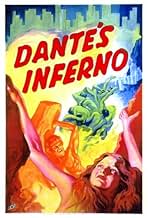
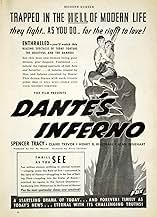
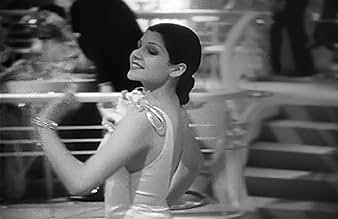
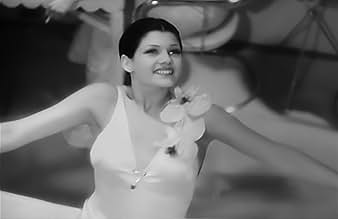
Jim Carter moves in on the McWade's carnival concession which shows scenes from Dante's "Inferno". He makes it a going concern, marrying Betty along the way. An inspector calls the amusement... Read allJim Carter moves in on the McWade's carnival concession which shows scenes from Dante's "Inferno". He makes it a going concern, marrying Betty along the way. An inspector calls the amusement pier unsafe but Carter bribes him. The pier collapses, leading to the inspector's suicide... Read allJim Carter moves in on the McWade's carnival concession which shows scenes from Dante's "Inferno". He makes it a going concern, marrying Betty along the way. An inspector calls the amusement pier unsafe but Carter bribes him. The pier collapses, leading to the inspector's suicide, injury to Pop McWade, trial for Carter, and Betty's leaving him. Carter starts over with... Read all
- Awards
- 1 nomination total
- Alexander Carter
- (as Scott Beckett)
- Dancer
- (as Rita Cansino)
- Girl in Stoke-Hold
- (uncredited)
- Man in Stoke-Hold
- (uncredited)
- Mr. Williams
- (uncredited)
- Girl in Stoke-Hold
- (uncredited)
- Concessionaire's Wife
- (uncredited)
- Photographer
- (uncredited)
- Passenger in Boiler Room
- (uncredited)
- Amusement Park Patron
- (uncredited)
Featured reviews
Enough to Frighten Beelzebub
The movie's basically a morality tale, showing one man's (Tracy) ruthless climb from bottom to top and learning his lesson after all. I really like the way Carter ingratiates himself socially into the upper class; just having big bucks is not enough. So he uses is well-honed entrepreneurial skills to grease the wheels. And, thanks reviewer Albertsanders for detailing how the story's basis lies in actual fact, surprising as that may seem.
My only complaint is the miracle ending. It sure doesn't comport with the events aboard ship. My guess is that it was a gesture to the newly formed Production Code. Or maybe it was just pandering to what the studio thinks audiences want. Either way, it undercuts a good story and maybe the best special effects of the time.
A Rich Film About The Unscrupulous Rich
This is a stand alone film that is unique, off beat, wild and profound. A visual display of a catastrophe of material and man. It is a stunning piece of work that was rarely shown on television and ignored as a bastard child of the bijou. The middle inclusion of a horrific Hell with suffering half-naked souls and with haunting, chilling musical accompaniment is partly responsible.
There are three set pieces in this remarkable movie that are unforgettable and the story of greed and decadence is timeless. This is a one of a kind, disturbing adventure put together with excellent special effects, costumes, and sets. An underrated, overlooked antique piece of propagandized art that remains relevant. "things don't change, the behavior of men remains the same throughout history", says the old man. Amen.
No one has commented that this movie was based on a true story
In the main part of the 1935 movie, Tracy plays an unscrupulous amusement park owner who decides his next attraction will be a trip through Hell called "Dante's Inferno". In his usual corner-cutting manner, fire protection measures are short-changed with the inevitable result that there is a disastrous fire. Following this is a dream sequence in which Dante's vision of Hell is re-enacted and Tracy is appropriately punished. Finally there is an ending that I won't reveal.
The non-fantasy part of the story is strikingly similar to an actual, highly publicized, event that took place about 20 years earlier than the conception of the movie. At that time, Coney Island, which is part of Brooklyn, itself part of New York City, was the premier amusement park area of the world. There were two parks, Steeplechase, which emphasized fun and sex, and Luna Park, which emphasized art and youth. William H. Reynolds, an underhanded real estate developer and former Republican state senator, was attracted by the profits and decided to create a third giant park. He called his Dreamland.
Following his typical pattern, Reynolds, through his ties to the corrupt Tammany Democratic political machine, was able to have streets closed to make some inexpensive land suitable for a large amusement park. This deprived poor people of access to the beach, but so what? Patrons of his park, and of luxury hotels, had no problem.
Oddly, his concept, despite the usual sleazy attractions, also had morality, even religiosity, as a major theme. It started off with an attraction called Genesis, the Bible story of the creation of the world. There was another called Destruction of Pompeii, presumably as payment for wickedness. His crowning effort along this line was called Hell Gate, a fantasy ride through Hell, with a gigantic Satan smirking over the entrance.
In the early hours of May 27, 1911, as they rushed to ready the attraction for the Spring opening, workers accidentally started a fire. Firefighters responded, but because of low water pressure (for which many also blamed Reynolds' machinations), could not prevent its spread and all of Dreamland, including Hell Gate, was destroyed.
Don't you agree that the inspiration, if not the actual plot of the movie Dante's Inferno, was drawn from real life? And isn't it amusing that, considering his behavior, Reynolds was so preoccupied with morality and retribution?
Incidentally, I saw this film when I was 15 and it scared me silly.
Early Rita Hayworth
wild film
Tracy plays a man who lucks into carnival barking as a result of meeting a man, played by Henry B. Walthall, who runs a concession known as "Dante's Inferno." Walthall soon becomes Tracy's father-in-law, and Tracy becomes a successful businessman.
He launches a huge, gaudy Inferno employing ruthless means to get the property. Though a wonderful husband and father, in his corporate world, he stops at nothing to get what he wants, including cheating, bribery, and ignoring possible dangers. The consequences are disastrous.
The film has an obvious allegory, and I'm still laughing at a previous poster who noted that when Walthall goes through a book with Tracy and the seven rungs of hell come to life, everyone had great physiques so hell must not take chubsters! It's true!
Other than hell's preference for perfect 10s, the effects are amazing - the Inferno concession, the images in the book that come to life, and the fantastic ship scene which uses the Inferno images to great effect.
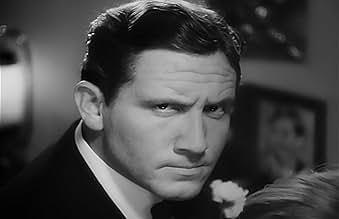
Spencer Tracy is excellent in his role, a tender dad, sweet husband and cruel businessman all at the same time. Claire Trevor is young and lovely and provides strong support for Tracy.
A very interesting film and highly recommended.
Did you know
- TriviaSpencer Tracy's erratic behavior on this film helped seal his fate with 20th Century-Fox. During filming Tracy disappeared from the set for weeks while on a drunken binge. He reportedly also showed up to the set one day surly and hung over and fell asleep in the "Manhattan apartment" set. The studio locked the stage while he was still asleep; Tracy woke up in a rage and started destroying sets, reportedly causing thousands of dollars worth of damage for which the studio billed him.
- GoofsAll entries contain spoilers
- ConnectionsEdited into Myra Breckinridge (1970)
- SoundtracksThe Wedding March
(1843) (uncredited)
from "A Midsummer Night's Dream, Op.61"
Written by Felix Mendelssohn
Played on a hurdy-gurdy for the wedding photograph
- How long is Dante's Inferno?Powered by Alexa
Details
- Release date
- Country of origin
- Language
- Also known as
- Danteov pakao
- Filming locations
- Ocean Park Pier, Santa Monica, California, USA(exterior views showing rides including Loop-O-Plane and Chute-the-Chutes)
- Production company
- See more company credits at IMDbPro
Box office
- Budget
- $748,900 (estimated)
- Runtime
- 1h 29m(89 min)
- Aspect ratio
- 1.37 : 1