IMDb RATING
7.2/10
6.4K
YOUR RATING


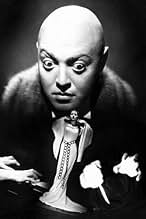
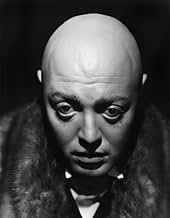
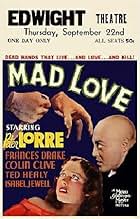
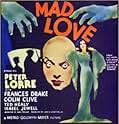
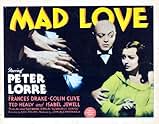
In Paris, a demented surgeon's obsession with a British actress leads him to secretly replace her concert-pianist husband's mangled hands with those of a guillotined murderer with a gift for... Read allIn Paris, a demented surgeon's obsession with a British actress leads him to secretly replace her concert-pianist husband's mangled hands with those of a guillotined murderer with a gift for knife-throwing.In Paris, a demented surgeon's obsession with a British actress leads him to secretly replace her concert-pianist husband's mangled hands with those of a guillotined murderer with a gift for knife-throwing.
- Awards
- 1 nomination total



Sara Haden
- Marie
- (as Sarah Haden)


George Davis
- Chauffeur
- (scenes deleted)

Billy Dooley
- Undetermined Role
- (scenes deleted)

Harold Huber
- Thief
- (scenes deleted)

Isabel Jewell
- Marianne
- (scenes deleted)

Leo White
- Undetermined Role
- (scenes deleted)

Sam Ash
- Detective Arresting Stephen
- (uncredited)

Hooper Atchley
- Train Conductor
- (uncredited)

Agostino Borgato
- Stage Doorman
- (uncredited)
Maurice Brierre
- Taxi Driver
- (uncredited)
7.26.3K
1
2
3
4
5
6
7
8
9
10
Featured reviews
He Just Wanted to Find Love
The inimitable Peter Lorre plays Dr. Gogol, an incredibly gifted surgeon. He has a weakness, however. He has fallen for an actress whose being rules his life. When she tells him she is married he is crestfallen. Her husband is a renowned classical pianist. He is injured in a train wreck, his hands crushed. Lorre works to cure him, but until he transplants the hands of a murderer, a knife thrower, the man cannot be whole. Of course, he now has the hands of a murderer and they want to kill, using knives. He thinks he will get the girl, but he disgusts her. Her rejection sends him over the edge. Great vehicle for the wonderful Lorre as he expresses madness and pain. Very well done horror tale.
The Hands Have IT!
This adaptation of Renard's The Hands of Orlac is quite good, yet a bit on the stagy side. It is one of Peter Lorre's early films and his first for Hollywood. Lorre is quite good, and almost sympathetic in a way, as a surgeon who has hopelessly fallen in love with the wife of a great pianist. Colin Clive of Frankenstein fame plays the musician, and Frances Drake plays his rather annoying, overacting wife. The visuals of the film are first-rate, as it was directed by great cameraman Karl Freund. Ted Healy adds some unnecessary comic relief. What I liked best about the film was the staging of the story against some beautiful expressionistic sets and Freunds expressive camerawork.
An unsung classic! Great atmosphere and fine Lorre performance!
"Mad Love" is not nearly as well known as other '30s horror classics, but certainly deserves to be! The director, Karl Freund, was one of early cinema's most innovative cinematographers, having worked with F. W. Murnau, James Whale, and others on such gems as "Frankenstein" and "The Last Laugh." The film presents Frances Drake as one of the most emotionally strong female characters to be featured in a '30s flick. Lorre gives one of his creepiest perfomances... it's great, high camp. Colin Clive (Dr. Henry Frankenstein himself!) lends strong support and the comic relief (annoying to some, not to me) is supplied by vaudeville great Ted Healy, the man who brought the Three Stooges together as his second bananas before they went solo. But the star of the show is Freund's direction - this is one of the most eerie, atmospheric films ever made. Sure, it's a bit over the top, but what '30s and '40s horror film isn't? A classic! Do yourself a favor and check it out.
Lorre's entry into classic horror filmdom
Excellent, morbid story of a brilliant sureon's (Lorre) obsessive, fetishistic love for a Grand Guignol style actress. The early scenes are perhaps the best film evocative of actual Grand Guignol sadefests. Lorre manages to procure a perfect waxen statue of his love object, thus introducing doppleganger horror, a relatively rare treat in American horror. The main plot focuses on Lorre's attempt to implicate Drake's husband in a series of murders by convincing him that the hands he grafted for him are acting of their own will (as in "Hands of Orlac"). Many subtle moments (which critics have not credited the film for), some garishly out-of-place slapstick humor is the only negative aspect. Fantastic photography.
This is Lorre's entry into classic horror stardom: Karloff has his Frankenstein monster, Lugosi has Dracula (forever, folks), Chaney Jr. has the wolfman, and Lorre's got this lesser-known but equally classic film to recommend him as one of the major horror stars of the classic era. This film represents MGM's entry into the early 30s horror film sweepstakes as well, and they did well to associate themselves with solid hands like Freund's and Lorre's. Hands..... hmmmmm unintended pun. Anyway, if anyone out there is a fan of classic horror films and has not yet seen this one, put it at the top of your list.
This is Lorre's entry into classic horror stardom: Karloff has his Frankenstein monster, Lugosi has Dracula (forever, folks), Chaney Jr. has the wolfman, and Lorre's got this lesser-known but equally classic film to recommend him as one of the major horror stars of the classic era. This film represents MGM's entry into the early 30s horror film sweepstakes as well, and they did well to associate themselves with solid hands like Freund's and Lorre's. Hands..... hmmmmm unintended pun. Anyway, if anyone out there is a fan of classic horror films and has not yet seen this one, put it at the top of your list.
Freund's directorial masterpiece
The legendary Karl Freund is definitely better known for his highly innovative work as director of photography, resulting in an extensive career (spanning across 5 decades) of beautiful and pioneering cinematography. With a body of work as impressive as his (ranging from Lang's "Metropolis" to TV's classic "I Love Lucy"), it is understandable that Freund's work as a director gets so easily forgotten. The fact that he only directed 10 films in his career also plays an important factor in this, however, at least 2 of his directorial efforts easily rank among the best horror movies ever made. The first one of the two (incidentally, his first work as a director in America), 1932's "The Mummy" is really the most popular, given that it is also one of the best performances by horror icon Boris Karloff; however, it is in the second one where Freund's talents really shine, making this last movie as a director his final masterpiece.
Loosely based on Maurice Renard's novel, "Les Mains d'Orlac" (literally, "The Hands of Orlac"), "Mad Love" is the story of Dr. Gogol (Peter Lorre), a brilliant surgeon deeply in love with a beautiful theater actress named Yvonne Orlac (Frances Drake). When season ends, Yvonne announces her retirement, and this prompts Gogol to finally meeting her. Unfortunately for Gogol, Yvonne tells him that she is actually married to concert pianist Stephen Orlac (Colin Clive). Saddened, Gogol leaves, but a bizarre turn of events will make him meet Yvonne one more time: Stephen has lost his hands in a terrible train accident and only Gogol's expertise will be able to save him. While he saves Stephen's hands, the operation begins to have serious side-effects, not only in Orlac, but also in Gogol.
While the screenplay was written by P.J. Wolfson, John L. Balderston and the usual assortment of contributing writers, the movie is mostly the work of Guy Endore and Florence Crewe-Jones, who made the adaptation from the French novel. Endore was a regular writer for MGM at the time, and helped to write other MGM's horrors like "Mark of the Vampire", "The Raven" and "The Devil-Doll"; it is his style, mix of Gothic and pulp novel what flows through the movie, although he remains true to the essence of Renard's classic horror novel. Renard is often credited as being the "inventor" of the Mad Scientist archetype, and truly gives a great use to it in his novel; appropriately, "Mad Love" keeps this psychological drama between characters and brings it to life, spending considerable time detailing the characters and their relationships, building up the necessary tension for the grandiose finale.
After directing several melodramas and comedies in a row, "Mad Love" allowed Freund to once again return to his expressionist roots and create a haunting tale of horror and madness in almost the same vein as his earlier classic, "The Mummy". Unlike what would be expected of a cinematographer, Freund dedicates as much attention to the non-visual aspects of the film as he does for the visual imagery, playing with the many different elements that form the bizarre love triangle of the film. The story itself focuses a lot in psychological themes, ranging from neurosis and hysteria, to compulsive obsession and dangerous psychosis; Freund makes great use of this themes across the movie, although it is obvious that he prefers the character of Dr. Gogol to the other protagonists of the film. Like Im-Ho-Tep the mummy, Dr. Gogol is driven by the mad love he feels for a woman, but unlike with the mummy, Freund makes sure to never fully transform Gogol into a monster, making him very human and frighteningly realist.
Peter Lorre's acting is essential for this last element in Gogol's persona, and he delivers one of this most amazing performances in his career. While lesser known than his characters in "M" or in "The Maltese Falcon", Dr. Gogol is certainly an iconic Lorre character that truly showcases Lorre's versatile talent. Frances Drake is surprisingly great, showing great emotion and excellent domain of the scene, giving her best to avoid being overshadowed by Lorre in their scenes together. Colin Clive, who would become famous as Dr. Victor Frankenstein in James Whale's films, delivers a truly effective performance as Orlac, but I found that Freund seems definitely much more interested in Dr. Gogol and his antics than in the pianist's neurosis, leaving few space to Orlac's growing insanity. Still, Clive does a very good performance despite the limited screen time his character receives when compared to Gogol.
It is probably this last point what truly stops this movie from being a classic of horror, as with a runtime of barely 68 minutes, it feels too short and gives the feeling that something was missing (perhaps a few more scenes with Colin Clive) in this psychological thriller. It's not really a big flaw in the end, but I truly was expecting to see the wonderful story being explored a bit more, as personally I felt it somewhat incomplete. On a different business, and as expected in a film by Karl Freund, the cinematography is simply brilliant, Chester A. Lyons and Freund's protegé, Gregg Toland (who would become a legend on his own), are in charge of it and devise one of the most beautifully looking horror of the 30s, easily on par with Freund's job for Universal.
It's a shame that studios were more interested in Freund's work as a cinematographer, because "Mad Love" proves that there he truly had talent as a director too. Who knows what would Freund had directed after this movie, specially considering the great improvements in cinematography he went on devising through his long and successful career. As it is, "Mad Love" is the final statement of a master who simply wasn't allowed to make more films (although who knows, probably he wasn't interested in directing), but it is nice to see him retiring with a top notch masterpiece. 9/10
Loosely based on Maurice Renard's novel, "Les Mains d'Orlac" (literally, "The Hands of Orlac"), "Mad Love" is the story of Dr. Gogol (Peter Lorre), a brilliant surgeon deeply in love with a beautiful theater actress named Yvonne Orlac (Frances Drake). When season ends, Yvonne announces her retirement, and this prompts Gogol to finally meeting her. Unfortunately for Gogol, Yvonne tells him that she is actually married to concert pianist Stephen Orlac (Colin Clive). Saddened, Gogol leaves, but a bizarre turn of events will make him meet Yvonne one more time: Stephen has lost his hands in a terrible train accident and only Gogol's expertise will be able to save him. While he saves Stephen's hands, the operation begins to have serious side-effects, not only in Orlac, but also in Gogol.
While the screenplay was written by P.J. Wolfson, John L. Balderston and the usual assortment of contributing writers, the movie is mostly the work of Guy Endore and Florence Crewe-Jones, who made the adaptation from the French novel. Endore was a regular writer for MGM at the time, and helped to write other MGM's horrors like "Mark of the Vampire", "The Raven" and "The Devil-Doll"; it is his style, mix of Gothic and pulp novel what flows through the movie, although he remains true to the essence of Renard's classic horror novel. Renard is often credited as being the "inventor" of the Mad Scientist archetype, and truly gives a great use to it in his novel; appropriately, "Mad Love" keeps this psychological drama between characters and brings it to life, spending considerable time detailing the characters and their relationships, building up the necessary tension for the grandiose finale.
After directing several melodramas and comedies in a row, "Mad Love" allowed Freund to once again return to his expressionist roots and create a haunting tale of horror and madness in almost the same vein as his earlier classic, "The Mummy". Unlike what would be expected of a cinematographer, Freund dedicates as much attention to the non-visual aspects of the film as he does for the visual imagery, playing with the many different elements that form the bizarre love triangle of the film. The story itself focuses a lot in psychological themes, ranging from neurosis and hysteria, to compulsive obsession and dangerous psychosis; Freund makes great use of this themes across the movie, although it is obvious that he prefers the character of Dr. Gogol to the other protagonists of the film. Like Im-Ho-Tep the mummy, Dr. Gogol is driven by the mad love he feels for a woman, but unlike with the mummy, Freund makes sure to never fully transform Gogol into a monster, making him very human and frighteningly realist.
Peter Lorre's acting is essential for this last element in Gogol's persona, and he delivers one of this most amazing performances in his career. While lesser known than his characters in "M" or in "The Maltese Falcon", Dr. Gogol is certainly an iconic Lorre character that truly showcases Lorre's versatile talent. Frances Drake is surprisingly great, showing great emotion and excellent domain of the scene, giving her best to avoid being overshadowed by Lorre in their scenes together. Colin Clive, who would become famous as Dr. Victor Frankenstein in James Whale's films, delivers a truly effective performance as Orlac, but I found that Freund seems definitely much more interested in Dr. Gogol and his antics than in the pianist's neurosis, leaving few space to Orlac's growing insanity. Still, Clive does a very good performance despite the limited screen time his character receives when compared to Gogol.
It is probably this last point what truly stops this movie from being a classic of horror, as with a runtime of barely 68 minutes, it feels too short and gives the feeling that something was missing (perhaps a few more scenes with Colin Clive) in this psychological thriller. It's not really a big flaw in the end, but I truly was expecting to see the wonderful story being explored a bit more, as personally I felt it somewhat incomplete. On a different business, and as expected in a film by Karl Freund, the cinematography is simply brilliant, Chester A. Lyons and Freund's protegé, Gregg Toland (who would become a legend on his own), are in charge of it and devise one of the most beautifully looking horror of the 30s, easily on par with Freund's job for Universal.
It's a shame that studios were more interested in Freund's work as a cinematographer, because "Mad Love" proves that there he truly had talent as a director too. Who knows what would Freund had directed after this movie, specially considering the great improvements in cinematography he went on devising through his long and successful career. As it is, "Mad Love" is the final statement of a master who simply wasn't allowed to make more films (although who knows, probably he wasn't interested in directing), but it is nice to see him retiring with a top notch masterpiece. 9/10


Did you know
- TriviaCharles Chaplin called Lorre the screen's best actor after seeing his performance in "Mad Love."
- GoofsThroughout the picture, the wax figure moves slightly whenever Frances Drake is subbing for the actual statue. Most noticeable when the bird lands on her shoulder, making the "lifeless" statue sway.
- Quotes
Françoise, Gogol's Housekeeper: [referring to the wax figure of Yvonne] It went out for a little walk!
- Crazy creditsAt the end of the opening credits, the titles are painted on a glass window pane that is broken by a fist punching through it.
- Alternate versionsPhil Hardy's The Overlook Film Encyclopedia: Science Fiction (p. 94) states that there is an 85-minute version of the film, although he provides no details about this.
- ConnectionsEdited into The History of the Hands (2016)
- How long is Mad Love?Powered by Alexa
Details
- Release date
- Country of origin
- Language
- Also known as
- The Mad Doctor of Paris
- Filming locations
- Production company
- See more company credits at IMDbPro
Box office
- Budget
- $257,502 (estimated)
- Runtime
- 1h 8m(68 min)
- Color
- Aspect ratio
- 1.37 : 1
Contribute to this page
Suggest an edit or add missing content