IMDb RATING
7.5/10
1.4K
YOUR RATING

Hard-working, henpecked Ambrose Wolfinger takes off from work to go to a wrestling match with catastrophic consequences.Hard-working, henpecked Ambrose Wolfinger takes off from work to go to a wrestling match with catastrophic consequences.Hard-working, henpecked Ambrose Wolfinger takes off from work to go to a wrestling match with catastrophic consequences.





Arthur Aylesworth
- Night Court Judge
- (uncredited)
Jack Baxley
- Court Officer
- (uncredited)

Mickey Bennett
- Office Employee
- (uncredited)

Billy Bletcher
- Timekeeper
- (uncredited)

Harry C. Bradley
- Passing Motorist
- (uncredited)
7.51.4K
1
2
3
4
5
6
7
8
9
10
Featured reviews
The Domestic Hell of Mr. Fields
Despite his marvelous comic con-men, who always outwits the rubes and dolts about him, there is a side of W.C. Fields that few people ever notice: he is usually a hopeless, henpecked husband when he is married. His Ambrose Wolfinger (in MAN ON THE FLYING TRAPEZE) is probably the most helpless married man that he ever portrayed.
Ambrose has actually been married (presumably more happily) to a previous wife, who has died. But they had a little girl (now grown up) named Hope (Mary Bryan) who is his one total ally in the family. His second wife, Leona Wolfinger, née Nesselrode (Kathleen Howard) is strict and shrewish with him. And his mother in law and brother in law Claude (Grady Sutton, playing a totally disreputable liar, trouble-maker, leech, and thief for a change) make his hell total.
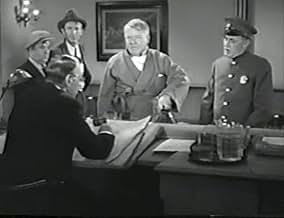
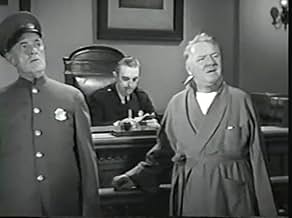
In this film Fields is controlled by events and people - he rarely shows any of the spunk and cleverness that his Great McGonigal or Egbert Souse or Larson E. Whipsnade show. He tries to get two burglars charged in court, but they were drinking apple jack that he had allowed to ferment, so the idiot crabby judge ignores the burglary and charges Fields with violating the prohibition laws! He tries to see a wrestling match, but is delayed by traffic problems, a tire that runs away from him, a set of traffic cops, and arrives too late to see the match, only to be knocked down by one of the wrestlers being thrown on him. To make the situation even more absurd, he did not realize this ticket was stolen by Claude, who seeing him lying on the ground sneers at him as "Drunk again!"
He is also harried by his boss (Lucien Littlefield) at work, and he has to lie to get a miserable afternoon off to see the match (he says his mother-in-law died). When the truth comes out, Littlefield (on his own - as he subsequently regrets) fires him.
This is how it goes throughout the film. Except for Mary Bryan and for his secretary (Carlotta Monti, who has a nice moment at Littlefield's expense), all of the characters use and abuse Fields. He is only finally aroused when Claude tries to slap Hope, and Fields defends her, knocking out Claude. But even after that he still seems lost regarding what to do to pick up his life.
The film is funny - witness the business about Field's filing system at the office (he's a memory expert). When the actual head of the firm (Littlefield's boss - Oscar Apfel) tries to find things without Fields around, he goes nuts with the system. Littlefield tries to defend his action, only to be told by Monti that he has libeled her by suggesting Fields and she were out together at the match. Littlefield is then informed that if he can't get Fields back he'd better start looking for a new job (in the depression).
Howard's role is curious. Like her performance in IT'S A GIFT, she is extremely strict and suspicious. At one point, when Fields is getting ready to go down and check for burglars, she is begging for him to hurry and not to forget his gun. He takes the gun out, and accidentally fires it. High strung by the situation, the shooting scares Howard into a faint - Fields looks at her and with a slight trace of hope in his voice he asks, "Are you dead?" Yet, he did marry her, and at the end, when stuck alone with her mother and brother (who won't look for work), she seems to realize that - for better or worse - Ambrose was a good provider. In the end she is reunited with him and with her step-daughter.
It is a good comedy, and if it lacks the polish of THE BANK DICK and IT'S A GIFT and THE OLD FASHIONED WAY it is still worth watching.
Ambrose has actually been married (presumably more happily) to a previous wife, who has died. But they had a little girl (now grown up) named Hope (Mary Bryan) who is his one total ally in the family. His second wife, Leona Wolfinger, née Nesselrode (Kathleen Howard) is strict and shrewish with him. And his mother in law and brother in law Claude (Grady Sutton, playing a totally disreputable liar, trouble-maker, leech, and thief for a change) make his hell total.
In this film Fields is controlled by events and people - he rarely shows any of the spunk and cleverness that his Great McGonigal or Egbert Souse or Larson E. Whipsnade show. He tries to get two burglars charged in court, but they were drinking apple jack that he had allowed to ferment, so the idiot crabby judge ignores the burglary and charges Fields with violating the prohibition laws! He tries to see a wrestling match, but is delayed by traffic problems, a tire that runs away from him, a set of traffic cops, and arrives too late to see the match, only to be knocked down by one of the wrestlers being thrown on him. To make the situation even more absurd, he did not realize this ticket was stolen by Claude, who seeing him lying on the ground sneers at him as "Drunk again!"
He is also harried by his boss (Lucien Littlefield) at work, and he has to lie to get a miserable afternoon off to see the match (he says his mother-in-law died). When the truth comes out, Littlefield (on his own - as he subsequently regrets) fires him.
This is how it goes throughout the film. Except for Mary Bryan and for his secretary (Carlotta Monti, who has a nice moment at Littlefield's expense), all of the characters use and abuse Fields. He is only finally aroused when Claude tries to slap Hope, and Fields defends her, knocking out Claude. But even after that he still seems lost regarding what to do to pick up his life.
The film is funny - witness the business about Field's filing system at the office (he's a memory expert). When the actual head of the firm (Littlefield's boss - Oscar Apfel) tries to find things without Fields around, he goes nuts with the system. Littlefield tries to defend his action, only to be told by Monti that he has libeled her by suggesting Fields and she were out together at the match. Littlefield is then informed that if he can't get Fields back he'd better start looking for a new job (in the depression).
Howard's role is curious. Like her performance in IT'S A GIFT, she is extremely strict and suspicious. At one point, when Fields is getting ready to go down and check for burglars, she is begging for him to hurry and not to forget his gun. He takes the gun out, and accidentally fires it. High strung by the situation, the shooting scares Howard into a faint - Fields looks at her and with a slight trace of hope in his voice he asks, "Are you dead?" Yet, he did marry her, and at the end, when stuck alone with her mother and brother (who won't look for work), she seems to realize that - for better or worse - Ambrose was a good provider. In the end she is reunited with him and with her step-daughter.
It is a good comedy, and if it lacks the polish of THE BANK DICK and IT'S A GIFT and THE OLD FASHIONED WAY it is still worth watching.
The Best of Fields
I consider this title, along with "It's A Gift", to be the best work of W.C. Fields entire career. He isn't a carnival huckster or a flim-flam man here...no top hat and double breasted suit. He's just a lower middle-class husband dealing with a lazy brother-in-law, shrewish wife and meddlesome mother-in-law. He's a classic case of what we would call today "passive-aggressive", a brow-beaten man who appears to have given up on asserting himself with his family, deferring to everyone around him, but still managing to do what he wants. I only wish he and Kathleen Howard(playing his wife) had done more than two movies together. They play off of each other wonderfully. So many hilarious set-pieces, but the breakfast table scene, with that "delightful verse by Gertrude Smotten," still ranks as my favorite.
fun W.C...
W.C. FIelds... and his usual sidekick Grady Sutton. and the usual plot where he's the hen-pecked husband trying to get away with something. instead of Jessie Ralph, this time the wife is Mary Brian. Fields and Brian had also made It's a Gift the year before. when Ambrose wants to take the day off to go see the fights, he tells one little lie, and of course it snowballs into a huge disaster. another vaudeville bit where thieves break into the cellar, and start a ruckus. and one of the crooks is the awesome Walter Brennan! although honestly, most of Brennan's roles up to this were uncredited, deleted, or short films. and he went on to win THREE oscars. another vaudeville bit where Fields has to chase a tire all over town, and has a narrow escape, time after time. it's great, as are all of his films. the mis-understood, down-trodden working man.
No Parking.
I feel that Fields works best here when he's engaged in the comedy de la domestic, specifically during the movie's opening 15 minutes where's caught between "burglars singing in the cellar" and his incessantly nagging wife played by a very convincing Kathleen Howard howling in the bedroom. Fantastic, hilarious stuff. The remainder of the film is more hit and miss. There are two collisions, one with a bicycle and the other with a large man. The misses are his secretary played by Fields' real-life mistress Carlotta Monti, and his daughter played by the ever alluring and sweet Mary Brian. But enough about that, who's for some applejack?
Absolutely One of W.C. Fields' Best
This was one of W.C. Fields' favorite films, and in fact was closest to his own family situation, or at least his version of it. It also reprises many of his skits worked out with the writer J.P. McEvoy, which he also replays in It's A Gift and other W.C. Fields' movies of the domestic type, like The Bank Dick.
I love this movie; it contains much of the actual W.C. Fields. The son, Claude, for example. W.C. Fields' and Hattie Fields, his wife, were estranged while their son, William Claude, Jr., grew up. Fields believed, according to biographers, including his grandson, that his wife turned his son against him. He always believed that if he'd had a daughter, she would be a more loyal child. In this movie, the son, Claude, is awful to him, while the daughter, Hope (!), is loyal and loving.
The gags fly: "How can you hurt a person by throwing him on his head?" "It must be hard to lose your mother-in-law." "Yes, it is, almost impossib-, um, yes." Or my favorite exchange, the most brilliantly poignant comment on an unhappy marriage, I think, ever portrayed in a movie. "Is your toast warm, Dad?" "No, dear, it's cold. But it's all right. I've been eating cold toast now for eight years; I like it." All the while looking as miserable as anyone ever could. God, he was brilliant.
There's also the sense that Ambrose, the character The Great Silly plays, is someone lost in a world that he doesn't understand. The scene where instead of the burglars, HE is the one sent to jail. Or the scene where he's parked in a no parking zone, and the painful exchanges with the cop, the chauffeur, etc. Or when he loses the car's wheel and chases it down the hill, over the dale, down the railroad tracks, barely escaping death twice.
His actual mistress (W.C. and Hattie, Catholics, never divorced), Carlotta Monti, plays his secretary, and is the one who explains that her mother is good friends with Hookalakah Meshobbab, somehow without howling with laughter.
Ah, what a film, and it's a disgrace that it's not on DVD yet.
I love this movie; it contains much of the actual W.C. Fields. The son, Claude, for example. W.C. Fields' and Hattie Fields, his wife, were estranged while their son, William Claude, Jr., grew up. Fields believed, according to biographers, including his grandson, that his wife turned his son against him. He always believed that if he'd had a daughter, she would be a more loyal child. In this movie, the son, Claude, is awful to him, while the daughter, Hope (!), is loyal and loving.
The gags fly: "How can you hurt a person by throwing him on his head?" "It must be hard to lose your mother-in-law." "Yes, it is, almost impossib-, um, yes." Or my favorite exchange, the most brilliantly poignant comment on an unhappy marriage, I think, ever portrayed in a movie. "Is your toast warm, Dad?" "No, dear, it's cold. But it's all right. I've been eating cold toast now for eight years; I like it." All the while looking as miserable as anyone ever could. God, he was brilliant.
There's also the sense that Ambrose, the character The Great Silly plays, is someone lost in a world that he doesn't understand. The scene where instead of the burglars, HE is the one sent to jail. Or the scene where he's parked in a no parking zone, and the painful exchanges with the cop, the chauffeur, etc. Or when he loses the car's wheel and chases it down the hill, over the dale, down the railroad tracks, barely escaping death twice.
His actual mistress (W.C. and Hattie, Catholics, never divorced), Carlotta Monti, plays his secretary, and is the one who explains that her mother is good friends with Hookalakah Meshobbab, somehow without howling with laughter.
Ah, what a film, and it's a disgrace that it's not on DVD yet.


Did you know
- TriviaThis was the last film directed by Clyde Bruckman. Although Bruckman's name appears on the credit, this film was actually directed by W.C. Fields, who took over after Bruckman had to quit early in the shoot due to the effects of his alcoholism. This is the only film on which Fields technically worked as his own director.
- GoofsMother-in-law Cordelia says "Well he's a fiend, a wool in sheep's clothing" ... Leona Wolfinger immediately catching the error says "What?" and immediately Cordelia corrects herself "A wolf in sheep's clothing ..." and the scene continues as if no error occurs; a great recovery.
- Quotes
Ambrose Wolfinger: My poor mother-in-law died three days ago. I'm attending her funeral this afternoon.
Ambrose's Secretary: Isn't that terrible, Mr. Wolfinger!
Ambrose Wolfinger: Yes, it's terrible. It's awful. Horrible tragedy.
Ambrose's Secretary: It must be hard to lose your mother-in-law.
Ambrose Wolfinger: Yes it is, very hard. It's almost impossible.
- ConnectionsFeatured in W.C. Fields: Straight Up (1986)
- SoundtracksOn the Banks of the Wabash, Far Away
(1897) (uncredited)
Music and lyrics by Paul Dresser
Sung a cappella by W.C. Fields, Walter Brennan, Tammany Young and Lew Kelly
- How long is Man on the Flying Trapeze?Powered by Alexa
Details
- Release date
- Country of origin
- Language
- Also known as
- Everything Happens at Once
- Filming locations
- Production company
- See more company credits at IMDbPro
- Runtime
- 1h 6m(66 min)
- Color
- Aspect ratio
- 1.37 : 1
Contribute to this page
Suggest an edit or add missing content