IMDb RATING
6.9/10
1.4K
YOUR RATING

A Louisiana con man enters his steamboat into a winner-take-all race with a rival while trying to find a witness to free his nephew, about to be hanged for murder.A Louisiana con man enters his steamboat into a winner-take-all race with a rival while trying to find a witness to free his nephew, about to be hanged for murder.A Louisiana con man enters his steamboat into a winner-take-all race with a rival while trying to find a witness to free his nephew, about to be hanged for murder.
- Director
- Writers
- Stars
- Awards
- 3 wins total



C.E. Anderson
- Jailer
- (uncredited)
Sam Baker
- Undetermined Role
- (uncredited)

William 'Billy' Benedict
- Breck
- (uncredited)

Heinie Conklin
- Jailbird
- (uncredited)

Tex Cooper
- Townsman
- (uncredited)

D'Arcy Corrigan
- Hangman
- (uncredited)

Luke Cosgrave
- Labor Boss
- (uncredited)
- Director
- Writers
- All cast & crew
- Production, box office & more at IMDbPro
6.91.4K
1
2
3
4
5
6
7
8
9
10
Featured reviews
10zootjim
Historic, Nostalgic with Tenderness: genuine America
I first saw this movie with my grandfather fifty years ago. Our small-town theater was having classic movie month and Will Rogers was my grandfather's favorite. For a ten-year old boy this movie made a lasting impression of the freedom and romance once available to us in America but now lost forever. Aside from the instantly believable story line about an uncle and his orphaned nephew going together to buy an aging Mississippi River steamboat the pathos applies superbly to this day. The young man meets a girl, gets in a fight over her and is in trouble with the law. The kind uncle moves heaven and earth to help his deceased sister's son. The characters are all period and realistic according to my grandfather who knew people just like that. America was a religious nation in those days, especially the South, so the use of religious terms in common speech is authentic. The thing to watch for in this film is the steamboat race. In 1935 the steamboat's day was already past, and to find that many operating steamboats to make the film must have been a task. Then...listen closely to the melodious whistles. Different pitches and echoes, made by live steam. Steam power built modern America, and the sound of a live steam whistle, once so common, is all but vanished now. I have to yield to my grandfather's opinion of the movie, not having lived in those times myself, and he said it was quite authentic, down to the use of pitch, kerosene or whatever was handy to get more speed out of the engines. The fact that a regular person felt he could go speak to a state governor in person is also part of our American heritage. There was not the class distinction (at least among whites) that there is today. This movie is a priceless treasure, and youngsters definitely need to see it. Anne Shirley, swamp girl, becomes sweet because she admits she is won over by the tenderness of Uncle John.
fun race deadly hanging
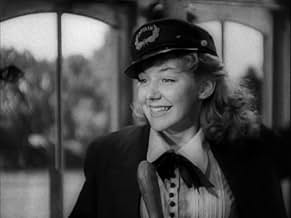
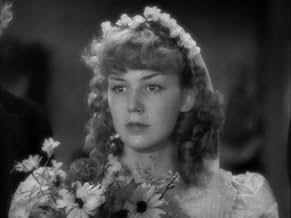
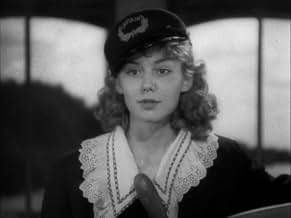
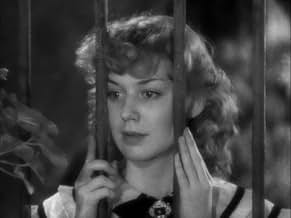
Snake oil salesman Doctor John Pearly (Will Rogers) makes a bet with Captain Eli to race steamboats. He has to fix up an old steamboat. He hopes to have his nephew Duke as the pilot. Duke brings along swamp gal Fleety Belle who was abused by her family. He had killed a man. It's self-defense but the only witness is preacher The New Moses who has since gone away. Following John's advice, Duke turns himself in. He is set to hang unless the preacher is found.
There is a basic structural issue with the premise and the movie. The movie wants to be a fun, light-weight, silly steamboat race. On the other hand, nephew Duke is threatened with hanging and there is supposed to be danger. These two things often do not mix well together. For example, they need to find The New Moses who is often found on the river. One would expect John to be piloting his steamboat up and down the river spreading the word and looking for the preacher. Instead, he ends up spending his time racing and by happenstance run into the preacher. The race is plenty fun and then we're reminded that Duke is about to be hanged. It's a wacky hanging party.
There is a basic structural issue with the premise and the movie. The movie wants to be a fun, light-weight, silly steamboat race. On the other hand, nephew Duke is threatened with hanging and there is supposed to be danger. These two things often do not mix well together. For example, they need to find The New Moses who is often found on the river. One would expect John to be piloting his steamboat up and down the river spreading the word and looking for the preacher. Instead, he ends up spending his time racing and by happenstance run into the preacher. The race is plenty fun and then we're reminded that Duke is about to be hanged. It's a wacky hanging party.
Minor Ford.
Minor Ford at his most homespun and with Will Rogers in the lead they don't come much more homespun than this piece of Americana. Of course, minor Ford is still pretty good when set beside some of his rivals. This one is almost a companion piece to "Judge Priest" with Rogers' steamboat captain racing his boat against a rival while trying to clear his nephew from a charge of murder. Rogers is excellent and there's a fine supporting cast of Ford regulars but as the young lovers Anne Shirley and John McGuire are terrible. Still, it's richly atmospheric, at times verging on the poetic and if you think the scenes with Stepin Fetchit are more than a little racist try to remember when it was made and the period in which it is set and put it into some kind of historical perspective and be thankful we are living in more enlightened times. The race itself, (and it's a long time coming), is superb.
This River Runs Deeper Than You'd Expect
It's funny to think that when this film was made, it was about a time in the early 1890's, only 35 years earlier than it's production. Now we are looking back almost 75 years at the film itself. I expected a light wacky comedy, but there is definitely a well-rounded plot here revolving around murder in self-defense. Will Rogers gives a very skilled and sympathetic performance, but some of the more hilarious gags in this are gifts from the writers.
The sheriff/preacher's wedding speech goes right up there with Donald Sutherland's in "Little Murders" for sheer comic value.
A great throwaway gag involves the search for the New Moses, when they accidentally run into the New Elijah instead!
Steppin Fetchit, while no great symbol for African Americans, actually plays against his lazy type in this, and his hard work and quick thinking actually save the day on a couple occasions.
A great (and uncommon) saw-playing musical interlude!
To me, the only major weakness was Ms. Shirley as the ingenue. She was quite likable, but did not seem to have lived as hard as her character was supposed to have.
All told, a winner of a film for fans of the 1930's view of the 1890's.
The sheriff/preacher's wedding speech goes right up there with Donald Sutherland's in "Little Murders" for sheer comic value.
A great throwaway gag involves the search for the New Moses, when they accidentally run into the New Elijah instead!
Steppin Fetchit, while no great symbol for African Americans, actually plays against his lazy type in this, and his hard work and quick thinking actually save the day on a couple occasions.
A great (and uncommon) saw-playing musical interlude!
To me, the only major weakness was Ms. Shirley as the ingenue. She was quite likable, but did not seem to have lived as hard as her character was supposed to have.
All told, a winner of a film for fans of the 1930's view of the 1890's.
"There's mighty fine people in the swamps"
Will Rogers was typical of popular 1930s stars, in that he wasn't a magnificent actor, but he was a great character. No-one wanted pure realism or chameleonic talent from someone like Rogers, just that he be himself in whatever role he assumed. Looking at a selection of his movies, you can see he took on a variety of parts, never literally playing the same person twice. But whether he was a country farmer, a small town doctor or, as here, a steamboat captain, he was always the same Will Rogers; an earthy, warm and trustworthy father figure, gently overseeing the lives and loves of the younger generation with the eye of experience. Such was the strength of his personality that he was able to break out of the character actor bracket and carry a movie on his own as an unconventional but well-loved lead man.
And a Will Rogers picture was typically populated with a fine crop of colourful supporting players. Anne Shirley and John McGuire ostensibly play the romantic leads, but their performances seem drab amid the likes of Eugene Palette and Stepin Fetchit. A few of these co-stars are deserving of special mention. First is Irvin S. Cobb, actually an author with few acting credits, but his cartoonish face makes him a great pompous villain. Then there is Berton Churchill, who normally played rather stern authority figures, here giving us the brilliant creation of a top hat-wearing, cigar-chomping preacher. Churchill's every line and gesture is a hilarious send-up of the type, and his is surely the funniest performance here. And finally we have Francis Ford, brother of director John. Francis played numerous bit parts for his little brother, almost always as a comical drunkard, but this is probably his most prominent performance. Sadly an alcoholic in real life, he does one of the few truly funny drunk acts to be seen in classic Hollywood, and it's lovely to see him getting the chance to shine he deserves.
It's no wonder really that these cheeky character actors come to the fore in Steamboat Round the Bend, because as a director Ford Junior always gave a lot of weight to such smaller players. While he didn't tend to do much screen writing, would often allow the comic relief scenes to play out with adlibbing, or simply hold the camera on the comedy actors for that little bit longer, such as that great shot of Churchill sauntering off after his first meeting with Rogers. Meanwhile he would shoot the more plot-orientated scenes with the minimum of fuss, making them seem brief and hardly relevant. This is not to say that Ford is unable to bring out the deeper emotions of a story. His masterfully economic expression allowed him to keep the human story going during simple exposition. For example, as the McGuire character explains his unintentional killing of a man, Ford keeps Anne Shirley, mutely hunched forward, clear in the background. Another poignant Ford trademark is the heartfelt singsong, in this case "Home Sweet Home" sung by the inmates of a prison. Like the improvised comedy scenes, Ford was willing to linger over sequences like this for the sake of tone over story.
Steamboat Round the Bend is among the best of all Will Rogers pictures, although it is sadly one of the last. By the time it reached theatres the actor had been killed in a plane crash. Still, even if his life hadn't been cut short, the early-to-mid-thirties would probably have been his career peak. The public's love of homely, irregular movie stars that had flourished in the depression was soon to dwindle. The age of such lively character actors was soon coming to an end as well, as audiences wanted more realism and more focused story lines, as opposed to the variety-show style movies that characterised the early talkie era. Still, touches of this older style would continue to crop up, in the pictures of John Ford up until the 1950s, and even today in, say, the Coen Brothers' more oddball productions, and this is very encouraging to see. And yet, nothing can ever replicate the experience of going back to these old classics, an age when personalities ruled the screen.
And a Will Rogers picture was typically populated with a fine crop of colourful supporting players. Anne Shirley and John McGuire ostensibly play the romantic leads, but their performances seem drab amid the likes of Eugene Palette and Stepin Fetchit. A few of these co-stars are deserving of special mention. First is Irvin S. Cobb, actually an author with few acting credits, but his cartoonish face makes him a great pompous villain. Then there is Berton Churchill, who normally played rather stern authority figures, here giving us the brilliant creation of a top hat-wearing, cigar-chomping preacher. Churchill's every line and gesture is a hilarious send-up of the type, and his is surely the funniest performance here. And finally we have Francis Ford, brother of director John. Francis played numerous bit parts for his little brother, almost always as a comical drunkard, but this is probably his most prominent performance. Sadly an alcoholic in real life, he does one of the few truly funny drunk acts to be seen in classic Hollywood, and it's lovely to see him getting the chance to shine he deserves.
It's no wonder really that these cheeky character actors come to the fore in Steamboat Round the Bend, because as a director Ford Junior always gave a lot of weight to such smaller players. While he didn't tend to do much screen writing, would often allow the comic relief scenes to play out with adlibbing, or simply hold the camera on the comedy actors for that little bit longer, such as that great shot of Churchill sauntering off after his first meeting with Rogers. Meanwhile he would shoot the more plot-orientated scenes with the minimum of fuss, making them seem brief and hardly relevant. This is not to say that Ford is unable to bring out the deeper emotions of a story. His masterfully economic expression allowed him to keep the human story going during simple exposition. For example, as the McGuire character explains his unintentional killing of a man, Ford keeps Anne Shirley, mutely hunched forward, clear in the background. Another poignant Ford trademark is the heartfelt singsong, in this case "Home Sweet Home" sung by the inmates of a prison. Like the improvised comedy scenes, Ford was willing to linger over sequences like this for the sake of tone over story.
Steamboat Round the Bend is among the best of all Will Rogers pictures, although it is sadly one of the last. By the time it reached theatres the actor had been killed in a plane crash. Still, even if his life hadn't been cut short, the early-to-mid-thirties would probably have been his career peak. The public's love of homely, irregular movie stars that had flourished in the depression was soon to dwindle. The age of such lively character actors was soon coming to an end as well, as audiences wanted more realism and more focused story lines, as opposed to the variety-show style movies that characterised the early talkie era. Still, touches of this older style would continue to crop up, in the pictures of John Ford up until the 1950s, and even today in, say, the Coen Brothers' more oddball productions, and this is very encouraging to see. And yet, nothing can ever replicate the experience of going back to these old classics, an age when personalities ruled the screen.


Did you know
- TriviaThe film was released shortly after Will Rogers' death on 15 August 1935 from an airplane crash near Point Barrow, Alaska with noted aviator Wiley Post. Originally, the ending of the film had him waving goodbye to the character played by Irvin S. Cobb, but the ending was changed to avoid the audience thinking he was saying goodbye to them, which may have caused them to leave the theater in tears. Cobb urged the ending not be changed. The review which appeared in Variety 25 September 1935 indicated the film had been "announced" as 102 minutes, but had been considerably shortened, which no doubt accounts for some problems in continuity and the abrupt ending.
- GoofsAt the end of the race, an official on a stand is waving a black and white checkered flag. A title card at the beginning of the film states this film is set in the early 1890s. The earliest known use of a checkered flag to signify the end of a race was for the 1906 Vanderbuilt Cup auto race.
- Quotes
New Moses: I've got souls to save.
Doctor John Pearly: No, you got a life to save, and the Lord don't care which one of your jobs you do first.
- ConnectionsFeatured in Directed by John Ford (1971)
- SoundtracksSteamboat Round the Bend
(1935) (uncredited)
Music by Oscar Levant
Lyrics by Sidney Clare
Sung by an unidentified chorus during opening sequence and played during closing credits
- How long is Steamboat Round the Bend?Powered by Alexa
Details
- Release date
- Country of origin
- Language
- Also known as
- Steamboat Bill
- Filming locations
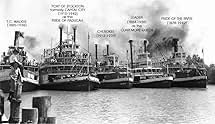
- San Joaquin River, California, USA(River and Delta at Stockton: steam ships, rivers channels)
- Production company
- See more company credits at IMDbPro
- Runtime
- 1h 22m(82 min)
- Color
- Aspect ratio
- 1.37 : 1
Contribute to this page
Suggest an edit or add missing content