IMDb RATING
7.4/10
1.8K
YOUR RATING

Unemployed Kihachi and his two sons struggle to make ends meet. But that doesn't keep Kihachi from wooing single mother Otaka.Unemployed Kihachi and his two sons struggle to make ends meet. But that doesn't keep Kihachi from wooing single mother Otaka.Unemployed Kihachi and his two sons struggle to make ends meet. But that doesn't keep Kihachi from wooing single mother Otaka.
- Director
- Writers
- Stars


- Director
- Writers
- All cast & crew
- Production, box office & more at IMDbPro
7.41.8K
1
2
3
4
5
6
7
8
9
10
Featured reviews
Japanese neorrealism
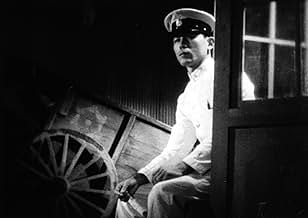
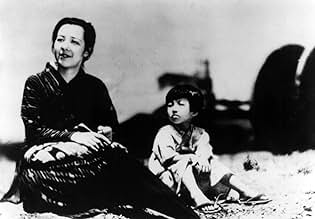
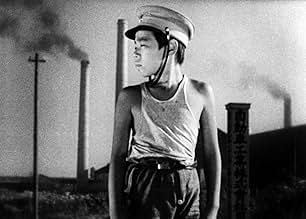
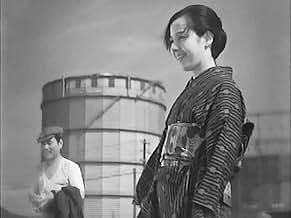
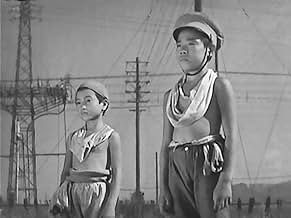
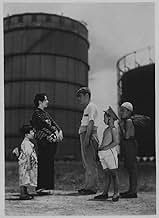
An Inn in Tokyo follows Kihachi, a nearly penniless, wandering laborer, as he and his two young sons, Zenko and Shoko, search through the industrial wastelands of Tokyo, hoping for any work to sustain them. For three days, their efforts are fruitless, leaving them weary and hungry. Along the way, they meet Otaka, a widowed mother with her own little girl, Kimiko. Similarly struggling, the two families form a bond, united by their hardship and loneliness in this desolate landscape.
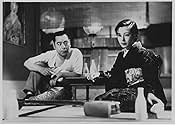
Eventually, Kihachi encounters an old friend, Otsune, who runs a small café. She offers Kihachi a job, and for the first time in days, he finds a brief sense of relief and joy. However, Kihachi soon learns that Kimiko has fallen seriously ill with dysentery, leaving her mother unable to pay the hospital fees. Desperate to help, Kihachi attempts to borrow from Otsune, but when she cannot lend the money, he makes the painful choice to steal from a wealthy bar. He gives the stolen money to Otaka for her daughter's care, sacrificing his own freedom in the process.
In a poignant final act, Kihachi asks Otsune to care for his sons, then walks alone to the police station to surrender. His oldest son, aware of the sorrow weighing on his father, serves him an imaginary cup of sake, a brief and tender gesture of understanding that underlines the deep connection between them.
This was Ozu's penultimate silent film, and it serves as a precursor to Italian neorealism, blending stunning technical precision with a powerful exploration of human resilience. Set against the bleak, industrial sprawl of Tokyo, Ozu presents the heartbreaking plight of two lost adults and their children, highlighting social hardship while masterfully capturing fleeting moments of humor and humanity. The film's compassionate performances, especially by the children, enrich this landscape, imbuing it with life and depth.
Eventually, Kihachi encounters an old friend, Otsune, who runs a small café. She offers Kihachi a job, and for the first time in days, he finds a brief sense of relief and joy. However, Kihachi soon learns that Kimiko has fallen seriously ill with dysentery, leaving her mother unable to pay the hospital fees. Desperate to help, Kihachi attempts to borrow from Otsune, but when she cannot lend the money, he makes the painful choice to steal from a wealthy bar. He gives the stolen money to Otaka for her daughter's care, sacrificing his own freedom in the process.
In a poignant final act, Kihachi asks Otsune to care for his sons, then walks alone to the police station to surrender. His oldest son, aware of the sorrow weighing on his father, serves him an imaginary cup of sake, a brief and tender gesture of understanding that underlines the deep connection between them.
This was Ozu's penultimate silent film, and it serves as a precursor to Italian neorealism, blending stunning technical precision with a powerful exploration of human resilience. Set against the bleak, industrial sprawl of Tokyo, Ozu presents the heartbreaking plight of two lost adults and their children, highlighting social hardship while masterfully capturing fleeting moments of humor and humanity. The film's compassionate performances, especially by the children, enrich this landscape, imbuing it with life and depth.
searing social melodrama from Ozu
This early great work from The Master is a sobering melodrama honed squarely on a single unemployed, homeless father struggling to feed and shelter his two sons. Ozu does a fine job capturing the dynamic between the two boys by themselves and with their father, but the film really gets interesting when two women enter the story: a young single mother, also homeless, and an old friend who finds the father a job. The maudlin climax seems to anticipate Ford's GRAPES OF WRATH and DeSican melodrama -- though in the wrong ways -- but prior to that Ozu comes up with an quirky expressionist sequence to reflect the father's unraveling moral state.
10mgmax
Masterpiece of realism
The richly moving story of a hard-luck father and his two children, this masterpiece of unadorned realism may remind you more of Italian films like Shoeshine than Ozu's more staid work of the 50s. (The inspiration was probably Vidor's The Crowd, and a comparison with that masterpiece is by no means out of order.)
10kerpan
One of the greatest films by anyone -- ever
I would argue that "Tokyo no yado" (Inn at Tokyo) is not only one of Ozu's best films, but one of the best films by anyone ever. It tells the story of an unemployed and homeless single father (Takeshi Sakamoto) with two sons (the elder of the two being the wonderful Tomio Aoki) looking for work in depression-era Tokyo, whose lives intersects with those of a single mother (the marvelous Yoshiko Okada) of a little daughter likewise forlornly seeking a way (and a place) to live. The children can find moments of happiness in the undustrial wasteland -- and their parents can briefly recollect their own happiness as children. The boys have a brief idyll, after their father gets a job with the help of an old friend (Choko Iida), even getting to go to school (a pleasure they value almost as much as having a fixed home and a dependable supply of food). Things, however, become troubled again when the family loses track of the mother and girl (who have not found any "angel" to help them out). A film that is strikingly beautiful -- and more than a little heart-breaking. It is marred by a tiny section that seems overly melodramatic right before the end (but this might be due to infelicities of the intertitles -- or at least of their translation).
Inn of floating lives
Ozu was really on the verge of discovery at the time, having experimented for a few years. I believe this is why he continued in the silent format longer than his peers, fearing sound would pose demands on the visual experience he was hoping to cultivate. So he was looking for an eye that is quiet but attentive, alert, seeing with a kind of vital emptiness.
Focus would be his exercise. In place of more rigorous form, he had discovered a few motifs he knew carried resonance - vast rolling skies, floating weeds, fireworks - and was content to use that as spontaneous blossoms of insight amid languid flows.
And he had an optimism that was touching, faith in a secular way. His characters really grew to a point of sublime selflessness but did so out of common sense and remained distraught, human.
So there is a lot of sense in early Ozu, in both meanings of the word, and this is why I value him.
But I wish he was bolder at the same time. And this is because the first 30 minutes are unusually sparse, even by standards he was developing, and just look at how simply he paints contemporary Japan with one stroke, a father with two raggedy kids to feed, unemployed in the middle of a sunbaked plain littered with factories, but in the latter stages turns into conventional drama that resolves theatrically, and even worse is a rehash of his Floating Weeds from the previous year.
So he was finding ways to handle emptiness but was still thinking in terms of balanced, old-fashioned storytelling. His eye was looking to see clearly but did not see itself.
The juxtaposition is striking and disappoints more, especially by comparison to the likes of Mizoguchi and Naruse who were coming up with clever ways to annotate the artifice of their melodrama. Ozu's unfolds at face value, provincial in its earnestness.
Asymmetry is what is lacking here. Imbalance that reflects a world unfettered by narratives.
Focus would be his exercise. In place of more rigorous form, he had discovered a few motifs he knew carried resonance - vast rolling skies, floating weeds, fireworks - and was content to use that as spontaneous blossoms of insight amid languid flows.
And he had an optimism that was touching, faith in a secular way. His characters really grew to a point of sublime selflessness but did so out of common sense and remained distraught, human.
So there is a lot of sense in early Ozu, in both meanings of the word, and this is why I value him.
But I wish he was bolder at the same time. And this is because the first 30 minutes are unusually sparse, even by standards he was developing, and just look at how simply he paints contemporary Japan with one stroke, a father with two raggedy kids to feed, unemployed in the middle of a sunbaked plain littered with factories, but in the latter stages turns into conventional drama that resolves theatrically, and even worse is a rehash of his Floating Weeds from the previous year.
So he was finding ways to handle emptiness but was still thinking in terms of balanced, old-fashioned storytelling. His eye was looking to see clearly but did not see itself.
The juxtaposition is striking and disappoints more, especially by comparison to the likes of Mizoguchi and Naruse who were coming up with clever ways to annotate the artifice of their melodrama. Ozu's unfolds at face value, provincial in its earnestness.
Asymmetry is what is lacking here. Imbalance that reflects a world unfettered by narratives.


Did you know
- TriviaThe credits indicate that the script was based on an original work by a foreign writer with a name that sounds like "Winzart Monet", but it is actually a gag name, derived from "without money".
- ConnectionsFeatured in A Story of Children and Film (2013)
Details
- Release date
- Country of origin
- Language
- Also known as
- Un alberg a Tòquio
- Production company
- See more company credits at IMDbPro
- Runtime
- 1h 19m(79 min)
- Color
- Sound mix
- Aspect ratio
- 1.37 : 1
Contribute to this page
Suggest an edit or add missing content