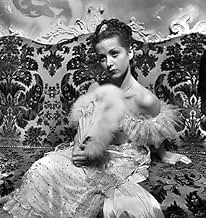
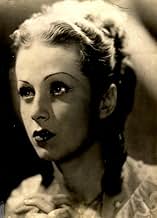
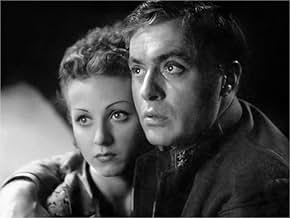
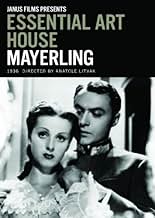
Rodolfe, Crown Prince of Austria, is fettered on all sides. He's bored; his father, the emperor, is domineering; his politics are more liberal than his father's, but he knows his views carry... Read allRodolfe, Crown Prince of Austria, is fettered on all sides. He's bored; his father, the emperor, is domineering; his politics are more liberal than his father's, but he knows his views carry no weight. He agrees to marry a princess to sire an heir, then spends his nights as a pla... Read allRodolfe, Crown Prince of Austria, is fettered on all sides. He's bored; his father, the emperor, is domineering; his politics are more liberal than his father's, but he knows his views carry no weight. He agrees to marry a princess to sire an heir, then spends his nights as a playboy. In 1888, he meets Marie Vetsera, 17, a baroness' daughter. She is resolute, smitten,... Read all
- Awards
- 3 wins & 1 nomination total
- La baronne Vetsera
- (as Marthe Regnier)
- La cousine de Marie
- (as Assia)
- Une fille
- (as Ribès)
- Szeps
- (as Bergeron)
- Le chef de la police
- (as Sokoloff)
- Le premier policier
- (as Aimos)
- Le second policier
- (as Siméon)
Featured reviews
For the women he loved
Indeed Emperor Franz Joseph lived on and on and on. He did not die until 1916 and the Empire would die with the end of World War I when so many new states were created in Europe. But when people do start getting old the succession in the dynasty becomes important.
Charles Boyer plays the dissolute and dissipated Crown Prince Rudolf who always gets a following whether he wants it or not in any monarchy. He's got more liberal views than his father played here by Jean Dax. What's not covered here is that Franz Joseph when he assumed the throne in 1848 was a rather serious minded youth of the age of 17, a total contrast to his kid. It made for continual conflict exacerbated by court politics.
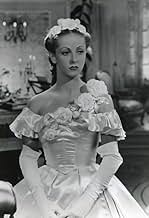
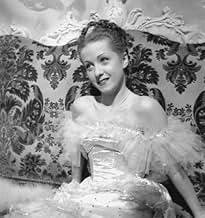
The Crown Prince was more interested in letting the good times roll like there was no tomorrow. The Emperor has already arranged a match which the Prince has reluctantly agreed to as per his duty to the state. But then he meets Danielle Darrieux who plays Marie Vetsera who is of minor nobility not quite up to Hapsburg standards. After that he wants only to be with her. And she wants only him, not even the crown if he has to give it up.
Rudolf was a momma's boy in every sense of the word. The Empress Elizabeth married Franz Joseph and she was a wild child herself. Her story is covered in the Grace Moore/Franchot Tone movie The King Steps Out. Although she's at court here in this film, most of the years of her reign she lived apart from the Emperor partaking of the various resorts at places like Baden-Baden and Biarritz. Actress Gabrielle Dorziat plays Sissi and she sympathizes with her son, but not much she can do. Boyer and Dorziat have a very emotional scene covering that.
Darrieux all wide eyed and innocent does a wonderful job as the luckless Marie Vetsara. Boyer scores well as the tragic Rudolf who would just not settle down to his responsibilities.
With the British monarchy crisis in the news in America and everywhere else but the British Empire, Mayerling found an interested audience in 1936. Anatole Litvak directed it and he, Boyer, and Darrieux would be in America soon enough. Boyer was already here, but returned to France for this film. No doubt he was cast for box office reasons in the foreign markets, most especially the American one.
All of them delivered a fine film.
Superb historical love-drama.
A beautiful film lost in a `beater' print
Sad But Not necessarily True
The story unfolds to the inevitable conclusion of murder/suicide which threw the Empire into turmoil. History may record the events of what happened at Mayerling a little differently but it surely makes a good story of thwarted love and royal politics. The 1968 remake with Omar Shariff and Catherine Deneuve is not bad either. This legendary romance has fascinated people since the turn of the century. So have the Kleenex handy and enjoy!!
True story
Well, it just didn't happen like that. It turned out to be a love story starring Charles Boyer and it gets very predictable from the moment we are introduced to Danielle Darrieux (Marie Vetsera). The films tells us early on exactly where this is heading with constant references to death. So, we wait to see how this is going to happen. This gets revealed right at the end - the only part of the film that holds any interest. Up until that point, it's a series of watching ballet, going to the fair, Morris dancing (the other standout moment of the film), etc whilst there are lavish sets and costumes to look at.
Once the film had finished, my wife asked if this was a true story and looked it up. Bingo! It's a true story. That makes a big difference and adds an extra point onto the score. This now holds an interest as the film describes a hugely significant moment in history. I wish I'd reminded myself of this before watching. I'll know for next time. The actual incident is a milestone as it changes the lineage of succession. Would there have been a World War 1 if the reforming, liberal Rudolf had acceded the throne? Would prostitution have become acceptably mainstream like it should be? The real story is interesting but the film not as interesting as it could have/should have been.
Did you know
- TriviaOne of the first foreign films with sound to become a hit in the United States. It made an international star out of Charles Boyer.
- ConnectionsFeatured in Scissors (1991)
Details
Box office
- Gross US & Canada
- $240,000
- Runtime
- 1h 36m(96 min)
- Color
- Aspect ratio
- 1.33 : 1