

A look at the life of Florence Nightingale.A look at the life of Florence Nightingale.A look at the life of Florence Nightingale.
- Awards
- 2 wins & 1 nomination total


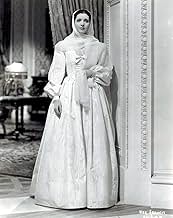


Lillian Kemble-Cooper
- Parthenope 'Parthe' Nightingale
- (as Lillian Cooper)
6.6445
1
2
3
4
5
6
7
8
9
10
Featured reviews
Way too corny and melodramatic
It's very melodramatic, reminding me of Young Tom Edison. Every "tidbit" the average person knows about the famous person is included in the script, in the most saccharine-style possible. Months after she sits up all night with Billy Mauch when he's ill, he finds her sitting in the snow. "I'm taking care of you now," he says as he gives her his coat. There are countless scenes like that one, as costars who play coworkers of Florence Nightingale praise her selflessness and dedication to her patients. In another scene, she comes down with cholera, and rather than letting the medical staff carry her away on a stretcher, the soldiers in the trench insist on doing it. That's fine, but one soldier actually says, "We'll do it! Who cares about cholera?" Way too corny for my taste.
But, if that's why you're watching the movie, you might not mind the style. I minded, because I was hoping for a more historical approach as to why she became a nurse, rather than just scene after scene of her forgoing sleep in order to sit up with a sick patient. There's a little portion of the beginning that shows her decline a marriage proposal in favor of medical school, but it's not very explanatory. There is a large supporting cast, though, including Henry O'Neill, Ian Hunter, Halliwell Hobbes, Nigel Bruce, Donald Crisp, Donald Woods, Fay Holden, and E. E. Clive. Watch at your own risk, and only if you like dated biopics.
But, if that's why you're watching the movie, you might not mind the style. I minded, because I was hoping for a more historical approach as to why she became a nurse, rather than just scene after scene of her forgoing sleep in order to sit up with a sick patient. There's a little portion of the beginning that shows her decline a marriage proposal in favor of medical school, but it's not very explanatory. There is a large supporting cast, though, including Henry O'Neill, Ian Hunter, Halliwell Hobbes, Nigel Bruce, Donald Crisp, Donald Woods, Fay Holden, and E. E. Clive. Watch at your own risk, and only if you like dated biopics.
OK Biopic
Kay Francis stars in this biopic of Florence Nightingale. I love old Hollywood biopics. They get a lot of flack today by certain types for embellishing some facts of these people's lives. Seems to me biopics today have even worse flaws. Instead of embellishing positively they embellish negatively. In other words, instead of focusing on inspiring uplifting strengths and virtues they focus on the faults and vices of historical figures. To each their own but personally I will take the rousing biographical films from back then over the salacious and often slanderous ones of the modern era.
Rant aside, this is not the strongest biopic but it is a decent one. Kay Francis works against type quite well. She's helped by an amazing supporting cast. To name a few: Donald Crisp, Nigel Bruce, Donald Woods, Henry O'Neill, Ian Hunter, Halliwell Hobbes -- they all give first rate support.
Overall it's an entertaining film. I recommend it to people who are interested In the story of Florence Nightingale and anybody who enjoys Golden Age of Hollywood biographical dramas.
Rant aside, this is not the strongest biopic but it is a decent one. Kay Francis works against type quite well. She's helped by an amazing supporting cast. To name a few: Donald Crisp, Nigel Bruce, Donald Woods, Henry O'Neill, Ian Hunter, Halliwell Hobbes -- they all give first rate support.
Overall it's an entertaining film. I recommend it to people who are interested In the story of Florence Nightingale and anybody who enjoys Golden Age of Hollywood biographical dramas.
Well Shot, Well Acted But Script is One Dimensional
With a title like The White Angel, you kind of know what you're going to get, if you'll excuse the pun, a whitewash. Of course a person like Florence Nightingale should be celebrated for her achievements but this film presents her as a saint rather than a living, breathing and flawed human being. Again, no joke intended but the characters for her are depicted as heroic and those against her, villainous, so, rather black and white. A more serious biopic might have been entitled The Lady With the Lamp and indeed a passage of the film where various characters read out Longfellow's poem of the same name is one of the most effective and moving scenes of the film. German director, William Dieterle, known for many great movies such as the beloved 1939 version of The Hunchback of Notre Dame and more significantly, for me, 1941's masterpiece, The Devil and Daniel Webster, is a sure hand on the tiller and moves things along with pace and interest but is fighting a battle with the script. The best you can say of it, is it is of it's time. The worst affected is the star, Kay Francis, a fine actress who delivers with conviction but is encumbered with po faced and twee lines that beggar belief. Her talent is evident in that she still manages to make her role engaging. Fortunately, she also has a sterling cast to play alongside her; on the 'good' side the redoutable Halliwell Hobbes brings charisma in spades as Lord Raglan and Ferdinand Munier is enjoyably whimsical as the camp cook, Soyer. On the distaff side, Donald Crisp is effectively cold as Dr Hunt, Montagu Love, suitably oily as Bullock and Nigel Bruce, my reason for watching, is hugely pleasurable to watch as the pompous and condescending Dr West, and unlike the other two antagonists, manages to be likeable into the bargain. All three represent the crushing patriarchy that our heroine needs to overcome both in England and the Crimea. Striking a false note is Billy Mauch as drummer boy, Billy, so very American and so very twee that his appearances jar and take you out of the story. Talking of twee, the appearance of Queen Victoria's arm and her arm only, takes the biscuit! But to conclude at an hour and a half with first rate acting and direction this is a good biopic and with a stronger script could have been a excellent one.
The Lady With A Lamp
The White Angel which was a film about the crucial years in the life of Florence
Nightingale when she during the Crimean War popularized the career of nursing
for women and sanitary hospitals. Her work in Great Britain and Clara Barton in
the USA during the Civil War set the standards for the nursing profession as we
know it now.
Nightingale came from an upper class background and that probably stood her in good stead because someone who had to worry about how the next month's rent was to be paid or the next meal coming from could not have taken on what she did or faced down the sexist attitudes of her age.
The British cinema did the best version of her life in 1951 with Anna Neagle playing Nightingale. Besides Florence herself the real name of only one other character is used, that of Lord Raglan the Commander of the British forces in the Crimea played here by Halliwell Hobbes. The real players are used in the Neagle film.
This was a change of pace for Kay Francis who usually was more glamorous in her roles than here. Francis reminds me a lot of Rosaland Russell when she did Sister Kenny.
This was part of Warner Brothers biographical films of the late 30s and The White Angel was the only one to have a female subject. The White Angel bogs down a bit in spots and for a more accurate film the Neagle picture is better. Still this is reasonably entertaining and Kay Francis fans will like it.
Nightingale came from an upper class background and that probably stood her in good stead because someone who had to worry about how the next month's rent was to be paid or the next meal coming from could not have taken on what she did or faced down the sexist attitudes of her age.
The British cinema did the best version of her life in 1951 with Anna Neagle playing Nightingale. Besides Florence herself the real name of only one other character is used, that of Lord Raglan the Commander of the British forces in the Crimea played here by Halliwell Hobbes. The real players are used in the Neagle film.
This was a change of pace for Kay Francis who usually was more glamorous in her roles than here. Francis reminds me a lot of Rosaland Russell when she did Sister Kenny.
This was part of Warner Brothers biographical films of the late 30s and The White Angel was the only one to have a female subject. The White Angel bogs down a bit in spots and for a more accurate film the Neagle picture is better. Still this is reasonably entertaining and Kay Francis fans will like it.
"Dangerously progressive!"
William Dieterle, like so many of his contemporaries, left Germany in the 1930's and headed for Tinseltown. He proved himself very adaptable and whilst under contract to Warner Brothers, raised that studio's prestige by directing a series of well-mounted biopics. Invariably set in foreign climes these studio-bound films were all totally convincing in terms of period and place.
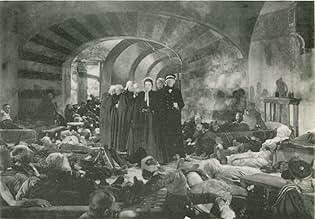
This biopic of Florence Nightingale is no exception and although considered the weakest of them all, not least by Dieterle himself, it remains a convincing portrait of Victorian England with its squalor and class-ridden complacency regarding the plight of the lower orders and the general view that nursing was little better than prostitution. It is no less effective when switching to the Crimea and the horrendous conditions that prevailed in the soldiers' hospital at Scutari.
Historically of course it is Hollywood Hokum and full of inaccuracies but it succeeds in its purpose of depicting a truly extraordinary woman and her battle with institutionalised ignorance and prejudice.
Dieterle's customary visual sense is complemented by two stalwarts of Warner Bros, cinematographer Tony Gaudio and the brilliant head of Art Direction, Polish émigré, Anton Grot.
It is generally agreed that the weak link lies in the casting of Kay Francis as Florence. She was at the time Queen of the Lot at Warner Bros and its highest paid star. This, coupled with her innate classiness would make her the obvious choice. She is certainly not lacking in sincerity and it is not her fault that her part has been written more as a symbol than as flesh and blood which alas makes the character rather one-dimensional. Ian Hunter does his best with another one-dimensional role as a reporter for 'The Times' and Donald Crisp excels as the odious Dr. Hunt.
Whatever its shortcomings this version is infinitely more powerful and engaging than that of Herbert Wilcox in 1950 which is little more than a series of tableaux-vivants.
Suffice to say that since her death Miss Nightingale's achievements and far-reaching influence have been overshadowed by suggestions of misogyny, lesbianism and racism! She remains however a Feminist icon despite her observation that although they might crave sympathy "women have no sympathy and my experience of women is almost as large as Europe."
This biopic of Florence Nightingale is no exception and although considered the weakest of them all, not least by Dieterle himself, it remains a convincing portrait of Victorian England with its squalor and class-ridden complacency regarding the plight of the lower orders and the general view that nursing was little better than prostitution. It is no less effective when switching to the Crimea and the horrendous conditions that prevailed in the soldiers' hospital at Scutari.
Historically of course it is Hollywood Hokum and full of inaccuracies but it succeeds in its purpose of depicting a truly extraordinary woman and her battle with institutionalised ignorance and prejudice.
Dieterle's customary visual sense is complemented by two stalwarts of Warner Bros, cinematographer Tony Gaudio and the brilliant head of Art Direction, Polish émigré, Anton Grot.
It is generally agreed that the weak link lies in the casting of Kay Francis as Florence. She was at the time Queen of the Lot at Warner Bros and its highest paid star. This, coupled with her innate classiness would make her the obvious choice. She is certainly not lacking in sincerity and it is not her fault that her part has been written more as a symbol than as flesh and blood which alas makes the character rather one-dimensional. Ian Hunter does his best with another one-dimensional role as a reporter for 'The Times' and Donald Crisp excels as the odious Dr. Hunt.
Whatever its shortcomings this version is infinitely more powerful and engaging than that of Herbert Wilcox in 1950 which is little more than a series of tableaux-vivants.
Suffice to say that since her death Miss Nightingale's achievements and far-reaching influence have been overshadowed by suggestions of misogyny, lesbianism and racism! She remains however a Feminist icon despite her observation that although they might crave sympathy "women have no sympathy and my experience of women is almost as large as Europe."


Did you know
- TriviaMuch disagreement to the origin of the source material exists. Some contemporary sources believed the source was Lytton Strachey's 1918 biographical essay in "Eminent Victorians". Others contend Michael Jacoby was the author. Warner Bros. executive Hal B. Wallis contended that the life of Florence Nightingale was in the public domain, and that screenwriter Mordaunt Shairp did his own research. The MPAA agreed with Wallis; no source credit was necessary.
- GoofsWhen Florence is receiving the news on the steps of the hospital of the sinking of the French transport, the shadow of the boom microphone moves onto then quickly off her left sleeve.
- Crazy creditsPrologue: Towards the year 1850, England was at peace with the world. Her men were following her ships to the four corners of the earth, building the great empire that is Queen Victoria's monument. Women were only permitted to nod meek approval. In all England, only Her Majesty had the right to express herself with the independence of a man.
- ConnectionsFeatured in Breakdowns of 1936 (1936)
- SoundtracksAuld Lang Syne
(uncredited)
Traditional
Lyrics by Robert Burns
Incorporated into the score at the new year
Sung by the crowd celebrating the new year
Details
- Runtime
- 1h 32m(92 min)
- Color
- Sound mix
- Aspect ratio
- 1.37 : 1
Contribute to this page
Suggest an edit or add missing content