IMDb RATING
6.7/10
1.5K
YOUR RATING


Steve Raleigh aims for Broadway; with backer Herman and leading lady Sally, he faces challenges as Sally trains a horse to finance the production.Steve Raleigh aims for Broadway; with backer Herman and leading lady Sally, he faces challenges as Sally trains a horse to finance the production.Steve Raleigh aims for Broadway; with backer Herman and leading lady Sally, he faces challenges as Sally trains a horse to finance the production.
- Director
- Writers
- Stars
- Awards
- 3 wins total






King Baggot
- Magazine Stand Proprietor
- (uncredited)

- Director
- Writers
- All cast & crew
- Production, box office & more at IMDbPro
6.71.4K
1
2
3
4
5
6
7
8
9
10
Featured reviews
A nice tribute to Clark Gable
My suspicions are running high that the lavish budget and extravagance of "Broadway Melody of 1938" were practice made in order to disguise the age old Judy Garland and Mickey Rooney premise "Come on, let's put on a show!", away from the typical country town backyard setting, for Broadway itself in a dressed up version of a simplified recyclable plot.
It's hard to believe that Judy Garland, a dark brunette starry eyed fifteen year old as a supporting novelty prop, hence the almost non-explained entrance into the "Melody" movie, later became a threat to Eleanor Powell, the female equivalent of Fred Astaire. Despite her lack of purpose, as the daughter of a boarding house proprietress for struggling actors, Judy manages to sing up a storm with her first big hits, "Dear Mr Gable", originally sung to the King himself before its inclusion in the film, "Everybody Sing", so popular that one of her films the following year was renamed after the song, sing a bit of "Yours and Mine" in the opening credits, and a dance in a toilet roll crinoline white dress with Buddy Ebsen.
However, "Broadway Melody of 1938" was Judy Garland's earliest feature film foray at MGM, and not surprisingly for a dynamic triple threat performer of her talents, steals the show.
Horses, gambling bets, sneezing experts, owners of a frighteningly large number of dogs and simply a hell of a lot of people with budding talent all contribute to the movie's conflicting story and the famous show business line, "The show must go on" in order for Robert Taylor's Broadway producer character to finance his latest hit production, called ironically enough, "Broadway Melody".
As a dancing spectacular showcase for the brilliant talents of Eleanor Powell, the routines featured are no disappointment, notably "Follow in my footsteps", in the company of the champion racehorse on a traveling train, and the sensational George Murphy/Powell dance "I'm Feeling Like a Million". Finally, the charismatic cast is rounded up by Sophie Tucker, as Judy's mother, singing a great rendition of her special song "Some of these days".
In all, like all the movies in the "Melody" series, this isn't exactly "Singin' in the Rain", but it certainly did a lot for the audiences of the Depression era, hungry for the lavish, fun musicals, and is certainly quite a surprising pleasant musical piece for your own enjoyment.
Rating: 8/10
It's hard to believe that Judy Garland, a dark brunette starry eyed fifteen year old as a supporting novelty prop, hence the almost non-explained entrance into the "Melody" movie, later became a threat to Eleanor Powell, the female equivalent of Fred Astaire. Despite her lack of purpose, as the daughter of a boarding house proprietress for struggling actors, Judy manages to sing up a storm with her first big hits, "Dear Mr Gable", originally sung to the King himself before its inclusion in the film, "Everybody Sing", so popular that one of her films the following year was renamed after the song, sing a bit of "Yours and Mine" in the opening credits, and a dance in a toilet roll crinoline white dress with Buddy Ebsen.
However, "Broadway Melody of 1938" was Judy Garland's earliest feature film foray at MGM, and not surprisingly for a dynamic triple threat performer of her talents, steals the show.
Horses, gambling bets, sneezing experts, owners of a frighteningly large number of dogs and simply a hell of a lot of people with budding talent all contribute to the movie's conflicting story and the famous show business line, "The show must go on" in order for Robert Taylor's Broadway producer character to finance his latest hit production, called ironically enough, "Broadway Melody".
As a dancing spectacular showcase for the brilliant talents of Eleanor Powell, the routines featured are no disappointment, notably "Follow in my footsteps", in the company of the champion racehorse on a traveling train, and the sensational George Murphy/Powell dance "I'm Feeling Like a Million". Finally, the charismatic cast is rounded up by Sophie Tucker, as Judy's mother, singing a great rendition of her special song "Some of these days".
In all, like all the movies in the "Melody" series, this isn't exactly "Singin' in the Rain", but it certainly did a lot for the audiences of the Depression era, hungry for the lavish, fun musicals, and is certainly quite a surprising pleasant musical piece for your own enjoyment.
Rating: 8/10
Not one of the best Broadway Melodies, but it has some great numbers!
What we have here is one of those none-too-inspired screenplays which the players are forced to pep up by shouting their lines at the top of their voices! Alas! Only Billy Gilbert can get away with this sort of stratagem. The others just seem ridiculous. However, never mind the silly story (this is one of the very few musicals with a horse-racing background), the movie's chief assets are its song and dance numbers, including a box-car dance with Eleanor Powell, George Murphy and Buddy Ebsen, two songs by Judy Garland (including the justly famous, "You Made Me Love You"), and. topping them all, a very lively and vastly amusing romp in the rain by Powell and Murphy. The movie was choreographed by the vastly under-rated Dave Gould and attractively photographed in black-and-white by William Daniels (although I understand Ray June worked on the film too).
Musical History Unfolds
Eleanor Powell dances in a tuxedo to "Broadway Rhythm," Judy Garland sings "You Made Me Love You" to a photograph of Clark Gable, and Sophie Tucker sings her signature song, "Some of These Days." Then Tucker joins Garland for "Everybody Sing," and we hear that "Happy Days Are Here Again." This is another history lesson in the famous tunes of the times and the unforgettable performers who gave them to us in song and dance. --Musicals on the Silver Screen, American Library Association, 2013
Broadway Goes to the Races
"Broadway Melody of 1938" (MGM, 1937), directed by Roy Del Ruth, the third installment to MGM's "Broadway Melody" yearly titled series, following 1929 and 1936, is an ultra lavish edition (minus Technicolor) with a galaxy of stars, and being most noted today mainly for young Judy Garland, in her MGM feature debut, singing to the portrait of movie actor, Clark Gable, than anything else in the entire production. It would had been more interesting in making Garland the central focus to the story as a teen-aged daughter of a legendary Broadway star (Sophie Tucker) of long ago wanting to keep the family tradition going after her mother retires, and the struggles and hardships that come with it. Instead, this edition of "Broadway Melody" includes enough subplots to make this a two hour plus special, and possibly was, but due to some noticeable sudden cuts and abridged scenes with quick blackouts, it finally made it to a 112 minute cut. Even Judy Garland's singing voice to the song, "Yours and Mine" is heard during the last half of the opening credits, and not seen as part of an audition as such, in the plot.
For the storyline, Caroline Whipple (Binnie Barnes), a former chorus girl now married to a middle-aged millionaire, Herman (Raymond Walburn), is fond of Steve Reilly (Robert Taylor), and she agrees to back a show for which he has written the score. Caroline maintains a large racing stable. Among her horses is Star Gazer, favored to win a big race at Baltimore. Sally Lee (Eleanor Powell), an ambitious dancer, loves Star Gazer because her father raised him. Hearing that Caroline intends to auction off the horse in New York, Sally stows away in a box car and hopes to go along with him. On the train she meets Steve Raleigh (Robert Taylor), who's traveling with the Whipples in their private car. After Sally helps him complete a score he is writing, he becomes impressed with her singing and dancing, and decides to star her in his upcoming show. While in New York, Steve arranges Sally to live in a boarding house for out-of-work actors run by Alice Clayton (Sophie Tucker), a former Broadway headliner hoping to get her daughter, Betty (Judy Garland) into show business. But before the grand finale featuring Star Gazer in a horse race, and then, the Broadway show, the subplot takes center stage on partners Sonny Ledford (George Murphy) and Peter Polt (Buddy Ebsen) who become trainer and jockey to Sally's horse, both dodging an Italian barber (Billy Gilbert) and his opera singing nephew (Charles Igor Gorin), because they owe him money they played on the horses, which won; plus character actor performers adding some comedy, including Robert Wildhack, who previously demonstrated the art of snoring in "Broadway Melody of 1936," now demonstrating his art of sneezing, which predates the comedy acts of future MGM comic, Red Skelton; Helen Troy as Emma Snipe, the "answer to everything" secretary, and a lot funnier than the sneezer; plus the legendary Robert Benchley in a supporting role as a critic.
The musical program includes: "The Toreador Song" from Bizet's CARMEN (sung by Charles Igor Gorin); "Follow in My Footsteps" (sung by George Murphy, Buddy Ebsen and Eleanor Powell); "Yours and Mine" (sung by Eleanor Powell); "Everybody Sing!" (sung by Judy Garland, with Sophie Tucker who sings a portion of "Happy Days Are Here Again", Barnett Parker, and others); "Some of These Days" (sung by Sophie Tucker); "I'm Feeling Like a Million" (sung and danced by George Murphy and Eleanor Powell); "Dear Mr. Gable (You Made Me Love You)" (sung by Judy Garland); "Your Broadway and My Broadway" (sung by Sophie Tucker/danced by Eleanor Powell), and "Broadway Melody" (closing with cast). A cut song, "Got a Pair of New Shoes," which Garland would sing in her latter film, "Thoroughbreds Don't Cry" (MGM, 1937), can be heard briefly sung by chorus during the finale.
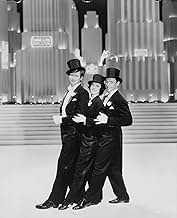
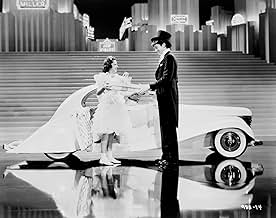
"Broadway Melody of 1938" is pure New Yorkish, with the opening and closing credits focusing on the legendary Broadway theaters, Radio City Music Hall, the Metropolitan Opera House and the streets of Broadway in the after sundown hours. The talented dancing by Eleanor Powell highlight the story, although having her tap-dancing in a box-car and later along with George Murphy on the New York streets in front of the Plaza Hotel around the water pond where they are the only one's around, with the orchestral score playing on cue, may seem foolish by today's standards. These "fantasy" numbers set against realism, along with Garland's memorable "Dear Mr. Gable" number, which takes place in her bedroom after everyone is asleep, all might have worked better as production numbers within the Broadway show, but this has become the normal style of film entertainment, especially by MGM standards, looking more like a dance musical from the 1940s and '50s. Remember Gene Kelly on the streets dancing and singing in the rain in 1952? And speaking of dancers, Buddy Ebsen should not go unnoticed, especially during his brief dancing segment opposite pert Judy Garland in the Broadway finale.
In spite of some of its shortcomings, "Broadway Melody of 1938" will not disappoint any avid lover of movie musicals from the golden age of Hollywood, especially seeing some future film stars on the rise, particularly the young Judy Garland, one year before success found her with "The Wizard of Oz" (1939).
Aside from "Broadway Melody of 1938" being readily available for viewing on both video cassette and cable's Turner Classic Movies, there was also a motion picture soundtrack on record released in 1983, compliments of Motion Picture Tracks International, which not only includes the entire score in stereo, but an outtake song of "I'm Feeling Like a Million," sung by Judy Garland on piano. One can only hope that someday, musical and/or storyline outtakes from the film will resurface in parts on video or DVD. Next and final installment, "Broadway Melody of 1940" (1940). (***)
For the storyline, Caroline Whipple (Binnie Barnes), a former chorus girl now married to a middle-aged millionaire, Herman (Raymond Walburn), is fond of Steve Reilly (Robert Taylor), and she agrees to back a show for which he has written the score. Caroline maintains a large racing stable. Among her horses is Star Gazer, favored to win a big race at Baltimore. Sally Lee (Eleanor Powell), an ambitious dancer, loves Star Gazer because her father raised him. Hearing that Caroline intends to auction off the horse in New York, Sally stows away in a box car and hopes to go along with him. On the train she meets Steve Raleigh (Robert Taylor), who's traveling with the Whipples in their private car. After Sally helps him complete a score he is writing, he becomes impressed with her singing and dancing, and decides to star her in his upcoming show. While in New York, Steve arranges Sally to live in a boarding house for out-of-work actors run by Alice Clayton (Sophie Tucker), a former Broadway headliner hoping to get her daughter, Betty (Judy Garland) into show business. But before the grand finale featuring Star Gazer in a horse race, and then, the Broadway show, the subplot takes center stage on partners Sonny Ledford (George Murphy) and Peter Polt (Buddy Ebsen) who become trainer and jockey to Sally's horse, both dodging an Italian barber (Billy Gilbert) and his opera singing nephew (Charles Igor Gorin), because they owe him money they played on the horses, which won; plus character actor performers adding some comedy, including Robert Wildhack, who previously demonstrated the art of snoring in "Broadway Melody of 1936," now demonstrating his art of sneezing, which predates the comedy acts of future MGM comic, Red Skelton; Helen Troy as Emma Snipe, the "answer to everything" secretary, and a lot funnier than the sneezer; plus the legendary Robert Benchley in a supporting role as a critic.
The musical program includes: "The Toreador Song" from Bizet's CARMEN (sung by Charles Igor Gorin); "Follow in My Footsteps" (sung by George Murphy, Buddy Ebsen and Eleanor Powell); "Yours and Mine" (sung by Eleanor Powell); "Everybody Sing!" (sung by Judy Garland, with Sophie Tucker who sings a portion of "Happy Days Are Here Again", Barnett Parker, and others); "Some of These Days" (sung by Sophie Tucker); "I'm Feeling Like a Million" (sung and danced by George Murphy and Eleanor Powell); "Dear Mr. Gable (You Made Me Love You)" (sung by Judy Garland); "Your Broadway and My Broadway" (sung by Sophie Tucker/danced by Eleanor Powell), and "Broadway Melody" (closing with cast). A cut song, "Got a Pair of New Shoes," which Garland would sing in her latter film, "Thoroughbreds Don't Cry" (MGM, 1937), can be heard briefly sung by chorus during the finale.
"Broadway Melody of 1938" is pure New Yorkish, with the opening and closing credits focusing on the legendary Broadway theaters, Radio City Music Hall, the Metropolitan Opera House and the streets of Broadway in the after sundown hours. The talented dancing by Eleanor Powell highlight the story, although having her tap-dancing in a box-car and later along with George Murphy on the New York streets in front of the Plaza Hotel around the water pond where they are the only one's around, with the orchestral score playing on cue, may seem foolish by today's standards. These "fantasy" numbers set against realism, along with Garland's memorable "Dear Mr. Gable" number, which takes place in her bedroom after everyone is asleep, all might have worked better as production numbers within the Broadway show, but this has become the normal style of film entertainment, especially by MGM standards, looking more like a dance musical from the 1940s and '50s. Remember Gene Kelly on the streets dancing and singing in the rain in 1952? And speaking of dancers, Buddy Ebsen should not go unnoticed, especially during his brief dancing segment opposite pert Judy Garland in the Broadway finale.
In spite of some of its shortcomings, "Broadway Melody of 1938" will not disappoint any avid lover of movie musicals from the golden age of Hollywood, especially seeing some future film stars on the rise, particularly the young Judy Garland, one year before success found her with "The Wizard of Oz" (1939).
Aside from "Broadway Melody of 1938" being readily available for viewing on both video cassette and cable's Turner Classic Movies, there was also a motion picture soundtrack on record released in 1983, compliments of Motion Picture Tracks International, which not only includes the entire score in stereo, but an outtake song of "I'm Feeling Like a Million," sung by Judy Garland on piano. One can only hope that someday, musical and/or storyline outtakes from the film will resurface in parts on video or DVD. Next and final installment, "Broadway Melody of 1940" (1940). (***)
In admiration of the highly talented Buddy Ebsen
Us that were born post-war tend to forget that some of our 50's heroes had prior talents, and that is just the case with Buddy Ebsen. He was so much a part of my childhood and since, yet hear he is hoofing it with Judy Garland back in 1938 - wow! This film is one of the all-time greats, so if you like a foot-tappin' memorable sequence - just watch Buddy and Judy. You will never forget it!


Did you know
- TriviaThe song "Dear Mr. Gable" was a birthday present for Clark Gable's 36th birthday. Composer and arranger Roger Edens adapted the old song "You Made Me Love You" by James V. Monaco. It was sung at Gable's studio birthday party by a young Judy Garland. Studio head Louis B. Mayer was so impressed by it, that he gave orders to let Garland sing it again in the next great musical MGM was going to produce.
- GoofsIn the number "Follow in My Footsteps" Sally Lee puts her guitar on the bunk, nobody takes it but it can't be seen after the cut.
- Quotes
Alice Clayton: Is he deaf?
Jerry Jason: Well, he was the last time when I asked him for a raise.
- ConnectionsEdited into Grand Central Murder (1942)
- SoundtracksBroadway Melody
(1929) (uncredited)
Music by Nacio Herb Brown
Lyrics by Arthur Freed
Sung by an offscreen chorus during the opening credits
Reprised by the cast in the finale
- How long is Broadway Melody of 1938?Powered by Alexa
Details
- Release date
- Country of origin
- Languages
- Also known as
- The Broadway Melody of 1937
- Filming locations
- Production company
- See more company credits at IMDbPro
Box office
- Gross US & Canada
- $4,118,020
- Gross worldwide
- $6,204,280
- Runtime
- 1h 50m(110 min)
- Color
- Aspect ratio
- 1.37 : 1
Contribute to this page
Suggest an edit or add missing content