
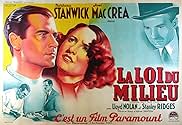
In his first film, young Dr. Kildare helps a female ex-con find her child.In his first film, young Dr. Kildare helps a female ex-con find her child.In his first film, young Dr. Kildare helps a female ex-con find her child.
- Director
- Writers
- Stars
- Awards
- 1 win total


Steve Pendleton
- Interne Jones
- (as Gaylord Pendleton)


James Adamson
- Porter
- (uncredited)

Agostino Borgato
- Popcorn Vendor
- (uncredited)
Helen Brown
- Nurse
- (uncredited)
- Director
- Writers
- All cast & crew
- Production, box office & more at IMDbPro
6.9904
1
2
3
4
5
6
7
8
9
10
Featured reviews
Stanwyck and McCrea Make "Internes" Worth Watching
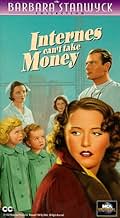
A wildly improbable drama, the misspelled "Internes Can't Take Money" was the first in the "Dr.Kildare" movie series, which was subsequently recast with Lew Ayres in the title role and continued at the MGM studio, following this initial Paramount effort. Concocted by writer Max Brand, the story involves an honest young intern at a large hospital, who crosses paths with a widowed ex-con seeking to locate her three-year-old daughter, who was abducted by her deceased bank-robber husband. The recipe is an old one; toss in a couple of shady characters and a gangster with a heart of gold, who is embroiled in illegal betting, add a tolerant landlady and a kindly bartender, sprinkle with nuns, mix with unexpected twists, and bake until overdone.
Despite an uninspired title and a routine script, director Alfred Santell maintains a steady pace that will distract viewers from the at-times laughable plot turns that lead to a teary fade-out, provoked either by laughter or sentiment. Beyond the script, the film's technical aspects are quite good, especially the black and white cinematography by Theodor Sparkuhl, who often dramatically captures Stanwyck garbed in deep black, contrasting with McCrea, dressed in his intern's whites.
Barbara Stanwyck plays the widow, Janet Haley, and the actress, at her sudsy distraught-mother best, is convincing in an unconvincing role. Joel McCrea is the original Dr. Kildare, a straight-arrow intern, poorly paid and burdened by work and rules, who seeks solace at a nearby bar, where his life takes a sudden turn. Stanwyck and McCrea, in their third co-starring film, work well together, and Stanwyck seems genuinely taken with McCrea during their first scene together. Attesting to what makes a film star a star, Stanwyck and McCrea add dimension and interest to otherwise cardboard characters in credibility-stretching situations. In addition to the two stars, the capable cast also includes Lloyd Nolan, Stanley Ridges, and Charles Lane. However, if not for the professionalism and charisma of the leads and supporting players, "Internes Can't Take Money" would be 80 minutes of laughable coincidences and plot turns, memorable only as the first in the Dr. Kildare movie series.
Despite an uninspired title and a routine script, director Alfred Santell maintains a steady pace that will distract viewers from the at-times laughable plot turns that lead to a teary fade-out, provoked either by laughter or sentiment. Beyond the script, the film's technical aspects are quite good, especially the black and white cinematography by Theodor Sparkuhl, who often dramatically captures Stanwyck garbed in deep black, contrasting with McCrea, dressed in his intern's whites.
Barbara Stanwyck plays the widow, Janet Haley, and the actress, at her sudsy distraught-mother best, is convincing in an unconvincing role. Joel McCrea is the original Dr. Kildare, a straight-arrow intern, poorly paid and burdened by work and rules, who seeks solace at a nearby bar, where his life takes a sudden turn. Stanwyck and McCrea, in their third co-starring film, work well together, and Stanwyck seems genuinely taken with McCrea during their first scene together. Attesting to what makes a film star a star, Stanwyck and McCrea add dimension and interest to otherwise cardboard characters in credibility-stretching situations. In addition to the two stars, the capable cast also includes Lloyd Nolan, Stanley Ridges, and Charles Lane. However, if not for the professionalism and charisma of the leads and supporting players, "Internes Can't Take Money" would be 80 minutes of laughable coincidences and plot turns, memorable only as the first in the Dr. Kildare movie series.
James Kildare, MD
The first appearance of young James Kildare, MD was in this Paramount feature that starred Joel McCrea as the young Intern at Blair General Hospital. Come to think of it, I don't recall if the name of the hospital is given in the film.
Nor will you find any of the other regulars from the Kildare/Gillespie series from MGM. When Paramount saw no possibilities in a series of films, they didn't do film series with the exception of Hopalong Cassidy, MGM picked it up.
Lew Ayres who was Kildare over at MGM was a bright idealistic getting his minting over at Blair General Hospital under the tutelage of gruff but kindly Lionel Barrymore. McCrea is a more stern type of Kildare, the most straight arrow of straight arrows. In fact Joel McCrea was quoted as saying he never felt comfortable being anything other than the straight arrow hero. But he was good in those parts.
His patients include Barbara Stanwyck, a woman from the wrong side of the tracks who will do anything to get back the child she lost custody of and Lloyd Nolan who he patches up after a brawl in the bar they both frequent. Both of their stories intertwine and you see the film to learn how.
In what was essentially a B programmer Paramount gave a lot of good production values to this film. I guess it was befitting the stars McCrea and Stanwyck who were definitely on their way up.
I do sort of miss the Blair General Hospital regulars, but McCrea does right by the character of James Kildare, MD.
Nor will you find any of the other regulars from the Kildare/Gillespie series from MGM. When Paramount saw no possibilities in a series of films, they didn't do film series with the exception of Hopalong Cassidy, MGM picked it up.
Lew Ayres who was Kildare over at MGM was a bright idealistic getting his minting over at Blair General Hospital under the tutelage of gruff but kindly Lionel Barrymore. McCrea is a more stern type of Kildare, the most straight arrow of straight arrows. In fact Joel McCrea was quoted as saying he never felt comfortable being anything other than the straight arrow hero. But he was good in those parts.
His patients include Barbara Stanwyck, a woman from the wrong side of the tracks who will do anything to get back the child she lost custody of and Lloyd Nolan who he patches up after a brawl in the bar they both frequent. Both of their stories intertwine and you see the film to learn how.
In what was essentially a B programmer Paramount gave a lot of good production values to this film. I guess it was befitting the stars McCrea and Stanwyck who were definitely on their way up.
I do sort of miss the Blair General Hospital regulars, but McCrea does right by the character of James Kildare, MD.
A Strong Movie with Great Performances by Barbara Stanwyck, Joel McCrea, Lloyd Nolan and Stanley Ridges
The acting and plot were strong here, and a very enjoyable movie. There is great chemistry with Joel McCrea and Barbara Stanwyck. Stanwyck per norm does great, dramatic work here.
The show stealer is Stanley Ridges. His creep who will help Stanwyck find her child -- only if she sleeps with him long-term and becomes his moll -- is chilling. It's one of the best performances I've ever see of a subtle, sinister gangster who alludes to dastardly deeds, without ever directly saying it. He doesn't ask her to sleep with him, he just munches popcorn, and offers her some. When she declines he says "At some point you should like popcorn." He is direct, firm and sleezy in a must-see performance.
The other scene stealer is Lloyd Nolan. A phenomenal what you would typically like a from a gangster, but with more depth. Great pauses, thoughtfulness and facial expressions in his conversations with McCrea. He's your ideal tough gangster but also has a bit of compassion. Just a bit.
MCrea is always a joy to watch - stable, sure performance.
Internes Can't Take Money is a clear title about the dilemma, and points to the moral quandary to come. But a more compelling title can be found, which that alone, would have made this a more sophisticated movie and higher up in the ranks.
The show stealer is Stanley Ridges. His creep who will help Stanwyck find her child -- only if she sleeps with him long-term and becomes his moll -- is chilling. It's one of the best performances I've ever see of a subtle, sinister gangster who alludes to dastardly deeds, without ever directly saying it. He doesn't ask her to sleep with him, he just munches popcorn, and offers her some. When she declines he says "At some point you should like popcorn." He is direct, firm and sleezy in a must-see performance.
The other scene stealer is Lloyd Nolan. A phenomenal what you would typically like a from a gangster, but with more depth. Great pauses, thoughtfulness and facial expressions in his conversations with McCrea. He's your ideal tough gangster but also has a bit of compassion. Just a bit.
MCrea is always a joy to watch - stable, sure performance.
Internes Can't Take Money is a clear title about the dilemma, and points to the moral quandary to come. But a more compelling title can be found, which that alone, would have made this a more sophisticated movie and higher up in the ranks.
B plot + A production = Dr. Kildare with atmosphere
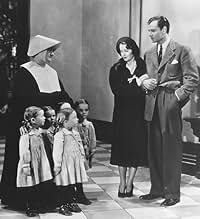
An exceptionally flavorful rendering of the Depression atmosphere: a world of the poor laboring in sweatshop jobs, petty hoods hanging out in smoky bars, backroom bookie joints, pushcart vendors and bus terminals and orphanages. While the plot is no more ambitious than the typical B movie of the time, the high production values, name cast, and imaginative direction from Alfred Santell all boost the quality.
At the center of the plot, Barbara Stanwyck spends much of the film in desperation mode, exhausted from searching for her lost child, beaten down by two years in jail, forced to hire stool pigeons, forced to stay alert.
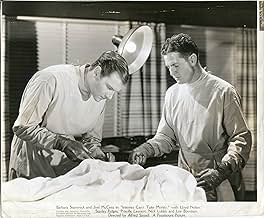
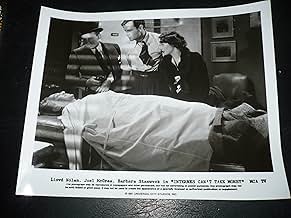
Joel McCrea makes the ideal American hero for the 30's: not only a doctor, but tall, blond, honest, sincere, manly, and progressive. At one point, he has to perform an operation on a bar room table, improvising with violin strings, an ice pick, and a bottle of rum! But this is not MGM's Dr. Kildare. He has no warm relationship with a kindly old mentor; instead, the chief doctor is an authority figure upholding the rules, dismissing Lee Bowman for unauthorized experimentation. The script also pumps up sympathy for interns as underpaid workers who get only $10 a month.
As a gangster, the always fascinating Stanley Ridges conveys the calm of a man secure in his power, whose eye movements size up his adversaries and whose silences reveal more menace than mere words. Watch the sexual innuendo he finds in his "I didn't always like popcorn" speech.
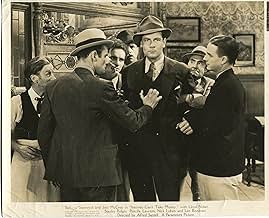
Santell uses extreme close-ups and moves the camera often, aided by gleaming lighting from Theodore Sparkuhl, plus some knock-out sets, including a sparkling white Art Deco clinic and an elaborately detailed New York Irish bar. Watch how economically Santell works to show the awakening of mutual attraction between Stanwyck and McCrea in their first scene together. Also lifting the picture out of its formula origins is the headlong pace Santell maintains to the climax, an urgency lost in the blander MGM series.
At the center of the plot, Barbara Stanwyck spends much of the film in desperation mode, exhausted from searching for her lost child, beaten down by two years in jail, forced to hire stool pigeons, forced to stay alert.
Joel McCrea makes the ideal American hero for the 30's: not only a doctor, but tall, blond, honest, sincere, manly, and progressive. At one point, he has to perform an operation on a bar room table, improvising with violin strings, an ice pick, and a bottle of rum! But this is not MGM's Dr. Kildare. He has no warm relationship with a kindly old mentor; instead, the chief doctor is an authority figure upholding the rules, dismissing Lee Bowman for unauthorized experimentation. The script also pumps up sympathy for interns as underpaid workers who get only $10 a month.
As a gangster, the always fascinating Stanley Ridges conveys the calm of a man secure in his power, whose eye movements size up his adversaries and whose silences reveal more menace than mere words. Watch the sexual innuendo he finds in his "I didn't always like popcorn" speech.
Santell uses extreme close-ups and moves the camera often, aided by gleaming lighting from Theodore Sparkuhl, plus some knock-out sets, including a sparkling white Art Deco clinic and an elaborately detailed New York Irish bar. Watch how economically Santell works to show the awakening of mutual attraction between Stanwyck and McCrea in their first scene together. Also lifting the picture out of its formula origins is the headlong pace Santell maintains to the climax, an urgency lost in the blander MGM series.
Stanwyck downshifts into the corner and leaves 'em behind
Barbara Stanwyck had always been a fine actress, but around the time of this film, she... found another gear somehow and blew past most of the competition. There were still a few actresses that could keep up with Lady Barbara, but her performance in 'Internes Can't Take Money' reduced that number to a mere handful, and with the twin triumph that year of 'Stella Dallas,' she remained at the top of her field for decades afterward.
For just one example - it's impossible to imagine Hepburn pulling off this role; there weren't enough menthol sticks in the United States to get her to bring the tears needed for the part. Stanwyck's perfectly natural acting in this film is a couple levels higher than Kate's ability. The performance across from McCrea is terrific and the way Stanwyck stares at Stanley Ridges as he destroys her faith in humanity is astonishing.
Several comments complain about the script but this story is terrific. It's as good a story as 2008's 'Changling' for example, but the message, and the ending, of 'Internes' is far more powerful.
It looks like most of the complaints are really based on the film not having the look or feel of the Lew Ayres version of Kildare; but this film doesn't have anything to do with the serial, other than inspiring it. It stretches credulity to think that Joel McCrea would have pitched over his career to make a serial - he was far too big a star for any studio head to have considered that even for a minute.
This one really is 1937 movie magic!
For just one example - it's impossible to imagine Hepburn pulling off this role; there weren't enough menthol sticks in the United States to get her to bring the tears needed for the part. Stanwyck's perfectly natural acting in this film is a couple levels higher than Kate's ability. The performance across from McCrea is terrific and the way Stanwyck stares at Stanley Ridges as he destroys her faith in humanity is astonishing.
Several comments complain about the script but this story is terrific. It's as good a story as 2008's 'Changling' for example, but the message, and the ending, of 'Internes' is far more powerful.
It looks like most of the complaints are really based on the film not having the look or feel of the Lew Ayres version of Kildare; but this film doesn't have anything to do with the serial, other than inspiring it. It stretches credulity to think that Joel McCrea would have pitched over his career to make a serial - he was far too big a star for any studio head to have considered that even for a minute.
This one really is 1937 movie magic!


Did you know
- TriviaBarbara Stanwyck asked director Al Santell to cast Joel McCrea as her leading man, having worked with him twice before. "I want this guy," she told him. "He's going to be a good leading man."
- GoofsDuring the bar-room conversation (c.16 minutes) the coffee cup on the table disappears, re-appears and moves between shots.
- Quotes
Bookie: Maybe it's the cops.
"Chief" Hanlon: Cops don't knock, they break in.
- ConnectionsFollowed by Young Dr. Kildare (1938)
- How long is Internes Can't Take Money?Powered by Alexa
Details
- Release date
- Country of origin
- Language
- Also known as
- Unga läkare
- Filming locations
- Manhattan, New York City, New York, USA(Second unit opening credits)
- Production company
- See more company credits at IMDbPro
- Runtime
- 1h 18m(78 min)
- Color
- Aspect ratio
- 1.37 : 1
Contribute to this page
Suggest an edit or add missing content