IMDb RATING
6.9/10
1.7K
YOUR RATING

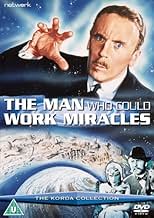
An ordinary man suddenly finds that anything he says comes true. Or at least, almost anything.An ordinary man suddenly finds that anything he says comes true. Or at least, almost anything.An ordinary man suddenly finds that anything he says comes true. Or at least, almost anything.
- Directors
- Writers
- Stars
- Awards
- 1 nomination total



Wallace Lupino
- Constable Winch
- (as Wally Lupino)


Gertrude Musgrove
- Effie (replaced by Joan Hickson)
- (scenes deleted)
- Directors
- Writers
- All cast & crew
- Production, box office & more at IMDbPro
6.91.7K
1
2
3
4
5
6
7
8
9
10
Featured reviews
Very thought-provoking
This is a nice little film that I'd never heard about but should have, as it's a nice little film. In many ways it's a lot like the "Twilight Zone" episode with Burgess Meredith where aliens give him extraordinary strength as an experiment. Here, however, angelic beings are talking in the heavens and one of them decides to pick a random person on Earth and give them practically limitless power--to see what effect this would have on the person and planet.
Ordinary Roland Young (sporting a toupee) is the guy chosen for this gift. However, unlike what you'd expect, he is slow to exploit this power and only does mostly simple tricks with it at the beginning. However, when it comes to making bigger changes in his life and to the planet, he's hesitant and seeks out advice from respected members of the community on what to do with his powers. One, a vicar, wants Young to do good with the power--but what, exactly, should this be and what are the repercussion? Another, played wonderfully by Ralph Richardson, is a pompous caricature of an English "gentleman" and wants Young to use his powers to kick butt! Others have various ideas and ultimately Young gets in well over his head.
Overall, the film is quite funny (particular in Richardson's scenes) as well as thought-provoking--an interesting combination. It makes you wonder what you might do if given god-like powers. An interesting portrait of human nature and our obvious foibles.
Ordinary Roland Young (sporting a toupee) is the guy chosen for this gift. However, unlike what you'd expect, he is slow to exploit this power and only does mostly simple tricks with it at the beginning. However, when it comes to making bigger changes in his life and to the planet, he's hesitant and seeks out advice from respected members of the community on what to do with his powers. One, a vicar, wants Young to do good with the power--but what, exactly, should this be and what are the repercussion? Another, played wonderfully by Ralph Richardson, is a pompous caricature of an English "gentleman" and wants Young to use his powers to kick butt! Others have various ideas and ultimately Young gets in well over his head.
Overall, the film is quite funny (particular in Richardson's scenes) as well as thought-provoking--an interesting combination. It makes you wonder what you might do if given god-like powers. An interesting portrait of human nature and our obvious foibles.
Exploration of moral dilemmas
The film, almost seventy five years after its release as this review is written, still provides a dilemma that could be endlessly discussed on the human condition.
A man is given unlimited power by three deities as they look down on the earth. The mind of Wells is highly visible as the plot develops.
It is approached in a tongue in cheek manner and the special effects of the time must have been very labor intensive in relation to the genius of todays computer graphics.
The moral questions could employ any philosopher in endless discussion. A relatively young Ralph Richardson portraying an old character gives us a glimpse into the early career of a classic British actor.
In a strange way it is a kind of feel good movie and very thought provoking. It may also intrigue the present day viewer as they consider the possibility of the cinema goer in the 1930s wondering how the camera tricks were performed.
A man is given unlimited power by three deities as they look down on the earth. The mind of Wells is highly visible as the plot develops.
It is approached in a tongue in cheek manner and the special effects of the time must have been very labor intensive in relation to the genius of todays computer graphics.
The moral questions could employ any philosopher in endless discussion. A relatively young Ralph Richardson portraying an old character gives us a glimpse into the early career of a classic British actor.
In a strange way it is a kind of feel good movie and very thought provoking. It may also intrigue the present day viewer as they consider the possibility of the cinema goer in the 1930s wondering how the camera tricks were performed.
A good old classic movie.
I first saw this movie when I was a kid in the fifties. The movie stands out in my mind just as if I saw it yesterday (in fact I am going to see it in the next few days, whenever I can find a place that rents it.) It was interesting and entertaining just as most movies based on H. G. Wells stories are.
the whimsical pessimism of H.G. Wells
H.G. Wells' lighthearted fantasy about an unassuming draperies assistant granted the ability to make his every dream come true might be the best film never made by Frank Capra. Normally a very sober thinker, Wells found the perfect balance between philosophy and whimsy for this original screenplay, in which a trio of cosmic gods conduct an experiment to see how the selfish inhabitants of this trifling world might cope with the possibility of total wish fulfillment. Astounded by his unexpected gift (which he believes to be a simple matter of will power), the meek and mild Mr. George McWirter Fotheringay soon finds himself besieged by friends and strangers offering opinions, advice, and partnership offers in lucrative business ventures. Should he use his miracle making for strictly personal gain, or for the benefit of all mankind? There are, of course, unexpected pitfalls to even the best intentions, but the consequences, while hardly optimistic, are never less than entertaining.
H.G.Wells's Opinion Of The Human Condition
The Man Who Could Work Miracles has its start in the heavens where some Greek God like creatures are roaming among the stars, one of them played by an as yet unknown George Sanders. Apparently H.G. Wells's idea of a Deity was closer to the Greeks and Romans than Christianity. In any event these three creatures discuss the happenings on planet earth where a group of puny creatures dominate, but who might start getting into their realm in the heavens in a few generations.
Let's see what they can do if one of them is granted our powers, creation with a mere thought. And with a random selection of a celestial finger it lands on meek little Roland Young as he's entering his local pub.
It takes time for Young to grasp the significance of his gift and this is Wells's most telling comment on the film, the sheer pettiness of the average man. From parlor tricks to trying to improve his love life, Young just can't seem to get it into his head what he can do.
Of course they're others who do think about these things more deeply than young. But I believe what H.G. Wells was trying to say is that even those who see a bigger picture than Young and attempt to use him only see it from a narrow perspective. The former colonel Ralph Richardson thinks of conquest, Edward Chapman thinks in terms of business and commerce, Ernest Thesiger is a dreamy Utopian with a theological background. Even Young sees the flaws in each of their versions of Utopia.
H.G. Wells in his other film that came out around the same time provided the answer by his lights. It was the scientists who should establish the benevolent despotism of the age, they alone have the wisdom to rule all of us. Wells said as much in Things To Come, though I never saw any evidence in the film and in real life that scientists are any better qualified than anyone else. Still that was his view.
The subject of humans being given the Godlike power of creation has been done many times. In a more serious version it was the subject of a classic Star Trek episode with Gary Lockwood being given just that power and in a half hour Twilight Zone episode, a hapless Burgess Meredith was a subject of a similar experiment. Meredith made Young's character look hip and appealing.
Though some might argue that Cosmo Topper was his career screen role, I would hold out that Everyman George William Fotheringay, selected by the Gods to be The Man Who Could Work Miracles is Roland Young's best part. He's such a hapless slob that each and every one of us can identify with. You might think you would know what to do given his power, but when you examine yourself a bit further......................
Let's see what they can do if one of them is granted our powers, creation with a mere thought. And with a random selection of a celestial finger it lands on meek little Roland Young as he's entering his local pub.
It takes time for Young to grasp the significance of his gift and this is Wells's most telling comment on the film, the sheer pettiness of the average man. From parlor tricks to trying to improve his love life, Young just can't seem to get it into his head what he can do.
Of course they're others who do think about these things more deeply than young. But I believe what H.G. Wells was trying to say is that even those who see a bigger picture than Young and attempt to use him only see it from a narrow perspective. The former colonel Ralph Richardson thinks of conquest, Edward Chapman thinks in terms of business and commerce, Ernest Thesiger is a dreamy Utopian with a theological background. Even Young sees the flaws in each of their versions of Utopia.
H.G. Wells in his other film that came out around the same time provided the answer by his lights. It was the scientists who should establish the benevolent despotism of the age, they alone have the wisdom to rule all of us. Wells said as much in Things To Come, though I never saw any evidence in the film and in real life that scientists are any better qualified than anyone else. Still that was his view.
The subject of humans being given the Godlike power of creation has been done many times. In a more serious version it was the subject of a classic Star Trek episode with Gary Lockwood being given just that power and in a half hour Twilight Zone episode, a hapless Burgess Meredith was a subject of a similar experiment. Meredith made Young's character look hip and appealing.
Though some might argue that Cosmo Topper was his career screen role, I would hold out that Everyman George William Fotheringay, selected by the Gods to be The Man Who Could Work Miracles is Roland Young's best part. He's such a hapless slob that each and every one of us can identify with. You might think you would know what to do given his power, but when you examine yourself a bit further......................


Did you know
- TriviaTheatrical movie debut of Michael Rennie (San Francisco Cop).
- GoofsThe sequence in which the constable is transported to San Francisco was obviously filmed in Los Angeles.
- Quotes
George McWhirter Fotheringay: You just stand there looking lovely, until I notice you!
- Crazy creditsOpening credits are shown over a background of outer space.
- ConnectionsFeatured in WatchMojo: Top 20 Movies Where the World Actually Ends (2021)
- How long is The Man Who Could Work Miracles?Powered by Alexa
Details
- Release date
- Country of origin
- Official site
- Language
- Also known as
- H.G. Wells' The Man Who Could Work Miracles
- Filming locations
- Denham Studios, Denham, Buckinghamshire, England, UK(Exterior, studio uncredited)
- Production company
- See more company credits at IMDbPro
- Runtime
- 1h 22m(82 min)
- Color
- Aspect ratio
- 1.37 : 1
Contribute to this page
Suggest an edit or add missing content