The Road Back
- 1h 40m
IMDb RATING
6.3/10
329
YOUR RATING

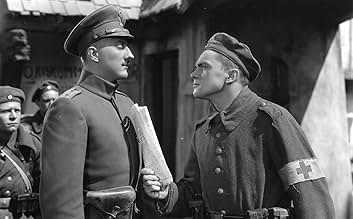
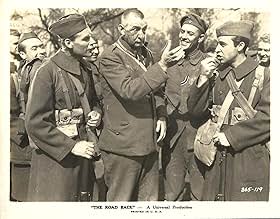
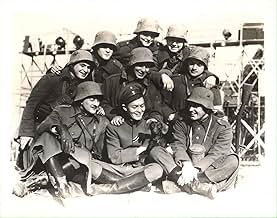
After World War I, a group of former German soldiers try to adjust to civilian life.After World War I, a group of former German soldiers try to adjust to civilian life.After World War I, a group of former German soldiers try to adjust to civilian life.
- Director
- Writers
- Stars




John 'Dusty' King
- Ernst
- (as John King)


Larry J. Blake
- Weil
- (as Larry Blake)


- Director
- Writers
- All cast & crew
- Production, box office & more at IMDbPro
6.3329
1
2
3
4
5
6
7
8
9
10
Featured reviews
Pretty great neglected Whale
Saw this at what is now presumed to be the final Cinefest, a Syracuse festival of old films that never get shown, and it was a highlight. An antiwar epic that was Whale's followup to "Show Boat," and two more different films can't be imagined, it's an impassioned look at the last days of World War 1 from the Germans' perspective, and the aftermath. Whale worked from a good screenplay by R.C. Sheriff (he'd also filmed Sheriff's "Journey's End" years before), and the war sequences are quite stunning. What hurts the film is some probably studio-imposed comic relief in the second half, undercutting the strong drama, and a leading man, John King, who simply wasn't up to it. But there's an excellent supporting cast, including Slim Summerville, whose role is partly but not entirely comic, and who shows subtleties his comic performances couldn't contain. Other unexpected people turn up, like Louise Fazenda and Dwight Frye, and the third act allows for some fine antiwar sermonizing that's still pertinent. It's superbly designed and directed, and one wishes it could be shown more.
THE ROAD BACK (James Whale and, uncredited, Edward Sloman, 1937) ***
The cinematic rights to German novelist Erich Maria Remarque's sequel to his celebrated "All Quiet On The Western Front", turned into an Oscar-winning masterpiece by Universal in 1930, was apparently picked up before the text was even completed. When the book did not meet with the same resounding success as the original (if anything, it was deemed inconvenient to the Third Reich, then in power, and summarily banned!), its filming was delayed until 1937 – when another world conflict was evidently looming.
With it, they entrusted their top director at the time who, even if he had mainly excelled within the fantasy genre, demonstrated he was capable of turning his attention to practically anything; after all, his very first two films were war pictures – albeit one was a British production (1930's JOURNEY'S END) and on the other his official credit was as dialogue director (HELL'S ANGELS, from the same year). As it happened, the studio heads – Carl Laemmle and his namesake offspring (who had championed Whale's obvious talent while tolerating his flamboyant lifestyle) – relinquished power around this time and the director suddenly found himself exposed to bureaucracy (brought on by intimidation from outsiders, namely the Nazi Party, who threatened to boycott all subsequent Universal productions unless the anti-Fascist sentiments in the script were excised!) and prejudice (his homosexuality supplying the perfect excuse to cut him down to size!).
Anyway, the resulting film (adapted by R.C. Sheriff, who had authored the play on which JOURNEY'S END was based) was bowdlerized to suit these political – and, doubtless, also economical – exigencies, Whale virtually disowned it and would leave Universal for good soon after completing work on WIVES UNDER SUSPICION (1938)! For this reason, THE ROAD BACK has always been considered a disappointment – in any case, it was clearly overshadowed by another major anti-war movie, namely Jean Renoir's contemporaneous LA GRAND ILLUSION – as both a Whale picture and a follow-up to a classic film (there was even talk that its negative was irretrievably lost but, happily, this did not prove to be the case!). Still, let us analyze the evidence at hand, i.e. the picture as it stands now: it is hardly the dud it has been written off as – Whale's reaction is natural and understandable but, if one were to dismiss a film merely for the fact that its creator's original intentions were not adhered to, I doubt Erich von Stroheim and Orson Welles would enjoy much of a reputation today (outside of their undeniable acting abilities and, of course, the latter's CITIZEN KANE [1941])!
The narrative begins in trenches (highlighted by elaborate tracking shots and just one short burst of action), reverts to the social life of the returning soldiers (to which they predictably fail to adjust, so much so that they prefer to keep each other company rather than stay with their loved ones – I am sure some would venture to make a case for a gay statement out of this!) and culminates in a murder trial (one of the most memorable and affecting I have ever watched – and that is no mean feat!). Romantic hopes are dashed by recurring memories of combat (lead John King was fiancé to pal Richard Cromwell's sister, who waits for him regardless and finally manages to reconcile his confused spirit towards achieving peace-of-mind) or else by the unfaithfulness of the girl concerned (which brings about the murder of her profiteer lover and whose subsequent trial finds Lionel Atwill in much the same role he had played in Whale's ONE MORE RIVER [1934]!).
It repeats, to notably less effect, the modest casting rule applied to Lewis Milestone's ALL QUIET ON THE WESTERN FRONT; there is also a similar disillusioned-return-to-the-classroom sequence and a call upon colleagues committed to an insane asylum to parallel the hospital visit to a dying buddy in the original. Catching the names of Slim Summerville (reprising his role from the earlier film!) and Andy Devine among the cast-list (by the way, the scrolling titles were a classy touch), I was ready for an over-abundance of comedy relief which, however, did not come to pass. Indeed, their contempt-of-court antics at the climax help relieve the dramatic tension and necessary preachiness! The same goes for Etienne Girardot as the doddering mayor, who is disturbed from his slumber by disgruntled townsfolk-cum-political activists for an impromptu dead-of-night rally – which leads to the tragedy of John Emery's Major, a career officer, shooting down a former member of his troop in the ensuing riot!
Incidentally, Whale's directorial flair – aided by the camera-work of John J. Mescall and George Robinson (the latter stepped in for the former when his drinking problem got out of control!) – is particularly felt during crowd scenes such as this; another is the outfit's arrival in town being dampened by the young anarchists' show of contempt to their uniforms. Still, quieter moments are no less powerful: the Major stripping himself of his rank in seclusion at the announcement of the Armistice, the surviving soldiers being joined by their ghostly colleagues when the substantially-diminished platoon files up in a town parade, etc. The coda (shot by uncredited director Sloman) – which replaced a controversial scene depicting war veterans King and Cromwell stumbling upon a group of children being indoctrinated into Nazism by a dwarf! – boasts a heartfelt plea for Peace which is, however, undercut by the rolling passage of years bringing us to the current impending struggle. For the record, Whale's original cut ran for 105 minutes, the revised version clocked in at 103 (which is the one I watched), but this was again re-touched (by director Frank Tuttle and cinematographer Stanley Cortez!) for a 1939 re-issue which whittled down the running-time further to the 'official' 97!
With it, they entrusted their top director at the time who, even if he had mainly excelled within the fantasy genre, demonstrated he was capable of turning his attention to practically anything; after all, his very first two films were war pictures – albeit one was a British production (1930's JOURNEY'S END) and on the other his official credit was as dialogue director (HELL'S ANGELS, from the same year). As it happened, the studio heads – Carl Laemmle and his namesake offspring (who had championed Whale's obvious talent while tolerating his flamboyant lifestyle) – relinquished power around this time and the director suddenly found himself exposed to bureaucracy (brought on by intimidation from outsiders, namely the Nazi Party, who threatened to boycott all subsequent Universal productions unless the anti-Fascist sentiments in the script were excised!) and prejudice (his homosexuality supplying the perfect excuse to cut him down to size!).
Anyway, the resulting film (adapted by R.C. Sheriff, who had authored the play on which JOURNEY'S END was based) was bowdlerized to suit these political – and, doubtless, also economical – exigencies, Whale virtually disowned it and would leave Universal for good soon after completing work on WIVES UNDER SUSPICION (1938)! For this reason, THE ROAD BACK has always been considered a disappointment – in any case, it was clearly overshadowed by another major anti-war movie, namely Jean Renoir's contemporaneous LA GRAND ILLUSION – as both a Whale picture and a follow-up to a classic film (there was even talk that its negative was irretrievably lost but, happily, this did not prove to be the case!). Still, let us analyze the evidence at hand, i.e. the picture as it stands now: it is hardly the dud it has been written off as – Whale's reaction is natural and understandable but, if one were to dismiss a film merely for the fact that its creator's original intentions were not adhered to, I doubt Erich von Stroheim and Orson Welles would enjoy much of a reputation today (outside of their undeniable acting abilities and, of course, the latter's CITIZEN KANE [1941])!
The narrative begins in trenches (highlighted by elaborate tracking shots and just one short burst of action), reverts to the social life of the returning soldiers (to which they predictably fail to adjust, so much so that they prefer to keep each other company rather than stay with their loved ones – I am sure some would venture to make a case for a gay statement out of this!) and culminates in a murder trial (one of the most memorable and affecting I have ever watched – and that is no mean feat!). Romantic hopes are dashed by recurring memories of combat (lead John King was fiancé to pal Richard Cromwell's sister, who waits for him regardless and finally manages to reconcile his confused spirit towards achieving peace-of-mind) or else by the unfaithfulness of the girl concerned (which brings about the murder of her profiteer lover and whose subsequent trial finds Lionel Atwill in much the same role he had played in Whale's ONE MORE RIVER [1934]!).
It repeats, to notably less effect, the modest casting rule applied to Lewis Milestone's ALL QUIET ON THE WESTERN FRONT; there is also a similar disillusioned-return-to-the-classroom sequence and a call upon colleagues committed to an insane asylum to parallel the hospital visit to a dying buddy in the original. Catching the names of Slim Summerville (reprising his role from the earlier film!) and Andy Devine among the cast-list (by the way, the scrolling titles were a classy touch), I was ready for an over-abundance of comedy relief which, however, did not come to pass. Indeed, their contempt-of-court antics at the climax help relieve the dramatic tension and necessary preachiness! The same goes for Etienne Girardot as the doddering mayor, who is disturbed from his slumber by disgruntled townsfolk-cum-political activists for an impromptu dead-of-night rally – which leads to the tragedy of John Emery's Major, a career officer, shooting down a former member of his troop in the ensuing riot!
Incidentally, Whale's directorial flair – aided by the camera-work of John J. Mescall and George Robinson (the latter stepped in for the former when his drinking problem got out of control!) – is particularly felt during crowd scenes such as this; another is the outfit's arrival in town being dampened by the young anarchists' show of contempt to their uniforms. Still, quieter moments are no less powerful: the Major stripping himself of his rank in seclusion at the announcement of the Armistice, the surviving soldiers being joined by their ghostly colleagues when the substantially-diminished platoon files up in a town parade, etc. The coda (shot by uncredited director Sloman) – which replaced a controversial scene depicting war veterans King and Cromwell stumbling upon a group of children being indoctrinated into Nazism by a dwarf! – boasts a heartfelt plea for Peace which is, however, undercut by the rolling passage of years bringing us to the current impending struggle. For the record, Whale's original cut ran for 105 minutes, the revised version clocked in at 103 (which is the one I watched), but this was again re-touched (by director Frank Tuttle and cinematographer Stanley Cortez!) for a 1939 re-issue which whittled down the running-time further to the 'official' 97!
Severe Cuts Sanitize Anti-Nazi Message of James Whales' Film
When Universal Pictures bought the rights to Erich Maria Remarque's follow-up book to his blockbuster classic, 'All Quiet on the Western Front,' the film studio felt the story of German soldiers returning to their homeland after World War One was a surefire hit in its June 1937 "The Road Back." Combining a great story with James Whale, director of the studio's biggest hits such as 1931's "Frankenstein," 1933's "The Invisible Man," and 1935's "Frankenstein and His Bride," Universal's new ownership felt the movie was guaranteed to be a money-making machine.
Trouble was Germany's Nazi government was steaming about the possibilities of a film made from Remarque's sequel, which was banned there. The Nazis' Hollywood conduit, German ambassador Georg Gyssling, was a strong influence in the movie industry because of Germany's lucrative film theater market. Chief film censor for the United States, Joseph Breen, had reformulated the Hay's Office movie production code to stress no film studio could criticize the functions of any foreign government. Germany was particularly sensitive to any international criticism of its increasingly repressive restrictions to its Jewish citizenry. The Remarque book was critical of the Nazi regime, and director Whale, a former British WW1 prisoner, was relishing following the novel to a tee.
Gyssling knew any movie under Germany's Article 15 law could enact a lifelong ban of any company or individual, foreign or domestic, if they were critical of the Nazis. Remarque's first book-to-film, 'All Quiet on the Western Front,' met scorn in Germany even before the Nazis took power. Sympathizers threw stink bombs in the theaters playing the 1930 film as well as tossing rats into the audience. Its sequel, "The Road Back," was equally anti-war, which Gyssling felt when he approached Breen, gave an "untrue and distorted picture of the German people." Head of Universal, Charles Rogers, told Breen and Gyssling the studio had already spent a considerable amount of money on "The Road Back" and assured the two the director would tone down the Nazi criticisms. Whale told them they would be pleased once they saw the movie's rough edit.
Gyssling's eyes popped out when he viewed the rough copy. He sent sixty members who were working on "The Road Back," from wardrobe assistants on up, informing them they would be prohibited from entering Germany if the movie wasn't revised. Whale was adamant that he was not cutting any of the requested anti-Nazi scenes. Rogers, wanting "to cultivate the good will of Germany," ordered the studio's film editors, without Whale's input, to excise 21 scenes, and inject new comedy scenes into the war movie. Whale angrily stomped out of the studio while director Edward Sloman filmed the humorous additions.
"What's left contains a few fleeting moments of what this film could have been," wrote film reviewer Paul Evennett, reflecting the consensus of critics who felt the revisions ruined Whale's original movie. "If the Nazis had kept their noses out, if the studio execs had had the gaul to stand up for their creatives, if Whale had retained the freedom to do justice to the work of Remarque," it would have have been a great movie. Universal destroyed all the cut footage. What's left has some of Whale's signature touches, including the opening salvo showing the last hours of combat before the armistice ends the war.
Despite all the alternations demanded by Gyssling and followed by Universal, Germany and several of its allies still banned "The Road Back." With the exception of Warner Brothers, Universal and the other major Hollywood studios continued to bow to the pressure of the Nazis, kowtowing to their demands. Because of Whale's obstinance, Universal relegated him to Grade B low budgeted movies, except for 1939's "The Man With the Iron Mask." The deliverer of early horror classics saw his career gradually end with all the drama surrounding this anti-war movie.
Trouble was Germany's Nazi government was steaming about the possibilities of a film made from Remarque's sequel, which was banned there. The Nazis' Hollywood conduit, German ambassador Georg Gyssling, was a strong influence in the movie industry because of Germany's lucrative film theater market. Chief film censor for the United States, Joseph Breen, had reformulated the Hay's Office movie production code to stress no film studio could criticize the functions of any foreign government. Germany was particularly sensitive to any international criticism of its increasingly repressive restrictions to its Jewish citizenry. The Remarque book was critical of the Nazi regime, and director Whale, a former British WW1 prisoner, was relishing following the novel to a tee.
Gyssling knew any movie under Germany's Article 15 law could enact a lifelong ban of any company or individual, foreign or domestic, if they were critical of the Nazis. Remarque's first book-to-film, 'All Quiet on the Western Front,' met scorn in Germany even before the Nazis took power. Sympathizers threw stink bombs in the theaters playing the 1930 film as well as tossing rats into the audience. Its sequel, "The Road Back," was equally anti-war, which Gyssling felt when he approached Breen, gave an "untrue and distorted picture of the German people." Head of Universal, Charles Rogers, told Breen and Gyssling the studio had already spent a considerable amount of money on "The Road Back" and assured the two the director would tone down the Nazi criticisms. Whale told them they would be pleased once they saw the movie's rough edit.
Gyssling's eyes popped out when he viewed the rough copy. He sent sixty members who were working on "The Road Back," from wardrobe assistants on up, informing them they would be prohibited from entering Germany if the movie wasn't revised. Whale was adamant that he was not cutting any of the requested anti-Nazi scenes. Rogers, wanting "to cultivate the good will of Germany," ordered the studio's film editors, without Whale's input, to excise 21 scenes, and inject new comedy scenes into the war movie. Whale angrily stomped out of the studio while director Edward Sloman filmed the humorous additions.
"What's left contains a few fleeting moments of what this film could have been," wrote film reviewer Paul Evennett, reflecting the consensus of critics who felt the revisions ruined Whale's original movie. "If the Nazis had kept their noses out, if the studio execs had had the gaul to stand up for their creatives, if Whale had retained the freedom to do justice to the work of Remarque," it would have have been a great movie. Universal destroyed all the cut footage. What's left has some of Whale's signature touches, including the opening salvo showing the last hours of combat before the armistice ends the war.
Despite all the alternations demanded by Gyssling and followed by Universal, Germany and several of its allies still banned "The Road Back." With the exception of Warner Brothers, Universal and the other major Hollywood studios continued to bow to the pressure of the Nazis, kowtowing to their demands. Because of Whale's obstinance, Universal relegated him to Grade B low budgeted movies, except for 1939's "The Man With the Iron Mask." The deliverer of early horror classics saw his career gradually end with all the drama surrounding this anti-war movie.
Was supposed to be Whale's masterpiece.
In the film Gods and Monsters, Ian McKellen wonderfully plays Whale recalling his hatred of making this film, the film Whale intended to be the crowning achievement of his career.
The first world war was still close to Whale as he made this film nearly 20 years after it ended. Whale intended the film end with a more sarcastic touch of showing the Nazis as war mongers, warping the minds of youths, but the final cut of this film was taken out of his hands.
The Road Back has some signature Whale touches. Yes, the camera dollies through a wall from outside on a street to the inside of a building, following a character entering it. Dwight Frye, Edward Van Sloan, Lionel Atwill and a few other Whale favorites play minor characters with character. He had his usual crew of Ted Kent editing, John Mescall shooting, John Fulton with special effects and the great Charles D. Hall as set designer. You would expect a horror film with all these names. Yet the film does not stand up next to his horror films, nor to Show Boat, Kiss Before the Mirror or Waterloo Bridge. It is a notch below.
It's hard to tell how much of it has to do with the editing. There were also completely unnecessary comedy scenes that did not belong that I understand were re-shot by the orders of studio head Charles D. Rogers, a man who clearly knew nothing of the studio he had taken over from the Laemmles.
Even if Whale had final cut, this film seems like its' story somewhat misses the mark. It works and is an admirable picture, but it seems to lack the scope that would have given it more power. The characters talk about how the war changes them, but we are shown very little of HOW they changed. They seem unhappy, but there is no real emotion. They too often seem like mouthpieces for Whale's beliefs and not like real people. It would have been a better film if it expanded on the souls of the characters and been a half hour longer or so. It probably would have actually moved faster than it does. We go from the war to the classroom to the bars and to the courtroom and it just seems to want to become an epic, but it can't.
Still, this film is worth watching, especially for Whale fans who want to see his last solid, good film. He was never again to be as creative or interested in his stories.
The first world war was still close to Whale as he made this film nearly 20 years after it ended. Whale intended the film end with a more sarcastic touch of showing the Nazis as war mongers, warping the minds of youths, but the final cut of this film was taken out of his hands.
The Road Back has some signature Whale touches. Yes, the camera dollies through a wall from outside on a street to the inside of a building, following a character entering it. Dwight Frye, Edward Van Sloan, Lionel Atwill and a few other Whale favorites play minor characters with character. He had his usual crew of Ted Kent editing, John Mescall shooting, John Fulton with special effects and the great Charles D. Hall as set designer. You would expect a horror film with all these names. Yet the film does not stand up next to his horror films, nor to Show Boat, Kiss Before the Mirror or Waterloo Bridge. It is a notch below.
It's hard to tell how much of it has to do with the editing. There were also completely unnecessary comedy scenes that did not belong that I understand were re-shot by the orders of studio head Charles D. Rogers, a man who clearly knew nothing of the studio he had taken over from the Laemmles.
Even if Whale had final cut, this film seems like its' story somewhat misses the mark. It works and is an admirable picture, but it seems to lack the scope that would have given it more power. The characters talk about how the war changes them, but we are shown very little of HOW they changed. They seem unhappy, but there is no real emotion. They too often seem like mouthpieces for Whale's beliefs and not like real people. It would have been a better film if it expanded on the souls of the characters and been a half hour longer or so. It probably would have actually moved faster than it does. We go from the war to the classroom to the bars and to the courtroom and it just seems to want to become an epic, but it can't.
Still, this film is worth watching, especially for Whale fans who want to see his last solid, good film. He was never again to be as creative or interested in his stories.
Homecoming 1918
Remarque's novel (which I haven't read) Der Weg zurück/The Road Back is a sequel to his All Quiet on the Western Front. Whale's (or rather Universal's) The Road Back has Slim Summerville as Tjaden again and mentions the names of Kat, Detering and Paul Bäumer in order to directly tie on the preceding film's success. Without success. Surely, The Road Back has a great first half, but, alas, a second half which does not hold up very well. Whale's excellent talent in directing is apparent, but as soon as the German soldiers arrive at home after World War I, it drifts too much into sentiment and pathos, without holding back the one or the other really powerful scene, (especially the one in the mental hospital) and some truly wonderful performances by Slim Summerville and Andy Devine. The choreography of the mass scene towards the end is impressive as well (which resembles Eisenstein's famous Odessa shots a lot). So, it's not really forgettable, but slight disappointment nonetheless.


Did you know
- TriviaFearful that this film would not do well overseas, the new regime at Universal Pictures severely edited the film before release, removing much of the strongly anti-Nazi slant that author Erich Maria Remarque included in the original novel, and which director James Whale intended to retain in the film version.
- ConnectionsFeatured in Now You See Him: The Invisible Man Revealed! (2000)
Details
- Runtime
- 1h 40m(100 min)
- Color
- Aspect ratio
- 1.37 : 1
Contribute to this page
Suggest an edit or add missing content