
After World War I, a group of former German soldiers try to adjust to civilian life.After World War I, a group of former German soldiers try to adjust to civilian life.After World War I, a group of former German soldiers try to adjust to civilian life.
- Director
- Writers
- Stars




John 'Dusty' King
- Ernst
- (as John King)


Larry J. Blake
- Weil
- (as Larry Blake)


- Director
- Writers
- All cast & crew
- Production, box office & more at IMDbPro
6.3329
1
2
3
4
5
6
7
8
9
10
Featured reviews
So-so James Whale obscurity
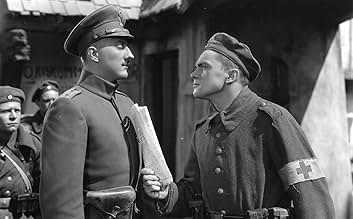
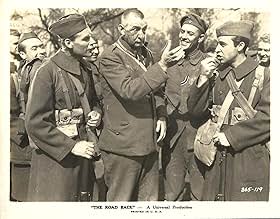
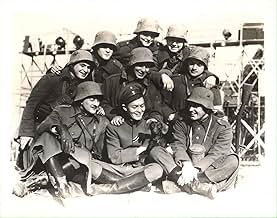
This anti-war film follows the lives of some German soldiers who find difficulty adjusting to life after the horrors of the front-line in World War I.
This film is often considered a spiritual follow up of sorts to the movie considered the first classic of the talkie era, All Quiet on the Western Front (1930). Like that one, this one is unusual in that it follows the 'enemy' side, the Germans. I think, though, this decision was more expedient than outreaching in the cases of both films in that by doing so it allowed the screenwriters to criticise the authorities more, as it was the German rulers who were the recipients of the anti-war sentiments. Still, it must also have humanised the German enemy for many viewers and this is obviously no bad thing. It is also notable for being directed by James Whale, who was one of the directorial masters of his day, in particular for his classic horror movies for Universal. So, this studio used him to helm this film but they found themselves with a very controversial movie, one which was bluntly critical of the then new Nazi regime in Germany. As a consequence, the Nazis demanded changes to the movie, which if not met would result in all Universal films being banned from that nation. With this huge threat to its European distribution prospects, the studio buckled and the film was partially re-shot and re-edited. It lost much of its power in the process. The remaining film has some interesting things about it but it pales significantly when compared to All Quiet on the Western Front and its overall dynamics are not especially strong or compelling enough to make this no more than an interesting footnote in movie history.
This film is often considered a spiritual follow up of sorts to the movie considered the first classic of the talkie era, All Quiet on the Western Front (1930). Like that one, this one is unusual in that it follows the 'enemy' side, the Germans. I think, though, this decision was more expedient than outreaching in the cases of both films in that by doing so it allowed the screenwriters to criticise the authorities more, as it was the German rulers who were the recipients of the anti-war sentiments. Still, it must also have humanised the German enemy for many viewers and this is obviously no bad thing. It is also notable for being directed by James Whale, who was one of the directorial masters of his day, in particular for his classic horror movies for Universal. So, this studio used him to helm this film but they found themselves with a very controversial movie, one which was bluntly critical of the then new Nazi regime in Germany. As a consequence, the Nazis demanded changes to the movie, which if not met would result in all Universal films being banned from that nation. With this huge threat to its European distribution prospects, the studio buckled and the film was partially re-shot and re-edited. It lost much of its power in the process. The remaining film has some interesting things about it but it pales significantly when compared to All Quiet on the Western Front and its overall dynamics are not especially strong or compelling enough to make this no more than an interesting footnote in movie history.
Was supposed to be Whale's masterpiece.
In the film Gods and Monsters, Ian McKellen wonderfully plays Whale recalling his hatred of making this film, the film Whale intended to be the crowning achievement of his career.
The first world war was still close to Whale as he made this film nearly 20 years after it ended. Whale intended the film end with a more sarcastic touch of showing the Nazis as war mongers, warping the minds of youths, but the final cut of this film was taken out of his hands.
The Road Back has some signature Whale touches. Yes, the camera dollies through a wall from outside on a street to the inside of a building, following a character entering it. Dwight Frye, Edward Van Sloan, Lionel Atwill and a few other Whale favorites play minor characters with character. He had his usual crew of Ted Kent editing, John Mescall shooting, John Fulton with special effects and the great Charles D. Hall as set designer. You would expect a horror film with all these names. Yet the film does not stand up next to his horror films, nor to Show Boat, Kiss Before the Mirror or Waterloo Bridge. It is a notch below.
It's hard to tell how much of it has to do with the editing. There were also completely unnecessary comedy scenes that did not belong that I understand were re-shot by the orders of studio head Charles D. Rogers, a man who clearly knew nothing of the studio he had taken over from the Laemmles.
Even if Whale had final cut, this film seems like its' story somewhat misses the mark. It works and is an admirable picture, but it seems to lack the scope that would have given it more power. The characters talk about how the war changes them, but we are shown very little of HOW they changed. They seem unhappy, but there is no real emotion. They too often seem like mouthpieces for Whale's beliefs and not like real people. It would have been a better film if it expanded on the souls of the characters and been a half hour longer or so. It probably would have actually moved faster than it does. We go from the war to the classroom to the bars and to the courtroom and it just seems to want to become an epic, but it can't.
Still, this film is worth watching, especially for Whale fans who want to see his last solid, good film. He was never again to be as creative or interested in his stories.
The first world war was still close to Whale as he made this film nearly 20 years after it ended. Whale intended the film end with a more sarcastic touch of showing the Nazis as war mongers, warping the minds of youths, but the final cut of this film was taken out of his hands.
The Road Back has some signature Whale touches. Yes, the camera dollies through a wall from outside on a street to the inside of a building, following a character entering it. Dwight Frye, Edward Van Sloan, Lionel Atwill and a few other Whale favorites play minor characters with character. He had his usual crew of Ted Kent editing, John Mescall shooting, John Fulton with special effects and the great Charles D. Hall as set designer. You would expect a horror film with all these names. Yet the film does not stand up next to his horror films, nor to Show Boat, Kiss Before the Mirror or Waterloo Bridge. It is a notch below.
It's hard to tell how much of it has to do with the editing. There were also completely unnecessary comedy scenes that did not belong that I understand were re-shot by the orders of studio head Charles D. Rogers, a man who clearly knew nothing of the studio he had taken over from the Laemmles.
Even if Whale had final cut, this film seems like its' story somewhat misses the mark. It works and is an admirable picture, but it seems to lack the scope that would have given it more power. The characters talk about how the war changes them, but we are shown very little of HOW they changed. They seem unhappy, but there is no real emotion. They too often seem like mouthpieces for Whale's beliefs and not like real people. It would have been a better film if it expanded on the souls of the characters and been a half hour longer or so. It probably would have actually moved faster than it does. We go from the war to the classroom to the bars and to the courtroom and it just seems to want to become an epic, but it can't.
Still, this film is worth watching, especially for Whale fans who want to see his last solid, good film. He was never again to be as creative or interested in his stories.
A Terminally Rough Road Back
It was in 1932 that James Whale found another piece of candy after 'Frankenstein'. It was called 'The Road Back', and it was the follow up novel to 'All Quiet on the Western Front'.
Universal was going to buy the rights and make the film. The book was not even written yet, but Remarque wanted fifty-thousand dollars.
But, when the book was published, it turned out to be not so hot. Universal decided to spend the money on other films, including 'Frankenstein'.
The film was revived though, after the Laemmles had lost the studio. Filming began on a strongly rainy night on January 27th, 1937.
It was a bad time to be shooting films outdoors. One man was killed when an explosive device knocked a gunner's tripod into shrapnel. George Daly, one of the actors, was pierced through the chest with a piece of wood.
The film went rapidly over budget and over time.
Then came the German government.
To make a long story short, they threatened Universal, and they threatened even some of the actors in the film. They wanted the movie to be killed. Charlie Rogers the production chief knew that he would not get the film into Germany, or into other countries pressured by Germany.
John King, the star was a downfall. Whale had decided to employ relatively unknown, and some actually unknown actors, as he had done in his early days in the London stage.
King simply couldn't handle the role, and the film was nearly finished before Whale realized it. Whale did what he did to actors that couldn't act well enough. He ignored him. He wasn't a particularly helpful man.
When the film was finished, it was two and a half weeks overdue and about two hundred thousand dollars over. That overage was enough for many a Universal movie, in total.
Whale got himself on the bad side of Charlie Rogers at that point. Whale got himself loaned out to Warner Brothers, and left Ted Kent, his favorite editor to handle the cut.
Then the German problem came back. As the film was about to be released, suddenly it was drawn back. Pressure from the German Embassy again.
Universal did have a fair amount of money invested in German properties. For whatever reason, Rogers found himself with a million dollar movie which he couldn't export, except to England. He gave in, and the movie was taken away from Kent and, to a great extent, destroyed.
The European nations that would not take the film without the changes largely still didn't take them. Brazil, China and Brazil refused it too, by German government request.
It was truly a disaster in just about every way.
But it was not the fault of James Whale.
Universal was going to buy the rights and make the film. The book was not even written yet, but Remarque wanted fifty-thousand dollars.
But, when the book was published, it turned out to be not so hot. Universal decided to spend the money on other films, including 'Frankenstein'.
The film was revived though, after the Laemmles had lost the studio. Filming began on a strongly rainy night on January 27th, 1937.
It was a bad time to be shooting films outdoors. One man was killed when an explosive device knocked a gunner's tripod into shrapnel. George Daly, one of the actors, was pierced through the chest with a piece of wood.
The film went rapidly over budget and over time.
Then came the German government.
To make a long story short, they threatened Universal, and they threatened even some of the actors in the film. They wanted the movie to be killed. Charlie Rogers the production chief knew that he would not get the film into Germany, or into other countries pressured by Germany.
John King, the star was a downfall. Whale had decided to employ relatively unknown, and some actually unknown actors, as he had done in his early days in the London stage.
King simply couldn't handle the role, and the film was nearly finished before Whale realized it. Whale did what he did to actors that couldn't act well enough. He ignored him. He wasn't a particularly helpful man.
When the film was finished, it was two and a half weeks overdue and about two hundred thousand dollars over. That overage was enough for many a Universal movie, in total.
Whale got himself on the bad side of Charlie Rogers at that point. Whale got himself loaned out to Warner Brothers, and left Ted Kent, his favorite editor to handle the cut.
Then the German problem came back. As the film was about to be released, suddenly it was drawn back. Pressure from the German Embassy again.
Universal did have a fair amount of money invested in German properties. For whatever reason, Rogers found himself with a million dollar movie which he couldn't export, except to England. He gave in, and the movie was taken away from Kent and, to a great extent, destroyed.
The European nations that would not take the film without the changes largely still didn't take them. Brazil, China and Brazil refused it too, by German government request.
It was truly a disaster in just about every way.
But it was not the fault of James Whale.
Talk about bad timing.....
In the years following WWI, slowly the former Allied Powers came to realize that this war was a pointless waste of lives. As a result, there were many war films of the 1930s that humanized the German enemy and discussed this new view of this awful war. The problem is, although films like "J'Accuse" and "All Quiet on the Western Front" were right...the timing was poor, as it encouraged these countries to disarm and see the Germans very favorably....just as Hitler was coming into power! Of these anti-war/pro-German films, "The Road Back" is probably the most unfortunately timed, as only a very short time later, the world's love of Germany began to diminish quickly--with Nazis taking over Austria and Czechoslovakia and Kristalnacht, in which Jews were slaughtered. Not surprisingly, the American audiences were no longer eager to see the Germans as victims...and "The Road Back".
The irony to all this is that the original book (by Erich Maria Remarque--the same man who wrote "All Quiet on the Western Front") DID have a strong anti-Nazi message and COULD have been a very effective film in preparing the world for the Nazi menace. Unfortunately, the studio removed this from the film in an attempt to make the movie acceptable abroad...especially in places that were pro-German! In the end, however, no one wanted the picture--the Germans STILL didn't think it was pro-German enough and folks who were scared of the mounting German aggression were not in the mood for such a film! Ultimately, it ended up being shown very few places.
The story begins in the final days of WWI. A group of German soldiers who have managed to remain alive and remain friends are trying to make it out of the war alive. Most do...only to find life back home is not at all easy nor pleasant. Communists at home are calling for revolution and officers returning from the front are attacked. Additionally, food shortages, no jobs and a broken economy spell disaster for the men and their families. In other words...life really sucked. And, it gets even worse when one of them kills a man. Why? Watch the film to find out for yourself.
While the film does not come out with an overtly pro-Nazi message because the Nazis are never mentioned, the film's covert message seems to be "Germany was a mess...until the Nazis came and brought peace and prosperity". Despite this and its strong anti-Communist message*, the German government banned the film anyway. I guess Hitler and his comrades just weren't taking any chances with this movie...though it sure seems like it would have been effective pro-German propaganda if used by them--especially if you chopped off the confusing and unnecessary minute of the picture. As for the quality of the film, it is exceptionally well made and if it weren't for its pro-Nazi bent, it would be a very good film.
* By the way, both the Communists AND Nazis were tearing the nation apart during this post-war period. Both promised prosperity...provided you gave them a free hand to deal with problems their way! Often, this resulted in gun fights in the streets between the two factions....though the film never mentions the Nazi part in all this violence.
The irony to all this is that the original book (by Erich Maria Remarque--the same man who wrote "All Quiet on the Western Front") DID have a strong anti-Nazi message and COULD have been a very effective film in preparing the world for the Nazi menace. Unfortunately, the studio removed this from the film in an attempt to make the movie acceptable abroad...especially in places that were pro-German! In the end, however, no one wanted the picture--the Germans STILL didn't think it was pro-German enough and folks who were scared of the mounting German aggression were not in the mood for such a film! Ultimately, it ended up being shown very few places.
The story begins in the final days of WWI. A group of German soldiers who have managed to remain alive and remain friends are trying to make it out of the war alive. Most do...only to find life back home is not at all easy nor pleasant. Communists at home are calling for revolution and officers returning from the front are attacked. Additionally, food shortages, no jobs and a broken economy spell disaster for the men and their families. In other words...life really sucked. And, it gets even worse when one of them kills a man. Why? Watch the film to find out for yourself.
While the film does not come out with an overtly pro-Nazi message because the Nazis are never mentioned, the film's covert message seems to be "Germany was a mess...until the Nazis came and brought peace and prosperity". Despite this and its strong anti-Communist message*, the German government banned the film anyway. I guess Hitler and his comrades just weren't taking any chances with this movie...though it sure seems like it would have been effective pro-German propaganda if used by them--especially if you chopped off the confusing and unnecessary minute of the picture. As for the quality of the film, it is exceptionally well made and if it weren't for its pro-Nazi bent, it would be a very good film.
* By the way, both the Communists AND Nazis were tearing the nation apart during this post-war period. Both promised prosperity...provided you gave them a free hand to deal with problems their way! Often, this resulted in gun fights in the streets between the two factions....though the film never mentions the Nazi part in all this violence.
"It's difficult to believe that no one will be killed tonight."
This film entitled THE ROAD BACK in English is from a novel by Erich Maria Remarque (who wrote the famous ALL QUIET ON THE WESTERN FRONT) the title of which in German was DER WEG ZÜRUCK, which means THE WAY BACK. This story is essentially a sequel of the story to the earlier book, which was filmed in 1930. This novel had already been banned by the Nazi Government before the filming even began. The story begins on November 10, 1918, the day before the Armistice was signed ending the War. But the forthcoming Armistice is secret and no one knows it is about to happen. So we see a closeknit squadron of German soldiers in the trenches in France (they have been together in the trenches for four years, and they are the sad remnant of a once mighty force, most of whom had been killed) launch what they do not know will be their last nightly attack across No Man's Land against the Allied troops. The battle scenes are very powerful but unlike modern films we do not have to see all the blood and wounds up close, since men falling over and later suffering on stretchers suffices. There is a sequence where the German general goes across the lines under protection to the camp of Marshal Foch to sign the Armistice document. He complains that he wants to change some clauses but is told he must sign or else, so he reluctantly signs. The fighting will cease the following morning at 11 AM. Our squadron engages in some final skirmishing and is about to go the top again in an attack when one of them says to the others: "Listen!" They all listen intently, expecting the usual artillery fire, but there is nothing. One of them says in astonishment: "Silence." They cannot believe it. They had not heard silence for four years. And then they are notified by their officer, who has had the wire, that the War is over. The most moving shot in the entire film is taken from No Man's Land itself, as we see the German soldiers take off their helmets, lay aside their rifles, and slowly and cautiously rise up out of their trench and take the first steps across No Man's Land without anyone shooting at them. Subsequently, when sitting and discussing what has occurred, one of them says the most haunting line of dialogue in the film: "It's difficult to believe that no one will be killed tonight." All of this initial part of the film, directed by James Whale, is extremely effective and moving. And so is what follows immediately, namely the men being told they have to make their own way home now, and "there may be some buses or trains, or may not, but you are on your own now." Many of the men are from the same provincial town, where we next see their awkward return from War. And from this part on, the film is somewhat mutilated because, as the other reviewers of this film have pointed out, the Nazi Government insisted upon much of the film being cut, some comedic scenes inserted, and all the anti-Nazi elements removed. The film studio caved in under the threat that no one of their films would ever be allowed to be shown in Germany in future if they refused to do what the Nazis demanded. This kind of surrender to Nazi blackmail was common at that time, and most of Hollywood gave way to the threats. James Whale was so insulted that he walked out and the cuts and changes were made by others. Having obliged the Nazis, the changed film was banned by the Nazis anyway, so a total commercial failure was inevitable, as the total cost could never be recouped. Few people at home or abroad ever saw the film and it has subsequently been largely forgotten. But it is essentially a profound and compassionate portrayal of the difficulties of returning soldiers coming to terms with Peace. Some men are welcomed by their sweethearts who have been waiting for them, and some have been betrayed by their sweethearts. One instance of this reads to a terrible tragedy. We will never know what the James Whale version of the second half of this film was before the changes, as the studio destroyed the cut material to prevent it ever being reinstated. The futility of war and the brutalising of soldiers in combat is however forcefully and meaningfully portrayed. What survives of this film is still well worth seeing, and to us today the changes do not necessarily rankle as much as they did then. It is still a marvellous film made by an inspired director. It deserves to be better known. And it is historically informative, so would be good to show in schools.


Did you know
- TriviaFearful that this film would not do well overseas, the new regime at Universal Pictures severely edited the film before release, removing much of the strongly anti-Nazi slant that author Erich Maria Remarque included in the original novel, and which director James Whale intended to retain in the film version.
- ConnectionsFeatured in Now You See Him: The Invisible Man Revealed! (2000)
Details
- Runtime
- 1h 40m(100 min)
- Color
- Aspect ratio
- 1.37 : 1
Contribute to this page
Suggest an edit or add missing content