

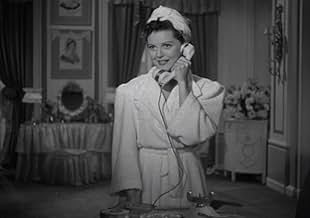
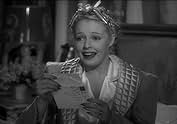
A drunken college boy invites a taxi dancer to spend the weekend at his snobbish school.A drunken college boy invites a taxi dancer to spend the weekend at his snobbish school.A drunken college boy invites a taxi dancer to spend the weekend at his snobbish school.
- Director
- Writers
- Stars
- Awards
- 1 win total



Peter Lind Hayes
- Skel
- (as Peter Hayes)


Ernie Alexander
- Parking Attendant
- (uncredited)
Rod Bacon
- College Boy
- (uncredited)

Lee Bennett
- College Boy
- (uncredited)
- Director
- Writers
- All cast & crew
- Production, box office & more at IMDbPro
6.3575
1
2
3
4
5
6
7
8
9
10
Featured reviews
Lana gets a glimpse of lifestyles of the rich and snooty
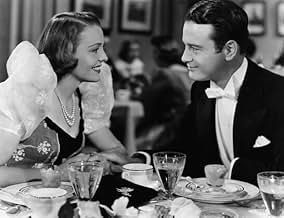
How pretty, sexy, and vivacious Lana Turner was, and she's shown to great advantage in "These Glamour Girls," a 1939 film about a weekend of house parties at an upper-class college. Turner plays a Jane, a taxi dancer at the Joy Lane Dance Hall who meets Phil (Lew Ayres), a college student from an old family who's at the Joy Lane slumming with his pals. While drunk, he invites her to the big weekend at Knightsbridge College. When she arrives, he's forgotten who she is and he already has a date. He convinces her to stay anyway, and while having a good time, she gets a glimpse of what the upper class is really like and what's important to them: background, the right schools, social standing, and money. And don't forget the booze.
This is an okay story with some good performances from Turner, Ayres, Richard Carlson, Marsha Hunt, Ann Rutherford, Tom Brown, Jane Bryan, and Anita Louise. Rutherford's with a man who doesn't want her, and Louise is the resident bitch. Bryan is dating Ayres, but it's obvious she's in love with Carlson. Marsha Hunt plays Betty, a 23-year-old still hanging with the college crowd in the hopes of nabbing a man. When she overhears someone say she should get married soon before she misses the boat, she panics. It's themes like this in the '30s-'50s that are hard to stomach, and frankly, it brings down this film. The resolution of the Betty arc is very out of place.
Most of the actors were in their twenties, but Turner was only 18 and Ayres was 30, a little old for a college kid - but he was always a very likable actor. Except for Turner, whose charisma leaps out of the screen, there isn't anything special about "These Glamour Girls."
This is an okay story with some good performances from Turner, Ayres, Richard Carlson, Marsha Hunt, Ann Rutherford, Tom Brown, Jane Bryan, and Anita Louise. Rutherford's with a man who doesn't want her, and Louise is the resident bitch. Bryan is dating Ayres, but it's obvious she's in love with Carlson. Marsha Hunt plays Betty, a 23-year-old still hanging with the college crowd in the hopes of nabbing a man. When she overhears someone say she should get married soon before she misses the boat, she panics. It's themes like this in the '30s-'50s that are hard to stomach, and frankly, it brings down this film. The resolution of the Betty arc is very out of place.
Most of the actors were in their twenties, but Turner was only 18 and Ayres was 30, a little old for a college kid - but he was always a very likable actor. Except for Turner, whose charisma leaps out of the screen, there isn't anything special about "These Glamour Girls."
Cracking the upper crust
At this stage of his career Lew Ayres seemed to be playing drunken playboys when he wasn't being Dr. Kildare. At the same time that These Glamour Girls came out Ayres went on some glorious binges in Remember and Holiday.
In this film Ayres a bit old for a college kid plays one of the upper crust who is going to prestigious Kingsford College. One night he and his pals go slumming to a dime a dance hall and Ayres issues an inebriated invitation to one of the girls to go to an upper crust clambake he's throwing.
Of course he forgets about it, but Lana Turner from Brooklyn goes and wows the crowd with some of her moves. Some of the debutantes resent her like Anita Louise, but she sure has the guys with their tongues hanging out.
One of those films designed to exhibit Lana Turner in her upcoming years from the MGM B picture unit. And certainly Lana struts her stuff.
When talking about These Glamour Girls one cannot overlook Marsha Hunt who at 23 and she's passed college age and never quite landed the husband she wanted. It was the culture of the times but a lot of women went to college not for education or career training but to land a husband. Hunt is no doubt without any skill to make a living and really is of a mindset that it's all over for her. Sad for anyone at 23 to think that no matter what the reason. Think of what happens to Andrea Leeds in Stage Door, Hunt meets a similar fate.
But this was Turner's moment and she's got beauty, talent, and wit aplenty. These Glamour Girls is old fashioned, but Lana Turner is eternal.
In this film Ayres a bit old for a college kid plays one of the upper crust who is going to prestigious Kingsford College. One night he and his pals go slumming to a dime a dance hall and Ayres issues an inebriated invitation to one of the girls to go to an upper crust clambake he's throwing.
Of course he forgets about it, but Lana Turner from Brooklyn goes and wows the crowd with some of her moves. Some of the debutantes resent her like Anita Louise, but she sure has the guys with their tongues hanging out.
One of those films designed to exhibit Lana Turner in her upcoming years from the MGM B picture unit. And certainly Lana struts her stuff.
When talking about These Glamour Girls one cannot overlook Marsha Hunt who at 23 and she's passed college age and never quite landed the husband she wanted. It was the culture of the times but a lot of women went to college not for education or career training but to land a husband. Hunt is no doubt without any skill to make a living and really is of a mindset that it's all over for her. Sad for anyone at 23 to think that no matter what the reason. Think of what happens to Andrea Leeds in Stage Door, Hunt meets a similar fate.
But this was Turner's moment and she's got beauty, talent, and wit aplenty. These Glamour Girls is old fashioned, but Lana Turner is eternal.
A sparkling and witty hidden gem
This little-known film is a lot of fun. The dialogue is quite pointed and witty and the pacing is very good. Lana Turner is especially appealing, and the college boys' catty girlfriends are astounding when they get going with their bitchy badinage.
As a movie it doesn't say much. As a social document it speaks volumes. Above all, one outstanding performance: Marsha Hunt.
As a work of art, there is not much here - a poor cousin to "My Man Godfrey." As a "teaching moment," however, this film is a zinger. It tries to entertain but also to deliver a social message. It does so, so maladroitly that it ends up a perfect mirror of a mixed-up society, an almost-post-Depression society that was itself badly muddled and conflicted.
We are presented with a thoroughly obnoxious set of idle, moneyed, entitled, frivolous and uncaring young people. So much for a caricature of the upper classes. Ah, but then there is the heartwarming contrast with the poor but honest working-class heroine (Lana Turner - not a bad performance, but not quite convincing). So much for the clichéd social conflict. What lesson are we, the almost-post-Depression theater audience, intended to draw from this? Of course, the lesson is that we are all one. Even the obnoxious rich are not so bad. They will see the light. The rich boy and poor girl will marry. But do they? Not really. The rich kid loses his fortune. Not until then does he accept his love for the dime-a-dance girl. The once-rich-but-now-in-reduced-circumstances girl marries the poor student who must work his way through college. No one steps out of his or her economic sphere. The rest of the rich kids go off to continue their obnoxious, parasitic life-style. All is right with the world. No one is really bad. Smile. It is indeed extraordinary that the uber-rich kid's father is found to be a criminal. He has defrauded perhaps thousands of investors (probably including many poor investors) in his hedge-fund or Ponzi scheme; he's a veritable Bernie Madoff. Yet we are not expected to blame him or even to dislike him. "Thanks, dad, for having given me a good start in life," says his non-reproachful son. Capitalism is a tough business, not for the faint-hearted. It's all OK. The poor are virtuous. The rich are irritating but ultimately sympathetic. That is the lesson of "Glamour Girls." It's a message Hollywood was eager to deliver in 1939, and America was happy to receive. Maybe Hollywood was right. As the 19th century humorist Josh Billings, a friend of Mark Twain, put it, defining the American spirit: "Wealth won't make a man virtuous, but there ain't anybody who wants to be poor just for the purpose of being good."
As a social document, a relic of its time, the movie is revealing. As a film, a work of art, it is less than captivating - with one exception. That exception makes the whole thing worth seeing: the performance of Marsha Hunt. Her character, Martha, is the only one with depth. Her acting is the only one with profundity. Just watch her suicide scene. Watch her face as she drives toward her fatal moment. She registers nearly a dozen shifting emotions, all razor sharp and all without speaking a word, all in the space of a minute of screen time. First we see desperation as she speeds the car unheeding toward nowhere; then sadness; then surprise as she spots the train alongside; then a look of realization as the idea of what she can do strikes her; then happiness as it sinks in; then literal glee as she contemplates it; then fierce determination as she hits the accelerator; fear takes over as she reaches the crossing, fear as she nervously, fumblingly, lights a last cigarette; then glee again, a look of triumph as she stares at the sleeping drunken frat boy beside her - he will go down too. It is extraordinary acting. Marsha Hunt - I've seen her interviewed - said she didn't care to be a star. She wanted to be a character actress. She became one of the best. One year later she played the gawky, tone-deaf sister in "Pride and Prejudice." After that she played the heroic but devastated victim of Nazi oppression in "None Shall Return." She portrayed a nasty, conniving home-wrecker in "Smash-Up," then a gentle, conflicted lover in "Raw Deal." If nothing else, "Glamour Girls" gives us one sublime actress at her peak.
We are presented with a thoroughly obnoxious set of idle, moneyed, entitled, frivolous and uncaring young people. So much for a caricature of the upper classes. Ah, but then there is the heartwarming contrast with the poor but honest working-class heroine (Lana Turner - not a bad performance, but not quite convincing). So much for the clichéd social conflict. What lesson are we, the almost-post-Depression theater audience, intended to draw from this? Of course, the lesson is that we are all one. Even the obnoxious rich are not so bad. They will see the light. The rich boy and poor girl will marry. But do they? Not really. The rich kid loses his fortune. Not until then does he accept his love for the dime-a-dance girl. The once-rich-but-now-in-reduced-circumstances girl marries the poor student who must work his way through college. No one steps out of his or her economic sphere. The rest of the rich kids go off to continue their obnoxious, parasitic life-style. All is right with the world. No one is really bad. Smile. It is indeed extraordinary that the uber-rich kid's father is found to be a criminal. He has defrauded perhaps thousands of investors (probably including many poor investors) in his hedge-fund or Ponzi scheme; he's a veritable Bernie Madoff. Yet we are not expected to blame him or even to dislike him. "Thanks, dad, for having given me a good start in life," says his non-reproachful son. Capitalism is a tough business, not for the faint-hearted. It's all OK. The poor are virtuous. The rich are irritating but ultimately sympathetic. That is the lesson of "Glamour Girls." It's a message Hollywood was eager to deliver in 1939, and America was happy to receive. Maybe Hollywood was right. As the 19th century humorist Josh Billings, a friend of Mark Twain, put it, defining the American spirit: "Wealth won't make a man virtuous, but there ain't anybody who wants to be poor just for the purpose of being good."
As a social document, a relic of its time, the movie is revealing. As a film, a work of art, it is less than captivating - with one exception. That exception makes the whole thing worth seeing: the performance of Marsha Hunt. Her character, Martha, is the only one with depth. Her acting is the only one with profundity. Just watch her suicide scene. Watch her face as she drives toward her fatal moment. She registers nearly a dozen shifting emotions, all razor sharp and all without speaking a word, all in the space of a minute of screen time. First we see desperation as she speeds the car unheeding toward nowhere; then sadness; then surprise as she spots the train alongside; then a look of realization as the idea of what she can do strikes her; then happiness as it sinks in; then literal glee as she contemplates it; then fierce determination as she hits the accelerator; fear takes over as she reaches the crossing, fear as she nervously, fumblingly, lights a last cigarette; then glee again, a look of triumph as she stares at the sleeping drunken frat boy beside her - he will go down too. It is extraordinary acting. Marsha Hunt - I've seen her interviewed - said she didn't care to be a star. She wanted to be a character actress. She became one of the best. One year later she played the gawky, tone-deaf sister in "Pride and Prejudice." After that she played the heroic but devastated victim of Nazi oppression in "None Shall Return." She portrayed a nasty, conniving home-wrecker in "Smash-Up," then a gentle, conflicted lover in "Raw Deal." If nothing else, "Glamour Girls" gives us one sublime actress at her peak.
Lightweight but Revealing
It may be lightweight fare, but the movie's still a revealing glimpse of the upper 1% of the 1930's. There's heartache aplenty when rich boy (Ayers) dates taxi dancer (Turner) from lower 99% and then stands her up in front of his snooty social circle. She's humiliated, to say the least, and we feel for her. Rich boy, Phil, has a lot to learn about life and people, and the remainder shows him trying to get things straight.
It's an MGM production so the glossy upper crust is spread on convincingly, from the high fashion clothes to the glittering ballrooms to the carefree attitudes. At the same time, the girls don't disappoint in the glamour department just as the title promises. We also get a cross-section of personality types from bitchy Daphne to misfit Betty to nice girl Carol. So it's lots of eye candy with some clumsy humor thrown in (the drunken Harvard man). But then, the movie turns dark near the end, and we see the downside of all the glitter (the stockbroker dad; an onrushing train). Notice, however, how biology ultimately triumphs over class.
The competition may be heavy but Turner shines as the working girl with stars in her eyes. But I especially like a rather obscure Jane Bryan (Carol) who projects an effortless inner radiance. Too bad that she left the business so soon. All in all, the film's a diverting peek into class mores of the time, a topic I expect still resonates with today's 99%.
It's an MGM production so the glossy upper crust is spread on convincingly, from the high fashion clothes to the glittering ballrooms to the carefree attitudes. At the same time, the girls don't disappoint in the glamour department just as the title promises. We also get a cross-section of personality types from bitchy Daphne to misfit Betty to nice girl Carol. So it's lots of eye candy with some clumsy humor thrown in (the drunken Harvard man). But then, the movie turns dark near the end, and we see the downside of all the glitter (the stockbroker dad; an onrushing train). Notice, however, how biology ultimately triumphs over class.
The competition may be heavy but Turner shines as the working girl with stars in her eyes. But I especially like a rather obscure Jane Bryan (Carol) who projects an effortless inner radiance. Too bad that she left the business so soon. All in all, the film's a diverting peek into class mores of the time, a topic I expect still resonates with today's 99%.


Did you know
- TriviaFirst film where Lana Turner receives top billing.
- Quotes
Jane Thomas: Listen, you wisecracking, bad-mouthing glamour girl. I've had all your kind of friend that I can use. Why, I wouldn't breathe the same air with you and your pedigree polo shirts for another five minutes.
- ConnectionsFeatured in Discovering Film: Lana Turner (2015)
- SoundtracksLoveliness
(1939)
Music by Edward Ward
Lyrics by Bob Wright and Chet Forrest
Played during the opening credits
Sung by Dale Fellows (uncredited) at the social
Hummed by Lana Turner (uncredited)
Played as background music often
Details
- Release date
- Country of origin
- Language
- Also known as
- Taksi igračica
- Filming locations
- Production company
- See more company credits at IMDbPro
Box office
- Budget
- $403,000 (estimated)
- Runtime
- 1h 19m(79 min)
- Color
- Aspect ratio
- 1.37 : 1
Contribute to this page
Suggest an edit or add missing content