IMDb RATING
6.4/10
1.4K
YOUR RATING
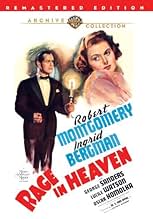
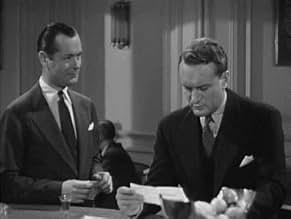
Robert Montgomery and George Sanders team up to play against type in this probing psychological thriller that features Ingrid Bergman as the object of their obsessions.Robert Montgomery and George Sanders team up to play against type in this probing psychological thriller that features Ingrid Bergman as the object of their obsessions.Robert Montgomery and George Sanders team up to play against type in this probing psychological thriller that features Ingrid Bergman as the object of their obsessions.
- Awards
- 3 wins total
Frederick Worlock
- Solicitor-General
- (as Frederic Worlock)
Ludwig Hardt
- Durand
- (as Ludwig Hart)
Stuart Hall
- Traveling Salesman
- (scenes deleted)
Major McBride
- Bank Clerk
- (scenes deleted)
Clive Morgan
- Traveling Salesman
- (scenes deleted)
Joseph North
- Undertaker
- (scenes deleted)
Wyndham Standing
- Dr. McTernan
- (scenes deleted)
Harry Allen
- Jury Foreman
- (uncredited)
6.41.4K
1
2
3
4
5
6
7
8
9
10
Featured reviews
Escapee from the insane asylum
This film, based on a James Hilton novel, is not often seen these days. In part, the material Christopher Isherwood extracted from the book doesn't make a good movie. As directed by W. S. Van Dyke, the film seems to have been sabotaged by its star, Robert Montgomery, who made no secret he didn't want to be in the picture. It's a shame because the rest of the players are evidently acting in a different movie.
The melodrama has some interesting things going for it. First there is the luminous appearance of Ingrid Bergman in her third Hollywood film. Also, George Sanders has one of the best roles he ever played in the movies. Both Ms. Bergman and Mr. Sanders are the reason for watching. Lucile Watson, Oscar Homolka and Philip Merivale, among others, make great contributions to the film.
While this is not by any means a horrible film, it could have been improved if only Mr. Montgomery, a welcome presence in any movie, would have done a better job inter acting with the rest and following direction.
The melodrama has some interesting things going for it. First there is the luminous appearance of Ingrid Bergman in her third Hollywood film. Also, George Sanders has one of the best roles he ever played in the movies. Both Ms. Bergman and Mr. Sanders are the reason for watching. Lucile Watson, Oscar Homolka and Philip Merivale, among others, make great contributions to the film.
While this is not by any means a horrible film, it could have been improved if only Mr. Montgomery, a welcome presence in any movie, would have done a better job inter acting with the rest and following direction.
Good old fashioned entertainment
Lighten up reviewer and enjoy this movie for what it is. Good Old fashioned entertainment. I've watched this movie man times and always enjoy it. Aubrey Mather as Clark is worth the admission price.
Leave him to heaven!
"Rage in Heaven" belongs to the spate of Freudian movies of the forties: Hitchcock's "spellbound" Lang's "secret beyond the door" Tourneur's "cat people" Stahl's "leave her to heaven" Siodmak's "dark mirror" ,the list is endless.
"Rage in heaven" is an excellent underrated thriller.Although Philip's mother part is underwritten ,she predates the Hitchcockian mums ,those of "Notorious" "Strangers on a train" "Marnie" etc.Robert Montgomery whose character is the most interesting portrays a rich kid,probably victim of his over possessive mother -"he's more attractive than Ward" - A selfish paranoiac man who will not be satisfied till he destroys everything.His behavior makes sense:the cat,then the best friend (the enemy ,for his wife is in love with him),the wife and finally himself ,the doctor explains.
The screenplay might not be thoroughly original,but "Leave her to heaven" (1946) borrows Gene Tierney's diabolical suicide from it,and the final search has something of Cornell Woolrich (aka William Irish) ,notably his "phantom lady".
Three excellent actors,and a gripping story: you will not waste your time.
"Rage in heaven" is an excellent underrated thriller.Although Philip's mother part is underwritten ,she predates the Hitchcockian mums ,those of "Notorious" "Strangers on a train" "Marnie" etc.Robert Montgomery whose character is the most interesting portrays a rich kid,probably victim of his over possessive mother -"he's more attractive than Ward" - A selfish paranoiac man who will not be satisfied till he destroys everything.His behavior makes sense:the cat,then the best friend (the enemy ,for his wife is in love with him),the wife and finally himself ,the doctor explains.
The screenplay might not be thoroughly original,but "Leave her to heaven" (1946) borrows Gene Tierney's diabolical suicide from it,and the final search has something of Cornell Woolrich (aka William Irish) ,notably his "phantom lady".
Three excellent actors,and a gripping story: you will not waste your time.
Another Hilton-based movie
James Hilton was not a great novelist, but he was a popular one in the 1930s and 1940s, and two of his books have managed to become minor classics. Both also were the basis of popular films: LOST HORIZON and GOODBYE MR. CHIPS. But, oddly enough, they were not the only Hilton novels that made it to the screen, nor the only two that became classic films. RANDOM HARVEST can be added to his novels that became film classics. And he also wrote his "Crippen" novel, WE ARE NOT ALONE (which starred Paul Muni and Dame Flora Robson), and this film, RAGE IN HEAVEN. In story it actually resembles RANDOM HARVEST a bit: In that film Ronald Colman is an amnesiac from World War I who escapes from an asylum, and eventually turns out to be the head of a large industrial empire. In RAGE IN HEAVEN Robert Montgomery is a paranoid who flees an asylum in France, and turns out to be the head of a large industrial empire. But Colman's character is intelligent and fair minded - a good boss. Montgomery is argumentative, harsh, and (ultimately) incompetent and cowardly. One can say that RAGE IN HEAVEN is the dark side of RANDOM HARVEST.
Robert Montgomery's film career is one of the most aggravating in Hollywood history. He built up a career in the 1930s playing cads and bounders in MGM comedies, with an occasionally good comic hero role (THE LAST OF MRS. CHEYNEY and TROUBLE FOR TWO come to mind). Then he got the plum role of the psychopathic Danny in NIGHT MUST FALL, and an Oscar nomination for best actor in 1937. But he did not get the Oscar (Spencer Tracy did). I have always suspected that had Montgomery won the Oscar he deserved to his name would be properly remembered today, as more than just a good actor who was the father of television's "Samantha", Elizabeth Montgomery. Instead, while he still had some good parts later in his career (many as a director and producer, as well as actor), he never got the recognition he thoroughly deserved.
It is obvious that RAGE IN HEAVEN was meant to be a follow-up "psycho" role for Montgomery, following Danny. But Phillip Morell is not as well done as Danny, probably because NIGHT MUST FALL was a play by Emlyn Williams originally, and so it was easier to transfer it to the screen than Hilton's novel. But then, LOST HORIZON, MR. CHIPS, and RANDOM HARVEST were well done screenplays too. Danny (for all his murderous habits) has his human moments, but Phillip doesn't. Phillip is always under-spoken and wide eyed. He always is on the verge of exploding (and similarly of collapsing - witness the moment the Union leadership force their way into his office to confront him over his unwillingness to settle the labor impasse, and how he just collapses and runs out yelling, "Give them whatever they want!"). A modern treatment might develop his mania somewhat. It is obvious that Hilton understood what paranoids were capable of - the business about the hidden confession in the diary rings true - but it is still not developed enough for the audience to understand. We know that Phillip's father was insane (and committed suicide) but more details are needed.
It was Ingrid Bergman's third or fourth American film. She was slowly inching her way to real stardom (she had touched it opposite Leslie Howard in the Hollywood version of INTERMEZZO), but her performance, while natural, is not very memorable. George Sanders again demonstrates his dependability in any role, here as a good guy almost destroyed by his mad friend. Oscar Homolka does a good job as the asylum head, whose assistance to Bergman saves Sanders in the end. It is not as good a film as it should have been with a better laid out script, but it is watchable one or two times.
Robert Montgomery's film career is one of the most aggravating in Hollywood history. He built up a career in the 1930s playing cads and bounders in MGM comedies, with an occasionally good comic hero role (THE LAST OF MRS. CHEYNEY and TROUBLE FOR TWO come to mind). Then he got the plum role of the psychopathic Danny in NIGHT MUST FALL, and an Oscar nomination for best actor in 1937. But he did not get the Oscar (Spencer Tracy did). I have always suspected that had Montgomery won the Oscar he deserved to his name would be properly remembered today, as more than just a good actor who was the father of television's "Samantha", Elizabeth Montgomery. Instead, while he still had some good parts later in his career (many as a director and producer, as well as actor), he never got the recognition he thoroughly deserved.
It is obvious that RAGE IN HEAVEN was meant to be a follow-up "psycho" role for Montgomery, following Danny. But Phillip Morell is not as well done as Danny, probably because NIGHT MUST FALL was a play by Emlyn Williams originally, and so it was easier to transfer it to the screen than Hilton's novel. But then, LOST HORIZON, MR. CHIPS, and RANDOM HARVEST were well done screenplays too. Danny (for all his murderous habits) has his human moments, but Phillip doesn't. Phillip is always under-spoken and wide eyed. He always is on the verge of exploding (and similarly of collapsing - witness the moment the Union leadership force their way into his office to confront him over his unwillingness to settle the labor impasse, and how he just collapses and runs out yelling, "Give them whatever they want!"). A modern treatment might develop his mania somewhat. It is obvious that Hilton understood what paranoids were capable of - the business about the hidden confession in the diary rings true - but it is still not developed enough for the audience to understand. We know that Phillip's father was insane (and committed suicide) but more details are needed.
It was Ingrid Bergman's third or fourth American film. She was slowly inching her way to real stardom (she had touched it opposite Leslie Howard in the Hollywood version of INTERMEZZO), but her performance, while natural, is not very memorable. George Sanders again demonstrates his dependability in any role, here as a good guy almost destroyed by his mad friend. Oscar Homolka does a good job as the asylum head, whose assistance to Bergman saves Sanders in the end. It is not as good a film as it should have been with a better laid out script, but it is watchable one or two times.
A good, solid, psychological thriller
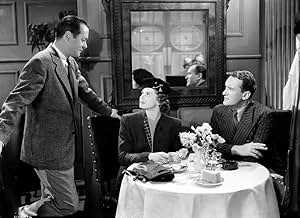
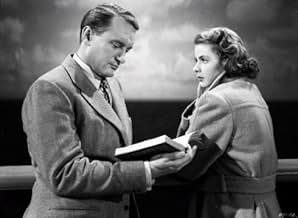
I might be in the minority here, but I really liked this movie. George Sanders, playing against type, was quite believable as Ward Andrews, a decent guy in love with his best friend's wife, but too noble to pursue her. Ingrid Bergman, as Stella, plays the conflicted wife very well. She loves her husband, but as he becomes more paranoid and jealous, you see her suffering from the emotional abuse he heaps on her. But the real surprise of this movie is Robert Montgomery. According to Ingrid Bergman, he told her he planned on phoning in his performance because he was angry with MGM for putting him in this film. If he did, it was a brilliant decision. His underplaying and detachment gave him the air of someone who was convinced of the rationality of his increasingly irrational behavior. I never thought I'd say this about Robert Montgomery, but he gave me the kind of creeps in this movie that I got from Anthony Perkins in Psycho.
Did you know
- TriviaW.S. Van Dyke took over the direction of the movie from Robert B. Sinclair, who became ill shortly after shooting began. Van Dyke was in the Marines, but was granted a 14-day leave to finish the picture. Neither Sinclair nor Van Dyke was available for re-takes, which were then directed by Richard Thorpe.
- GoofsThe movie commences with a quote, "Heaven hath no rage like love to hatred turned", which it attributes to Milton. The quote is in fact from William Congreve's play "The Mourning Bride".
- Quotes
Stella Bergen: My life is like this clearing. Nice and peaceful with paths leading in all directions. Only, I don't know which one to take.
- ConnectionsFeatured in Ingrid (1984)
- How long is Rage in Heaven?Powered by Alexa
Details
- Release date
- Country of origin
- Languages
- Also known as
- Gefährliche Liebe
- Filming locations
- Production company
- See more company credits at IMDbPro
- Runtime
- 1h 25m(85 min)
- Color
- Aspect ratio
- 1.37 : 1
Contribute to this page
Suggest an edit or add missing content