

The son of a murderer is entangled in his father's crimes and is sentenced to a rehabilitive farm, where he learns a new way of life.The son of a murderer is entangled in his father's crimes and is sentenced to a rehabilitive farm, where he learns a new way of life.The son of a murderer is entangled in his father's crimes and is sentenced to a rehabilitive farm, where he learns a new way of life.
- Director
- Writers
- Stars
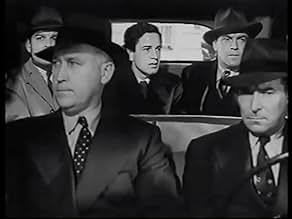

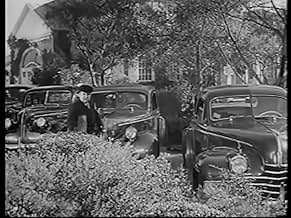


King Baggot
- Man in Bank
- (uncredited)

William Bailey
- Man in Courtroom
- (uncredited)
- Director
- Writers
- All cast & crew
- Production, box office & more at IMDbPro
6.3246
1
2
3
4
5
6
7
8
9
10
Featured reviews
This film belongs to Gene Reynolds!!
A very good film, with actors ranging from Lionel Barrymore to Edward Arnold, but this film really hinges on the acting ability of Gene Reynolds. Mr. Reynolds dominates this film and for a teen actor, he carries the film very well. I found this film to be very good and really kept this viewer's attention from beginning to end. Be sure and catch this film the next time it is on television--another "small" film that is worth seeing!!
Surprisingly good.
When this film begins, the audience is taken for a real ride. The usually nice Edward Arnold turns out to be playing an amazingly cold and heartless guy. Surprisingly, this evil crook turns out to have a son (Gene Reynolds)--a teenager who idolizes him. So, even when Dad robs banks and kills people, the boy STILL thinks his father is great. When the boy is captured by the police, the kid naturally turns out to be incorrigible and gets himself thrown out of reform school. In an odd twist, however, instead of sending him to a worse facility, they parole him to a farmer (Robert Sterling). What the kid doesn't know is that the authorities expect the father to try to come back for him eventually--and then they'll spring the trap. But in the meantime, the boy is stuck on the place for some time--weeks or months. And in the process, for the first time, the boy ends up making connections with folks other than his Dad. What's next? See the film.
While the plot is a bit moralistic and predictable at times, this still is a dandy movie mostly because of the great dialog and acting. Arnold is great as a Dillinger-type crook but the supporting actors and the writing really make the picture. Reynolds is great--mostly because he has some of the snappiest and most sarcastic comments I've ever heard from a kid! And, Lionel Barrymore, though he's only in the movie a bit, is terrific. The bottom line is that this film, though pretty much a B-movie, has the full MGM treatment--and is a fine and enjoyable picture throughout.
While the plot is a bit moralistic and predictable at times, this still is a dandy movie mostly because of the great dialog and acting. Arnold is great as a Dillinger-type crook but the supporting actors and the writing really make the picture. Reynolds is great--mostly because he has some of the snappiest and most sarcastic comments I've ever heard from a kid! And, Lionel Barrymore, though he's only in the movie a bit, is terrific. The bottom line is that this film, though pretty much a B-movie, has the full MGM treatment--and is a fine and enjoyable picture throughout.
Life on the run is no life for a kid.
The cast is pretty top-notch for its time, with two great character actors, Edward Arnold and Lionel Barrymore. Gene Reynolds, as Arnold's smart aleck son, gives a fine performance too. As expected, Lionel steals every scene he's in, and this is one of several films disproving the widely reported myth that Lionel was confined to a wheelchair and never filmed standing again after 1938.
The supporting cast, including Robert Sterling, Marsha Hunt, and a nasty goose named Charlie, all have their moments, but the success of the film hinges on the talents of Reynolds, Arnold and Barrymore.
The climactic scene in which Barrymore and Arnold face off is pretty neat, given the caliber of these two old pros.
The film remains engaging and enjoyable throughout, and the occasional lapses into sentimentality and corniness are easily forgivable. Though not one of the "great" films of the era by any stretch, and more of a B-picture overall, it's still a good, little-known '40's gem.
The supporting cast, including Robert Sterling, Marsha Hunt, and a nasty goose named Charlie, all have their moments, but the success of the film hinges on the talents of Reynolds, Arnold and Barrymore.
The climactic scene in which Barrymore and Arnold face off is pretty neat, given the caliber of these two old pros.
The film remains engaging and enjoyable throughout, and the occasional lapses into sentimentality and corniness are easily forgivable. Though not one of the "great" films of the era by any stretch, and more of a B-picture overall, it's still a good, little-known '40's gem.
Gene Reynolds shines in crime drama programmer...
But all his acting abilities are given short shrift by a tale that purports to be a crime melodrama with EDWARD ARNOLD as his father, a bank robber who's always one step ahead of the police. RICHARD LANE is the detective on his trail, VEDA ANN BORG is Arnold's moll girlfriend, GENE REYNOLDS is his street smart son, and RALPH BYRD is an unfortunate police officer.
Trouble is, none of the story rings true. It all his a very fabricated MGM look, the kind of programmer they turned out to fill a double feature program without any headliners in starring roles. I never bought jovial EDWARD ARNOLD as the criminal type and this bit of miscasting prevents the story from any real sense of credibility.
It's a good forty minutes before ROBERT STERLING and MARSHA HUNT show up as a farm couple willing to take reform school reject GENE REYNOLDS under their wing. He's a fallen sparrow who needs all the nurturing they can give.
Fifty minutes into the story, LIONEL BARRYMORE and GLORIA DE HAVEN show up, with Barrymore as a Grandpa who smokes a pipe and talks like Dr. Gillespie except that he's full of kindly sentiments instead of bitter complaints about mankind.
Did I say the story was dated? Marsha Hunt talks about a schoolteacher making $85 a month.
Summing up: Unpredictable at the start, the story soon turns into a conventional "crime doesn't pay" drama with Reynolds doing a complete reformation in time for a happy ending. The only saving grace is that it's not as preachy as it might have been.
Summing up: The faults far outweigh the virtues.
Trivia note: Watch for PHIL SILVERS (without specs) in a one minute bit as a hobo.
Trouble is, none of the story rings true. It all his a very fabricated MGM look, the kind of programmer they turned out to fill a double feature program without any headliners in starring roles. I never bought jovial EDWARD ARNOLD as the criminal type and this bit of miscasting prevents the story from any real sense of credibility.
It's a good forty minutes before ROBERT STERLING and MARSHA HUNT show up as a farm couple willing to take reform school reject GENE REYNOLDS under their wing. He's a fallen sparrow who needs all the nurturing they can give.
Fifty minutes into the story, LIONEL BARRYMORE and GLORIA DE HAVEN show up, with Barrymore as a Grandpa who smokes a pipe and talks like Dr. Gillespie except that he's full of kindly sentiments instead of bitter complaints about mankind.
Did I say the story was dated? Marsha Hunt talks about a schoolteacher making $85 a month.
Summing up: Unpredictable at the start, the story soon turns into a conventional "crime doesn't pay" drama with Reynolds doing a complete reformation in time for a happy ending. The only saving grace is that it's not as preachy as it might have been.
Summing up: The faults far outweigh the virtues.
Trivia note: Watch for PHIL SILVERS (without specs) in a one minute bit as a hobo.
'Brother Orchid' for teens
Fans of Brother Orchid and The Life of Jimmy Dolan might want to check out the lesser known The Penalty, starring Edward Arnold and Gene Reynolds. Edward's opening scene is incredible! It's no wonder he got typecast as a villain. He's a lumberjack and hires a dozen men in town for a week's work, and when one asks how they can trust he's good for the money, he comes up with a solution: they can all accompany him to the bank and watch him withdraw the funds. When he reaches the teller window, he hands over a piece of paper: "This is a stick-up. Don't start anything or my twelve men will finish it. Hand over all your cash and hurry!" Isn't that brilliant? He tells his hired hands he'll be right back, leaves the bank, changes his clothes, steals a different car, and escapes. You almost hope he gets away with it, with such a brilliant set-up!
Edward has a devoted young son, Gene, who idolizes him and obeys his every order. He also has a moll, Veda Ann Borg, with a penchant for fur coats. The Feds are on their tail, and the trio go on the lam. I've seen a lot of gangster movies, and I gasped three times during this movie. It's not one you would have heard of, but it's worth watching. Good acting, a solid story, and lessons that teach what's really important in life. Although he receives second billing, Lionel Barrymore doesn't show up until forty-nine minutes in. You'll also see Robert Sterling, Marsha Hunt, Emma Dunn, Richard Lane, Gloria DeHaven, Grant Mitchell, and a young Phil Silvers.
Edward has a devoted young son, Gene, who idolizes him and obeys his every order. He also has a moll, Veda Ann Borg, with a penchant for fur coats. The Feds are on their tail, and the trio go on the lam. I've seen a lot of gangster movies, and I gasped three times during this movie. It's not one you would have heard of, but it's worth watching. Good acting, a solid story, and lessons that teach what's really important in life. Although he receives second billing, Lionel Barrymore doesn't show up until forty-nine minutes in. You'll also see Robert Sterling, Marsha Hunt, Emma Dunn, Richard Lane, Gloria DeHaven, Grant Mitchell, and a young Phil Silvers.


Did you know
- TriviaThe police in this film use the 1928 model Thompson sub-machine gun with a 50 round drum magazine while the bad guys use the BAR (Browning Automatic Rifle). Bonnie and Clyde were known for using the BAR in their criminal exploits. Unlike the Thompson which uses a pistol round, the BAR uses a rifle round with extreme penetrating power. The BAR was also used by American machine-gunners in WWII.
- GoofsWhen Roosty pulls the black car over after crossing the bridge, reflections of multiple studio lights can be seen on the car's highly polished door.
Details
- Runtime
- 1h 20m(80 min)
- Color
- Aspect ratio
- 1.37 : 1
Contribute to this page
Suggest an edit or add missing content