
A 100-year-old pioneer woman tells her story in flashbacks.A 100-year-old pioneer woman tells her story in flashbacks.A 100-year-old pioneer woman tells her story in flashbacks.
- Awards
- 2 wins total
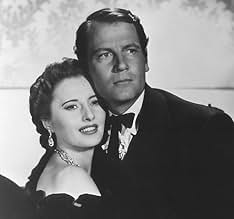
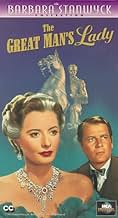
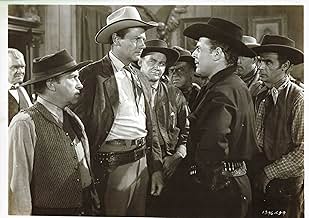
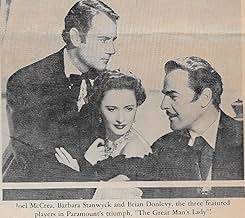


K.T. Stevens
- Girl Biographer
- (as Katharine Stevens)


Irving Bacon
- Parson
- (uncredited)

Hank Bell
- Man #1 - Hoyt City
- (uncredited)

Monte Blue
- Man #2 - Hoyt City
- (uncredited)
6.6923
1
2
3
4
5
6
7
8
9
10
Featured reviews
Outdated
Unfortunately, whatever production values this film contains are generally spoiled by the passage of time and fortunate changes in perspective. For those of us watching now are happily forewarned in the narrator's introduction to the film in which it is not only explicit as to the woman character's subordinate position to her "great man" but also at least implicit as to the role of any woman in the life of her "great man." Of the many "flash-back" films where the character re-hashes their past, this is certainly melodramatic in its acting and characterizations. The action does not seem compelling to watch, as if one could fast-forward to get to the punch line, which does not really satisfy - the principal male character's life is summed up in such high regard as to make one wonder if the viewer had just seen the same film! One has to wonder how female audience members felt about the general message (such as it is) of this film when it opened in theatres, although Ms. Stanwyck most likely held her own in her stubbornness by standards of the time.
10SHAWFAN
This film needs defending
Such undeserved condescension on the part of most of your reviewers! I thought it was an absorbing romantic drama in which Stanwyck was at her very best. As she turned from youthful sparkly-eyed amused flirt in her first scenes with McCrea into the mature more gray-haired woman seriously urging him to do his political best for those whom he represented, her virtuosity as an actress of transformations came greatly to the fore. It was a pleasure to respond to her in her various moods of youthful love, a stunned mother's loss of her two babies, her vigorous denunciation of her father in his unconscionable request of her, and finally the resignation of old age in which she at last destroys the long-lived marriage certificate she's been carrying around through most of the story.
McCrea was also very good, especially in the scene in which he confesses himself guilty of the same kind of corruption so rife in the American West at that railroad-building time.
The story seemed to echo the true events of The Ballad of Baby Doe (opera) in its background of silver mining and marital troubles; and it certainly resembled Edna Ferber-Abby Mann's Cimarron in retelling the story of a marriage in which the husband spends years on the road away from his wife.
The 19th-century flooding in Sacramento was certainly up to date given the similar events happening in that city in our own times as well.
A great movie. Pay no attention to those detractors.
McCrea was also very good, especially in the scene in which he confesses himself guilty of the same kind of corruption so rife in the American West at that railroad-building time.
The story seemed to echo the true events of The Ballad of Baby Doe (opera) in its background of silver mining and marital troubles; and it certainly resembled Edna Ferber-Abby Mann's Cimarron in retelling the story of a marriage in which the husband spends years on the road away from his wife.
The 19th-century flooding in Sacramento was certainly up to date given the similar events happening in that city in our own times as well.
A great movie. Pay no attention to those detractors.
Confused Romance
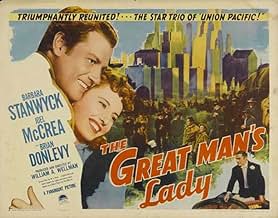
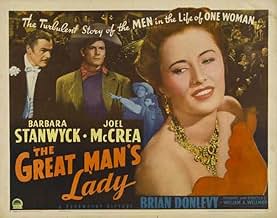
When the statue of the founder of Hoyt City, Ethan Hoyt (Joel McCrea) is dedicated, the sensationalist reporters and a biographer (Katharine Stevens) head to the house of the one hundred year-old Hannah Sempler (Barbara Stanwyck), where Ethan died, to know the relationship between them. Ms. Hannah sends them all out but the lady. Then she tells her life since she was a teenager and felt in love with the pioneer Ethan.
In 1848, in Philadelphia, Ethan dreams on building Hoyt City, but he needs financiers and influent people to change the route of the railroad. Hannah decides to leave her upper-class father and marries with Ethan. Eight years later, she meets the gambler Steely Edwards (Brian Donlevy) and they become close friends. When Ethan discovers silver, Steely lends money to Hannah with the condition that she does not go to the mines with Ethan. Along the years, Ethan becomes rich and far from Hannah that he believes had died in a flood. Years later, they meet each other again in Hoyt City but their love is doomed since Ethan has raised a family of his own.
"The Great Man's Lady" is a classic with some of my favorite directors (William A. Wellman), actresses (Barbara Stanwyck) and actors (Joel McCrea and Brian Donlevy); and haunting music score by Victor Young. Unfortunately the story is a confused romance with a not well-explained triangle of love. I did not understand the quote "spring never comes again", since spring returns every year. My vote is six.
Title (Brazil): "Até Que a Morte nos Separe" ("Till Death Do Us Apart")
In 1848, in Philadelphia, Ethan dreams on building Hoyt City, but he needs financiers and influent people to change the route of the railroad. Hannah decides to leave her upper-class father and marries with Ethan. Eight years later, she meets the gambler Steely Edwards (Brian Donlevy) and they become close friends. When Ethan discovers silver, Steely lends money to Hannah with the condition that she does not go to the mines with Ethan. Along the years, Ethan becomes rich and far from Hannah that he believes had died in a flood. Years later, they meet each other again in Hoyt City but their love is doomed since Ethan has raised a family of his own.
"The Great Man's Lady" is a classic with some of my favorite directors (William A. Wellman), actresses (Barbara Stanwyck) and actors (Joel McCrea and Brian Donlevy); and haunting music score by Victor Young. Unfortunately the story is a confused romance with a not well-explained triangle of love. I did not understand the quote "spring never comes again", since spring returns every year. My vote is six.
Title (Brazil): "Até Que a Morte nos Separe" ("Till Death Do Us Apart")
Not as epic as the movie think it is but it's still fine
From the first intro scroll itself, the film shows how dated it is and how stupid it can be with the themes in it. The first half hour went along proving it to me with every character and plot point just fast-forwarding itself to seemingly pointless places. But the rest of the movie, even though doesn't really get out of those aspects gives Barbara Stanwyck a great chance to show her acting prowess and she single-handedly saves the film.
The film can be considered an optimistic look at the tragedy that is any human life. But the privilege of the characters, the lack of feeling any stake even when it is needed and the lacklustre narrative doesn't really help in its philosophy. A lot of the movie, especially the scroll at the beginning and the ending sequence feels like the makers believed it to be something epic when it isn't even remotely close to being that.
Even with all of that and some of the regressive messages, the film believes to be progressive, the film still contains enough to appreciate it for what it is. The movie does portray moments that are representative of how small and yet great life is and Barbara Stanwyck makes it work with her charm and presence. I feel like this same exact story could've been a great film with a better script. I don't know how common this type of story was back then but maybe this film has inspired many other filmmakers afterwards.
The film can be considered an optimistic look at the tragedy that is any human life. But the privilege of the characters, the lack of feeling any stake even when it is needed and the lacklustre narrative doesn't really help in its philosophy. A lot of the movie, especially the scroll at the beginning and the ending sequence feels like the makers believed it to be something epic when it isn't even remotely close to being that.
Even with all of that and some of the regressive messages, the film believes to be progressive, the film still contains enough to appreciate it for what it is. The movie does portray moments that are representative of how small and yet great life is and Barbara Stanwyck makes it work with her charm and presence. I feel like this same exact story could've been a great film with a better script. I don't know how common this type of story was back then but maybe this film has inspired many other filmmakers afterwards.
An excellent romantic, historical drama with two of my favorite stars.
~~~Since I was only 12 when I saw this years ago, I was very impressed with everything about the movie-----the stars, the storyline, the costumes, the historical flavor, and the emphasis on the noble character of the leading stars----Barbara Stanwyck and Joel McCrea who were always great in everything in which they ever appeared. It was the only movie I ever returned to see the second time before I started seeing numerous repeats on the TV Movie Channels. The movie starts and ends with Barbara Stanwyck portraying an elderly lady who tells the story of her relationship to Joel McCrea from youth through maturity. Through a series of flashbacks, Stanwyck tells her story to a pretty, young, blonde reporter who is interviewing her in the hope of getting a hot story on the day an imposing statue of McCrea is dedicated.


Did you know
- TriviaFifth of six film collaborations between Barbara Stanwyck and Joel McCrea.
- GoofsWhen the Hoyts stand at the sight of their future city, they're at the foot of a hill, but moments later they're on top of a hill.
- ConnectionsFeatured in Biography: Barbara Stanwyck: Straight Down the Line (1997)
- SoundtracksUnfinished Symphony
("Symphony 8 in B Major") (uncredited)
Composed by Franz Schubert (begun 1822)
Heard on soundtrack during Janet and Ethan's farewell and under end title
- How long is The Great Man's Lady?Powered by Alexa
Details
- Runtime
- 1h 30m(90 min)
- Color
- Aspect ratio
- 1.37 : 1
Contribute to this page
Suggest an edit or add missing content