
A 100-year-old pioneer woman tells her story in flashbacks.A 100-year-old pioneer woman tells her story in flashbacks.A 100-year-old pioneer woman tells her story in flashbacks.
- Awards
- 2 wins total


K.T. Stevens
- Girl Biographer
- (as Katharine Stevens)


Irving Bacon
- Parson
- (uncredited)

Hank Bell
- Man #1 - Hoyt City
- (uncredited)

Monte Blue
- Man #2 - Hoyt City
- (uncredited)
6.6923
1
2
3
4
5
6
7
8
9
10
Featured reviews
Not as epic as the movie think it is but it's still fine
From the first intro scroll itself, the film shows how dated it is and how stupid it can be with the themes in it. The first half hour went along proving it to me with every character and plot point just fast-forwarding itself to seemingly pointless places. But the rest of the movie, even though doesn't really get out of those aspects gives Barbara Stanwyck a great chance to show her acting prowess and she single-handedly saves the film.
The film can be considered an optimistic look at the tragedy that is any human life. But the privilege of the characters, the lack of feeling any stake even when it is needed and the lacklustre narrative doesn't really help in its philosophy. A lot of the movie, especially the scroll at the beginning and the ending sequence feels like the makers believed it to be something epic when it isn't even remotely close to being that.
Even with all of that and some of the regressive messages, the film believes to be progressive, the film still contains enough to appreciate it for what it is. The movie does portray moments that are representative of how small and yet great life is and Barbara Stanwyck makes it work with her charm and presence. I feel like this same exact story could've been a great film with a better script. I don't know how common this type of story was back then but maybe this film has inspired many other filmmakers afterwards.
The film can be considered an optimistic look at the tragedy that is any human life. But the privilege of the characters, the lack of feeling any stake even when it is needed and the lacklustre narrative doesn't really help in its philosophy. A lot of the movie, especially the scroll at the beginning and the ending sequence feels like the makers believed it to be something epic when it isn't even remotely close to being that.
Even with all of that and some of the regressive messages, the film believes to be progressive, the film still contains enough to appreciate it for what it is. The movie does portray moments that are representative of how small and yet great life is and Barbara Stanwyck makes it work with her charm and presence. I feel like this same exact story could've been a great film with a better script. I don't know how common this type of story was back then but maybe this film has inspired many other filmmakers afterwards.
An excellent romantic, historical drama with two of my favorite stars.
~~~Since I was only 12 when I saw this years ago, I was very impressed with everything about the movie-----the stars, the storyline, the costumes, the historical flavor, and the emphasis on the noble character of the leading stars----Barbara Stanwyck and Joel McCrea who were always great in everything in which they ever appeared. It was the only movie I ever returned to see the second time before I started seeing numerous repeats on the TV Movie Channels. The movie starts and ends with Barbara Stanwyck portraying an elderly lady who tells the story of her relationship to Joel McCrea from youth through maturity. Through a series of flashbacks, Stanwyck tells her story to a pretty, young, blonde reporter who is interviewing her in the hope of getting a hot story on the day an imposing statue of McCrea is dedicated.
For Business Reasons?
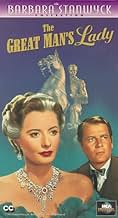
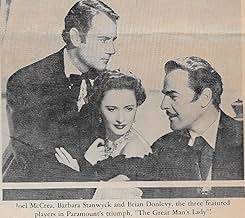
Joel McCrea and Barbara Stanwyck made six films together, the most they did respectively with other leads. The Great Man's Lady while not the best example of their joint work is certainly one interesting if somewhat incredible film.
I can certainly see what attracted Stanwyck to a role that was part Maytime and part any number of Edna Ferber like tales of empire builders. Stanwyck is certainly a better actress than Jeanette MacDonald and she really does carry off the part of the 107 year old pioneer woman who is telling a young reporter about her most interesting life.
Like in Cimarron, McCrea and Stanwyck start out for the west in the 1840s in search of opportunity and like in Cimarron the woman is being taken from a life of ease and comfort to become a pioneer. The film shows how very useful she was to him.
Albeit even with her conservative politics in real life, Stanwyck was a feminist icon and in the 19th century without even the right to vote, women held a far different position than they do legally now. What help she renders to McCrea is on the unofficial side. But as the story unfolds she contributes mightily to his rise to fame and power and sacrifices EVERYTHING for him.
I'd like to give the film a higher rating, but the thing that totally throws me is the part her father plays in her ultimate decision. Thurston Hall is Stanwyck's father and he's a typical robber baron of the era. But I can't see any father asking his daughter to do what she did for business reasons. It makes the whole story quite bizarre.
McCrea and Stanwyck liked each other personally and professionally. In Tony Thomas's book about Joel McCrea based on interviews he did with him in the Eighties, McCrea said that Barbara Stanwyck was his favorite leading lady. She was thoroughly professional and helpful to every other cast member in any film she was in. He had no qualms in saying that The Great Man's Lady is her film all the way.
It's far from her best film, but for Barbara Stanwyck fans it's one of her best performances.
I can certainly see what attracted Stanwyck to a role that was part Maytime and part any number of Edna Ferber like tales of empire builders. Stanwyck is certainly a better actress than Jeanette MacDonald and she really does carry off the part of the 107 year old pioneer woman who is telling a young reporter about her most interesting life.
Like in Cimarron, McCrea and Stanwyck start out for the west in the 1840s in search of opportunity and like in Cimarron the woman is being taken from a life of ease and comfort to become a pioneer. The film shows how very useful she was to him.
Albeit even with her conservative politics in real life, Stanwyck was a feminist icon and in the 19th century without even the right to vote, women held a far different position than they do legally now. What help she renders to McCrea is on the unofficial side. But as the story unfolds she contributes mightily to his rise to fame and power and sacrifices EVERYTHING for him.
I'd like to give the film a higher rating, but the thing that totally throws me is the part her father plays in her ultimate decision. Thurston Hall is Stanwyck's father and he's a typical robber baron of the era. But I can't see any father asking his daughter to do what she did for business reasons. It makes the whole story quite bizarre.
McCrea and Stanwyck liked each other personally and professionally. In Tony Thomas's book about Joel McCrea based on interviews he did with him in the Eighties, McCrea said that Barbara Stanwyck was his favorite leading lady. She was thoroughly professional and helpful to every other cast member in any film she was in. He had no qualms in saying that The Great Man's Lady is her film all the way.
It's far from her best film, but for Barbara Stanwyck fans it's one of her best performances.
Confused Romance
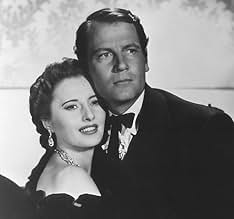
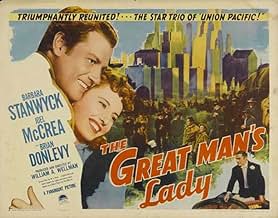
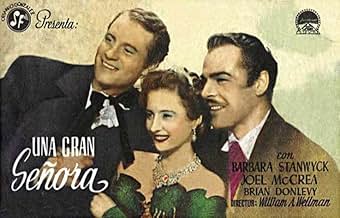
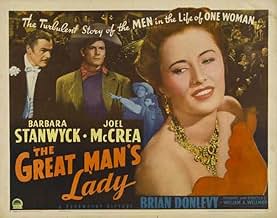
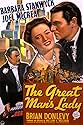
When the statue of the founder of Hoyt City, Ethan Hoyt (Joel McCrea) is dedicated, the sensationalist reporters and a biographer (Katharine Stevens) head to the house of the one hundred year-old Hannah Sempler (Barbara Stanwyck), where Ethan died, to know the relationship between them. Ms. Hannah sends them all out but the lady. Then she tells her life since she was a teenager and felt in love with the pioneer Ethan.
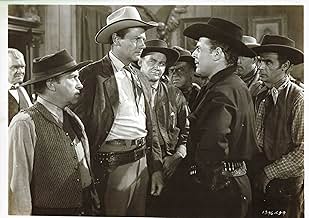
In 1848, in Philadelphia, Ethan dreams on building Hoyt City, but he needs financiers and influent people to change the route of the railroad. Hannah decides to leave her upper-class father and marries with Ethan. Eight years later, she meets the gambler Steely Edwards (Brian Donlevy) and they become close friends. When Ethan discovers silver, Steely lends money to Hannah with the condition that she does not go to the mines with Ethan. Along the years, Ethan becomes rich and far from Hannah that he believes had died in a flood. Years later, they meet each other again in Hoyt City but their love is doomed since Ethan has raised a family of his own.
"The Great Man's Lady" is a classic with some of my favorite directors (William A. Wellman), actresses (Barbara Stanwyck) and actors (Joel McCrea and Brian Donlevy); and haunting music score by Victor Young. Unfortunately the story is a confused romance with a not well-explained triangle of love. I did not understand the quote "spring never comes again", since spring returns every year. My vote is six.
Title (Brazil): "Até Que a Morte nos Separe" ("Till Death Do Us Apart")
In 1848, in Philadelphia, Ethan dreams on building Hoyt City, but he needs financiers and influent people to change the route of the railroad. Hannah decides to leave her upper-class father and marries with Ethan. Eight years later, she meets the gambler Steely Edwards (Brian Donlevy) and they become close friends. When Ethan discovers silver, Steely lends money to Hannah with the condition that she does not go to the mines with Ethan. Along the years, Ethan becomes rich and far from Hannah that he believes had died in a flood. Years later, they meet each other again in Hoyt City but their love is doomed since Ethan has raised a family of his own.
"The Great Man's Lady" is a classic with some of my favorite directors (William A. Wellman), actresses (Barbara Stanwyck) and actors (Joel McCrea and Brian Donlevy); and haunting music score by Victor Young. Unfortunately the story is a confused romance with a not well-explained triangle of love. I did not understand the quote "spring never comes again", since spring returns every year. My vote is six.
Title (Brazil): "Até Que a Morte nos Separe" ("Till Death Do Us Apart")
SUPER REVIEWER
With the dedication of a statue in honor of the late great Ethan Hoyt(Joel McCrea) happening in the city which bears his name, reporters from all over rush to the home of Hannah Sempler(Barbara Stanwyck), rumored to have once been married to him, to get her opinion and answers to all of their questions. But without giving any meaningful responses, she chases them away. However, one young woman(Katharine Stevens) remains, desperately wanting to write a biography about Hoyt. Hannah brusquely tells her to come back in a hundred years when they are both old women but reconsiders, taking pity on her to start her story when she was a young woman in Philadelphia in 1848 when she runs away with Hoyt to avoid being married to Mr. Cadwallader(Lloyd Corrigan). Aided by excellent performances, especially Brian Donlevy in support, "The Great Man's Lady" is a very entertaining and touching tribute to those pioneers who thought big in building this country from the ground up and sacrificed much along the way. While smartly advocating for privacy and the public need not know every detail, the movie takes the Great Man Theory down a notch by commenting blithely that they could not have done it alone, as dreamers always need a partner to ground them to reality in order for them to fully succeed.(It does not hurt if she can handle a hunting rifle, like Hannah can.) And it is not just feminism that puts this movie far ahead of its time, as it is filmed innovatively with a stunning opening sequence that begins with a shot of the house before panning wider to reveal the city that has risen up around it. Sound familiar?


Did you know
- TriviaFifth of six film collaborations between Barbara Stanwyck and Joel McCrea.
- GoofsWhen the Hoyts stand at the sight of their future city, they're at the foot of a hill, but moments later they're on top of a hill.
- ConnectionsFeatured in Biography: Barbara Stanwyck: Straight Down the Line (1997)
- SoundtracksUnfinished Symphony
("Symphony 8 in B Major") (uncredited)
Composed by Franz Schubert (begun 1822)
Heard on soundtrack during Janet and Ethan's farewell and under end title
- How long is The Great Man's Lady?Powered by Alexa
Details
- Runtime
- 1h 30m(90 min)
- Color
- Aspect ratio
- 1.37 : 1
Contribute to this page
Suggest an edit or add missing content