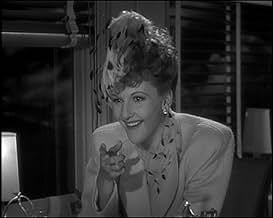
A Paramount Studios security guard who was a major actor during the silent film era must carry out the illusion that he is still a big deal when his sailor son comes to visit.A Paramount Studios security guard who was a major actor during the silent film era must carry out the illusion that he is still a big deal when his sailor son comes to visit.A Paramount Studios security guard who was a major actor during the silent film era must carry out the illusion that he is still a big deal when his sailor son comes to visit.
- Nominated for 2 Oscars
- 1 win & 2 nominations total
6.6722
1
2
3
4
5
6
7
8
9
10
Featured reviews
Doing It For Defense
Betty Hutton, one of the nominal stars of Star Spangled Rhythm, was not just doing it for defense as in her number, but the whole studio was doing this All Star flag waver for the defense of the morale of the USA.
I can never resist one of these all star spectaculars and there's only one I would ever have given a bad review to, and this isn't the one. Everybody working on the Paramount lot got to do his bit for defense in this film, some bits being longer than others.
The nominal plot of this film has Betty Hutton as a switchboard girl at Paramount studios and Victor Moore, a former silent western star, now working as a security guard at the studio trying to convince Eddie Bracken and a bunch of his sailor buddies that Moore is really the head of the studio. For that they have to con and bamboozle Walter Abel who is a real studio executive out of his office and off the lot so they can do their masquerade uninterrupted.
Of course Bracken asks the inevitable, pop can you get all these stars down for a big Navy show, and the con has to continue. But all of this nonsense is just an excuse for some musical and comedy numbers by the Paramount players.
Harold Arlen and Johnny Mercer wrote the score and out of it came two really big standards, That Old Black Magic which was nominated for Best Song that year, but lost to another Paramount film song, White Christmas and Hit the Road to Dreamland.
The latter was done as director Preston Sturges was playing himself and screening a musical number from his latest film. As the projector rolls on screen it's Dick Powell and Mary Martin on a Pullman car singing about finally hitting the hay after some romance. The scene is so well done I wish it was included as an integral part of a real film.
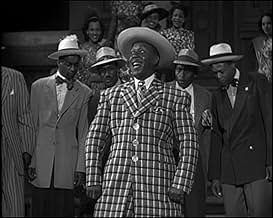
That Old Black Magic is sung by Johnny Johnson and danced by ballet star Vera Zorina. It was enormous hit that year, recorded by a flock of singers. Oddly enough not by Bing Crosby though he got to sing it in another film, Here Come the Waves.
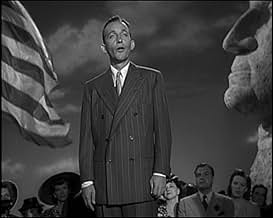
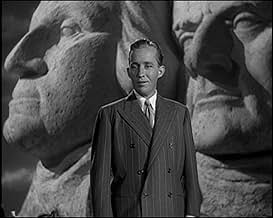
Of course the finale is a wartime flag waving number with Bing Crosby singing Old Glory about the flag and the wonders of the country behind it. The number about the flag probably wouldn't fly today still and that's a pity.
It's even more of a pity that these musical extravaganzas are a thing of the past with the decline of the Hollywood studio system. Star Spangled Rhythm is one of the best of its kind.
I can never resist one of these all star spectaculars and there's only one I would ever have given a bad review to, and this isn't the one. Everybody working on the Paramount lot got to do his bit for defense in this film, some bits being longer than others.
The nominal plot of this film has Betty Hutton as a switchboard girl at Paramount studios and Victor Moore, a former silent western star, now working as a security guard at the studio trying to convince Eddie Bracken and a bunch of his sailor buddies that Moore is really the head of the studio. For that they have to con and bamboozle Walter Abel who is a real studio executive out of his office and off the lot so they can do their masquerade uninterrupted.
Of course Bracken asks the inevitable, pop can you get all these stars down for a big Navy show, and the con has to continue. But all of this nonsense is just an excuse for some musical and comedy numbers by the Paramount players.
Harold Arlen and Johnny Mercer wrote the score and out of it came two really big standards, That Old Black Magic which was nominated for Best Song that year, but lost to another Paramount film song, White Christmas and Hit the Road to Dreamland.
The latter was done as director Preston Sturges was playing himself and screening a musical number from his latest film. As the projector rolls on screen it's Dick Powell and Mary Martin on a Pullman car singing about finally hitting the hay after some romance. The scene is so well done I wish it was included as an integral part of a real film.
That Old Black Magic is sung by Johnny Johnson and danced by ballet star Vera Zorina. It was enormous hit that year, recorded by a flock of singers. Oddly enough not by Bing Crosby though he got to sing it in another film, Here Come the Waves.
Of course the finale is a wartime flag waving number with Bing Crosby singing Old Glory about the flag and the wonders of the country behind it. The number about the flag probably wouldn't fly today still and that's a pity.
It's even more of a pity that these musical extravaganzas are a thing of the past with the decline of the Hollywood studio system. Star Spangled Rhythm is one of the best of its kind.
What Twisted Webs We Weave When We Try To Deceive
Eddie Bracken is in the Navy. His dad (Victor Moore--aka Bronco Billy) is a guard at Paramount but has told him he is head of the studio. His girl (Betty Hutton who he has never met) does her part to keep the deception going. When Eddie gets shore leave with his buddies they naturally want to go to the studio and then the fun begins as the attempts at keeping the deception going get more involved and intricate up to the point where dad agrees to hold a show for the whole ship.
No question that this movie was to be patriotic and to showcase Paramount stars. This is a good vehicle for it. You get a chance to glimpse studio life in its' various forms and to see many stars of the time perform brief numbers. Yet the stars don't overwhelm the story.
Some very funny scenes such as when Betty wants to get into the studio by climbing over a wall and during the show for the ship's men there is an absolutely hilarious sketch with men showing how women act when they get together for an evening of playing cards. There is also a great sketch where Bob Hope is trying to hide from William Bendix and he has to do it while Bendix is taking a shower with Bob in the shower with him! A nice light-hearted movie with good entertainment.
No question that this movie was to be patriotic and to showcase Paramount stars. This is a good vehicle for it. You get a chance to glimpse studio life in its' various forms and to see many stars of the time perform brief numbers. Yet the stars don't overwhelm the story.
Some very funny scenes such as when Betty wants to get into the studio by climbing over a wall and during the show for the ship's men there is an absolutely hilarious sketch with men showing how women act when they get together for an evening of playing cards. There is also a great sketch where Bob Hope is trying to hide from William Bendix and he has to do it while Bendix is taking a shower with Bob in the shower with him! A nice light-hearted movie with good entertainment.
Star Spangled Rhythm- Let's Hear it for Paramount **1/2
Paramount produced a cavalcade of stars in this traditional World War 11 patriotic film dealing with the situations that ensue when an attendant at Paramount Studios tries to impress his navy son by claiming that he is a studio mogul.
Naturally, this evolves into situations too numerous to speak of here.
Victor Moore is the father and Eddie Bracken stars as the son. Bette Hutton is marvelous as Bracken's girlfriend and the ensemble cast at Paramount are terrific when putting on a show for the navy.
You have to feel for Walter Abel, a mogul who is victimized in the scheme of Hutton and Moore.
Add 1/2* for Bing Crosby's patriotic song ending.
Naturally, this evolves into situations too numerous to speak of here.
Victor Moore is the father and Eddie Bracken stars as the son. Bette Hutton is marvelous as Bracken's girlfriend and the ensemble cast at Paramount are terrific when putting on a show for the navy.
You have to feel for Walter Abel, a mogul who is victimized in the scheme of Hutton and Moore.
Add 1/2* for Bing Crosby's patriotic song ending.
An uneven ride
At best, 1942 was a year of confusion because of World War Two. Perhaps that is why the movie is uneven. The movie was released before the first anniversary of the attack on Pearl Harbor which drew the United States into the war as a legal active participant. The purpose of this film seems two-fold: to entertain in time of war and to provide Paramount with a opportunity to do its part in the war effort in public. There are some extraordinary scenes, such as the dance number in the aircraft plant and Betty Hutton's singing during a jeep ride. In general, however, the movie promises more than it delivers, and the scene with Bing Crosby singing of "Old Glory" in front of Mount Rushmore (with a patriotic chorus) is simply too jingoistic. One bright result is the Bracken-Hutton screen relationship in this movie which blossomed into very good comedy in a later film, "The Miracle of Morgan's Creek."
A treat for any fan of Hollywood's golden age.
In the 1930s and 40s, most of the major studios made films that featured a variety show, of sorts, with the contract stars. MGM struck gold with this in the early sound film "The Hollywood Review of 1929" and this film set the stage for quite a few followup films. This sort of film became especially popular during WWII, as these films were often sent overseas to entertain the troops--such as "Hollywood Canteen" and "Star Spangled Rhythm". "Star Spangled Rhythm" is a tad different in that there is more plot than many of these films. In other words, it's not just a variety show and this really doesn't begin until the film is at the half-way point.
The film begins as a sailor (Eddie Bracken) convinces a group of his friends on shore leave to come with him to Paramount Studios, as his father is head of production! However, his dad (Victor Moore) is NOT the boss but a lowly security guard on the lot. Now wanting to get caught, Moore and Betty Hutton (who plays Bracken's VERY energetic girlfriend) work together to convince the sailors (and a Marine they picked up along the way) that Moore indeed is the big kahuna! For me, this is the best part of the film, as the plot is pretty cute and gets funny when the real head of production walks into the middle of this--and thinks he's been replaced! Unfortunately for Moore, the boss finally does realize what's been happening and it looks as if the plan is about to fall apart. However, through some further finagling, Moore and Hutton are able to arrange a show for the servicemen to convince the fellas that nothing is up....that Moore IS a big-shot.
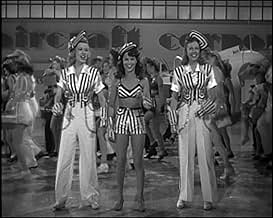
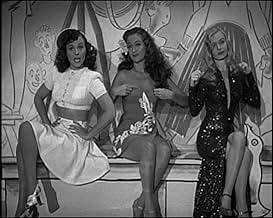
As far as the variety show goes, there are no major surprises but it's nice to see the actors and actresses play themselves in a series of nice cameos. What I actually struck me most about this was how incredibly short Dorothy Lamour, Veronica Lake (I did know she was 'diminutive') and Paulette Goddard were, as they were towered over by the other actresses in the first scene of the variety show. Not surprisingly, the three later sang a number together. In addition to these women, Bob Hope, Bing Crosby, Ray Milland, Franchot Tone, Fred MacMurray and many others were on hand for the show.
In addition to the show, you also get to see some stars walking around the studio lot. A few of these cameos are bizarre--and wonderful for cinephiles like myself. You get a rare role for Cecil B. DeMille and Preston Sturgis as themselves. Plus, in addition to seeing Bing Crosby walking about the lot, his son Gary is with him. I liked this very contrived "behind the scenes" look of the film. Sure, you know this is all for a fictional film, but it's pretty cool if you're into old films like me.
Overall, while not all the variety acts work well, many do. Plus the story that ties them all together is very good. The film may bore some (especially those who know nothing of the classic era in Hollywood), but is a treat for any 1940s film buff.
By the way, although the show is supposed to be done on stage live in front of the sailors, it's very, very obvious many of the acts were performed on a sound stage--with sound stage sets. Just suspend your sense of disbelief at these moments or they might just make your brain hurt! After all, the shower scene is obviously NOT done in front of the men but it is quite funny!
The film begins as a sailor (Eddie Bracken) convinces a group of his friends on shore leave to come with him to Paramount Studios, as his father is head of production! However, his dad (Victor Moore) is NOT the boss but a lowly security guard on the lot. Now wanting to get caught, Moore and Betty Hutton (who plays Bracken's VERY energetic girlfriend) work together to convince the sailors (and a Marine they picked up along the way) that Moore indeed is the big kahuna! For me, this is the best part of the film, as the plot is pretty cute and gets funny when the real head of production walks into the middle of this--and thinks he's been replaced! Unfortunately for Moore, the boss finally does realize what's been happening and it looks as if the plan is about to fall apart. However, through some further finagling, Moore and Hutton are able to arrange a show for the servicemen to convince the fellas that nothing is up....that Moore IS a big-shot.
As far as the variety show goes, there are no major surprises but it's nice to see the actors and actresses play themselves in a series of nice cameos. What I actually struck me most about this was how incredibly short Dorothy Lamour, Veronica Lake (I did know she was 'diminutive') and Paulette Goddard were, as they were towered over by the other actresses in the first scene of the variety show. Not surprisingly, the three later sang a number together. In addition to these women, Bob Hope, Bing Crosby, Ray Milland, Franchot Tone, Fred MacMurray and many others were on hand for the show.
In addition to the show, you also get to see some stars walking around the studio lot. A few of these cameos are bizarre--and wonderful for cinephiles like myself. You get a rare role for Cecil B. DeMille and Preston Sturgis as themselves. Plus, in addition to seeing Bing Crosby walking about the lot, his son Gary is with him. I liked this very contrived "behind the scenes" look of the film. Sure, you know this is all for a fictional film, but it's pretty cool if you're into old films like me.
Overall, while not all the variety acts work well, many do. Plus the story that ties them all together is very good. The film may bore some (especially those who know nothing of the classic era in Hollywood), but is a treat for any 1940s film buff.
By the way, although the show is supposed to be done on stage live in front of the sailors, it's very, very obvious many of the acts were performed on a sound stage--with sound stage sets. Just suspend your sense of disbelief at these moments or they might just make your brain hurt! After all, the shower scene is obviously NOT done in front of the men but it is quite funny!
Did you know
- TriviaVeronica Lake's singing voice was dubbed by Martha Mears.
- GoofsDuring the jeep ride, one of the sailors is thrown out when the vehicle hits a bump and jumps onto a dirt road. The sailor is then shown back in the jeep in the next shot.
- Quotes
[In front of Old Glory and a plaster Mt. Rushmore]
Bing Crosby: [singing] Germans, Italians, and Japs / Can't kick us off our Rand-McNally maps.
- ConnectionsFeatured in Paramount Presents (1974)
- SoundtracksThat Old Black Magic
Music by Harold Arlen
Lyrics by Johnny Mercer
Sung by Johnny Johnston
Danced by Vera Zorina
- How long is Star Spangled Rhythm?Powered by Alexa
Details
Box office
- Gross US & Canada
- $602,500
- Runtime
- 1h 39m(99 min)
- Color
- Aspect ratio
- 1.37 : 1
Contribute to this page
Suggest an edit or add missing content