IMDb RATING
7.2/10
6.4K
YOUR RATING


A devoted secretary risks her life to try to find the elusive woman who may prove her boss didn't murder his selfish wife.A devoted secretary risks her life to try to find the elusive woman who may prove her boss didn't murder his selfish wife.A devoted secretary risks her life to try to find the elusive woman who may prove her boss didn't murder his selfish wife.
- Director
- Writers
- Stars


Aurora Miranda
- Estela Monteiro
- (as Aurora)


Harry Adams
- Courtroom Spectator
- (uncredited)

Robert Bain
- Guitarist
- (uncredited)
Joan Bayley
- Dancer
- (uncredited)
Brandon Beach
- Theatre Party Guest
- (uncredited)

Brooks Benedict
- Theatre Party Guest
- (uncredited)
- Director
- Writers
- All cast & crew
- Production, box office & more at IMDbPro
7.26.3K
1
2
3
4
5
6
7
8
9
10
Featured reviews
Witness wanted
'Phantom Lady' (retitled in my country as 'Witness wanted') is a little gem for anyone who appreciates 1940s film noir. It need not feature any of the big stars (Bogart, Cagney, Laughton, Ladd etc.), because its strengths are its excellent b/w photography and an interesting story that doesn't rely on predictable clichés of the genre.
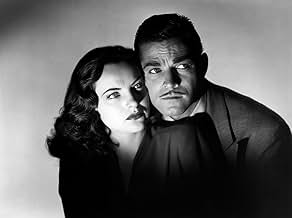
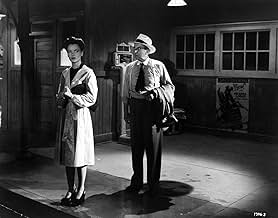
Scott Henderson (Alan Curtis) is arrested for the murder of his wife. He is completely innocent, since he spent the evening at a theater with an unknown woman he invited after he met her at a bar (yes, his marriage has seen better days). But when asked for an alibi, not only that 'phantom lady' has disappeared, also several witnesses deny to have seen him with her. Thus, he's thrown into jail, and only his secretary (Ella Raines) and inspector Burgess (Thomas Gomez) don't give up the investigation. When Marlow (Franchot Tone), an old friend of Henderson, offers his assistance, the investigation is taking up speed, but meanwhile another witness was murdered. How can they defend Henderson without witnesses?
What I liked especially about 'Phantom Lady' is that there is no actual hero. Henderson is giving up, sits in his prison cell all day and doesn't show any hope. It's almost like he wants to be imprisoned for something he didn't do. So it's really the secretary who becomes the central character, driving the search for the real murderer. Quite unusual for the times and well worth watching.
Scott Henderson (Alan Curtis) is arrested for the murder of his wife. He is completely innocent, since he spent the evening at a theater with an unknown woman he invited after he met her at a bar (yes, his marriage has seen better days). But when asked for an alibi, not only that 'phantom lady' has disappeared, also several witnesses deny to have seen him with her. Thus, he's thrown into jail, and only his secretary (Ella Raines) and inspector Burgess (Thomas Gomez) don't give up the investigation. When Marlow (Franchot Tone), an old friend of Henderson, offers his assistance, the investigation is taking up speed, but meanwhile another witness was murdered. How can they defend Henderson without witnesses?
What I liked especially about 'Phantom Lady' is that there is no actual hero. Henderson is giving up, sits in his prison cell all day and doesn't show any hope. It's almost like he wants to be imprisoned for something he didn't do. So it's really the secretary who becomes the central character, driving the search for the real murderer. Quite unusual for the times and well worth watching.
Testing the Limits
So how did the producers get that orgasmic release scene past the censors. Sure, Carol (Raines) and Cliff (Cook) are about ten feet apart as he pounds on the drums while she sways back and forth in total sync, their faces contorted in frenzied delight. There's no guesswork here. It's as close to the real thing as the decade gets, and a masterpiece of simulated ecstasy. I wonder what the set was like while filming this.
The movie's a tight little thriller, helmed by noir master Robert Siodmak. So who is it that's framing architect Henderson (Curtis) for his wife's murder. By golly, the lovelorn Carol is going to find out even if it leads her down every dark, scary street on the studio lot. And once she dons her cheap hep-cat outfit, that's just where she's headed. But it's that frenzied jazz scene with Cliff that steals the show. Everything after seems something of an anti-climax. However, be sure to catch that beautifully modulated scene where Carol plies the emotionally disturbed Ann (Helm) for access to the incriminating ladies' hat. It's poignantly done, especially by actress Helm.
No doubt, this is one of the noir highpoints of the period, with dark symbolism and atmospheric shadows aplenty. Also, Raines gives a winning performance as the unstoppable Carol, while Tone wisely refuses to go over the top as the psychopath. On the other hand, it's a good thing we don't see much of Curtis in both a badly written and dimly performed part. I'm guessing Siodmak cared little how that particularly conventional role came across. Anyway, for fans of 40's noir, this Universal programmer remains a must-see.
The movie's a tight little thriller, helmed by noir master Robert Siodmak. So who is it that's framing architect Henderson (Curtis) for his wife's murder. By golly, the lovelorn Carol is going to find out even if it leads her down every dark, scary street on the studio lot. And once she dons her cheap hep-cat outfit, that's just where she's headed. But it's that frenzied jazz scene with Cliff that steals the show. Everything after seems something of an anti-climax. However, be sure to catch that beautifully modulated scene where Carol plies the emotionally disturbed Ann (Helm) for access to the incriminating ladies' hat. It's poignantly done, especially by actress Helm.
No doubt, this is one of the noir highpoints of the period, with dark symbolism and atmospheric shadows aplenty. Also, Raines gives a winning performance as the unstoppable Carol, while Tone wisely refuses to go over the top as the psychopath. On the other hand, it's a good thing we don't see much of Curtis in both a badly written and dimly performed part. I'm guessing Siodmak cared little how that particularly conventional role came across. Anyway, for fans of 40's noir, this Universal programmer remains a must-see.
The most suggestive 'sex scene' in '40s films.
Film students and fans of film noir always hear about PHANTOM LADY and now that I've seen it I'm inclined to report that it's overrated. Though the premise is initially intriguing, it quickly accumulates so many plot holes that you instantly figure out who the murderer is. But this is an exercise in style, not content. Director Robert Siodmak saved the film by giving visual distinction to a poor script.
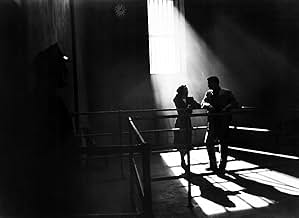
His training in the German Expressionist style makes for very striking images thoughout despite the low budget: dramatic contrasts between light and dark with simple, strong lighting effects never fail to provide interest and tension. And he goes a long way in suggesting the ethnic and racial mix of New York City in 1944 by his offbeat choice of extras and supporting players, most of whom are not the types you see in movies of the time. And the set of sculptor Franchot Tone's apartment complete with furniture and busts would be the envy of many a Soho or Tribeca resident in 2004.
In the lead, Ella Raines looks rather like a poor man's Gene Tierney. She is attractive and likable and you have no trouble maintaining interest in her, but she doesn't have much acting range, at least at this point in her career. Franchot Tone does a very professional job in an impossibly sketchy and ludicrous part, and Thomas Gomez is okay as the detective. As the wronged man, Alan Curtis provides his own visual interest via a strong jaw and broad shoulders, and an occasional hint of surliness makes his character more interesting.
But as others have indicated here, the single most surprising and effective scene is one where horny drummer Elisha Cook, Jr. takes Ella Raines to an after hours dive to show her what he's made of. Equating jazz and especially drumming with hot sex, Siodmak cross cuts between Cook's orgasmic frenzy at the drums (complete with a closeup insert of his crotch) with Ella seemingly transported as well, giving him the come-on, urging him to climax. It's the most overtly sexual scene I've ever seen in a '40s film and it's one you shouldn't miss.
His training in the German Expressionist style makes for very striking images thoughout despite the low budget: dramatic contrasts between light and dark with simple, strong lighting effects never fail to provide interest and tension. And he goes a long way in suggesting the ethnic and racial mix of New York City in 1944 by his offbeat choice of extras and supporting players, most of whom are not the types you see in movies of the time. And the set of sculptor Franchot Tone's apartment complete with furniture and busts would be the envy of many a Soho or Tribeca resident in 2004.
In the lead, Ella Raines looks rather like a poor man's Gene Tierney. She is attractive and likable and you have no trouble maintaining interest in her, but she doesn't have much acting range, at least at this point in her career. Franchot Tone does a very professional job in an impossibly sketchy and ludicrous part, and Thomas Gomez is okay as the detective. As the wronged man, Alan Curtis provides his own visual interest via a strong jaw and broad shoulders, and an occasional hint of surliness makes his character more interesting.
But as others have indicated here, the single most surprising and effective scene is one where horny drummer Elisha Cook, Jr. takes Ella Raines to an after hours dive to show her what he's made of. Equating jazz and especially drumming with hot sex, Siodmak cross cuts between Cook's orgasmic frenzy at the drums (complete with a closeup insert of his crotch) with Ella seemingly transported as well, giving him the come-on, urging him to climax. It's the most overtly sexual scene I've ever seen in a '40s film and it's one you shouldn't miss.
so this movie...
This isn't the best film noir but in a way it's quintessential in this way: I saw this years ago, and I have such a hazy memory that it's almost like I didn't see it... I think (?) It's the kind of movie I used to throw on really late at night like at 2 AM and I might watch all of it or some of it and then the rest the next day, and it has the kind of film noir plot and execution that it blends into many other film noirs. I don't mean to say that as a put down or to its detriment, but this fits so well into how this mood and feel work involving murder and a woman-who-wasn't-there (or seemingly never was) and a mystery to find the missing woman and all of the twists and turns therein.
It might be because it doesn't have the top shelf cast of some of the other movies of the period - there's no Barbara Stanwyck or Robert Mitchum or Edward G Robinson or Burt Lancaster or Glenn Ford or the list goes on - and yet I don't remember anyone here being so bad or off-putting that I had to turn it off or felt like I didn't get my VHS rental's worth. Siodmak's a quality director, and this is clearly the forerunner to what he would perfect with The Killers and Criss Cross. I'm sure I should see it again so I can solidify my opinion of it, but in a way I think it's fitting that it's half-forgotten - it's almost like the way that the characters find themselves in this story, a mystery to track down something buried away and not wanting to be found.
Or something.
It might be because it doesn't have the top shelf cast of some of the other movies of the period - there's no Barbara Stanwyck or Robert Mitchum or Edward G Robinson or Burt Lancaster or Glenn Ford or the list goes on - and yet I don't remember anyone here being so bad or off-putting that I had to turn it off or felt like I didn't get my VHS rental's worth. Siodmak's a quality director, and this is clearly the forerunner to what he would perfect with The Killers and Criss Cross. I'm sure I should see it again so I can solidify my opinion of it, but in a way I think it's fitting that it's half-forgotten - it's almost like the way that the characters find themselves in this story, a mystery to track down something buried away and not wanting to be found.
Or something.
One Thing Bothered Me
I'll admit that I like a certain degree of plausibility in films. Thus, it was hard for me to totally embrace this movie after watching the scene in which the husband (Alan Curtis) comes home to his darkened apartment and calls out for his wife, wondering where she is,unaware that detectives were there waiting for him. It was obvious that Curtis expected the wife to be home, not to mention alive, yet the detectives never took this into consideration. If you strangled your spouse, would you return home later and call out for her? Besides, who could have tipped off the detectives that a murder had occurred? OK, if you get by these sore spots, you'll find a well-made film noir that is worth watching.


Did you know
- TriviaThe elusive phantom lady being sought by Carol "Kansas" Richman (Ella Raines), is repeatedly referenced as "Miss Terry" (i.e., "mystery").
- GoofsCliff's (Elisha Cook Jr.) "drumming" at no time matches the drums on the soundtrack.
- Quotes
Cliff: You and I are going to have fun tonight, Jeannie! You like jive?
Carol Richman: You bet! I'm a hep kitten!
- ConnectionsFeatured in CSI: Crime Scene Investigation: A Night at the Movies (2003)
- SoundtracksI'll Remember April
(uncredited)
Music by Gene de Paul
Lyrics by Patricia Johnston & Don Raye
[played during opening credits and throughout the movie]
- How long is Phantom Lady?Powered by Alexa
Details
- Release date
- Country of origin
- Languages
- Also known as
- La dama fantasma
- Filming locations
- Production company
- See more company credits at IMDbPro
- Runtime
- 1h 27m(87 min)
- Color
- Aspect ratio
- 1.33 : 1
Contribute to this page
Suggest an edit or add missing content