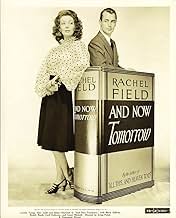
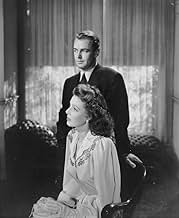
A wealthy woman who lost her hearing to meningitis meets a doctor who is concocting a serum that will cure deafness.A wealthy woman who lost her hearing to meningitis meets a doctor who is concocting a serum that will cure deafness.A wealthy woman who lost her hearing to meningitis meets a doctor who is concocting a serum that will cure deafness.
- Director
- Writers
- Stars
Bobby Barber
- Mill Worker
- (uncredited)
Charles Bates
- Frightened Boy
- (uncredited)
Conrad Binyon
- Bobby
- (uncredited)
Harry C. Bradley
- Episcopalian Minister
- (uncredited)
Leo Bulgakov
- Jan Vankovitch
- (uncredited)
George M. Carleton
- Meeker
- (uncredited)
Ann Carter
- Emily - Age 7
- (uncredited)
Anthony Caruso
- Peter Gallo
- (uncredited)
Russ Clark
- Patient
- (uncredited)
Mae Clarke
- Receptionist
- (uncredited)
- Director
- Writers
- All cast & crew
- Production, box office & more at IMDbPro
6.8505
1
2
3
4
5
6
7
8
9
10
Featured reviews
Incredible cast!
Although she got second billing to Ladd, Young's articulate smooth projection of her character shines in this movie. Ladd probably got the top spot because in 1944 all men were fighting overseas leaving the women to make up the majority of the audience. Still, his portrayal is very believable as one who has humble beginnings yet rises in the class structure while still showing rough edges. The poor boy and rich girl theme is not as boring as it seems. The Ladd-Young interaction works well as their characters develop a reluctant caring for one another.
The supporting cast and crew represent a Hollywood Who's Who at the time. Beulah Bondi is one of the great supporting actors of the 30s and 40s. Her appearances while cameo always added depth to her films. Susan Hayward is superb as the brash assertive sister. One could go on: Barry Sullivan with his mellow distinctive voice; costumes by Edith Head, one of the great ladies of Hollywood; music by Victor Young.
Yes, the movie is dated. The Great Depression looms in the background. But that is also its strength. Seldom was the Depression ever directly mentioned in the cinema. It truly was one of the most formative experiences of American life because it affected the entire population. While class envy always existed in our collective culture class hatred never engendered much support. This movie touches on this with sophistication.
The supporting cast and crew represent a Hollywood Who's Who at the time. Beulah Bondi is one of the great supporting actors of the 30s and 40s. Her appearances while cameo always added depth to her films. Susan Hayward is superb as the brash assertive sister. One could go on: Barry Sullivan with his mellow distinctive voice; costumes by Edith Head, one of the great ladies of Hollywood; music by Victor Young.
Yes, the movie is dated. The Great Depression looms in the background. But that is also its strength. Seldom was the Depression ever directly mentioned in the cinema. It truly was one of the most formative experiences of American life because it affected the entire population. While class envy always existed in our collective culture class hatred never engendered much support. This movie touches on this with sophistication.
Unusual Pairing and Venue
This is a decent quality movie overall with some good people, some surprising to see together. That's the way I felt about Loretta Young and Alan Ladd. Somehow, Ms. Young came off kind of awkward in appearance here, perhaps partially due to compensations having to be made for the difference in height between the two leads. But she seemed less graceful overall than I've ever seen her, even in a lot of the costumes. As mentioned, this is a departure for Ladd in type and he's good enough doing what he did, but not 100% for the pairing. He seemed to be mocking and scoffing at Emily all the way through, despising her really rather extremely and then suddenly he's in love with her. Not so smooth a transition. Yet, I enjoyed some of it, but it was just too choppy between them overall. The ending was unforgivable. Ms. Young's automatic speaking of the title phrase was so flat and inept as was the following kiss, with Ladd looking like he was lying in her lap with his head on her chest. Just so awkward.
The rest of it was smooth enough, if not redeeming of the angst created by the above. Barry Sullivan was in very good looks here, Susan Hayward doing a good enough job. Ms. Bondi, as always, provided quality and authenticity in her unusual role as a society matron. Cecil Kellaway was wonderful. Maybe another try at some future date.
Well-acted drama similar to Dark Victory
I don't usually like Loretta Young, but I admit when actors or actresses I don't care for give objectively good performances. Loretta plays a deaf woman, ill with meningitis, and she's very good. Her eyes are glued to her fellow actors' lips, and when they turn away from her for a moment, she gets a bewildered look on her face until they return to face her. She wipes the fear and shame away and asks, even though it humiliates her to do it, them to repeat themselves. It's very realistic and natural.
When she falls ill, Loretta breaks her engagement to Barry Sullivan, so that his quality of life isn't diminished for having to care for a sick person. Alan Ladd, a new, unknown doctor, wants to experiment on Loretta to see if he can cure her, and in the many months of the treatment, Barry falls in love with Loretta's sister, Susan Hayward.
And Now Tomorrow is very similar to Dark Victory, so if you liked one, there's a good chance you'll like the other. Part medical drama, part love story, and chalk full of beautiful clothes from Edith Head, this is an overlooked classic that's great to watch with a bowl of popcorn on a rainy afternoon.
When she falls ill, Loretta breaks her engagement to Barry Sullivan, so that his quality of life isn't diminished for having to care for a sick person. Alan Ladd, a new, unknown doctor, wants to experiment on Loretta to see if he can cure her, and in the many months of the treatment, Barry falls in love with Loretta's sister, Susan Hayward.
And Now Tomorrow is very similar to Dark Victory, so if you liked one, there's a good chance you'll like the other. Part medical drama, part love story, and chalk full of beautiful clothes from Edith Head, this is an overlooked classic that's great to watch with a bowl of popcorn on a rainy afternoon.
believable love story
Doctor Merek Vance returns to his hometown of Blairtown. He originally comes from the bad side of town and has a big grudge against the richest family in town. But then the deaf daughter of this family comes to him for treatment, which puts him in a dilemma. Partly because he has found a drug that can cure deafness.
At first the two do not get along very well but gradually something blossoms between them, the problem is that she already has a fiancé.
The strong point of the film is that more than enough time is spent on the character development of the two characters so that their love story seems credible, Derek initially has little respect for the rich family and Emily finds him rude , but gradually she learns to appreciate him more and more.
The chemistry between the two characters is strong and they play their roles ve.
At first the two do not get along very well but gradually something blossoms between them, the problem is that she already has a fiancé.
The strong point of the film is that more than enough time is spent on the character development of the two characters so that their love story seems credible, Derek initially has little respect for the rich family and Emily finds him rude , but gradually she learns to appreciate him more and more.
The chemistry between the two characters is strong and they play their roles ve.
melodrama made more interesting by the caliber of the actors
Loretta Young has lost her hearing due to a bout of meningitis. She meets a hollywood handsome doctor who has decided to try to cure her. He falls for her beautiful self, only thing is she's engaged to a man she loves. Unbeknownst to her the fiancé has fallen in love with her sister. Also unbeknownst to her she has fallen for the doctor. This is a melodrama made more interesting by the caliber of the actors, especially Susan Hayward.
Did you know
- TriviaOne of over 700 Paramount Productions, filmed between 1929 and 1949, which were sold to MCA/Universal in 1958 for television distribution, and have been owned and controlled by Universal ever since. Its earliest documented telecast took place in Boston Saturday 11 October 1958 on WBZ (Channel 4); it first aired in Phoenix Thursday 12 February 1959 on KVAR (Channel 12), followed by Milwaukee 16 May 1959 on WITI (Channel 6), by Minneapolis 7 July 1959 on WTCN (Channel 11), by Asheville 30 August 1959 on WLOS (Channel 13), by Pittsburgh 8 October 1959 on KDKA (Channel 2), by Omaha 2 November 1959 on KETV (Channel 7), by both Denver and Johnstown 19 November 1959 on KBTV (Channel 9) & WJAC (Channel 6), by St. Louis 11 December 1959 on KMOX (Channel 4), and by Detroit 18 December 1959 on WJBK (Channel 2). It was released on DVD 1 March 2016 as part of the Universal Vault Series.
- Quotes
Emily Blair: You're not very polite this afternoon, are you?
Doctor Merek Vance: About average for me, Miss Blair, about average.
- ConnectionsFeatured in The 67th Annual Academy Awards (1995)
- How long is And Now Tomorrow?Powered by Alexa
Details
- Release date
- Country of origin
- Language
- Also known as
- Prisoners of Hope
- Filming locations
- Paramount Ranch - 2813 Cornell Road, Agoura, California, USA(Portions of Midwestern street area as Blairstown - library, doctors office and business storefront)
- Production company
- See more company credits at IMDbPro
- Runtime
- 1h 26m(86 min)
- Color
- Aspect ratio
- 1.37 : 1
Contribute to this page
Suggest an edit or add missing content