IMDb RATING
5.9/10
2.3K
YOUR RATING

In Paris, an artist hires portrait models, and after he finishes their portraits, he strangles them.In Paris, an artist hires portrait models, and after he finishes their portraits, he strangles them.In Paris, an artist hires portrait models, and after he finishes their portraits, he strangles them.
- Director
- Writers
- Stars
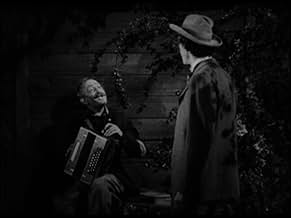
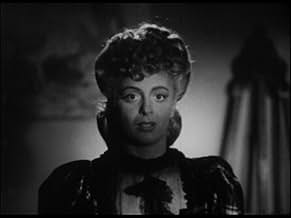


Ludwig Stössel
- Jean Lamarte
- (as Ludwig Stossel)


Harry Cording
- Policeman
- (uncredited)

Frank Darien
- Inquiry Judge
- (uncredited)

Bess Flowers
- Courtroom Spectator
- (uncredited)

Mabel Forrest
- Woman
- (unconfirmed)
- (uncredited)

Eddie Hall
- Paul
- (uncredited)
- Director
- Writers
- All cast & crew
- Production, box office & more at IMDbPro
5.92.3K
1
2
3
4
5
6
7
8
9
10
Featured reviews
Poverty Row Pearl
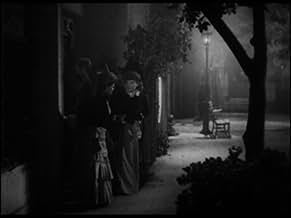
A PRC poverty row production that makes the most of its limited budget. A lot of credit should go to production designers Eugene Shufftan and Edgar Ulmer who collaborated on the movie's sumptuous look. Even when the middle part drags, the visuals remain arresting. Note too how the meagre exterior sets are stylized to make up for the limitations. Of course, cult director Ulmer was no stranger to transforming army surplus material into artistic effects. The overall result is an atmospheric recreation of 19th century Paris.
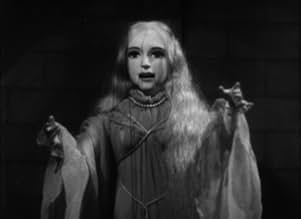
Making Carradine's Bluebeard a puppeteer is a novel and interesting wrinkle. Then too, I can't help thinking there is more plot potential in continuing with Bluebeard the puppet master than in shifting the story line over to Bluebeard the painter, as the screenplay does. Nonetheless, those early scenes in the park are good ones. However, the cadaverous actor who can be as florid and intense as anyone seems a little too understated here. While physically he looks the part of the grim reaper, Carradine is simply no good as a simpering lover, while too many of his scenes lack the menace the role calls for. Unfortunately, the result compares unfavorably, for example, with Laird Cregar's riveting Jack the Ripper in that Gothic thriller The Lodger of the same year. It appears Ulmer is much more the visual artist than the thespic coach.
Nonetheless, the movie remains an interesting curiosity. Consider the sheer wackiness of presenting Iris Adrian whose cheap Brooklyn accent can barely be disguised as a Parisian. Still, it does amount to an amusing turn. Also, note the off-angle camera staging of Carradine's flashback sequence, which is both effective in identifying the sequence and artfully composed. Such camera effects were hardly a Hollywood staple at a time when producers generally felt they would confuse the audience.
Of course, there's the question that always arises for fans of Ulmer. What would he have done with an A-budget and A-material in a career spent in the lower depths of Hollywood production. Hard to say-- perhaps he needed the challenge of PRC-type constraints. However, I think it's fair to say that none of his poverty row productions are without genuine points of interest and entertainment, and-- as is the case with Bluebeard-- may even rise at times to artistic levels.
Making Carradine's Bluebeard a puppeteer is a novel and interesting wrinkle. Then too, I can't help thinking there is more plot potential in continuing with Bluebeard the puppet master than in shifting the story line over to Bluebeard the painter, as the screenplay does. Nonetheless, those early scenes in the park are good ones. However, the cadaverous actor who can be as florid and intense as anyone seems a little too understated here. While physically he looks the part of the grim reaper, Carradine is simply no good as a simpering lover, while too many of his scenes lack the menace the role calls for. Unfortunately, the result compares unfavorably, for example, with Laird Cregar's riveting Jack the Ripper in that Gothic thriller The Lodger of the same year. It appears Ulmer is much more the visual artist than the thespic coach.
Nonetheless, the movie remains an interesting curiosity. Consider the sheer wackiness of presenting Iris Adrian whose cheap Brooklyn accent can barely be disguised as a Parisian. Still, it does amount to an amusing turn. Also, note the off-angle camera staging of Carradine's flashback sequence, which is both effective in identifying the sequence and artfully composed. Such camera effects were hardly a Hollywood staple at a time when producers generally felt they would confuse the audience.
Of course, there's the question that always arises for fans of Ulmer. What would he have done with an A-budget and A-material in a career spent in the lower depths of Hollywood production. Hard to say-- perhaps he needed the challenge of PRC-type constraints. However, I think it's fair to say that none of his poverty row productions are without genuine points of interest and entertainment, and-- as is the case with Bluebeard-- may even rise at times to artistic levels.
Low-budgeted as well as effective picture about an infamous character who knocks off series of beautiful women
Paris ,France , a tormented painter and puppeteer called Gaston Morrell (one of John Carradine's best vehicles) has a psychopatic urge to strangle gorgeous women . As he contacts Parisian women through his paintings posing as models he seduces and eventually kills them in order to carry out his dark purports . Among those getting the ending curtain call from "bluebeard" (is a type of serial killer ; specifically, it is a man who murders his wives or lovers , this type is named after the fictional "Bluebeard") are Francine Lutien , Lucille Lutien and Renee Claremont .
This chiller is based on lady killer Henry-Denise Landru who seduced and murdered several women . The flick realized Noir style packs thrills , chills , drama , suspense and a lot of murders . Good acting by John Carradine as an artist hires portrait models, and after he finishes their portraits, he strangles them . It features John Carradine's own favorite performance . Furthermore , there appears Jean Parker as Lucille Lutien and Nils Asther and Inspector Jacques . And film debut of actress Sonia Sorel -Mrs. John Carradine- , who went on to do several more titles for director Edgar G. Ulmer.
The failure of the original copyright holder to renew the film's copyright resulted in it falling into public domain, meaning that virtually anyone could duplicate and sell a VHS/DVD copy of the film. Therefore, many of the versions of this film available on the market are either severely and usually badly edited and/or of extremely poor quality, having been duplicated from second- or third-generation or more copies of the film . Eugen Schüfftan was actually the director of photography but could not be credited on screen because he was not yet a member of the cinematographer's union . So he was credited as production designer, the job actually done by director Edgar G. Ulmer, while the camera operator Jockey Arthur Feindel was credited as director of photography . This Noir film was professionally directed by Edgar G Ulmer , being filmed in six days . Edgar was born on September 17, 1904 in Olmütz, Moravia, Czech Republic as Edgar George Ulmer. He was a director and writer, known for Satanás (1934), Detour (1945) and People on Sunday (1930) , Aníbal (1959) , The Amazing Transparent Man (1960) , Beyond the Time Barrier (1960) , among others .
Other films dealing with this known character , Henry ¨Bluebeard¨ Landru , -who was really father of various children, disposed and married 11 wives and killed them in order to feed his little family , being subsequently beheaded- , are the followings : ¨Bluebeard¨ (1901) by George Melies ; ¨Monsieur Verdoux¨ (1947) with Charles Chaplin and Martha Ryer ; ¨Bluebeard's 10 honeymoon¨ by W.L. Wilder with George Sanders , Patricia Roc and Corinne Calvet ; ¨Bluebeard¨(1963) by Claude Chabrol with Charles Denner , Stephane Audran , Danielle Darrieux , Michele Morgan and Hildegarde Neff ; soporific remake titled ¨Bluebeard¨(1972) by Edward Dmytryck with Richard Burton, Joey Heatherton , Rachel Welch , Sybil Danning , Natahalie Delon , Virna Lisi ; and ¨¨Bluebeard¨(2009) by Catherine Breillat with Dominique Thomas and Lola Creton .
This chiller is based on lady killer Henry-Denise Landru who seduced and murdered several women . The flick realized Noir style packs thrills , chills , drama , suspense and a lot of murders . Good acting by John Carradine as an artist hires portrait models, and after he finishes their portraits, he strangles them . It features John Carradine's own favorite performance . Furthermore , there appears Jean Parker as Lucille Lutien and Nils Asther and Inspector Jacques . And film debut of actress Sonia Sorel -Mrs. John Carradine- , who went on to do several more titles for director Edgar G. Ulmer.
The failure of the original copyright holder to renew the film's copyright resulted in it falling into public domain, meaning that virtually anyone could duplicate and sell a VHS/DVD copy of the film. Therefore, many of the versions of this film available on the market are either severely and usually badly edited and/or of extremely poor quality, having been duplicated from second- or third-generation or more copies of the film . Eugen Schüfftan was actually the director of photography but could not be credited on screen because he was not yet a member of the cinematographer's union . So he was credited as production designer, the job actually done by director Edgar G. Ulmer, while the camera operator Jockey Arthur Feindel was credited as director of photography . This Noir film was professionally directed by Edgar G Ulmer , being filmed in six days . Edgar was born on September 17, 1904 in Olmütz, Moravia, Czech Republic as Edgar George Ulmer. He was a director and writer, known for Satanás (1934), Detour (1945) and People on Sunday (1930) , Aníbal (1959) , The Amazing Transparent Man (1960) , Beyond the Time Barrier (1960) , among others .
Other films dealing with this known character , Henry ¨Bluebeard¨ Landru , -who was really father of various children, disposed and married 11 wives and killed them in order to feed his little family , being subsequently beheaded- , are the followings : ¨Bluebeard¨ (1901) by George Melies ; ¨Monsieur Verdoux¨ (1947) with Charles Chaplin and Martha Ryer ; ¨Bluebeard's 10 honeymoon¨ by W.L. Wilder with George Sanders , Patricia Roc and Corinne Calvet ; ¨Bluebeard¨(1963) by Claude Chabrol with Charles Denner , Stephane Audran , Danielle Darrieux , Michele Morgan and Hildegarde Neff ; soporific remake titled ¨Bluebeard¨(1972) by Edward Dmytryck with Richard Burton, Joey Heatherton , Rachel Welch , Sybil Danning , Natahalie Delon , Virna Lisi ; and ¨¨Bluebeard¨(2009) by Catherine Breillat with Dominique Thomas and Lola Creton .
One of Carradine's and PRC's finest
This telling of French serial killer Bluebeard (why was he called Bluebeard?) is notable for two reasons - one is John Carradine's haunting yet believable portrayal of a madman's psyche, and the other is for Edgar G. Ulmer's ability to create mood and even grandeur on a tiny budget. While Carradine's acting skills have never been in question, his over-the-top scene stealing in many small roles would make one approach him with caution in a leading role. However, Carradine manages to restrain himself enough to never grow old or cumbersome in the role, while simultaneously delivering his lines memorably - leading to the excellent final crescendo. The plot never tires, the direction is masterful, the ensemble acting (especially the devious art dealer Lamarte) far better than expected, and the final feeling one of satisfaction. While all of this is unadulterated praise, the movie does appear a tad bit stagey (via budgetary concerns) at times, and also moves slowly at certain points. Despite this, Bluebeard is not merely an excellent time-waster, but a movie worthy of any viewer going out, renting, and popping in.
7tavm
John Carradine gives a chilling performance in Bluebeard
John Carradine had always considered his role as Gaston Morrell in Bluebeard as his favorite and since it's one of his few starring ones it's easy to see why. Director Edgar G. Ulmer makes the most of the low budget he had working for poverty row studio PRC in making one of the most atmospheric horror films of the '40s. Most of the supporting cast also do well here especially Jean Parker as Lucille who Gaston falls head over heels for and Ludwig Stossel as Jean Lamarte. The woman who played Renee, Sonia Sorel, would later marry Carradine and bear kids Keith and Robert with him. Iris Adrian lends some humor in a brief court sequence. Well worth seeking for old movie horror fans.
An agreeable time-passer
This is a decent little film but more importantly it's a chance for the star (John Carradine) to show he COULD be a leading man and not just a cheesy supporting actor. In fact, I was THRILLED to see this film because only a couple weeks ago, I saw Carradine's worst film (BILLY THE KID VERSUS Dracula). This film helped to wash away the foul stench of failure from my mind--at least temporarily.
The film is, not surprisingly, a low-budget movie. Carradine played in many of these type of films but this one is different because it is actually well written, acted and engaging. And while it is NOT going to change your life by watching it, it does deliver excellent B-movie thrills.
The film is, not surprisingly, a low-budget movie. Carradine played in many of these type of films but this one is different because it is actually well written, acted and engaging. And while it is NOT going to change your life by watching it, it does deliver excellent B-movie thrills.


Did you know
- TriviaFeatures John Carradine's own favorite performance.
- GoofsWhen the artist is going to paint the model "unobserved", it's done so by arranging mirrors so he can see her but she supposedly can't see him. In reality, however, no matter how many mirrors you use or how you arrange them, if you can see another person in the reflection(s), they can see you.
- Quotes
Gaston Morrell: Lucille, I want to tell you something no other living person knows...
- ConnectionsFeatured in Creature Features: The Mummy (1971)
- SoundtracksFaust
(1859) (uncredited)
Written by Charles Gounod
Excerpts played and sung in English at the marionette show
Excerpts played often in the score
- How long is Bluebeard?Powered by Alexa
Details
- Runtime
- 1h 12m(72 min)
- Color
- Aspect ratio
- 1.37 : 1
Contribute to this page
Suggest an edit or add missing content