IMDb RATING
6.6/10
2.6K
YOUR RATING

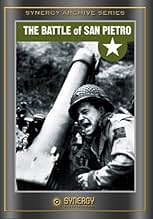
Director John Huston documents the Battle of San Pietro Infine in December 1943.Director John Huston documents the Battle of San Pietro Infine in December 1943.Director John Huston documents the Battle of San Pietro Infine in December 1943.
- Director
- Writer
- Stars
- Awards
- 1 win total




Mark W. Clark
- Self - Introduction
- (uncredited)

John Huston
- Self - Narrator
- (voice)
- (uncredited)
- Director
- Writer
- All cast & crew
- Production, box office & more at IMDbPro
6.62.6K
1
2
3
4
5
6
7
8
9
10
Featured reviews
10marie_D
A U.S. Army Documentary but Maybe the Greatest Anti-War Film Ever
This film is available on DVD -- as part of the "Treasures from American Film Archives" collection released this year. The collection has lots of gems on its four disks but "The Battle of San Pietro" alone would make it worth the price.
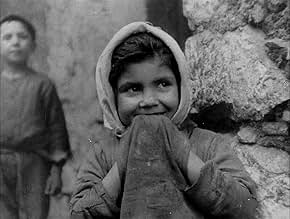
I watched this 30-minute documentary of one of many battles in Italy shortly after having viewed "All Quiet on the Western Front" for the first time. I thought the Milestone film was brilliant but it was this Huston documentary that made me cry. I don't know whether it is the matter-of-fact narration (by the director), the sight of all those G.I.s, or the Italian children that got to me but the sum of it all was almost overwhelming. Very highly recommended. 10/10
I watched this 30-minute documentary of one of many battles in Italy shortly after having viewed "All Quiet on the Western Front" for the first time. I thought the Milestone film was brilliant but it was this Huston documentary that made me cry. I don't know whether it is the matter-of-fact narration (by the director), the sight of all those G.I.s, or the Italian children that got to me but the sum of it all was almost overwhelming. Very highly recommended. 10/10
An Impressive & Memorable Documentary
John Huston's World War II documentary on the battle of San Pietro is easily up to the high standard that he set with his numerous classic dramas. It is impressive in describing both the events and the atmosphere of a desperate and costly struggle, and it is memorable in preserving its effect on those who had to live through it.
Even on a purely historical level, this would serve as a valuable description of one stage in the grueling Italian campaign, one of the war's least-remembered and least glamorous aspects. The narration is very efficient in detailing what the battle was about, what happened, and why it happened. It puts everything into the perspective of the war as a whole, and it also provides a look at the nature of the Allies' slow, grueling, costly progress up the Italian peninsula.
On a dramatic level, it is even more effective and memorable. Without forcing anything, without resorting to ploys of any kind, it brings you into the world of the unfortunate foot soldiers on whose backs and blood the fate of the battle rested. Huston's narration is flawless, using evenly measured tones to describe events in such a way as to allow them and the pictures of them to speak for themselves - and they speak in a powerful way.
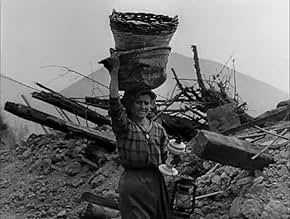
Most of the footage must have been taken at considerable risk, and while there is nothing fancy about the techniques, it's impressive how much it captures. The soldiers slowly crawling along rocky heights, the pounding of heavy artillery, the frightened civilians hiding in caves, and much more, are all vividly captured. It's hard to think of another documentary then or now that succeeds so well at what it set out to do.
Even on a purely historical level, this would serve as a valuable description of one stage in the grueling Italian campaign, one of the war's least-remembered and least glamorous aspects. The narration is very efficient in detailing what the battle was about, what happened, and why it happened. It puts everything into the perspective of the war as a whole, and it also provides a look at the nature of the Allies' slow, grueling, costly progress up the Italian peninsula.
On a dramatic level, it is even more effective and memorable. Without forcing anything, without resorting to ploys of any kind, it brings you into the world of the unfortunate foot soldiers on whose backs and blood the fate of the battle rested. Huston's narration is flawless, using evenly measured tones to describe events in such a way as to allow them and the pictures of them to speak for themselves - and they speak in a powerful way.
Most of the footage must have been taken at considerable risk, and while there is nothing fancy about the techniques, it's impressive how much it captures. The soldiers slowly crawling along rocky heights, the pounding of heavy artillery, the frightened civilians hiding in caves, and much more, are all vividly captured. It's hard to think of another documentary then or now that succeeds so well at what it set out to do.
It's all in the perception
While I agree with another reviewer here that " All Quiet On The Western Front" is one of the greatest anti-war films of all time I don't see this documentary as anti-war at all. San Pietro was of strategic value to the Allied Forces and yes we took it at great loss of life and yes nobody wants to die in some war in a foreign country but these brave young men died for a good cause. To try and use this film to argue that wars should never be fought does a great disservice to all the young Americans who died to free Europe from the Nazis.
Gritty and realistic...
I saw this film while watching my copy of the 4-DVD set "Treasures From American Film Archives"--a set of mostly ephemeral films that would have otherwise been lost.
"San Pietro" is a film assembled by the US War Department to chronicle one of many battles from WWII. Like so many government films made during WWII, it is narrated by a Hollywood star (director John Huston) and I assume it was made by film makers who were in military service for the war.
The film's narration and images are surprisingly blunt and free from extreme patriotism--making it highly realistic and gripping. In other words, the film is not all about American victory but shows casualties and describes how difficult this battle was--not some jingoistic rant meant to glorify war and make it seem like the troops were super-human. While some might have thought this would demoralize the folks at home (hence it was held for release for two years), it was direct, informative and well-constructed. At times, it felt almost as if you were there in the action and was very compelling--and a nice tribute to real sacrifices made by some very brave soldiers as well as an important historical record.
"San Pietro" is a film assembled by the US War Department to chronicle one of many battles from WWII. Like so many government films made during WWII, it is narrated by a Hollywood star (director John Huston) and I assume it was made by film makers who were in military service for the war.
The film's narration and images are surprisingly blunt and free from extreme patriotism--making it highly realistic and gripping. In other words, the film is not all about American victory but shows casualties and describes how difficult this battle was--not some jingoistic rant meant to glorify war and make it seem like the troops were super-human. While some might have thought this would demoralize the folks at home (hence it was held for release for two years), it was direct, informative and well-constructed. At times, it felt almost as if you were there in the action and was very compelling--and a nice tribute to real sacrifices made by some very brave soldiers as well as an important historical record.
Hard Fight.
I don't know how this documentary ever managed to be released in 1945 while the war was still underway. Other examples of the genre always ended in victory. Allied dead were never seen except at funeral services with flags flying and officers making speeches and a solemn narrator telling us of their brave deeds.
Huston's documentary is different. The narration is by the director and is full of the logic of battle and lacks sentiment. The film is shot from ground level, the level of the foot soldier. A phosphorous shell explodes some feet away, the ground trembles, and the air is filled with bits of burning chemicals. An American soldier is shot in mid-stride and flops unceremoniously to the ground. There are multiple shots of American dead, some being bundled into mattress covers and lowered into hasty graves by the Quartermaster Corps.
Only one speech is delivered, by General Mark Clark at the opening of the film. He was in charge of American forces in Italy and always saw to it that the press referred to the Fifth Army as "General Mark Clark's Fifth Army." Clark points out that there was great sacrifice during the campaign and hints that it might not have been so great if the Army hadn't seen fit to rob him of resources for the invasion of France. Nevertheless, he observes, we kept many Germans pinned down in Italy. No mention of the fact that the Allies too were bottled up in Italy with the Germans acting as the cork.
Huston uses a simple map and pointer to illustrate the tactical situation. And his narration is blunt. The attack on the German's right was launched and not a man got more than 300 yards beyond his starting point. All our attacks were repeatedly repulsed with heavy losses. And when at last the Germans withdrew, they did so swiftly and according to plan, and took up new defensive position five kilometers away.
Five kilometers away. That meant a new battle against a new defensive line. And after that, another battle against another defensive line, with all the German artillery sighted in, and their positions camouflaged and mutually supporting.
There was nothing else to be done. The Italian boot seemed made for defense, with a high mountain range forming a spine down the center, and innumerable smaller ranges to the east and west, interspersed with rivers that swelled during the winter rains. The obstacles and mud often halted operations entirely.
I suppose that's one of the reasons why we don't see very much footage of combat from the Italian campaign on television. It wasn't colorful. It wasn't glamorous. It didn't end in a smashing victory. The Battle of San Pietro was an early one, and Monte Casino and the Gustav Line and other terrors still lay ahead.
The closest Hollywood ever came to capturing the misery associated with the Italian campaign was in William Wellman's "The Story of G.I. Joe" -- and even there, the despair these men must have felt is muted by the homespun voice over of Burgess Meredith as Ernie Pyle. Huston evidently staged many of the combat scenes but I still don't know how Huston's short film managed to get past the wartime censors.
Huston's documentary is different. The narration is by the director and is full of the logic of battle and lacks sentiment. The film is shot from ground level, the level of the foot soldier. A phosphorous shell explodes some feet away, the ground trembles, and the air is filled with bits of burning chemicals. An American soldier is shot in mid-stride and flops unceremoniously to the ground. There are multiple shots of American dead, some being bundled into mattress covers and lowered into hasty graves by the Quartermaster Corps.
Only one speech is delivered, by General Mark Clark at the opening of the film. He was in charge of American forces in Italy and always saw to it that the press referred to the Fifth Army as "General Mark Clark's Fifth Army." Clark points out that there was great sacrifice during the campaign and hints that it might not have been so great if the Army hadn't seen fit to rob him of resources for the invasion of France. Nevertheless, he observes, we kept many Germans pinned down in Italy. No mention of the fact that the Allies too were bottled up in Italy with the Germans acting as the cork.
Huston uses a simple map and pointer to illustrate the tactical situation. And his narration is blunt. The attack on the German's right was launched and not a man got more than 300 yards beyond his starting point. All our attacks were repeatedly repulsed with heavy losses. And when at last the Germans withdrew, they did so swiftly and according to plan, and took up new defensive position five kilometers away.
Five kilometers away. That meant a new battle against a new defensive line. And after that, another battle against another defensive line, with all the German artillery sighted in, and their positions camouflaged and mutually supporting.
There was nothing else to be done. The Italian boot seemed made for defense, with a high mountain range forming a spine down the center, and innumerable smaller ranges to the east and west, interspersed with rivers that swelled during the winter rains. The obstacles and mud often halted operations entirely.
I suppose that's one of the reasons why we don't see very much footage of combat from the Italian campaign on television. It wasn't colorful. It wasn't glamorous. It didn't end in a smashing victory. The Battle of San Pietro was an early one, and Monte Casino and the Gustav Line and other terrors still lay ahead.
The closest Hollywood ever came to capturing the misery associated with the Italian campaign was in William Wellman's "The Story of G.I. Joe" -- and even there, the despair these men must have felt is muted by the homespun voice over of Burgess Meredith as Ernie Pyle. Huston evidently staged many of the combat scenes but I still don't know how Huston's short film managed to get past the wartime censors.


Did you know
- TriviaThis film was considered so blunt in its depiction of the difficulties of the battle that the US Army refused to show it, believing it to be damaging to troop morale.
- ConnectionsEdited into Story of G.I. Joe (1945)
Details
- Runtime
- 32m
- Color
- Sound mix
- Aspect ratio
- 1.37 : 1
Contribute to this page
Suggest an edit or add missing content