San Pietro
- 32m
IMDb RATING
6.6/10
2.6K
YOUR RATING

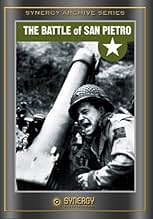
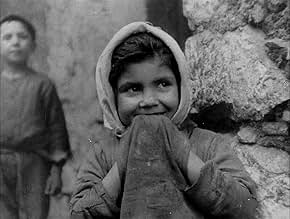
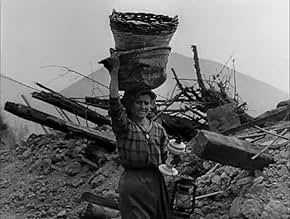
Director John Huston documents the Battle of San Pietro Infine in December 1943.Director John Huston documents the Battle of San Pietro Infine in December 1943.Director John Huston documents the Battle of San Pietro Infine in December 1943.
- Director
- Writer
- Stars
- Awards
- 1 win total




Mark W. Clark
- Self - Introduction
- (uncredited)

John Huston
- Self - Narrator
- (voice)
- (uncredited)
- Director
- Writer
- All cast & crew
- Production, box office & more at IMDbPro
6.62.6K
1
2
3
4
5
6
7
8
9
10
Featured reviews
Okay, but a bit disappointing. 6/10
John Huston's World War 2 documentary on the taking of the Italian town of San Pietro by US forces in December 1943.
Okay, but a bit disappointing. Was interesting as it covers a battle that you never hear about in WW2 documentaries or read about in books. In a way San Pietro was a sample of the type of attritional war fought in Italy.
However, like "Report from the Aleutians" the main problem is John Huston's narration. Dull, verbose, flowery, and quite irritating at times. Not as bad here as the aforementioned documentary, but still off-putting enough.
Okay, but a bit disappointing. Was interesting as it covers a battle that you never hear about in WW2 documentaries or read about in books. In a way San Pietro was a sample of the type of attritional war fought in Italy.
However, like "Report from the Aleutians" the main problem is John Huston's narration. Dull, verbose, flowery, and quite irritating at times. Not as bad here as the aforementioned documentary, but still off-putting enough.
The story behind San Pietro
One reviewer commented that he didn't know how this film ever got released during World War II. It almost didn't.
First, you need to know that Hollywood actors, directors and producers were heavily recruited by the War and Navy Departments (the Defense Dept. is a post war innovation). These celebrities got to know a lot of the senior military personnel through their activities in Stage Door Canteens, the USO, recruiting and bond drives. Few were closer to the military top brass than Orson Welles, a close friend of Houston's.
Welles told this story on, I believe, a Dick Cavett Show in the late 1960s or very early 1970s. I repeat it as I remember it.
According to Welles the War Department censors did not want San Pietro released. They felt that the film was too graphic and that it might have an adverse effect on support for the war. Through Welles' personal friendship with General George C. Marshall he and Houston arranged a private screening at the Pentagon for Marshall, his staff and the censors. Following the screening Gen. Marshall stood up and ordered that the film be released. He said that it was an accurate depiction and that war was horrible. He felt that the American people needed to know that horror lest they romanticize war and become fond of a monstrous act of inhumanity.
So San Pietro was released. If Welles exaggerated his role, I can't say. Certainly Houston didn't contradict him. If I have misremembered the tale in some particular, it does not change the fact that San Pietro owed its release to the intervention of Marshall.
Even today San Pietro is worth seeing. As has already been suggested, it is a good complement to Lewis Milestone's All Quiet on the Western Front. I would suggest that it also ranks with two other great movies whose subject is World War I. Those movies are Jean Renoir's Grand Illusion and Stanley Kubrick's Paths of Glory. And, although it doesn't quiet rank with the three films already mentioned, Philippe de Broca's King of Hearts belongs in the insanity of war film festival we seem to be constructing here. Finally, I would point out that earlier wars are often stand ins for the more recent one as in M.A.S.H. Korea stood in for Vietnam.
First, you need to know that Hollywood actors, directors and producers were heavily recruited by the War and Navy Departments (the Defense Dept. is a post war innovation). These celebrities got to know a lot of the senior military personnel through their activities in Stage Door Canteens, the USO, recruiting and bond drives. Few were closer to the military top brass than Orson Welles, a close friend of Houston's.
Welles told this story on, I believe, a Dick Cavett Show in the late 1960s or very early 1970s. I repeat it as I remember it.
According to Welles the War Department censors did not want San Pietro released. They felt that the film was too graphic and that it might have an adverse effect on support for the war. Through Welles' personal friendship with General George C. Marshall he and Houston arranged a private screening at the Pentagon for Marshall, his staff and the censors. Following the screening Gen. Marshall stood up and ordered that the film be released. He said that it was an accurate depiction and that war was horrible. He felt that the American people needed to know that horror lest they romanticize war and become fond of a monstrous act of inhumanity.
So San Pietro was released. If Welles exaggerated his role, I can't say. Certainly Houston didn't contradict him. If I have misremembered the tale in some particular, it does not change the fact that San Pietro owed its release to the intervention of Marshall.
Even today San Pietro is worth seeing. As has already been suggested, it is a good complement to Lewis Milestone's All Quiet on the Western Front. I would suggest that it also ranks with two other great movies whose subject is World War I. Those movies are Jean Renoir's Grand Illusion and Stanley Kubrick's Paths of Glory. And, although it doesn't quiet rank with the three films already mentioned, Philippe de Broca's King of Hearts belongs in the insanity of war film festival we seem to be constructing here. Finally, I would point out that earlier wars are often stand ins for the more recent one as in M.A.S.H. Korea stood in for Vietnam.
War, Dark and Gritty
This documentary movie is about the battle of San Pietro, a small village in Italy. Over 1,100 US soldiers were killed while trying to take this location, that blocked the way for the Allied forces from the Germans.
Huston and his crew were attached to the U.S. Army's 143rd Regiment of the 36th Division. Unlike many other military documentaries, it was claimed Huston's cameramen filmed alongside the infantrymen as they fought their way up the hills to reach San Pietro. (Huston's claim that the film was made during the battle was proved false by the research of Peter Maslowski.) Huston quickly became unpopular with the Army, not only for the film but also for his response to the accusation that the film was anti-war. Huston responded that if he ever made a pro-war film, he should be shot. And this coming from a man who served. I think that is a great statement. We can support the troops, especially when they are fighting the fascists, but that should not make us "pro-war". Whatever is between pro- and anti- war, that seems to be the right outlook.
Huston and his crew were attached to the U.S. Army's 143rd Regiment of the 36th Division. Unlike many other military documentaries, it was claimed Huston's cameramen filmed alongside the infantrymen as they fought their way up the hills to reach San Pietro. (Huston's claim that the film was made during the battle was proved false by the research of Peter Maslowski.) Huston quickly became unpopular with the Army, not only for the film but also for his response to the accusation that the film was anti-war. Huston responded that if he ever made a pro-war film, he should be shot. And this coming from a man who served. I think that is a great statement. We can support the troops, especially when they are fighting the fascists, but that should not make us "pro-war". Whatever is between pro- and anti- war, that seems to be the right outlook.
It's all in the perception
While I agree with another reviewer here that " All Quiet On The Western Front" is one of the greatest anti-war films of all time I don't see this documentary as anti-war at all. San Pietro was of strategic value to the Allied Forces and yes we took it at great loss of life and yes nobody wants to die in some war in a foreign country but these brave young men died for a good cause. To try and use this film to argue that wars should never be fought does a great disservice to all the young Americans who died to free Europe from the Nazis.
the extra minutes are worth fighting for
i recently saw the approx. 40min version of this film and i must say, knowing what is missing from the 32min version, that it is indeed far more impactful and superior. images of more fallen soldiers in white body bags appear and reappear throughout to the point of it being a reocurring theme. i'm sure it's just as brilliant without the extra footage, but if you can, try to see the extra footage. while i have not seen the true original (running approx. 50min), i'm quite positive it's even better than the one i was fortunate enough to see. a great documentary film all-around (even if some of it was staged).


Did you know
- TriviaThis film was considered so blunt in its depiction of the difficulties of the battle that the US Army refused to show it, believing it to be damaging to troop morale.
- ConnectionsEdited into Story of G.I. Joe (1945)
Details
- Runtime
- 32m
- Color
- Sound mix
- Aspect ratio
- 1.37 : 1
Contribute to this page
Suggest an edit or add missing content