IMDb RATING
6.6/10
2.6K
YOUR RATING

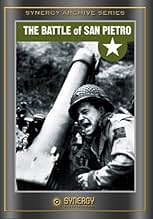
Director John Huston documents the Battle of San Pietro Infine in December 1943.Director John Huston documents the Battle of San Pietro Infine in December 1943.Director John Huston documents the Battle of San Pietro Infine in December 1943.
- Director
- Writer
- Stars
- Awards
- 1 win total




Mark W. Clark
- Self - Introduction
- (uncredited)

John Huston
- Self - Narrator
- (voice)
- (uncredited)
- Director
- Writer
- All cast & crew
- Production, box office & more at IMDbPro
6.62.6K
1
2
3
4
5
6
7
8
9
10
Featured reviews
An Impressive & Memorable Documentary
John Huston's World War II documentary on the battle of San Pietro is easily up to the high standard that he set with his numerous classic dramas. It is impressive in describing both the events and the atmosphere of a desperate and costly struggle, and it is memorable in preserving its effect on those who had to live through it.
Even on a purely historical level, this would serve as a valuable description of one stage in the grueling Italian campaign, one of the war's least-remembered and least glamorous aspects. The narration is very efficient in detailing what the battle was about, what happened, and why it happened. It puts everything into the perspective of the war as a whole, and it also provides a look at the nature of the Allies' slow, grueling, costly progress up the Italian peninsula.
On a dramatic level, it is even more effective and memorable. Without forcing anything, without resorting to ploys of any kind, it brings you into the world of the unfortunate foot soldiers on whose backs and blood the fate of the battle rested. Huston's narration is flawless, using evenly measured tones to describe events in such a way as to allow them and the pictures of them to speak for themselves - and they speak in a powerful way.
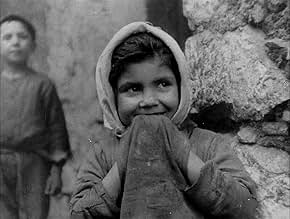
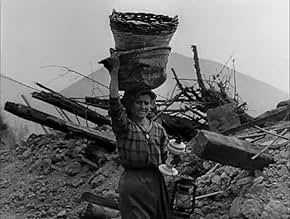
Most of the footage must have been taken at considerable risk, and while there is nothing fancy about the techniques, it's impressive how much it captures. The soldiers slowly crawling along rocky heights, the pounding of heavy artillery, the frightened civilians hiding in caves, and much more, are all vividly captured. It's hard to think of another documentary then or now that succeeds so well at what it set out to do.
Even on a purely historical level, this would serve as a valuable description of one stage in the grueling Italian campaign, one of the war's least-remembered and least glamorous aspects. The narration is very efficient in detailing what the battle was about, what happened, and why it happened. It puts everything into the perspective of the war as a whole, and it also provides a look at the nature of the Allies' slow, grueling, costly progress up the Italian peninsula.
On a dramatic level, it is even more effective and memorable. Without forcing anything, without resorting to ploys of any kind, it brings you into the world of the unfortunate foot soldiers on whose backs and blood the fate of the battle rested. Huston's narration is flawless, using evenly measured tones to describe events in such a way as to allow them and the pictures of them to speak for themselves - and they speak in a powerful way.
Most of the footage must have been taken at considerable risk, and while there is nothing fancy about the techniques, it's impressive how much it captures. The soldiers slowly crawling along rocky heights, the pounding of heavy artillery, the frightened civilians hiding in caves, and much more, are all vividly captured. It's hard to think of another documentary then or now that succeeds so well at what it set out to do.
Doesn't quite live up to its reputation.
I was expecting quite a bit from this movie, as it's often being credited as being an intriguing WW II (anti)war documentary, that puts you right in the middle of things. It does feature some unique and straight-forward battle images but to me it just didn't all worked out.
To me this movie looks and feels more like a news reel than an actual documentary about the accounts of the battle of San Pietro. This might sound like a compliment but it isn't really. The movie tells a story and it features lots of footage but it all feels glued together. To me it's even doubtful if the narration and images even belong together. The entire narration tells how the battle progressed but I doubted that all of the footage got shot during any of those talked about events. My suspicion got confirmed by the end of the movie, when a disclaimer got shown saying some of the footage got shot before and after the battle but were put into the movie for continuity reasons.
The narration by John Huston keeps the movie going at all times but it makes things happen a bit too fast as well really. Guess this is not the creator's fault but more the war department's that heavily cut the movie down because the movie got considered to be too anti-war by them.
The movie is mostly considered to be anti-war because it's being pretty straight-forward and of course honest. You'll see death bodies in this movie and allies taking some heavy blows by the Nazi-enemy. This of course however this present day only works out as realistic and more interesting as well.
After watching this movie I still don't feel like I knew what happened all during the battle of San Pietro, or why this battle was considered to be such a distinctive or important one to the allied campaign. But this again is also mostly due to the movie its too high pace.
WW II-buffs will still 'enjoy' this movie for what it is, due to its unique footage but don't expect to learn much or to be blown away by any of the movie its images.
6/10
http://bobafett1138.blogspot.com/
To me this movie looks and feels more like a news reel than an actual documentary about the accounts of the battle of San Pietro. This might sound like a compliment but it isn't really. The movie tells a story and it features lots of footage but it all feels glued together. To me it's even doubtful if the narration and images even belong together. The entire narration tells how the battle progressed but I doubted that all of the footage got shot during any of those talked about events. My suspicion got confirmed by the end of the movie, when a disclaimer got shown saying some of the footage got shot before and after the battle but were put into the movie for continuity reasons.
The narration by John Huston keeps the movie going at all times but it makes things happen a bit too fast as well really. Guess this is not the creator's fault but more the war department's that heavily cut the movie down because the movie got considered to be too anti-war by them.
The movie is mostly considered to be anti-war because it's being pretty straight-forward and of course honest. You'll see death bodies in this movie and allies taking some heavy blows by the Nazi-enemy. This of course however this present day only works out as realistic and more interesting as well.
After watching this movie I still don't feel like I knew what happened all during the battle of San Pietro, or why this battle was considered to be such a distinctive or important one to the allied campaign. But this again is also mostly due to the movie its too high pace.
WW II-buffs will still 'enjoy' this movie for what it is, due to its unique footage but don't expect to learn much or to be blown away by any of the movie its images.
6/10
http://bobafett1138.blogspot.com/
Okay, but a bit disappointing. 6/10
John Huston's World War 2 documentary on the taking of the Italian town of San Pietro by US forces in December 1943.
Okay, but a bit disappointing. Was interesting as it covers a battle that you never hear about in WW2 documentaries or read about in books. In a way San Pietro was a sample of the type of attritional war fought in Italy.
However, like "Report from the Aleutians" the main problem is John Huston's narration. Dull, verbose, flowery, and quite irritating at times. Not as bad here as the aforementioned documentary, but still off-putting enough.
Okay, but a bit disappointing. Was interesting as it covers a battle that you never hear about in WW2 documentaries or read about in books. In a way San Pietro was a sample of the type of attritional war fought in Italy.
However, like "Report from the Aleutians" the main problem is John Huston's narration. Dull, verbose, flowery, and quite irritating at times. Not as bad here as the aforementioned documentary, but still off-putting enough.
It's all in the perception
While I agree with another reviewer here that " All Quiet On The Western Front" is one of the greatest anti-war films of all time I don't see this documentary as anti-war at all. San Pietro was of strategic value to the Allied Forces and yes we took it at great loss of life and yes nobody wants to die in some war in a foreign country but these brave young men died for a good cause. To try and use this film to argue that wars should never be fought does a great disservice to all the young Americans who died to free Europe from the Nazis.
Gritty and realistic...
I saw this film while watching my copy of the 4-DVD set "Treasures From American Film Archives"--a set of mostly ephemeral films that would have otherwise been lost.
"San Pietro" is a film assembled by the US War Department to chronicle one of many battles from WWII. Like so many government films made during WWII, it is narrated by a Hollywood star (director John Huston) and I assume it was made by film makers who were in military service for the war.
The film's narration and images are surprisingly blunt and free from extreme patriotism--making it highly realistic and gripping. In other words, the film is not all about American victory but shows casualties and describes how difficult this battle was--not some jingoistic rant meant to glorify war and make it seem like the troops were super-human. While some might have thought this would demoralize the folks at home (hence it was held for release for two years), it was direct, informative and well-constructed. At times, it felt almost as if you were there in the action and was very compelling--and a nice tribute to real sacrifices made by some very brave soldiers as well as an important historical record.
"San Pietro" is a film assembled by the US War Department to chronicle one of many battles from WWII. Like so many government films made during WWII, it is narrated by a Hollywood star (director John Huston) and I assume it was made by film makers who were in military service for the war.
The film's narration and images are surprisingly blunt and free from extreme patriotism--making it highly realistic and gripping. In other words, the film is not all about American victory but shows casualties and describes how difficult this battle was--not some jingoistic rant meant to glorify war and make it seem like the troops were super-human. While some might have thought this would demoralize the folks at home (hence it was held for release for two years), it was direct, informative and well-constructed. At times, it felt almost as if you were there in the action and was very compelling--and a nice tribute to real sacrifices made by some very brave soldiers as well as an important historical record.


Did you know
- TriviaThis film was considered so blunt in its depiction of the difficulties of the battle that the US Army refused to show it, believing it to be damaging to troop morale.
- ConnectionsEdited into Story of G.I. Joe (1945)
Details
- Runtime
- 32m
- Color
- Sound mix
- Aspect ratio
- 1.37 : 1
Contribute to this page
Suggest an edit or add missing content