IMDb RATING
5.6/10
2.7K
YOUR RATING

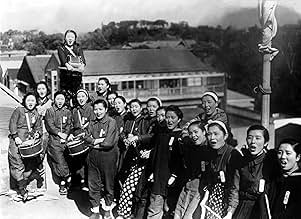
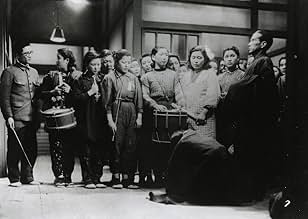
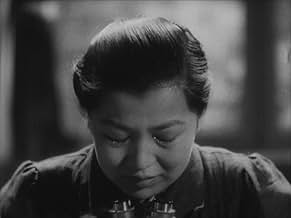
World War II film about female volunteer workers at an optics plant who do their best to meet production targets.World War II film about female volunteer workers at an optics plant who do their best to meet production targets.World War II film about female volunteer workers at an optics plant who do their best to meet production targets.





- Director
- Writer
- All cast & crew
- Production, box office & more at IMDbPro
5.62.7K
1
2
3
4
5
6
7
8
9
10
Featured reviews
the Japanese "Twelve-O'clock High"
This is a great movie - a must-see. I saw it without subtitles, and my Japanese wasn't good enough to catch most of the dialog, but the raw emotional power of the cast and of the imagery made it easy to follow - completely engrossing, in fact. The story is about a group of women factory workers in WWII Japan, and how each one must overcome whatever personal hardship they face to help the group succeed. The sense of being swept up in a titanic struggle, and the almost superhuman selflessness and group cohesion that that breeds, are the same themes treated in "Twelve-O'clock High". The two movies would make an enlightening double feature. One image sticks with me: although it's not focused on, throughout the movie you see the women carefully taking off their shoes and placing them neatly by the door as they come in to the dormitory, and you see them carefully put them on as they leave. During one scene, when a girl is returning from the hospital, everyone rushes to greet her. Kurosawa cuts to a shot of the shoes, as they are thoughtlessly trampled by the women eager to meet their friend.
War Propaganda and Tribute to the Japanese Female Workers in Times of War
During the World War II, the management of a war industry of optical instruments for weapons requests an effort from the workers to increase the productivity during four months. The target for male workers is an increase of 100% of the production, but the female workers, led by the dedicated Tsuru Watanabe (Yôko Yaguchi), ask the direction to surpass their goal from 50% to 70%. Along the period, the women have to overcome illness and their personal problems to complete their quote.
"Ichiban Utsukushiku" is a war propaganda and tribute to the Japanese female workers in times of war by Akira Kurosawa recommended only for fans of this great director. The plot is boring in many moments, but I liked to see the humanization of the nationalist Japanese workers and this unusual perspective from a people that were sooner defeated in the war. The winners usually write the history from their perspective and this film is a rare testimony from the Japanese point of view. Watanabe is an enlightened character with her dedication and positive leadership. My vote is six.
Title (Brazil): "A Mais Bela" ("The Most Beautiful")
"Ichiban Utsukushiku" is a war propaganda and tribute to the Japanese female workers in times of war by Akira Kurosawa recommended only for fans of this great director. The plot is boring in many moments, but I liked to see the humanization of the nationalist Japanese workers and this unusual perspective from a people that were sooner defeated in the war. The winners usually write the history from their perspective and this film is a rare testimony from the Japanese point of view. Watanabe is an enlightened character with her dedication and positive leadership. My vote is six.
Title (Brazil): "A Mais Bela" ("The Most Beautiful")
'Rosie The Riveter', Japanese Style...
Ichiban utsukushiku (1944) 'THE MOST BEAUTIFUL' is Akira Kurosawa's tribute to Japanese Women who supported the war effort (WWII) at the 'Home-Front'. It is analogous to films made in other countries at that time. The nations that participated in the conflict all called upon Women too help in the manufacturing process. Some successfully like Great Britain, Soviet Russia and the U.S.A. Others like China, Fascist Italy or Nazi Germany less so, with Imperial Japan falling in between. Not from lack of effort, but of resources.
Like LETTERS FROM IWO JIMA (2006) the film shows the war from the Japanese perspective. This is a propaganda film. That does not invalidate its message compared with the other participants in the conflict, it is just another point of view, made in wartime. The Women work in a optical factory which could pass for a 'Dickensian Workhouse'. Their work is important and they know it. The pressure of increased productivity with limited resources is clearly shown. It effects them all emotionally, physically and psychologically. The Men of the factory for the most part are unseen drones, except for the managers of the plant. They take a sensitive interest in the well being of their Female staff, without taking advantage of them. The War is largely unseen, but you know it is out there and getting closer all the time. The Director could see the end was coming, even if the Imperial General Staff could not.
The principal cast of Women actors are largely unknowns whose careers were brief before and after this film. They are all convincing in their roles and give believable characterizations. The only 'Star' recognizable too Western audiences would be the great TAKASHI SHIMURA. SHIMURA was a 'jake of all trades' for the TOHO Studios, Japan. His acting range spanned Business Men, Criminals, Detectives, Samurai and Scientists. Films of note, SHICHININ NO SAMURAI (1954) 'The Seven Samurai', GOJIRA (1954) 'Godzilla', CHIKYU BOEIGUN (1957) 'The Mysterians' and YOJIMBO (1961) 'Yojimbo, The Bodyguard'.
Those who have TCM or a well stocked local Library can take advantage of the films of AKIRA KUROSAWA and they should.
Like LETTERS FROM IWO JIMA (2006) the film shows the war from the Japanese perspective. This is a propaganda film. That does not invalidate its message compared with the other participants in the conflict, it is just another point of view, made in wartime. The Women work in a optical factory which could pass for a 'Dickensian Workhouse'. Their work is important and they know it. The pressure of increased productivity with limited resources is clearly shown. It effects them all emotionally, physically and psychologically. The Men of the factory for the most part are unseen drones, except for the managers of the plant. They take a sensitive interest in the well being of their Female staff, without taking advantage of them. The War is largely unseen, but you know it is out there and getting closer all the time. The Director could see the end was coming, even if the Imperial General Staff could not.
The principal cast of Women actors are largely unknowns whose careers were brief before and after this film. They are all convincing in their roles and give believable characterizations. The only 'Star' recognizable too Western audiences would be the great TAKASHI SHIMURA. SHIMURA was a 'jake of all trades' for the TOHO Studios, Japan. His acting range spanned Business Men, Criminals, Detectives, Samurai and Scientists. Films of note, SHICHININ NO SAMURAI (1954) 'The Seven Samurai', GOJIRA (1954) 'Godzilla', CHIKYU BOEIGUN (1957) 'The Mysterians' and YOJIMBO (1961) 'Yojimbo, The Bodyguard'.
Those who have TCM or a well stocked local Library can take advantage of the films of AKIRA KUROSAWA and they should.
For Kurosawa completists only
Like SANSHIRO SUGATA PART 2, this film was never released in the U.S. for political reasons. There's not any blatantly anti-American content, as in SSP2, but THE MOST BEAUTIFUL, filmed by government request, was a pro-Imperialist propaganda document.
Kurosawa gamely attempts to weave together a story which functions both as propaganda and as a tender coming-of-age story, but isn't entirely successful. This would have been a demanding proposition even for a seasoned pro, let alone a young director like Kurosawa, directing only his second feature.
The story follows a group of young girls working in an armaments factory in the latter days of WWII. The girls must increase production sharply. The girls suffer hardships of all sorts. One, Tao, emerges as the leader of the group. Through the travails of helping her coworkers meet their quotas, Tao learns courage, fortitude and compassion.
If all this sounds a little boring, that's because it is. Kurosawa's visual signatures are seldom seen. At least the performances are good, especially Yoko Yaguchi as Tao. Takashi Shimura has a thankless, do-nothing role as the foreman of the factory.
Kurosawa gamely attempts to weave together a story which functions both as propaganda and as a tender coming-of-age story, but isn't entirely successful. This would have been a demanding proposition even for a seasoned pro, let alone a young director like Kurosawa, directing only his second feature.
The story follows a group of young girls working in an armaments factory in the latter days of WWII. The girls must increase production sharply. The girls suffer hardships of all sorts. One, Tao, emerges as the leader of the group. Through the travails of helping her coworkers meet their quotas, Tao learns courage, fortitude and compassion.
If all this sounds a little boring, that's because it is. Kurosawa's visual signatures are seldom seen. At least the performances are good, especially Yoko Yaguchi as Tao. Takashi Shimura has a thankless, do-nothing role as the foreman of the factory.
The Most Beautiful
Most Beautiful, The (1944)
** (out of 4)
Interesting WW2 era film about a factory in Japan who asks their men to raise production by 100% and then ask the women to do 50%. At first the women are insulted by not being asked to do as much as the men but they soon find out that this raise in production is going to test every bit of their soul both physically and mentally. This early Kurosawa film isn't a good one but it is interesting and does have a few moments where the director does something great. What I found most interesting about the film is how different it is from the WW2 films that were being produced in Hollywood at the time. There's no question that this is a propaganda piece for the Japanese people but it's interesting to see how their moral was attempted at being raised. Most of the American WW2 pictures were "fight, fight, fight" and you can say that about this film but the difference is that the fight is mostly a personal drama with each of the women. Then being ashamed that they can't produce more for their country. Being ashamed that they are sick and can't do their part for a day. Ashamed that their parents might learn they were sick and couldn't do the job. The film does a pretty good job at building up these dramas but sadly none of their stories are strong enough to make the film be a total success. I think most of the blame has to go towards the screenplay that is a bit too over dramatic during certain scenes and there are some major issues with some of the performances. It's obvious Toho didn't give Kurosawa much of a budget but the director shows that he can handle the personal drama quite nicely. The most impressive sequence in the film happens early on when the women are told that production is going to be raised. This somewhat long sequence shows us many of the women talking amongst each other and Kurosawa builds up us thinking they're unhappy about the raise but the way he explains what they're really upset about was quite powerful. The film runs 85-minutes and even at this short pace the film begins to run out of gas and really drag along towards the end. Fans of Kurosawa will probably want to check this out but others will probably hit the stop button early on.
** (out of 4)
Interesting WW2 era film about a factory in Japan who asks their men to raise production by 100% and then ask the women to do 50%. At first the women are insulted by not being asked to do as much as the men but they soon find out that this raise in production is going to test every bit of their soul both physically and mentally. This early Kurosawa film isn't a good one but it is interesting and does have a few moments where the director does something great. What I found most interesting about the film is how different it is from the WW2 films that were being produced in Hollywood at the time. There's no question that this is a propaganda piece for the Japanese people but it's interesting to see how their moral was attempted at being raised. Most of the American WW2 pictures were "fight, fight, fight" and you can say that about this film but the difference is that the fight is mostly a personal drama with each of the women. Then being ashamed that they can't produce more for their country. Being ashamed that they are sick and can't do their part for a day. Ashamed that their parents might learn they were sick and couldn't do the job. The film does a pretty good job at building up these dramas but sadly none of their stories are strong enough to make the film be a total success. I think most of the blame has to go towards the screenplay that is a bit too over dramatic during certain scenes and there are some major issues with some of the performances. It's obvious Toho didn't give Kurosawa much of a budget but the director shows that he can handle the personal drama quite nicely. The most impressive sequence in the film happens early on when the women are told that production is going to be raised. This somewhat long sequence shows us many of the women talking amongst each other and Kurosawa builds up us thinking they're unhappy about the raise but the way he explains what they're really upset about was quite powerful. The film runs 85-minutes and even at this short pace the film begins to run out of gas and really drag along towards the end. Fans of Kurosawa will probably want to check this out but others will probably hit the stop button early on.


Did you know
- TriviaIn order to save film during wartime, the Japanese government ordered films to be released to have no opening titles and thus giving no credit to most of the actors or workers on each film. This included "The Most Beautiful" (1944).
- ConnectionsReferenced in Kurosawa: The Last Emperor (1999)
- How long is The Most Beautiful?Powered by Alexa
Details
- Runtime
- 1h 25m(85 min)
- Color
- Sound mix
- Aspect ratio
- 1.37 : 1
Contribute to this page
Suggest an edit or add missing content