

A young woman traveling to Poland with her employer meets a count, and they fall in love as World War II begins.A young woman traveling to Poland with her employer meets a count, and they fall in love as World War II begins.A young woman traveling to Poland with her employer meets a count, and they fall in love as World War II begins.
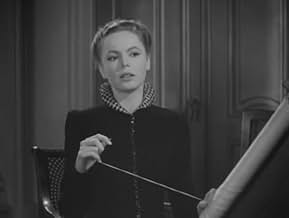
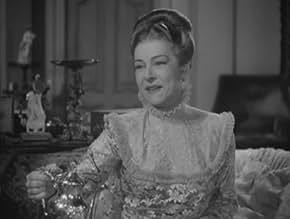


Alla Nazimova
- Zofia Orwid
- (as Nazimova)

Harry Adams
- Ballet Attendee
- (uncredited)

Alex Akimoff
- Wine Seller
- (uncredited)
Sylvia Arslan
- Naneczka
- (uncredited)

Lynn Baggett
- Friend of Count Orvid
- (uncredited)

George Blagoi
- Polish Peasant
- (uncredited)

John Bleifer
- Wladek
- (uncredited)

Paul Bradley
- Ballet Attendee
- (uncredited)

Cyd Charisse
- Ballerina
- (uncredited)

Gino Corrado
- Peasant at Party
- (uncredited)
- …
Julius Cramer
- Polish Diplomat
- (uncredited)
Jane Crowley
- Party Guest
- (uncredited)
- Director
- Writers
- All cast & crew
- Production, box office & more at IMDbPro
6.7687
1
2
3
4
5
6
7
8
9
10
Featured reviews
Poland during World War II is background for romantic drama...
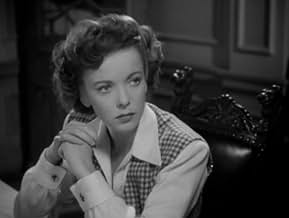
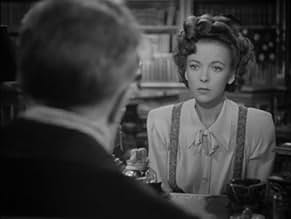
IDA LUPINO is a British young woman visiting Poland and acting as a companion to MARY BOLAND, a wealthy woman fond of collecting antiques. At an antique shop, Ida runs into PAUL HENRIED, who thinks she works at the store. They meet and fall in love, and Ida discovers that he's a Polish count. He insists on showing her around Warsaw and in a few short days they fall in love and, although Ida has misgivings when she meets his family and fails to pass inspection, they do marry.
Then the Nazi invasion of Poland looms over the story for the second half of the film. The script is articulate and literate, dealing as it does with the aristocracy for the most part, but terribly slow-moving and Vincent Sherman's direction fails to give the script the pace it needs to maintain interest.
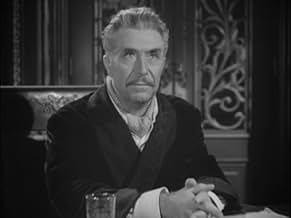
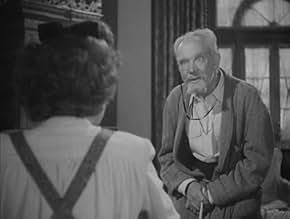
Ida plays a more rational and less intense creature than she usually does and gives an assured performance as the British girl who must adjust to her new husband and his family. NANCY COLEMAN is his regal, spoiled sister, NAZIMOVA is his party-loving mother, and VICTOR FRANCEN is Henried's wealthy uncle, a Count who keeps the family financially solvent.
But Poland is unable to avoid falling into Hitler's clutches and the story veers into more serious territory with the advent of war and the decision that Henried must make with regard to Poland under Nazi rule.
Summing up: A bit tedious at times, but interesting for the performances of Lupino, Henried, Coleman, Francen, Nazimova, Mary Boland and Franz Waxman's melodramatic score.
Then the Nazi invasion of Poland looms over the story for the second half of the film. The script is articulate and literate, dealing as it does with the aristocracy for the most part, but terribly slow-moving and Vincent Sherman's direction fails to give the script the pace it needs to maintain interest.
Ida plays a more rational and less intense creature than she usually does and gives an assured performance as the British girl who must adjust to her new husband and his family. NANCY COLEMAN is his regal, spoiled sister, NAZIMOVA is his party-loving mother, and VICTOR FRANCEN is Henried's wealthy uncle, a Count who keeps the family financially solvent.
But Poland is unable to avoid falling into Hitler's clutches and the story veers into more serious territory with the advent of war and the decision that Henried must make with regard to Poland under Nazi rule.
Summing up: A bit tedious at times, but interesting for the performances of Lupino, Henried, Coleman, Francen, Nazimova, Mary Boland and Franz Waxman's melodramatic score.
Poland goes down
In Our Time English girl Ida Lupino goes traveling with a somewhat subdued
Mary Boland and meets up with a real honest to goodness count played by
Paul Henreid. It's a romance that develops between them and she becomes a
countess.
Henreid is the kind of guy rich girls married back in the day for the title. He has an estate that's tied up in debt. They have to modernize or go broke. But with war clouds on the horizon will they have a chance?
This film is a tribute to the resistance of the Polish people in much the same way Edge Of Darkness is to the Norwegians. It came to the attention of the House Un-American Activities Committee and its writer Hpward Koch made the blacklist.
When Ida Lupino talks about having the estate peasants share in the harvest and maybe bringing in tractors she runs into some bad reaction from Victor Francen the old mastodon head of the family. God made him an aristocrat and them peasants and as an aristorat he's entitled to the perks therein. All this talk about sharing and brotherhood got the HUAC investigators attention.
In the end there's a note of optimism as this film came out in 1944 and the tide of war had turned and the audience who saw In Our Time knew it. The collective cast members fates are left to your imagination.
This wartime film still holds up well even today as recent events show fasciam is very much alive in this world and in places Americans did not contemplate in 1944.
Henreid is the kind of guy rich girls married back in the day for the title. He has an estate that's tied up in debt. They have to modernize or go broke. But with war clouds on the horizon will they have a chance?
This film is a tribute to the resistance of the Polish people in much the same way Edge Of Darkness is to the Norwegians. It came to the attention of the House Un-American Activities Committee and its writer Hpward Koch made the blacklist.
When Ida Lupino talks about having the estate peasants share in the harvest and maybe bringing in tractors she runs into some bad reaction from Victor Francen the old mastodon head of the family. God made him an aristocrat and them peasants and as an aristorat he's entitled to the perks therein. All this talk about sharing and brotherhood got the HUAC investigators attention.
In the end there's a note of optimism as this film came out in 1944 and the tide of war had turned and the audience who saw In Our Time knew it. The collective cast members fates are left to your imagination.
This wartime film still holds up well even today as recent events show fasciam is very much alive in this world and in places Americans did not contemplate in 1944.
What a Great Find!
Stumbled onto this on TCM ... granted, it's a wartime film to be sure - down to the "Buy War Bonds" cleverly configured Warner Brothers credit at the end, and brimming with patriotic emotion - but incredibly enjoyable/entertaining. I was happily surprised by all the talent in the cast - besides the ALWAYS wonderful Ida Lupino and the wonderfully debonair/attractive Paul Henreid (sigh!), it was delightful to see - albeit briefly - Mary Boland (for an extensive Mary Boland treat, check her out in "The Women"). And the rarely-seen-on-screen Alla Nazimova was illuminating ... while I heard her name being mentioned by the host, I didn't put it together until afterward. Great WWII Western European homefront film - highly recommend it!
Unusual World War II Drama
It is unusual to see a film made during the Second World War by Warner Bros. that deals with Poland, but here we have this seldom seen gem starring Ida Lupina and Paul Henreid. Lupino plays an English tourist in Warsaw on an antique buying mission when she falls in love with a Polish count, played sensitively by Henreid. They move to his estate and attempt to modernize the farm operations, but the German invasion of Poland throws their lives into turmoil.
Polish Aristocrats Don't Like Commoners
A bit slow moving but nonetheless interesting. The only thing missing is Maria Ouspenskaya stirring a boiling cauldron.
Paul Henried and Ida Lupino fall in love near Warsaw. She's a British commoner employed by a fancy English antique collector. Paul and Ida meet by accident in an antique shop. After they do some innocent and tender kanoodling for a while, Paul decides to bring Ida home to meet the Fockers...oops...I mean the royal Orvid family.
Only philosophical uncle Leopold Baruta likes Ida. Paul's sister,Janina, hates her while the rest of the Orvids think she's not good enough for Paul. In the meantime, we encounter a guy who's supporting them all-- Count Pavel. The reason why he's a Count is because everyone watches him count his money to then disperse to them as monthly stipends.
Count Pavel is also a representative of Poland to Nazi Germany and he's convinced that, after Czechoslovakia, Hitler had no more territorial designs on Europe so it would be a good idea to give him the Polish Corridor so as not to tick him off into attacking Poland.
Ida begins to dislike the whole Orvid family and especially Paul's reliance on Pavel for dough. So she's about to hop a train to get her back to England when Paul promises to become independent and she buys into it. So they marry, start teaching the peasants how to till the land while Pavel seethes because this is no way for Polish nobility to act.
On Sept,1.1939, the Nazis invade Poland and begin bombing Warsaw. Paul puts on his military uniform and heads for battle. Ida is left home and somehow, she rallies the peasants into fighting the Germans which history proves to be an absurdity. She teaches them the "scorched earth" policy which history teaches was anachronistic because it was the Russians who employed it against the Nazis after 6/22/41.
However despite its flaws,it all makes for an interesting anti-Nazi, morale boosting film for us at home.
Paul Henried and Ida Lupino fall in love near Warsaw. She's a British commoner employed by a fancy English antique collector. Paul and Ida meet by accident in an antique shop. After they do some innocent and tender kanoodling for a while, Paul decides to bring Ida home to meet the Fockers...oops...I mean the royal Orvid family.
Only philosophical uncle Leopold Baruta likes Ida. Paul's sister,Janina, hates her while the rest of the Orvids think she's not good enough for Paul. In the meantime, we encounter a guy who's supporting them all-- Count Pavel. The reason why he's a Count is because everyone watches him count his money to then disperse to them as monthly stipends.
Count Pavel is also a representative of Poland to Nazi Germany and he's convinced that, after Czechoslovakia, Hitler had no more territorial designs on Europe so it would be a good idea to give him the Polish Corridor so as not to tick him off into attacking Poland.
Ida begins to dislike the whole Orvid family and especially Paul's reliance on Pavel for dough. So she's about to hop a train to get her back to England when Paul promises to become independent and she buys into it. So they marry, start teaching the peasants how to till the land while Pavel seethes because this is no way for Polish nobility to act.
On Sept,1.1939, the Nazis invade Poland and begin bombing Warsaw. Paul puts on his military uniform and heads for battle. Ida is left home and somehow, she rallies the peasants into fighting the Germans which history proves to be an absurdity. She teaches them the "scorched earth" policy which history teaches was anachronistic because it was the Russians who employed it against the Nazis after 6/22/41.
However despite its flaws,it all makes for an interesting anti-Nazi, morale boosting film for us at home.


Did you know
- TriviaCount Stefan takes Jennifer on a walking tour of Warsaw. As they walk, stock footage is shown of various important monuments, culminating in the bronze statue of Frédéric Chopin by sculptor Waclaw Szymanowski. These monuments were all systematically destroyed by the Germans in 1940.
- GoofsAt the ballet, Count Stefan and others in his box use the opera glasses to look down at Jennifer in the audience below. The first shot through the glasses shows her not looking straight up at Count Stefan, but to her right, even though they have acknowledged each other. In subsequent shots through the glasses, the perspectives are far too low and to the front of Jennifer to be from the box above.
- Quotes
Count Pawel Orwid: [at the ballet] Stefan, when I was a young man, I came for the ballerinas. Later on I came for the music. Now I come to sit.
- Crazy creditsAfter the WB logo appears at the end, the letters W and B are separated and letters added to form the words "BUY War Bonds".
- ConnectionsFeatured in Frances Farmer Presents: In Our Time (1959)
- SoundtracksPolonaise in A major, Op.40, No.1 ('Military')
(1838-39) (uncredited)
Written by Frédéric Chopin
Partially played during the opening credits and at the end
Variation in the score throughout
Played on a radio to signal that Warsaw is still fighting
Details
- Runtime
- 1h 50m(110 min)
- Color
- Aspect ratio
- 1.37 : 1
Contribute to this page
Suggest an edit or add missing content