IMDb RATING
6.9/10
2.4K
YOUR RATING


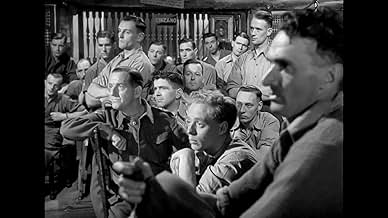
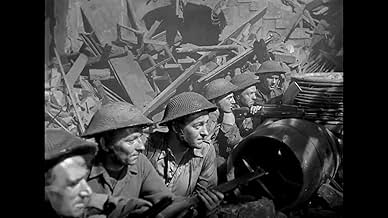
World War II drama that follows a group of British draftees, starting with their rigorous basic training, and ending with their deployment in North Africa.World War II drama that follows a group of British draftees, starting with their rigorous basic training, and ending with their deployment in North Africa.World War II drama that follows a group of British draftees, starting with their rigorous basic training, and ending with their deployment in North Africa.
- Director
- Writers
- Stars
- Awards
- 1 win total




Hugh Burden
- Pte. Bill Parsons
- (as Hugh Burdon)

Jimmy Hanley
- Pte. Geoffrey Stainer
- (as Jimmie Hanley)

William Hartnell
- Sgt. Ned Fletcher
- (as Billy Hartnell)


A. Bromley Davenport
- Chelsea Pensioner
- (as Bromley Davenport)

Renée Asherson
- Marjorie Gillingham
- (as Renee Ascherson)


- Director
- Writers
- All cast & crew
- Production, box office & more at IMDbPro
6.92.4K
1
2
3
4
5
6
7
8
9
10
Featured reviews
While seemingly mundane, this turns out to be a rather dandy flick
This is a film about a seemingly run of the mill sort of group. After the Brits were involved in WWII and saw how bad the going would be, the government was forced to draft men who would traditionally have been exempt. Men who were a bit old or involved with careers that might be deemed 'useful' to the effort were suddenly being called to duty, as times were dire. The beginning of the film shows these men being selected for service.
Unfortunately, this is a rather motley group and they tended to complain quite a bit as well (mostly by Stanley Holloway's character). How they could become a productive unit seemed pretty doubtful and I doubt if such an unimpressive group of men would have been used as actors had this propaganda film been made a few years earlier--when things looked really bad for the British. However, now that the war was appearing win-able, I can understand the choices of actors.
There is nothing particularly magical about any of the film--their selection, their training or their combat experience in North Africa. However, all of it was very well handled and excelled because they tried to make it believable--normal, everyday men rising to the occasion. In many ways, it reminded me of a landlocked version of "In Which We Serve"--with fine acting and writing instead of jingoism and super-human exploits. Very well done.
There are a few interesting actors in the film. Peter Ustinov is in his first film and he plays a French-speaking man. While his French isn't 100% fluid, it was decent and a bit of a surprise. Apparently, he was in real life David Niven's assistant in the British Army and somehow ended up in the film--and thus began his career. Also, Dr. Who fans will appreciate that the Sergeant is played by Dr. #1, William Hartnell.
By the way, this is a little explanation for those who are not British or familiar with British history. Early in the film, someone asks Stanley Holloway's character who he liked in Parliament. Holloway indicates the only one he liked was Guy Fawkes! Fawkes was part of a plot to blow up Parliament in 1605, but was caught and executed--and the Brits celebrate this to this day with Guy Fawkes Day--as day of merry-making, bonfires and fireworks! Obviously Holloway's character wasn't exactly fond of the government, eh?!
Unfortunately, this is a rather motley group and they tended to complain quite a bit as well (mostly by Stanley Holloway's character). How they could become a productive unit seemed pretty doubtful and I doubt if such an unimpressive group of men would have been used as actors had this propaganda film been made a few years earlier--when things looked really bad for the British. However, now that the war was appearing win-able, I can understand the choices of actors.
There is nothing particularly magical about any of the film--their selection, their training or their combat experience in North Africa. However, all of it was very well handled and excelled because they tried to make it believable--normal, everyday men rising to the occasion. In many ways, it reminded me of a landlocked version of "In Which We Serve"--with fine acting and writing instead of jingoism and super-human exploits. Very well done.
There are a few interesting actors in the film. Peter Ustinov is in his first film and he plays a French-speaking man. While his French isn't 100% fluid, it was decent and a bit of a surprise. Apparently, he was in real life David Niven's assistant in the British Army and somehow ended up in the film--and thus began his career. Also, Dr. Who fans will appreciate that the Sergeant is played by Dr. #1, William Hartnell.
By the way, this is a little explanation for those who are not British or familiar with British history. Early in the film, someone asks Stanley Holloway's character who he liked in Parliament. Holloway indicates the only one he liked was Guy Fawkes! Fawkes was part of a plot to blow up Parliament in 1605, but was caught and executed--and the Brits celebrate this to this day with Guy Fawkes Day--as day of merry-making, bonfires and fireworks! Obviously Holloway's character wasn't exactly fond of the government, eh?!
Strong cast makes this appealing.
This is a good film that was intended to bolster morale during World War II. The cast is very good and headed by David Niven. This is a story primarily of 8 men of different backgrounds who survive their basic training and end up driving Rommel out of North Africa. The film is primarily about how men develop character when push comes to shove and there isn't a whole lot of action. Good story and worth seeing for the strong cast alone.
Best war movie made in the 2nd World War
I really can't understand some of the more negative comments from some reviewers from the USA about this movie. For me, it is far superior to equivalent American wartime propaganda movies (including enjoyable but hardly realistic efforts such as 7 Graves To Cairo and Sahara), and made and acted by a British cast who were serving servicemen as well (unlike a certain J. Wayne or H. Bogart). Carol Reed gives us on the surface a cliche ridden movie but his gritty visual style which would become his trademark plus a script that still gives depth to a by now familiar concept lift this way above other movies made at the time.
The soldiers don't look pristine and for most of the time, don't act heroically until the last 5 minutes. They're not an elite unit (as in Sands of Iwo Jima), they grumble, complain and stagger their way to the front lines but nor are they goofballs, pranksters or loveable rogues. They are ordinary men in difficult times, which was what the film makers wanted to show. They are not all broad stereotypes either; some, like the characters Davenport or Brewer, may on the surface seem like the upper class toff and the cheeky cockney but again, the way they interplay with the rest of the cast, they become more than just representatives of their class.
For an old war movie, I was impressed with the action. Early on, when the two old soldiers are talking about how much better it was in the army in their day, we get a juxtaposed montage of David Niven in training, showing how hard it is. A lot of the burning troop ship shots are done hand held, which adds to the tension. The Tunisia scenes look very authentic and see how Reed indulges in rapid cutting, disorienting explosions and run down and dirty art direction. The only film that comes close to achieving this kind of grittiness in the war years is "Guadalcanal Diary".
The soldiers don't look pristine and for most of the time, don't act heroically until the last 5 minutes. They're not an elite unit (as in Sands of Iwo Jima), they grumble, complain and stagger their way to the front lines but nor are they goofballs, pranksters or loveable rogues. They are ordinary men in difficult times, which was what the film makers wanted to show. They are not all broad stereotypes either; some, like the characters Davenport or Brewer, may on the surface seem like the upper class toff and the cheeky cockney but again, the way they interplay with the rest of the cast, they become more than just representatives of their class.
For an old war movie, I was impressed with the action. Early on, when the two old soldiers are talking about how much better it was in the army in their day, we get a juxtaposed montage of David Niven in training, showing how hard it is. A lot of the burning troop ship shots are done hand held, which adds to the tension. The Tunisia scenes look very authentic and see how Reed indulges in rapid cutting, disorienting explosions and run down and dirty art direction. The only film that comes close to achieving this kind of grittiness in the war years is "Guadalcanal Diary".
An Excellent and Unusual British Wartime Picture
THE WAY AHEAD is to some extent a cliche-driven movie, but given the timeframe of its production, I feel it portrays very well the mindset of the ordinary citizen of a country under extreme duress, as well as the tribulations of the many regiments being reconstituted as the war progressed seemingly forever. While it is difficult for us to imagine what it must have been like to live under the constant spectre of loss and possible defeat, even some understanding of the way things were for the British in 1944 will permit a casual viewer of THE WAY AHEAD to appreciate its positive message and the call-to-duty which it implies.
When compared against many of the similar American WW2 'propaganda' films, THE WAY AHEAD comes across as a down-to-earth story which I'm sure many could identify with at the time. For us, the 21st-century viewer, this movie is a welcome glimpse of the British perspective back then, unique in both plot and characterization compared to the more common U.S. fare of the period. In addition, it provides the enthusiast with dozens of rare snapshots of the use of unique British Commonwealth WW2 equipment.
When compared against many of the similar American WW2 'propaganda' films, THE WAY AHEAD comes across as a down-to-earth story which I'm sure many could identify with at the time. For us, the 21st-century viewer, this movie is a welcome glimpse of the British perspective back then, unique in both plot and characterization compared to the more common U.S. fare of the period. In addition, it provides the enthusiast with dozens of rare snapshots of the use of unique British Commonwealth WW2 equipment.
I'd like to see the British version
"The Way Ahead" is an interesting film produced in Britain during World War II to support the war effort by drawing on the talents of an outstanding group of noted British personalities, including Erik Ambler, Carol Reed, Peter Ustinov. The actors comprise and ensemble of some of the most recognizable British character actors of the 1940s and 1950s, not least among whom are David Niven and Peter Ustinov, who actually were serving in the British Army at the time.
The plot follows a polyglot assortment of civilians who are drafted into the British Army at the Beginning of World War II, undergo basic training and eventually emerge as an efficient fighting unit. It is not a new story but it is done very well in this case, thanks to excellent writing and direction, and the equally expert ensemble cast.
However, I must admit that I have only seen this film in the United States under it's alternative title, "the Immortal Battalion". I could not help coming away with the suspicion that the original film must have been somewhat cut and reedited before release in the U.S. I don't know for a fact if that was the case, but certain hints here and there in the story line, as well as certain odd gaps in continuity, suggest that may have been the case. I find it difficult to believe that Erik Amber, Peter Ustinov and Carol Reed would have been satisfied with such clumsiness of production, so I can only assume that the film must have been clumsily reedited later by somebody else. For that reason, I find it difficult to judge this film fairly without comparing it with the original UK version, which I strongly suspect differs somewhat from the version shown in the U.S. Nevertheless, I still recommended it highly.
The plot follows a polyglot assortment of civilians who are drafted into the British Army at the Beginning of World War II, undergo basic training and eventually emerge as an efficient fighting unit. It is not a new story but it is done very well in this case, thanks to excellent writing and direction, and the equally expert ensemble cast.
However, I must admit that I have only seen this film in the United States under it's alternative title, "the Immortal Battalion". I could not help coming away with the suspicion that the original film must have been somewhat cut and reedited before release in the U.S. I don't know for a fact if that was the case, but certain hints here and there in the story line, as well as certain odd gaps in continuity, suggest that may have been the case. I find it difficult to believe that Erik Amber, Peter Ustinov and Carol Reed would have been satisfied with such clumsiness of production, so I can only assume that the film must have been clumsily reedited later by somebody else. For that reason, I find it difficult to judge this film fairly without comparing it with the original UK version, which I strongly suspect differs somewhat from the version shown in the U.S. Nevertheless, I still recommended it highly.


Did you know
- TriviaIn the U.K., this was released on D-Day, June 6, 1944.
- GoofsFollowing some energetic army training, Private Bill Parsons is seen sitting on the grass at the top of a cliff, with his colleagues, exhausted. However, the action then cuts to him being helped up the cliff.
- Quotes
Pvt. Ted Brewer: Only one good man ever got into Parliament.
Pvt. Herbert Davenport: Oh really? Who?
Pvt. Ted Brewer: Bleedin' Guy Fawkes.
- Crazy creditsThe film ends with THE BEGINNING
- Alternate versionsThe version seen on American TV under the alternate title "The Immortal Battalion" has been re-edited and extensively cut (from 115 to 91 or 86 minutes) by Ed Fitz with an added preface and epilogue by war correspondent Quentin Reynolds.
- ConnectionsEdited into WW II Theater: The Way Ahead (2022)
- SoundtracksIf You Were the Only Girl (in the World)
(uncredited)
Written by Nat Ayer
Lyrics by Clifford Grey
Performed by Tessie O'Shea and soldiers
- How long is The Way Ahead?Powered by Alexa
Details
- Runtime
- 1h 31m(91 min)
- Color
- Aspect ratio
- 1.37 : 1
Contribute to this page
Suggest an edit or add missing content