

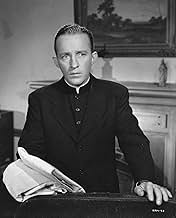
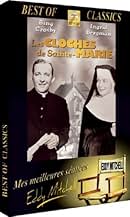
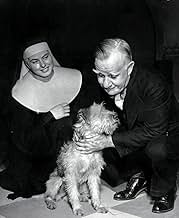
At a big city Catholic school, Father O'Malley and Sister Benedict indulge in friendly rivalry, and succeed in extending the school through the gift of a building.At a big city Catholic school, Father O'Malley and Sister Benedict indulge in friendly rivalry, and succeed in extending the school through the gift of a building.At a big city Catholic school, Father O'Malley and Sister Benedict indulge in friendly rivalry, and succeed in extending the school through the gift of a building.
- Won 1 Oscar
- 8 wins & 8 nominations total




Richard Tyler
- Eddie Breen
- (as Dickie Tyler)


Carl R. Botefuhr
- Student
- (uncredited)
Edward Coch Jr.
- Baby Jesus
- (uncredited)
Aina Constant
- Nun
- (uncredited)
Jimmy Crane
- Luther
- (uncredited)
Gwen Crawford
- Nun
- (uncredited)

Bobby Dolan Jr.
- Bobby
- (uncredited)

Jimmie Dundee
- Cabbie
- (uncredited)
Bobby Frasco
- Tommy Smith
- (uncredited)
- Director
- Writers
- All cast & crew
- Production, box office & more at IMDbPro
7.210.2K
1
2
3
4
5
6
7
8
9
10
Featured reviews
A slightly sugar-coated impression of Catholic education, but heartwarming
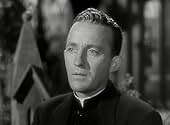
I had often heard how this film was nominated for Best Picture and other important Academy Awards, so I was glad to see it on cable a few days ago. I was very pleased with it. The film builds up to quite an emotional, dramatic ending. There are some moments when Ingrid Bergman simply shines with a special radiance. Bing Crosby was excellent also, although I think he had many better songs to sing in his long career. The direction seems slow-paced at times, but in a way this measured pacing gives the audience a better chance to focus on the characters on the screen.
The story certainly touched upon some important issues of Catholic education in the 1940's and 1950's. There were always fine attempts to help children from the other side of the tracks to prosper in a private school, with assistance of various kinds. The postwar population boom, however, led to huge numbers of children being educated as cheaply as possible in crowded, old, unsafe buildings. It was not uncommon to have 70 pupils in one classroom. In this film the nuns are relentlessly polite, but in real life they had to be very strict to control large classes. The picture refers to "fire traps" and the fact that St. Mary's School was about to be condemned. How ironic this was, for just 13 years later -- on December 1, 1958 -- a fire swept through the antiquated Our Lady of the Angels elementary school in Chicago, killing 92 children and three nuns. That tragic fire led to sweeping changes in building code laws and the modernization of thousands of schools across America, both public and private.
The story certainly touched upon some important issues of Catholic education in the 1940's and 1950's. There were always fine attempts to help children from the other side of the tracks to prosper in a private school, with assistance of various kinds. The postwar population boom, however, led to huge numbers of children being educated as cheaply as possible in crowded, old, unsafe buildings. It was not uncommon to have 70 pupils in one classroom. In this film the nuns are relentlessly polite, but in real life they had to be very strict to control large classes. The picture refers to "fire traps" and the fact that St. Mary's School was about to be condemned. How ironic this was, for just 13 years later -- on December 1, 1958 -- a fire swept through the antiquated Our Lady of the Angels elementary school in Chicago, killing 92 children and three nuns. That tragic fire led to sweeping changes in building code laws and the modernization of thousands of schools across America, both public and private.
The sixth sense
The key to the movie is the scene when Patricia reads her essay (made with a little help from Father O'Maley) : to be (or not to be) is the final sense ,the common sense and the most important of them all.
Although it takes place in a Capraesque universe ,some of the subjects are not irrelevant today:Patricia who does not pass her exam on purpose ,any teacher of the world has met such a pupil! At a time when many marriages are broken ,the movie has a contemporary feel.
A priest -who 's going his way,to mention the first movie he appears in- and nuns ,with Ingrid Bergman as Mother Superior.And it's never dull,never tedious ,thanks partly to the marvelous chemistry Crosby/Bergman.They would give faith to a complete and utter heathen.
Remarkable scenes
-O'Maley's delivering his speech while the nuns roar with laughter cause the kitten is playing with the priest's hat.
-Patricia,reading her essay,which does deserve an A+
-When O'Maley tells Sister Benedicte she won't be in charge of the school the next year ,she barely utters three words.Stunning.
Horace P.Bogardus seems to be out of a Capra movie,"you can't take it with you" comes to mind.
"The Bells" is also a musical made with taste; the songs always come at the right time ;best example : Crosby singing "song of beginning again" as the prodigal father accompanies him on piano.Phil Spector enjoyed the title track so much he had Bob B Soxx and the Blue Jeans record it on his Christmas record (1963):their version is sumptuous.
In spite of its sugar-coated side,"Bells" can still appeal to today's audience :Bergman's and Crosby's beaming faces can win anybody over .
Although it takes place in a Capraesque universe ,some of the subjects are not irrelevant today:Patricia who does not pass her exam on purpose ,any teacher of the world has met such a pupil! At a time when many marriages are broken ,the movie has a contemporary feel.
A priest -who 's going his way,to mention the first movie he appears in- and nuns ,with Ingrid Bergman as Mother Superior.And it's never dull,never tedious ,thanks partly to the marvelous chemistry Crosby/Bergman.They would give faith to a complete and utter heathen.
Remarkable scenes
-O'Maley's delivering his speech while the nuns roar with laughter cause the kitten is playing with the priest's hat.
-Patricia,reading her essay,which does deserve an A+
- My favorite is the play the kids perform before a very small audience (Sister Benedicte and O'Maley):the nativity scene.Sister tells they did everything by themselves."I would not change a line" O'Maley says. McCarey probably let his young actors improvise -and they are very cute-.Nowadays ,acting becomes more and more important in the national curriculum ,as soon as the pupils begin school:it works wonders for the children's self-confidence,teacher's honor!The boxing lesson (by the nun,not the priest) is probably largely improvised too.
-When O'Maley tells Sister Benedicte she won't be in charge of the school the next year ,she barely utters three words.Stunning.
Horace P.Bogardus seems to be out of a Capra movie,"you can't take it with you" comes to mind.
"The Bells" is also a musical made with taste; the songs always come at the right time ;best example : Crosby singing "song of beginning again" as the prodigal father accompanies him on piano.Phil Spector enjoyed the title track so much he had Bob B Soxx and the Blue Jeans record it on his Christmas record (1963):their version is sumptuous.
In spite of its sugar-coated side,"Bells" can still appeal to today's audience :Bergman's and Crosby's beaming faces can win anybody over .
Pleasant, Upbeat Movie With a Pretty Good Cast
As the companion piece to "Going My Way", "The Bells of St. Mary's" shares the same pleasant, upbeat tone, and it has a similar story that, though stylized, has some worthwhile and thoughtful material. Besides Bing Crosby, the cast here features Ingrid Bergman and several solid supporting players such as Henry Travers and Rhys Williams.
As Sister Benedict, Father O'Malley's foil here, Bergman gives this movie its own feel, with themes somewhat different from those in O'Malley's debates with Barry Fitzgerald's character in "Going My Way". Everyone has their own preference between the two movies, but as fine an actress as Bergman is, it's really hard to match - much less top - the dimension that Fitzgerald added in the other film.
Probably each of the two Father O'Malley movies should just be enjoyed for its own merits. While the story here is hardly anything weighty, "The Bells of St. Mary's" offers good entertainment and some worthwhile, positive thoughts.
As Sister Benedict, Father O'Malley's foil here, Bergman gives this movie its own feel, with themes somewhat different from those in O'Malley's debates with Barry Fitzgerald's character in "Going My Way". Everyone has their own preference between the two movies, but as fine an actress as Bergman is, it's really hard to match - much less top - the dimension that Fitzgerald added in the other film.
Probably each of the two Father O'Malley movies should just be enjoyed for its own merits. While the story here is hardly anything weighty, "The Bells of St. Mary's" offers good entertainment and some worthwhile, positive thoughts.
Old-Fashioned (Which Means Pretty Good)
This was a just a plain, nice story, one of those kind I tend favor simply they don't have any "bad guys" in them and still keep the story interesting.
I expected Ingrid Bergman's character, "Sister Mary," from what the liners notes on the video box said, to be a sort-of villain portraying a hard-line rigid nun but that wasn't the case at all. In fact, in her several philosophical disputes the priest "Father Chuck O'Malley" (Bing Crosby) I sided with her because Crosby was a little too liberal regarding punishment. (He never wanted to scold or punish any misbehaving kid., for example. No discipline is not a good idea, as parents know.)
The story is a little unrealistic in that a strong-willed business tycoon would not abandon all his business plans and hand over a brand-new million-dollar (today it would be many millions) building to a church. However, it's nice to see! These kind of old-fashioned films are almost collector's items today but they are pleasant to watch and pretty good entertainment.
I expected Ingrid Bergman's character, "Sister Mary," from what the liners notes on the video box said, to be a sort-of villain portraying a hard-line rigid nun but that wasn't the case at all. In fact, in her several philosophical disputes the priest "Father Chuck O'Malley" (Bing Crosby) I sided with her because Crosby was a little too liberal regarding punishment. (He never wanted to scold or punish any misbehaving kid., for example. No discipline is not a good idea, as parents know.)
The story is a little unrealistic in that a strong-willed business tycoon would not abandon all his business plans and hand over a brand-new million-dollar (today it would be many millions) building to a church. However, it's nice to see! These kind of old-fashioned films are almost collector's items today but they are pleasant to watch and pretty good entertainment.
"Just dial O..." this time for Outstanding
1944's "Going My Way" was a wispy-thin Oscar winner with only Barry Fitzgerald's adorable curmudgeon-ness to lift it out of sugary banality; this sequel drops Barry, so it shouldn't be of much use. However, director Leo McCarey actually pulls off a winner. Bing Crosby is back as Father O'Malley, and he's more human here than before, and his warm, witty battles with sister Ingrid Bergman are a delight (it helps that Bergman is possibly the most glowing, knowing, embraceable nun in Hollywood history!). Their smooth trials with the students and each other at St. Mary's have a seamless professionalism that, while not especially fresh, works the audience over with sheer good will. A sub-plot involving a troubled young girl (the excellent Joan Carroll) and her mother is a dandy heart-tugger, and the light music involved isn't such an obvious device as it was in "Going My Way"; the songs are there, but they're unobtrusive. A very good film, one that triumphs over its predecessor. Bing proves to be a solid actor here, not just a personality; he makes Father O'Malley a reachable character rather than just a holy rascal. Watch for his hesitation at the very end, and the thoughtfulness he gives to the scene. Admirably, Crosby gives back this time around. ***1/2 from ****


Did you know
- TriviaThe production was overseen by a Catholic priest who served as an advisor during the shooting. While the final farewell sequence was being filmed, Bing Crosby and Ingrid Bergman decided to play a prank on him. They asked director Leo McCarey to allow one more take, and, as "Father O'Malley" and "Sister Benedict" said their last goodbyes, they embraced in a passionate kiss, while the off-screen priest/advisor jumped up roaring in protest.
- GoofsAs the characters walk from the school building to the nearby church, they cast two shadows on the ground on both their right and left-hand sides, revealing that it is, in fact, a studio set illuminated by multiple overhead electric lights. In an actual exterior scene there would be only one light source overhead - the sun - which would cast shadows in one direction only depending on its position in the sky at the time of day depicted.
- Quotes
Sister Mary Benedict: You don't become a nun to run away from life, Patsy. It's not because you've lost something. It's because you've found something.
- Alternate versionsAlso available in a computer colorized version.
- ConnectionsFeatured in Hollywood: The Great Stars (1963)
Details
- Release date
- Country of origin
- Languages
- Also known as
- Las campanas de Santa María
- Filming locations
- Production company
- See more company credits at IMDbPro
Box office
- Gross US & Canada
- $21,333,333
- Gross worldwide
- $21,337,978
- Runtime
- 2h 6m(126 min)
- Color
- Aspect ratio
- 1.37 : 1
Contribute to this page
Suggest an edit or add missing content