
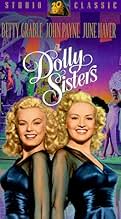
Two sisters from Hungary become famous entertainers in the early 1900s. Fictionalized biography with lots of songs.Two sisters from Hungary become famous entertainers in the early 1900s. Fictionalized biography with lots of songs.Two sisters from Hungary become famous entertainers in the early 1900s. Fictionalized biography with lots of songs.
- Director
- Writers
- Stars
- Nominated for 1 Oscar
- 1 nomination total





Fred Aldrich
- Soldier
- (uncredited)

Lester Allen
- Morrie Keno
- (uncredited)

Herbert Ashley
- Fields
- (uncredited)
Nino Bellini
- French Actor
- (uncredited)

Brooks Benedict
- Party Guest
- (uncredited)

Trude Berliner
- German Actress
- (uncredited)

Edward Biby
- Party Guest
- (uncredited)
Lulu Mae Bohrman
- Party Guest
- (uncredited)

Eddie Borden
- Man on Bus
- (uncredited)
- Director
- Writers
- All cast & crew
- Production, box office & more at IMDbPro
6.2886
1
2
3
4
5
6
7
8
9
10
Featured reviews
Sumptuous Fox musical
Betty Grable and June Haver are "The Dolly Sisters" in this 1945 film also starring John Payne, S.Z. Sakall and Reginald Gardner. Grable enjoyed an unparalleled run - 10 years in a row - in the Hollywood top ten box office, from 1941 to 1951, yet when Turner Classic Movies published their Unforgettable Leading Ladies of the Studio Era book, Grable was left out. For anyone who believes - erroneously - that Turner Classic Movies has any interest in film history, she was left out - just as Tyrone Power was left out of the leading men book - because TCM doesn't own their films.
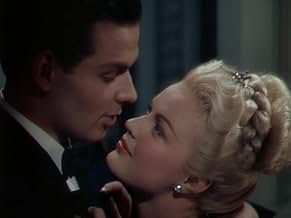
Not realizing that for a huge audience later on, it wouldn't exist, 20th Century Fox spared no expense for this lavish color musical about two real-life Hungarian sisters (actually brunettes) who were big entertainers in the beginning of the century. The story focuses on Jenny Dolly (Grable) primarily and her romance and marriage to Ziegfeld performer Harry Fox (inventor of the "fox trot"), played by John Payne, and how World War I and career separations destroyed their marriage.
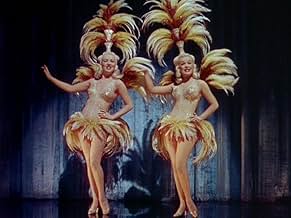
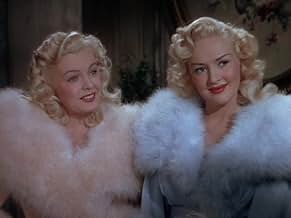
Grable and Haver look just like sisters and are marvelous together, wearing gorgeous costumes and looking fabulous and radiant throughout. Both bring a lot of energy to their roles. Payne does a good job as Harry, singing and acting well. A versatile actor, he could not only appear in musicals where he did his own singing, but he did plenty of drama and was also a hunk. He was invaluable to Fox during the war years.
This is a very entertaining film, but it's a shame that a film on the true story of the Dolly Sisters has never been made. Jenny and Fox were divorced in 1921. She was indeed involved in a car accident with an ex-boyfriend in 1933 and had to sell her jewels to pay for many surgeries, but unlike the film, she never really recovered. She never reconciled with Fox and in 1941, she hung herself. Rosie did marry a Chicago businessman; she attempted suicide in 1962, though it failed, and she died in 1970. The two women were huge gamblers, only hinted at in the film, and made a fortune: They won $850,000 in one season at Deauville and one evening in Cannes, Jenny won 4 million francs, which she converted to a collection of jewelry, and then went on to win another 11 million more francs.
I suppose during World War II, no one would have been interested in such a downer, so it's just as well that we have this film, which gives us vibrant entertainment in the best 20th Century Fox tradition.
Not realizing that for a huge audience later on, it wouldn't exist, 20th Century Fox spared no expense for this lavish color musical about two real-life Hungarian sisters (actually brunettes) who were big entertainers in the beginning of the century. The story focuses on Jenny Dolly (Grable) primarily and her romance and marriage to Ziegfeld performer Harry Fox (inventor of the "fox trot"), played by John Payne, and how World War I and career separations destroyed their marriage.
Grable and Haver look just like sisters and are marvelous together, wearing gorgeous costumes and looking fabulous and radiant throughout. Both bring a lot of energy to their roles. Payne does a good job as Harry, singing and acting well. A versatile actor, he could not only appear in musicals where he did his own singing, but he did plenty of drama and was also a hunk. He was invaluable to Fox during the war years.
This is a very entertaining film, but it's a shame that a film on the true story of the Dolly Sisters has never been made. Jenny and Fox were divorced in 1921. She was indeed involved in a car accident with an ex-boyfriend in 1933 and had to sell her jewels to pay for many surgeries, but unlike the film, she never really recovered. She never reconciled with Fox and in 1941, she hung herself. Rosie did marry a Chicago businessman; she attempted suicide in 1962, though it failed, and she died in 1970. The two women were huge gamblers, only hinted at in the film, and made a fortune: They won $850,000 in one season at Deauville and one evening in Cannes, Jenny won 4 million francs, which she converted to a collection of jewelry, and then went on to win another 11 million more francs.
I suppose during World War II, no one would have been interested in such a downer, so it's just as well that we have this film, which gives us vibrant entertainment in the best 20th Century Fox tradition.
Betty Grable & June Haver in a Joyous Fox musical
"The Dolly Sisters" is Betty Grable and June Haver's most joyously tuneful musical, a gaudy, loud, exquisitely Technicolored extravaganza of songs, dancing, and romance, the kind of vacuous yet tasteful fluff 20th Century Fox did well with great success. The studio head, Darryl Zanuck intended as a vehicle for Alice Faye & Betty Grable, but he couldn't convince Faye to get out of retirement, so producer George Jessel casted June Haver, and the movie become one of the top grossing pictures of the 1940s.
Grable and Haver (fantastic throughout) are the Hungarian born blonde sisters, Jenny & Rosie that took Broadway by storm. Their story begins with their arrival in New York in 1904, their subsequent rise from vaudeville acts to Broadway & Folies Bergere of Paris. They meet an aspiring composer Harry (John Payne) who arranges a meeting with Oscar Hammerstein to appear his Music Hall. Betty falls in love with Harry while June settles for a far less troubled romance with Frank Latimore. Betty is particularly very revealing, especially when she gets the nervous breakdown. Good performances also by S.Z. Sakall and Reginald Gardiner.
Lots of rollicking, uproarious songs/numbers, including the Oscar-winning "I Can't Begin to Tell You", the haunting "I'm Always Chasing Rainbows", plus some kitschy stuff like "Powder, Lipstick and Rouge", "Give Me The Moonlight, Give Me The Girl".
"Dolly Sisters" can be best appreciated if you see it back to back with June Haver's 1946's musical, "Three Little Girls in Blue", a joyous merriment in need of resurrection.
Grable and Haver (fantastic throughout) are the Hungarian born blonde sisters, Jenny & Rosie that took Broadway by storm. Their story begins with their arrival in New York in 1904, their subsequent rise from vaudeville acts to Broadway & Folies Bergere of Paris. They meet an aspiring composer Harry (John Payne) who arranges a meeting with Oscar Hammerstein to appear his Music Hall. Betty falls in love with Harry while June settles for a far less troubled romance with Frank Latimore. Betty is particularly very revealing, especially when she gets the nervous breakdown. Good performances also by S.Z. Sakall and Reginald Gardiner.
Lots of rollicking, uproarious songs/numbers, including the Oscar-winning "I Can't Begin to Tell You", the haunting "I'm Always Chasing Rainbows", plus some kitschy stuff like "Powder, Lipstick and Rouge", "Give Me The Moonlight, Give Me The Girl".
"Dolly Sisters" can be best appreciated if you see it back to back with June Haver's 1946's musical, "Three Little Girls in Blue", a joyous merriment in need of resurrection.
Colorful, splashy but almost total fiction
The real Dolly Sisters were dark, in both complexion and hair, Hungarian dancers with complex personalities and troubled lives, in fact Jenny had committed suicide several years before the debut of this musical, so if you are looking for anything resembling a depiction of the actual Dolly Sisters story look elsewhere. However if a sumptuous overstuffed showcase for blonds Betty Grable and June Haver is what you seek this is for you. Filmed in almost blinding Technicolor with some good songs and one great and beautiful one, I'm Always Chasing Rainbows, eye popping costumes and hairstyles this is old fashioned entertainment dished up with style.
Grable and Payne are at their peak in entertaining show biz story...
The real-life Dolly sisters were brunettes but that didn't stop Fox from pairing Bette Grable and June Haver as the famous duo, in addition to fictionalizing their rise to fame in vaudeville and the legit circuit. Nevertheless, this is a typical 1940s charmer of a musical, with the talented John Payne for added appeal and good performances by S. Z. Sakall and Reginald Gardiner. Grable and Haver are seen in a good number of singing and dancing routines and there is even one new song ("I Can't Begin To Tell You") supposedly penned by John Payne. It's all very likeable technicolored entertainment in lavish style. Betty's role is a little more dramatic than usual and she does a good piece of emoting in the final scenes. If you're a Grable fan, you can't afford to miss this one! And she was never better than when she was teamed opposite John Payne--good chemistry and believable sparks.
Colourful and cheery fun, not hard to see why it became one of 20th Century Fox's most profitable musicals
There may be better film musicals out there than 'The Dolly Sisters', but it succeeds very well as colourful fun with enough to put a smile on one's face and clearly knows what it's trying to be and what to do with it.
A huge part of wanting to see 'The Dolly Sisters' was the cast. With the likes of Betty Grable, June Haver, SZ Sakall, Reginald Gardiner, John Payne, there are some talented people here. Also, foibles and all, there is an immense soft spot had for the "Golden Age Hollywood" musicals, a soft spot that has been lifelong held. A fair few of them are flawed in the story department but many are compensated by the music, production values, atmosphere and performances.
While 'The Dolly Sisters' has more merits than it has flaws, the story (if we are to forget that biographically it's very much fictionalised) is as flimsy and predictable as they come and some of the latter parts meander, such as a finale that could have had more oomph. Frank Latimore fails to pass the "remotely amusing" test and further fails to inject much charm or enthusiasm.
Lastly the black face routine is in pretty embarrassing taste now, with a lot of unsubtle and unfunny black stereotypes that feel out of date and not for the easily offended, with very gaudy make-up.
However, the merits that 'The Dolly Sisters' has are numerous. It looks lovely, with only the costumes and make-up in the black face sequence showing signs of cheapness, elsewhere the film is handsomely mounted and photographed beautifully and with such great use of colour. The songs are tuneful and a very pleasant listen, especially "I Can't Begin to Tell You" (Oscar-nominated and not hard to see why) and "I'm Always Chasing Rainbows". They are mostly staged with the right amount of entertainment and intimacy.
Scripting is suitably zesty, and Irving Cummings directs with much assurance. The story is not perfect but has such a cheery charm, a huge abundance of fun and heart that it is difficult to be too hard on it. Betty Grable and June Haver were tailor-made for their roles, and are endearing joys to watch. John Payne sings beautifully and looks more comfortable than in some of his other films, while SZ Sakall is so cuddly and funny and Reginald Gardiner is amusing.
All in all, colourful and cheery fun. 7/10 Bethany Cox
A huge part of wanting to see 'The Dolly Sisters' was the cast. With the likes of Betty Grable, June Haver, SZ Sakall, Reginald Gardiner, John Payne, there are some talented people here. Also, foibles and all, there is an immense soft spot had for the "Golden Age Hollywood" musicals, a soft spot that has been lifelong held. A fair few of them are flawed in the story department but many are compensated by the music, production values, atmosphere and performances.
While 'The Dolly Sisters' has more merits than it has flaws, the story (if we are to forget that biographically it's very much fictionalised) is as flimsy and predictable as they come and some of the latter parts meander, such as a finale that could have had more oomph. Frank Latimore fails to pass the "remotely amusing" test and further fails to inject much charm or enthusiasm.
Lastly the black face routine is in pretty embarrassing taste now, with a lot of unsubtle and unfunny black stereotypes that feel out of date and not for the easily offended, with very gaudy make-up.
However, the merits that 'The Dolly Sisters' has are numerous. It looks lovely, with only the costumes and make-up in the black face sequence showing signs of cheapness, elsewhere the film is handsomely mounted and photographed beautifully and with such great use of colour. The songs are tuneful and a very pleasant listen, especially "I Can't Begin to Tell You" (Oscar-nominated and not hard to see why) and "I'm Always Chasing Rainbows". They are mostly staged with the right amount of entertainment and intimacy.
Scripting is suitably zesty, and Irving Cummings directs with much assurance. The story is not perfect but has such a cheery charm, a huge abundance of fun and heart that it is difficult to be too hard on it. Betty Grable and June Haver were tailor-made for their roles, and are endearing joys to watch. John Payne sings beautifully and looks more comfortable than in some of his other films, while SZ Sakall is so cuddly and funny and Reginald Gardiner is amusing.
All in all, colourful and cheery fun. 7/10 Bethany Cox


Did you know
- ConnectionsFeatured in Fred Astaire Salutes the Fox Musicals (1974)
- How long is The Dolly Sisters?Powered by Alexa
Details
- Release date
- Country of origin
- Language
- Also known as
- Dolly Sisters
- Filming locations
- Production company
- See more company credits at IMDbPro
Box office
- Budget
- $2,510,000 (estimated)
- Runtime
- 1h 54m(114 min)
- Aspect ratio
- 1.37 : 1
Contribute to this page
Suggest an edit or add missing content