IMDb RATING
7.4/10
1.2K
YOUR RATING
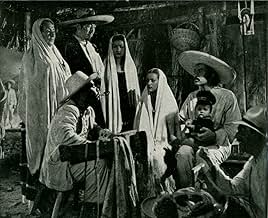
The discovery of a perfect pearl forever changes the lives of a poor Mexican fisherman and his family.The discovery of a perfect pearl forever changes the lives of a poor Mexican fisherman and his family.The discovery of a perfect pearl forever changes the lives of a poor Mexican fisherman and his family.
- Director
- Writers
- Stars
- Awards
- 9 wins & 6 nominations total
José Arratia
- Tratante de perlas
- (uncredited)
Guillermo Calles
- Indio rastreador
- (uncredited)
Enrique Cancino
- Pueblerino
- (uncredited)
Maria Elena Cuadros
- Juanita
- (uncredited)
Enedina Díaz de León
- Yerbera
- (uncredited)
Columba Domínguez
- Pueblerina
- (uncredited)
Agustín Fernández
- Pueblerino
- (uncredited)
Rogelio Fernández
- Pueblerino
- (uncredited)
Raquel García
- Pueblerina
- (uncredited)
- Director
- Writers
- All cast & crew
- Production, box office & more at IMDbPro
7.41.2K
1
2
3
4
5
6
7
8
9
10
Featured reviews
This is a story that old men tell to children. They aren't sure where it happened or when.
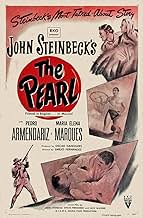
The Pearl is directed by Emilio Fernández and John Steinbeck co-adapts his own novella of the same name with Fernández and Jack Wagner. It stars Pedro Armendariz, María Elena Marqués, Fernando Wagner, Gilberto González, Juan García and Charles Rooner. Music is by Antonio Díaz Conde and cinematography by Gabriel Figueroa.
We are in La Paz, Mexico, and when Quino and Juana's son is stung by a scorpion the couple are anguished by not having the finances to pay for medical treatment. Hope springs eternal when Quino discovers a large pearl, something which is seemingly the answer to their prayers - is it?
What we basically have here is a morality play about the corruption of greed. Once the pearl of the title is discovered the ugliness of mankind rears its vile head. People around Quino and Juana - a homely honest but poor couple - suddenly have designs on the financial gains that the pearl can bring - with some of them willing to commit cardinal sins to achieve their aim. The pearl also begins to drive a wedge between the loving couple, and thus we are held enthral of the story to see exactly where this will all end up?
Though it's not very subtle in the telling, with Steinbeck's literary bent often as heavy as a sledgehammer, this is undeniably compelling stuff. That it's also a visual delight also considerably aids the viewing experience. Fernández and Figueroa bring truly atmospheric cinematography into play as a key character of the piece, with kinked frames and low level shots perfectly embracing the discord of the troubling human conditioning on view. Come 1947 what we would come to know as the film noir style of film making was in full effect, fans of such should for sure add The Pearl to their must seek out lists. 8/10
We are in La Paz, Mexico, and when Quino and Juana's son is stung by a scorpion the couple are anguished by not having the finances to pay for medical treatment. Hope springs eternal when Quino discovers a large pearl, something which is seemingly the answer to their prayers - is it?
What we basically have here is a morality play about the corruption of greed. Once the pearl of the title is discovered the ugliness of mankind rears its vile head. People around Quino and Juana - a homely honest but poor couple - suddenly have designs on the financial gains that the pearl can bring - with some of them willing to commit cardinal sins to achieve their aim. The pearl also begins to drive a wedge between the loving couple, and thus we are held enthral of the story to see exactly where this will all end up?
Though it's not very subtle in the telling, with Steinbeck's literary bent often as heavy as a sledgehammer, this is undeniably compelling stuff. That it's also a visual delight also considerably aids the viewing experience. Fernández and Figueroa bring truly atmospheric cinematography into play as a key character of the piece, with kinked frames and low level shots perfectly embracing the discord of the troubling human conditioning on view. Come 1947 what we would come to know as the film noir style of film making was in full effect, fans of such should for sure add The Pearl to their must seek out lists. 8/10
10whpratt1
Great John Steinbeck Story
Some how I over looked this John Steinbeck brief story years ago and loved this 1947 production and the fantastic acting. The film is great in black and white and it clearly shows the poverty of local fishermen and their hard tasks of having to dive only when the ocean was calm. Pedro Armendariz,"From Russia With Love",'63 and Maria Elena Marques,"Pueblilo",'62, gave an outstanding performance as husband and wife who have to deal with finding a great treasure and having to face the hard facts of many people who want to share their wealth. Charles Rooner,(Doctor),"Silent Fear",'56 plays a very horrible doctor who seems to hate the local fishermen and wants to treat only the rich who will be able to pay his medical fees. This is truly a great film, which was very well produced and a great Film Classic from the late 40's. Enjoy
A Masterpiece of world film-making
Making an adaptation off John Steinbeck's short novel wasn't easy and always a feat.But Emilio Fernandez and Gabriel Figueroa did it in a succesful way.
Pedro Armendariz repeats on a high class of acting role as in 'Maria Candelaria'. Once again the cinematography of Gabriel Figueroa ranks among the best he's done. (the cinematography of this movie earned him, a prize at the Cannes Film Festival).
The aid of Mr. Steinbeck himself, helped Emilio to adapt the screenplay just as good as the novel itself.
This movie has no flaws and it ranks among the best in Mexico Film History, a must see.
Pedro Armendariz repeats on a high class of acting role as in 'Maria Candelaria'. Once again the cinematography of Gabriel Figueroa ranks among the best he's done. (the cinematography of this movie earned him, a prize at the Cannes Film Festival).
The aid of Mr. Steinbeck himself, helped Emilio to adapt the screenplay just as good as the novel itself.
This movie has no flaws and it ranks among the best in Mexico Film History, a must see.
Beautifully shot and told film
This is a wonderfully shot film whose story, while not totally believable, could serve as allegory. Perhaps the family of the Mexican fisherman-diver played by Armendariz would have been happier if he had not discovered the pearl at all, but the poverty that endangers their baby's life makes his joy at this discovery (in a good underwater scene) credible. Immediately afterward, he finds himself beset by freeloaders and robbers (including his own brother), and the spiral continues until it ends in flight, hunger, death and a sort of redemption: the pearl is hurled back into the sea that spawned it. Apart from the story, the highlight is the Mexican scenery, the village and villagers, and the skillful and evocative camera angles. As one reviewer wrote, it's unlikely a villagers' celebration would have been as elaborate as the one shown in "La Perla," but it is enjoyable. Perhaps one semi-cynical message that could be gained from this film is that if you strike it rich, tell as few people as possible.
Magnificent movie from Mexico's "Golden Age"
What can go wrong when you gather several geniuses in their respective fields: California's John Steinbeck(who later won the Literature Nobel prize), Gabriel Figueroa, Mexico's greatest movies photographer, and one of the all time greats in international cinematography, Mexico's Emilio "Indio" Fernandez??? This movie is among Mexico's greatest movies of all times. It is a story of greed and poverty(which by the way could still be a contemporary story), it is an impacting story about a poor Fisherman whose son was denied treatment by the ambitious foreign Doctor in the Village, and who later tries to steal from the ignorant Fisherman, a very valuable pearl he found in the sea. This movie was produced for RKO Radio Pictures and it was released in both English and Spanish. As an added piece of information, El Indio Fernandez, the Director, who was in platonic love with Olivia de Havilland wanted her to be the star of the picture, but more than likely this was never offered to her; So much was the love that he had for Olivia, that the street where he lived in Mexico was named Dulce Olivia(sweet Olivia) at his request. This movie was filmed in 1945, precisely during the "Golden Age" of Mexico's Cinematography.
Did you know
- TriviaEmilio Fernández, who was in love with Olivia de Havilland, thought she was the ideal actress to play the female starring role. De Havilland never knew of his secret love, but the director was able to get the government of Mexico City to change the name of the street he grew up on to "Dulce Olivia" (Sweet Olivia).
- Quotes
Narrator: This is a story that old men tell to children. They aren't sure where it happened or when.
- Alternate versionsA short version (77') was shown in the USA, France and West Germany whereas a longer version (85 to 87') was shown in Mexico and East Germany.
- ConnectionsAlternate-language version of The Pearl (1948)
- How long is The Pearl?Powered by Alexa
Details
- Runtime
- 1h 25m(85 min)
- Color
- Aspect ratio
- 1.37 : 1
Contribute to this page
Suggest an edit or add missing content