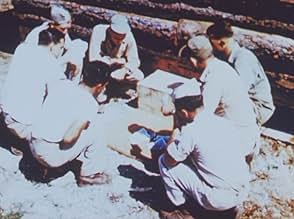
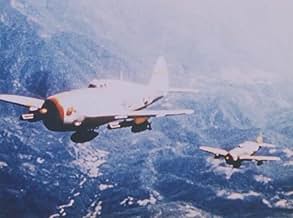
A WW2 documentary on the P-47 Thunderbolt fighter/bomber pilots in missions (Operation Strangle) from their base in Corsica to Northern Italy in 1944, destroying railroads, bridges, trains, ... Read allA WW2 documentary on the P-47 Thunderbolt fighter/bomber pilots in missions (Operation Strangle) from their base in Corsica to Northern Italy in 1944, destroying railroads, bridges, trains, vehicles and hard targets.A WW2 documentary on the P-47 Thunderbolt fighter/bomber pilots in missions (Operation Strangle) from their base in Corsica to Northern Italy in 1944, destroying railroads, bridges, trains, vehicles and hard targets.
Ira C. Eaker
- Self
- (archive footage)
Lloyd Bridges
- Self - Pilot
- (voice)
- (uncredited)
Eugene Kern
- Self - Narrator
- (uncredited)
Robert Lowery
- Self - Narrator
- (uncredited)
- Directors
- Writer
- All cast & crew
- Production, box office & more at IMDbPro
6.6798
1
2
3
4
5
6
7
8
9
10
Featured reviews
Good WW2
Thunderbolt (1947)
*** (out of 4)
WW2 documentary directed by John Sturges and William Wyler with an added introduction from James Stewart. The documentary covers the P-47 Thunderbolt pilots whose mission was to knock out all the train tracks and bridges throughout Corsica, Italy so that the German's couldn't get any supplies. Sturges and Wyler put twelve different cameras on the planes so there's a lot of terrific ariel footage of the bombings, which is quite impressive. I don't think the documentary plays out too well today because we see things getting bombed even though the pilots aren't sure if it's the Germans or perhaps civilians. There's also some footage of what the pilots do when they're not working but the documentary ends on a downnote as some of the men in the crew never made it back home. The film's biggest problem is the narration, which is so slow that it can't keep up with all the action going on in the movie. Lloyd Bridges provides the voice of one of the pilots.
*** (out of 4)
WW2 documentary directed by John Sturges and William Wyler with an added introduction from James Stewart. The documentary covers the P-47 Thunderbolt pilots whose mission was to knock out all the train tracks and bridges throughout Corsica, Italy so that the German's couldn't get any supplies. Sturges and Wyler put twelve different cameras on the planes so there's a lot of terrific ariel footage of the bombings, which is quite impressive. I don't think the documentary plays out too well today because we see things getting bombed even though the pilots aren't sure if it's the Germans or perhaps civilians. There's also some footage of what the pilots do when they're not working but the documentary ends on a downnote as some of the men in the crew never made it back home. The film's biggest problem is the narration, which is so slow that it can't keep up with all the action going on in the movie. Lloyd Bridges provides the voice of one of the pilots.
Excellent for aviation lovers and also realists
As a private pilot, I really liked the aviation scene and the P47 is such an ugly impressive plane.
Great scenes to see in colour.
I am particularly shocked by the way the strafing was done. What's the point of shooting fields, cattle's or trains? There were probability civilians in it. Can't be Huns everywhere.
Great scenes to see in colour.
I am particularly shocked by the way the strafing was done. What's the point of shooting fields, cattle's or trains? There were probability civilians in it. Can't be Huns everywhere.
Informative WW2 Documentary
It's an honest an informative documentary. Rather than telling people want they want to hear, this documentary does an excellent job of showing people what it was like for the pilots as they try to cut off food, supplies, and reinforcements to the German forces. The documentary shows great images of what is happening along with a narration to give you more information about what they are doing and why they are doing it. The narrator explains some of the thoughts ans feelings that the pilots have and what expectations people have of them. Overall, it's a solid non-propaganda documentary of the war.
Interesting war-time documentary
The setting is the Italian Campaign in World War Two. More specifically this is about a series of planned air strikes carried out using the P-47 Thunderbolt bombers launched from Corsica in 1944 that went under the codename Operation Strangle. The idea was to destroy the bridges, train tracks and vehicles on the roads at the narrowest section of the Italian peninsula, which in effect would cut off supplies to the German army located in the South of that country, allowing the Allies to advance big distances north.
Like other wartime documentaries such as Attack in the Pacific (1944) this film shares similar strengths and weaknesses. On the one hand, it's obviously very raw, one-sided and propagandist to an extent. But on the other hand, it has a lot of fascinating real footage. This included planes fitted out with multi-camera set ups involved in the missions. We witness attacks on various targets which show pretty clearly the dangers involved. This also includes some indiscriminate bombings, where farmhouses seem to have been routinely blown up in case they were holding explosives, etc. We also see footage of the real men involved which adds an extra poignancy. You will get a more detailed overview of events in a documentary made nowadays but there is still some invaluable footage here. And it was a very important campaign to the overall war effort, so it's good to see it being documented for that reason alone.
Memorial to The Jug
William Wyler began work on this film during 1944 as a counterpoint to his better-known film about the 8th Air Force, "Memphis Belle". While the latter concerned the strategic bombing campaign carried out by long-range, multi-engine bombers, the subject of "Thunderbolt" was tactical missions flown by single-engine, single-seat fighter-bombers. This was a very different war from that depicted in "Memphis Belle". For one thing, while strategic bomber crews could expect to be rotated home after completing 25 missions, the fighter-bomber pilots were flying literally hundreds of missions, frequently carrying out several during the course of a single day.
The film chronicles a brief period with one of several fighter-bomber groups based on the island of Corsica, about 60 miles west of the Italian mainland. Incidentally, this was the same island where Joseph Heller was based, and which inspired him to write his famous novel, "Catch-22". The only difference is that "Thunderbolt" was not filmed with a Medium Bomber Group, such as Heller served in, but with a Fighter-Bomber Group.
The fighter-bombers featured in the film are P-47s, to which the Army Air Force gave the emotive name of "Thunderbolt". However, to those who flew them, the P-47 was invariably known as "The Jug", partly due to it's rotund shape, but more especially as a contraction of the word "Juggernaut". For a Juggernaut was precisely what the P-47 was. The Jug was the largest single-seat fighter to serve during WW-II. It carried eight 12.7-mm machine guns along with a heavy load of bombs or rockets, and was capable of bringing it's pilot home after absorbing a considerable amount of battle damage. Unlike any other fighters of that time the Jug had an air-cooled engine, which meant that it's pilot did not have to worry about a liquid cooling system that was vulnerable to damage from enemy fire. Because of those characteristics the Jug came into it's own in the sort of low-level ground-attack missions shown in "Thunderbolt". In fact years later, when they began flying similar ground attack missions in Korea, a lot of veteran pilots regretted the fact that the Air Force had seen fit to scrap all of it's Jugs after WW-II ended.
"Thunderbolt" does not glamorize the lives of these fighter-bomber personnel. The narration is as terse as the subject matter. It was a brutal war, and that brutality is not watered down. To the men of the Fighter-Bomber Group this was merely a day-to-day job, with the difference that the working men shown in the film did not always live to see the next day. However, the film does go out of it's way to explain exactly what it was that they were trying to accomplish, and why it mattered. It is interesting to reflect that The Big Picture was something many of the members of the Fighter-Bomber Group probably did not entirely understand at the time. In short, these aircraft were engaged in cutting Italian road and rail communications in order to prevent the movement of war material to the German Army, so that the Allied Armies could break the stalemate in the mountains of Southern Italy. The mere fact that the stalemate was broken is proof of how effective the air campaign shown in the film actually was.
The film chronicles a brief period with one of several fighter-bomber groups based on the island of Corsica, about 60 miles west of the Italian mainland. Incidentally, this was the same island where Joseph Heller was based, and which inspired him to write his famous novel, "Catch-22". The only difference is that "Thunderbolt" was not filmed with a Medium Bomber Group, such as Heller served in, but with a Fighter-Bomber Group.
The fighter-bombers featured in the film are P-47s, to which the Army Air Force gave the emotive name of "Thunderbolt". However, to those who flew them, the P-47 was invariably known as "The Jug", partly due to it's rotund shape, but more especially as a contraction of the word "Juggernaut". For a Juggernaut was precisely what the P-47 was. The Jug was the largest single-seat fighter to serve during WW-II. It carried eight 12.7-mm machine guns along with a heavy load of bombs or rockets, and was capable of bringing it's pilot home after absorbing a considerable amount of battle damage. Unlike any other fighters of that time the Jug had an air-cooled engine, which meant that it's pilot did not have to worry about a liquid cooling system that was vulnerable to damage from enemy fire. Because of those characteristics the Jug came into it's own in the sort of low-level ground-attack missions shown in "Thunderbolt". In fact years later, when they began flying similar ground attack missions in Korea, a lot of veteran pilots regretted the fact that the Air Force had seen fit to scrap all of it's Jugs after WW-II ended.
"Thunderbolt" does not glamorize the lives of these fighter-bomber personnel. The narration is as terse as the subject matter. It was a brutal war, and that brutality is not watered down. To the men of the Fighter-Bomber Group this was merely a day-to-day job, with the difference that the working men shown in the film did not always live to see the next day. However, the film does go out of it's way to explain exactly what it was that they were trying to accomplish, and why it mattered. It is interesting to reflect that The Big Picture was something many of the members of the Fighter-Bomber Group probably did not entirely understand at the time. In short, these aircraft were engaged in cutting Italian road and rail communications in order to prevent the movement of war material to the German Army, so that the Allied Armies could break the stalemate in the mountains of Southern Italy. The mere fact that the stalemate was broken is proof of how effective the air campaign shown in the film actually was.
Did you know
- TriviaDirector William Wyler lost his hearing during production of this film when he flew in a noisy, unpressurized transport plane. He was subsequently medically discharged from the Army, but eventually got some hearing back in one ear. Hence, the delay in the release of this film.
- ConnectionsEdited into Federal Follies - Volume 5 (1987)
Details
- Runtime
- 44m
- Sound mix
- Aspect ratio
- 1.37 : 1
Contribute to this page
Suggest an edit or add missing content