
Some youngsters kill their teacher; but they won't tell their motivation. The police detective on the case feels some sinister influence behind the young murderers.Some youngsters kill their teacher; but they won't tell their motivation. The police detective on the case feels some sinister influence behind the young murderers.Some youngsters kill their teacher; but they won't tell their motivation. The police detective on the case feels some sinister influence behind the young murderers.




- Livia Ussaro
- (as Susan Scott)

- Beatrice Romani
- (as Danika)

- Florist - Sorella di Verino
- (as Priscilla Benson)
Featured reviews
🎬🔪A Brutal Reflection of Society's Dark Underbelly
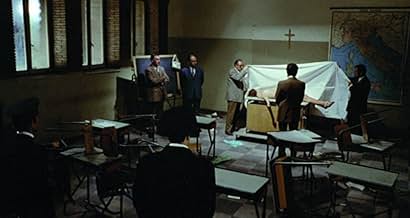
The film follows Detective Luca Lamberti, played with stoic intensity by Pier Paolo Capponi, as he investigates the brutal murder of a young teacher in a reform school. Di Leo wastes no time in establishing a grim, pessimistic tone that permeates the entire narrative. The stark black-and-white cinematography by Franco Villa accentuates the bleak urban landscapes and claustrophobic interiors, creating a palpable sense of unease and moral ambiguity.
One of the film's strengths lies in its unflinching portrayal of troubled youth. The young cast, mostly non-professional actors, deliver raw and authentic performances that lend credibility to their characters' desperate circumstances. Di Leo's direction draws out the underlying tension and barely contained violence simmering beneath the surface of these disenfranchised teenagers.
The screenplay, co-written by Di Leo and Scerbanenco, delves into themes of social inequality, institutional failure, and the cycle of violence. It presents a scathing critique of a society ill-equipped to deal with the challenges faced by its most vulnerable members. The dialogue is sharp and often brutally honest, reflecting the harsh realities of life in the urban underbelly.
Pier Paolo Capponi's portrayal of Detective Lamberti is a highlight of the film. His world-weary demeanor and dogged determination provide a moral anchor in a story filled with shades of gray. The character's interactions with the young suspects and his colleagues offer insight into the complexities of law enforcement in a changing social landscape.
The film's pacing, however, can be uneven at times. While the investigation drives the plot forward, there are moments where the narrative loses momentum, particularly in some of the more dialogue-heavy scenes. Additionally, some viewers might find the depiction of violence and social issues too bleak or dated by today's standards.
Musically, the film benefits from a haunting score by Luis Enríquez Bacalov, which enhances the atmosphere of dread and melancholy. The use of music is sparse but effective, underscoring key moments without overpowering the visual storytelling.
"I ragazzi del massacro" is notable for its place in the evolution of Italian crime cinema. It serves as a bridge between the more straightforward detective stories of the 1960s and the gritty, politically charged poliziotteschi films that would dominate the 1970s. Di Leo's directorial style, while not yet fully formed, shows glimpses of the hard-hitting approach he would perfect in later works like "Milano Calibro 9."
In conclusion, "I ragazzi del massacro" is a thought-provoking and atmospheric crime drama that offers more than just a standard whodunit. Its unflinching look at social issues and strong performances make it a worthwhile watch for fans of Italian cinema and crime fiction. While it may not reach the heights of Di Leo's later works, it remains an important and engaging entry in his filmography.
This film is recommended for viewers interested in Italian cinema history, particularly the development of the crime genre. Its stark portrayal of youth crime and societal issues may be challenging for some, but it offers valuable insights into the social climate of late 1960s Italy. As with many films of its era, some aspects may feel dated, but its core themes and atmospheric storytelling continue to resonate. 🇮🇹🔍
CAn Ferdinando DiLeo ever make a bad movie? No
Another excellent film from Fernando Di Leo
The film is essentially a character study and we mainly focus on the Police Inspector and a handful of the boys at the centre of the crime. The locations used are not particularly diverse; especially not during the first third when almost everything takes place inside a room in the police station. The film does have a very minimalist approach, but it's all done very professionally and the film is of a higher quality than a lot of the output from Italy in the late sixties and early seventies. The film is bolstered by a handful of good acting performances; Pier Paolo Capponi is absolutely great as the police inspector and receives good support from Giallo heroine Susan Scott (who in truth doesn't have a whole lot to do) and Giuliano Manetti as the main character of the school class. The majority of the film is build-up as we try to work out the reasons behind the heinous crime at the start of the film; and the brutal climax doesn't disappoint. The motive for the killings might not go down too well in some circles; but it's inventive enough and ensures that the film finishes well. Overall, this is an excellent thriller and comes highly recommended!
audacious
Fernando Di Leo takes us for this incredible trip among juvenile delinquency. Although the movie was made in 1969, Di Leo talks about drugs, veneral diseases, prostitution, transvestism, teenagers having sex with old women, homosexuality and incest much in advance compared to what still had to come in our society.
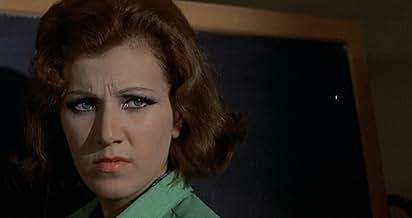
Fernando Di Leo delivers us a very interesting movie technically superb. The interrogation of the youngsters is done in a very sharp style. The rape scene, although very impressive, is simply done with a camera movement. The suspense is well built. Pier Paolo Capponi offers us an excellent interpretation. With him we have Livia Ussaro more interested in the social aspects of the youngsters: "The police doesn't care about the kids, who they are, what they wanted to be, what they do and why they do it, if they have feelings. They are considered criminals and that's all..." But for inspector Lamberti these words will not remain unheard. To solve the case he will also have to consider these aspects.
Fernando Di Leo. One of Italy's most interesting directors.
School for drinking, raping & murdering... scoundrels.


Did you know
- TriviaDuca chain smokes fashionable Astor cigarettes.
- GoofsThe soft, feminine hands of the instigator of the crimes develop hair on them during the rape.
- Quotes
Duca Lamberti: You're right, Ellusic. You can take me in the ass, disrespect me, wherever, whenever, even on the job. You can get drunk and murder a woman, and I can't even touch you.
[in a soft, mock conciliatory tone]
Duca Lamberti: I'm sorry if I was rude to you
[to guards, at the top of his lungs]
Duca Lamberti: TAKE HIM AWAY!
- ConnectionsFeatured in Italian Gangsters (2015)
- How long is Naked Violence?Powered by Alexa
Details
- Release date
- Country of origin
- Language
- Also known as
- Note 7 - Die Jungen der Gewalt
- Filming locations
- Production companies
- See more company credits at IMDbPro
- Runtime
- 1h 32m(92 min)
- Color
- Aspect ratio
- 1.85 : 1